
What are the benefits of using soft wash techniques for render and stucco maintenance?
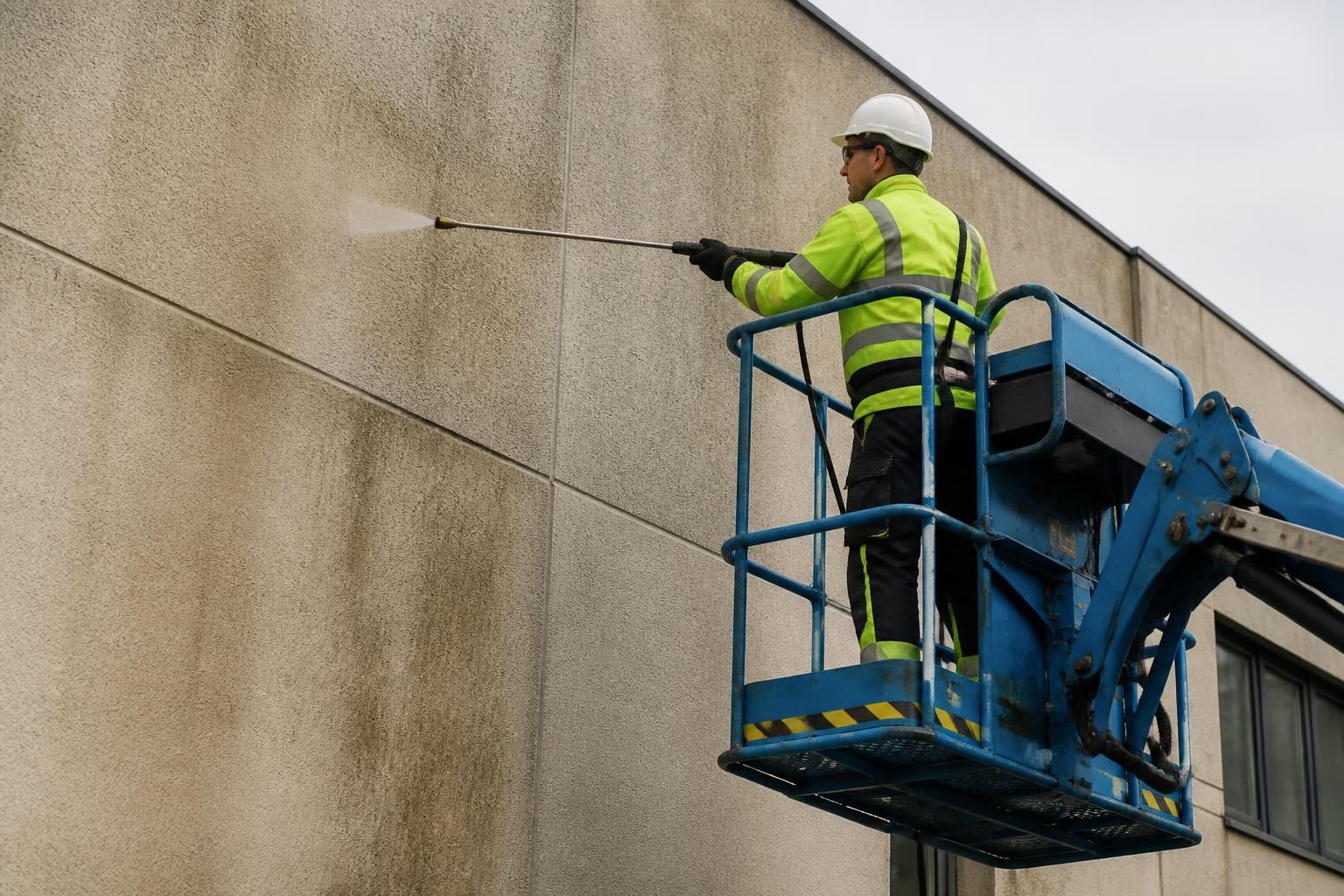
Soft wash cleaning uses low-pressure application of specialist cleaning solutions to remove algae, moss, dirt and atmospheric staining from render and stucco without the abrasion or impact associated with high-pressure washing. It provides a gentler, more controlled approach that helps protect delicate finishes, improve appearance and reduce the risk of surface damage during routine maintenance.
Soft wash maintenance is a low-pressure cleaning method in which specialist solutions are applied to render or stucco to break down algae, moss, lichen, organic growth, dirt and atmospheric staining before the surface is gently rinsed. Its main benefit is that it removes contamination through chemical action rather than relying on high water pressure or abrasive scrubbing, helping to reduce the risk of marking, dislodging or eroding the finish.
It is gentler on delicate finishes. Render and stucco are not always uniform, impermeable surfaces. They may include textured coatings, painted finishes, repaired sections, exposed aggregate or areas that have already weakened through weathering. High-pressure cleaning can force water into cracks, open joints, remove surface material or leave visible striping. Soft washing uses controlled pressure appropriate to the condition of the elevation, so the cleaning process is less likely to disturb the underlying substrate or decorative texture.
Low pressure does not mean that the work is simply a light rinse. The cleaning solution is selected according to the type of contamination and the surface being treated. This allows organic growth and ingrained staining to be loosened before rinsing, rather than trying to remove everything through mechanical force. The correct pressure, solution strength, contact time and rinsing method still need to be determined by an experienced technician.
It is effective against biological growth. Algae, moss, lichen and other organic deposits can be difficult to remove completely with water alone. They can also return quickly if remnants remain within the texture of the render or stucco. A suitable soft wash treatment can penetrate the surface profile and treat contamination more thoroughly than a superficial rinse. This helps improve the appearance of the elevation and can reduce the conditions that support rapid regrowth.
Fungicidal or biocidal treatments may form part of the process where organic contamination is established. These products must be used responsibly, with appropriate precautions for people, plants, drainage systems and surrounding materials. Treatment does not remove the underlying causes of damp or persistent shading, so areas affected by leaking gutters, defective downpipes, poor ventilation or excessive moisture may still require remedial attention.
It helps preserve the appearance and texture of the finish. Render and stucco often have a textured or coloured surface that can be changed by aggressive cleaning. Excessive pressure may expose the substrate, create patches, remove paint or leave a visibly different texture. Soft washing provides a more controlled way to remove surface soiling while retaining the character of the existing finish. It is particularly useful where maintaining a consistent appearance across a large commercial elevation is important.
Care is still required because soft washing cannot correct existing deterioration. Crumbling render, hollow sections, open cracks, failed sealant and loose coatings should be identified before cleaning. Cleaning a defective surface may reveal the extent of the problem, but it will not replace repairs or redecoration. Where a coating is poorly bonded, even low-pressure rinsing can cause lifting, which is why a pre-cleaning inspection and test area are important.
It reduces the risk of water-related damage. Render and stucco can absorb water, especially where cracks, porous areas or failed details are present. High-pressure equipment can drive water behind the finish and into vulnerable interfaces around windows, doors, vents, joints and service penetrations. Soft washing limits the mechanical force used during application and rinsing, reducing the likelihood of forcing water into defects. It does not make the surface waterproof, so openings and known defects must still be protected and managed.
It can provide a more even result on textured surfaces. Dirt and biological growth often collect in recesses, around architectural details and beneath projecting features. A pressure-only method may clean exposed areas while leaving contamination in the texture, or it may create bright bands where the operator has worked unevenly. Applying a suitable solution across the elevation and allowing it to work before a controlled rinse can produce a more consistent finish. The aim should be to clean evenly without creating a sharp contrast between treated and untreated areas.
It can reduce the need for aggressive manual cleaning. Scrubbing render and stucco can be labour-intensive and may flatten texture, loosen particles or create localised marks. Soft washing helps soften deposits first, allowing limited agitation where necessary rather than relying on continuous abrasion. Manual methods may still be appropriate for isolated stains, delicate details or areas where chemical treatment is unsuitable, but they can be used more selectively.
It supports planned external maintenance. Render and stucco generally benefit from cleaning before contamination becomes deeply established. A planned soft wash programme can help keep façades presentable, identify defects at an early stage and reduce the build-up of organic matter that retains moisture against the surface. For commercial premises, this can be coordinated with inspections, gutter clearance, roof work, access arrangements and other external maintenance activities.
The suitable cleaning frequency depends on exposure, orientation, nearby trees, traffic pollution, shading, moisture levels, surface condition and the type of finish. North-facing or shaded elevations may retain contamination for longer, while buildings near roads or industrial areas may develop atmospheric soiling more quickly. Rather than relying on a fixed interval, the condition of the façade should be reviewed and cleaning scheduled before growth becomes extensive.
Soft washing is not suitable for every situation. Some stains are mineral, metallic, oily or paint-based and may not respond to a biological treatment. Render that is unstable, heavily cracked or poorly adhered may require repair before any cleaning takes place. Certain coatings can also react adversely to cleaning chemicals. A professional assessment should establish the render or stucco type, identify sensitive areas, determine whether the staining is biological and confirm that the proposed treatment will not affect adjacent materials.
A responsible soft wash process normally includes a site assessment, protection of doors, windows, vents, signs, planted areas and nearby surfaces, followed by a small test section. The technician should use a suitable solution at a controlled concentration, allow adequate dwell time without letting it dry on the surface, and rinse in a way that removes loosened contamination without unnecessary impact. Run-off should be controlled in accordance with site requirements, and surrounding areas should be checked after completion.
Weather conditions also influence the result. Strong sunlight, high temperatures or drying wind can cause a solution to dry too quickly, while rain can dilute treatment or carry it away before it has worked. Cold conditions may affect application and rinsing, and windy weather can increase the risk of spray drift. Cleaning should therefore be planned around suitable conditions and any required protection of occupants, vehicles, landscaping and neighbouring property.
After cleaning, the surface should be allowed to dry and then inspected for remaining staining, defects and areas requiring further attention. Any repairs, recoating or sealing should only be carried out when the substrate is suitably dry and compatible with the proposed product. Keeping gutters and downpipes clear, correcting water leaks, improving drainage and trimming vegetation away from the façade will help preserve the result.
Overall, soft wash techniques offer a practical balance between effective contamination removal and protection of render and stucco. They are especially valuable where the finish is textured, weathered, painted or vulnerable to abrasion. The best outcome comes from matching the treatment to the material and pollutant, using the lowest effective pressure, controlling chemical application and addressing defects that would otherwise cause staining to return.
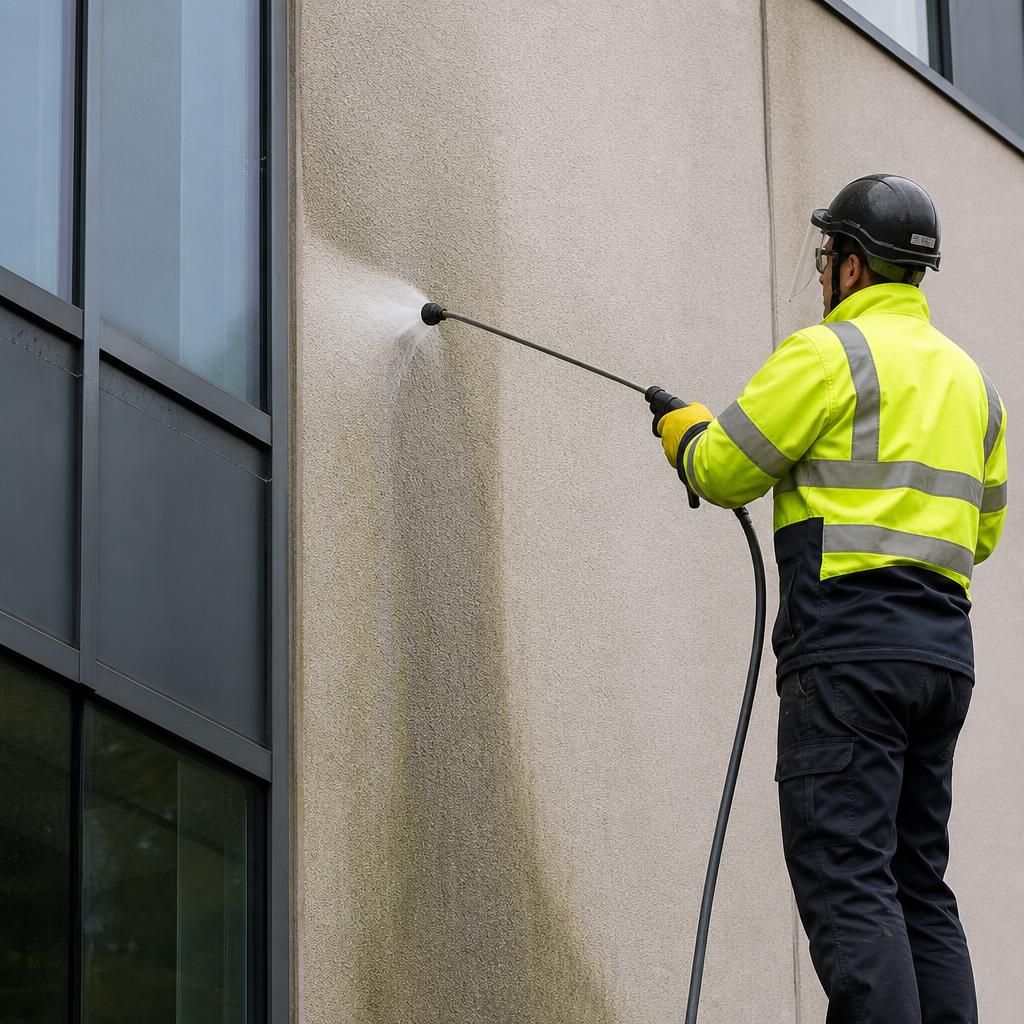
Soft washing is a low-pressure cleaning process that uses a suitable solution to break down algae, moss, lichen and atmospheric dirt on render and stucco before controlled rinsing. This reduces reliance on force, helping protect textured, painted or weathered finishes from abrasion, surface marking and unnecessary material loss.
It can also produce a more even result because the solution reaches contamination within the surface profile rather than cleaning only exposed areas. A professional assessment remains important, as cracked, loose or poorly bonded render should be repaired before treatment and surrounding windows, plants, drainage points and other materials must be protected.