
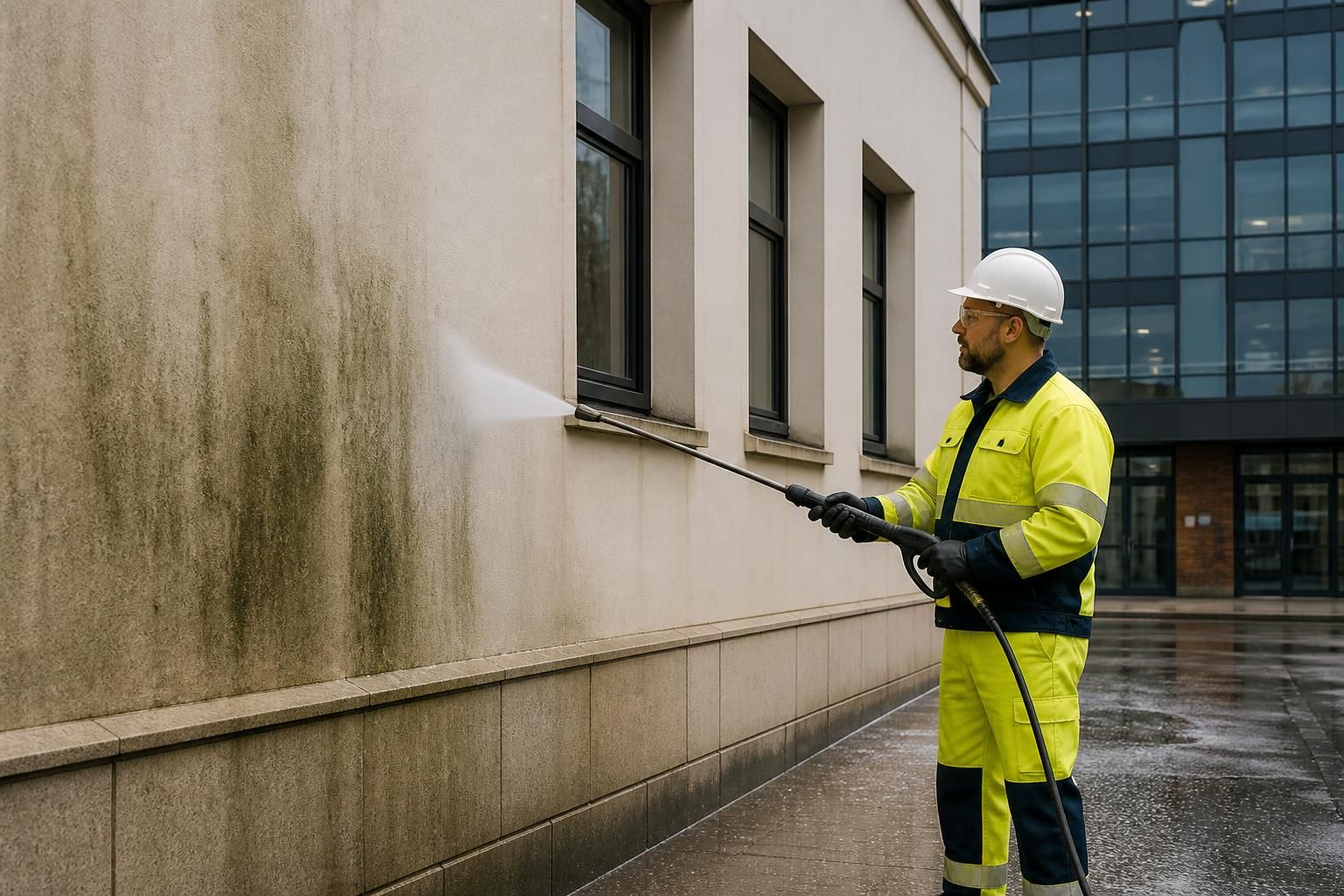
How often should render and stucco exteriors be cleaned?
Render and stucco exteriors should usually be inspected annually and cleaned when visible staining, algae, moss, traffic film or pollution begins to build up, rather than to a fixed schedule. More exposed façades or properties in damp, shaded or heavily polluted locations may need cleaning more frequently, while sheltered surfaces can often go longer between treatments.
Render and stucco exteriors should generally be inspected at least annually and cleaned when staining, organic growth or pollution becomes established, rather than being treated to a rigid timetable. Many façades require cleaning every few years, but the appropriate interval depends on exposure, surface condition, drainage and the surrounding environment. A sheltered wall may remain presentable for longer, while a damp, shaded or heavily trafficked elevation may need attention more frequently.
Annual inspections are the best starting point. An inspection should assess the full façade, including areas beneath roof edges, around windows and doors, near downpipes, behind vegetation and at ground level. These locations often retain moisture or collect dirt before the rest of the wall shows obvious deterioration. Identifying the early signs of contamination allows cleaning to be planned before staining becomes deeply embedded or biological growth spreads across larger areas.
The main indicators that render or stucco needs cleaning include:
- Green, black or brown discolouration caused by algae, moss, lichen or other organic growth.
- Traffic film, soot and airborne pollution, particularly on façades near busy roads or industrial areas.
- Water run-off marks beneath sills, coping stones, roof lines and defective or overflowing gutters.
- Bird fouling, dust, construction residue or other site-related contamination.
- A noticeable difference in appearance between exposed elevations and more sheltered areas.
- Persistent damp patches, peeling coatings, cracking or surface friability that may indicate an underlying defect.
Location has a significant effect on cleaning frequency. Buildings in Birmingham and the wider West Midlands can experience a combination of urban pollution, variable weather and prolonged periods of dampness. Façades beside roads, car parks, rail routes or industrial premises are more likely to accumulate airborne grime. North-facing elevations and walls shaded by trees or neighbouring buildings often dry more slowly, which can encourage algae and moss. Coastal exposure, dense vegetation and poorly ventilated courtyards can also increase the need for maintenance.
The material and finish should be considered as well. Render systems vary in texture, porosity, coating and strength, while stucco may include decorative profiles or repaired sections with different levels of absorbency. A rough or open-textured surface can hold more dirt than a smooth, well-sealed finish. Older render, previously painted surfaces and areas with failed repairs may require a more cautious assessment before any cleaning interval is agreed.
Cleaning should not be delayed simply because a façade has not reached a planned date. Organic growth holds moisture against the surface and can spread into joints, reveals and other details. Pollution deposits can also become more difficult to remove after repeated wetting and drying. Early, controlled cleaning is usually preferable to aggressive treatment after heavy build-up has formed. However, cleaning should not be carried out solely for appearance if the underlying cause of staining is a leaking gutter, defective flashing, cracked render or persistent dampness. Those defects should be addressed to prevent the problem returning.
A practical maintenance programme for commercial and managed properties normally includes:
- A documented visual inspection of all accessible elevations and high-risk areas.
- Photographs or condition notes to compare changes over time.
- Cleaning when contamination becomes visible or begins to affect the condition and presentation of the façade.
- Checks and repairs to gutters, downpipes, roof details, sealants and surrounding landscaping where they contribute to staining or dampness.
- A post-cleaning review to identify any areas that need further treatment or repair.
For many properties, arranging cleaning during a planned external maintenance cycle is efficient, particularly where access equipment is already required for other façade, roof or cladding work. High-profile commercial premises, housing developments, public buildings and sites with strict presentation requirements may need more frequent visual checks than buildings in less exposed settings. The cleaning interval should reflect the appearance standard required by the site, not just the point at which contamination becomes severe.
Weather and access conditions also influence timing. Render and stucco should be assessed before treatment to confirm that the surface can be cleaned safely in the prevailing conditions. Excessively cold, wet or windy weather can affect dwell times, rinsing, drying and access equipment. A professional contractor can select an appropriate treatment window and adjust the method for the substrate, contamination and forecast rather than applying unnecessary pressure.
After cleaning, the façade should be monitored for recurring staining. Rapid regrowth may indicate ongoing moisture, insufficient ventilation, nearby vegetation or a drainage fault rather than a failure of the cleaning process. Where appropriate, a suitable biocidal or fungicidal treatment can help control organic contamination, but it should be selected and applied according to the render or stucco system and site conditions. It is not a substitute for repairing leaks or removing persistent sources of dampness.
In summary, inspect render and stucco annually, then set the cleaning frequency according to exposure, contamination, surface condition and the required appearance of the property. Clean visible pollution and organic growth before it becomes extensive, investigate recurring stains at their source and use a low-impact method appropriate to the finish. For larger or multi-elevation premises, a documented inspection and planned maintenance programme provides a more reliable approach than waiting for the façade to become heavily soiled.

Render and stucco exteriors should be inspected annually, but cleaning should be scheduled according to the level of contamination and the condition of the surface rather than a fixed timetable. Visible algae, moss, lichen, traffic film, soot, water-runoff marks or bird fouling are signs that cleaning is due.
Exposed façades may need more frequent attention where they are shaded, damp, close to busy roads or affected by overflowing gutters and downpipes. Sheltered walls can often go longer between treatments. Recurring staining should be investigated before cleaning, as leaks, defective drainage or persistent dampness can cause the problem to return.