
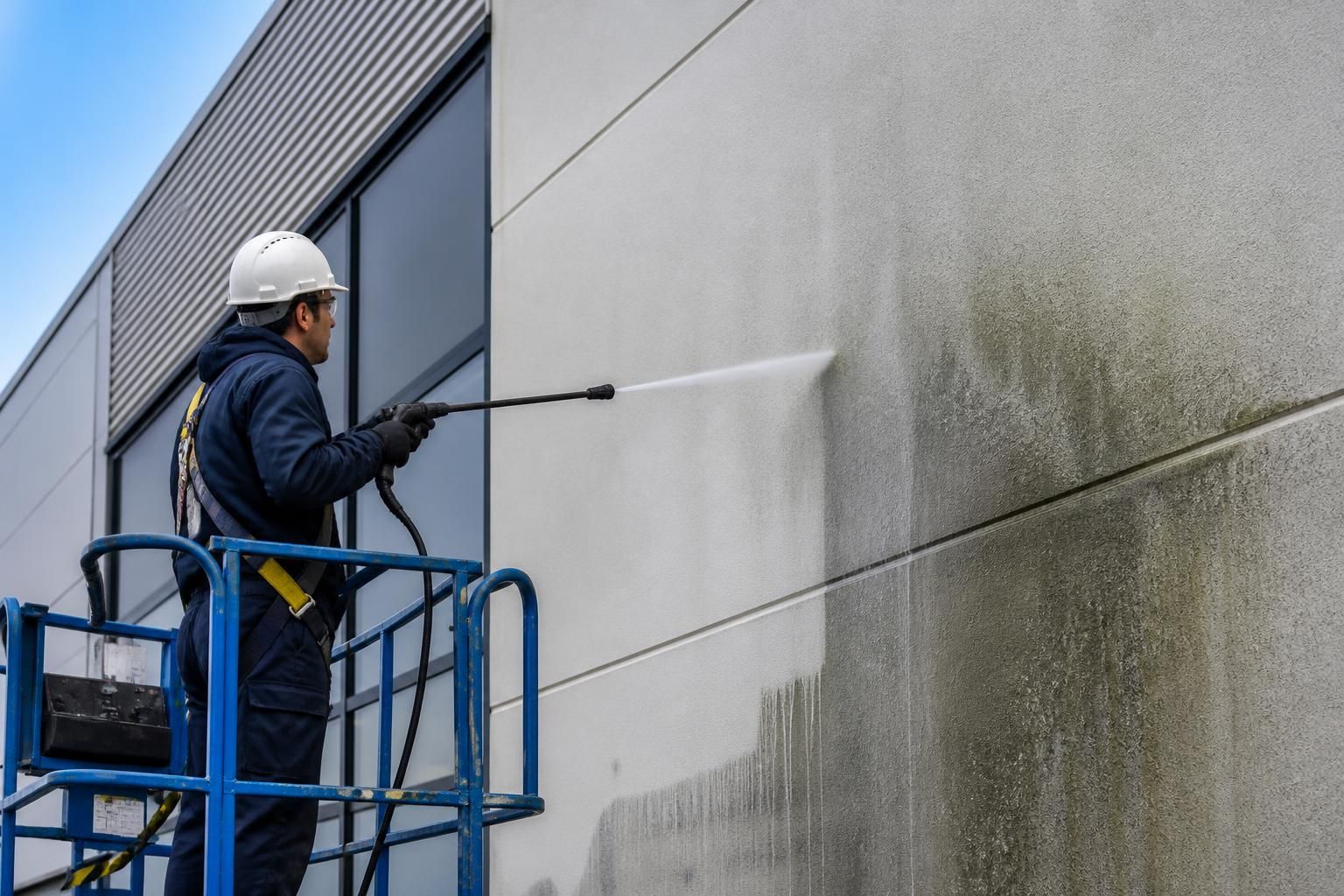
How does fungicidal treatment improve the maintenance of stucco and render surfaces?
Fungicidal treatment helps maintain stucco and render by controlling algae, moss, lichen and fungal growth left behind after cleaning. Applied appropriately to the surface, it slows regrowth, preserves the finish and helps reduce moisture-related deterioration between scheduled cleans.
Fungicidal treatment improves the maintenance of stucco and render by controlling algae, moss, lichen and fungal growth that remains on, or returns to, the surface after cleaning. Applied as part of a suitable cleaning and maintenance programme, it helps slow regrowth, preserve the appearance of the finish and reduce the risk of organic contamination contributing to moisture-related deterioration.
Exterior render and stucco are vulnerable to organic growth where surfaces remain damp, shaded or poorly ventilated. Nearby trees, overflowing gutters, leaking downpipes, atmospheric moisture and persistent condensation can all create suitable conditions. Algae may appear as green or dark staining, while moss and lichen can form thicker growths that retain moisture against the surface. Fungal contamination may also contribute to discolouration and an unpleasant, neglected appearance.
A fungicidal treatment is designed to address this biological contamination rather than simply wash away visible dirt. It can help deal with microscopic spores and residues that may not be removed entirely by a low-pressure or soft-wash process. This is important because a surface can look clean immediately after washing while still carrying conditions that allow organic growth to return quickly.
How it supports render and stucco maintenance
- Slows regrowth: Treatment reduces the biological activity left after cleaning, helping the surface remain presentable for longer between scheduled visits.
- Helps protect the finish: Moss and lichen can attach firmly to textured render, and their growth can place additional stress on the surface. Controlling them helps limit avoidable disturbance to the coating.
- Reduces moisture retention: Organic growth can hold water against render and stucco. Removing and treating it helps the surface dry more effectively, although drainage and ventilation problems must also be corrected.
- Supports safer cleaning: Where biological growth is treated before or during cleaning, less aggressive mechanical action may be needed to remove staining. This can reduce the risk of scarring, abrasion or loosening a weak finish.
- Improves appearance: Treating the biological cause of staining, rather than only removing the visible mark, provides a more complete maintenance approach.
When treatment is applied
The exact sequence depends on the condition of the elevation, the type of render and the extent of contamination. A contractor may apply a compatible treatment before cleaning to loosen or deactivate organic growth, or after cleaning to help control remaining spores and reduce early regrowth. In some cases, a repeat application is appropriate where the surface is heavily colonised or conditions remain persistently damp.
The treated area normally requires sufficient contact time for the product to work. It should not simply be rinsed away immediately unless the product instructions require that approach. Weather, surface temperature, porosity and the level of contamination all affect the process. The product must also be applied evenly, with particular care around textured areas, joints, ledges and other locations where growth can remain sheltered.
Compatibility is essential
Not every fungicidal product is suitable for every rendered or stucco finish. The substrate may be cement render, lime render, acrylic render, silicone-modified render, painted render or another proprietary system, and each can respond differently to moisture, chemicals and pressure. A professional assessment should consider the render specification, age, condition, previous coatings and any manufacturer restrictions before treatment begins.
A small test area is useful where the finish is unfamiliar, weathered, porous or already showing cracking, friability or colour variation. Testing helps confirm that the treatment and cleaning method do not cause unacceptable bleaching, patchiness, softening or loss of surface material. Sensitive items such as windows, doors, sealants, decorative trims, landscaping and drainage fittings should also be protected from contamination and runoff.
What fungicidal treatment cannot do
Fungicidal treatment is not a substitute for repairing defective render, failed sealants, cracked areas or leaking rainwater goods. It will not resolve rising damp, penetrating damp, persistent condensation or inadequate drainage. If those underlying issues remain, organic growth is likely to return regardless of the treatment used.
It is also not intended to conceal structural defects or permanently remove every type of discolouration. Rust marks, soot, traffic film, efflorescence, paint transfer and mineral staining may require different cleaning methods. Treating the surface without first identifying the source of the staining can produce an incomplete result or an unsuitable maintenance plan.
Good practice after application
- Inspect gutters, downpipes, outlets and flashings so that water is not repeatedly discharged onto the render.
- Check shaded elevations and recessed details, where dampness and poor air movement can encourage faster regrowth.
- Repair cracks, open joints and failed sealants using materials compatible with the existing render system.
- Avoid unnecessary high-pressure cleaning, which can erode textured finishes, drive water into defects or expose the underlying substrate.
- Record the product used, areas treated and any manufacturer instructions so future maintenance is consistent.
- Schedule follow-up inspections based on the building’s exposure and condition rather than waiting for heavy growth to become established.
For commercial and managed properties, fungicidal treatment is most effective when incorporated into a planned render and stucco maintenance programme. The condition of the surface should be reviewed before each clean, particularly on north-facing or shaded elevations and buildings exposed to trees, high moisture or heavy urban pollution. This allows the cleaning method, treatment strength and inspection interval to be adjusted without applying unnecessary chemicals or mechanical force.
Work should be planned in accordance with the product label, site risk assessment and applicable control measures. Operatives should manage overspray, runoff and protection of people, vehicles, plants and drainage systems. Where access equipment is required, the work area must also be controlled so that treatment and rinsing can be completed safely and evenly across the elevation.
In practical terms, fungicidal treatment extends the benefit of a professional clean by addressing the biological contamination that contributes to recurring staining. Its value is greatest when combined with gentle, substrate-appropriate cleaning, prompt repairs and control of the moisture sources that support organic growth.
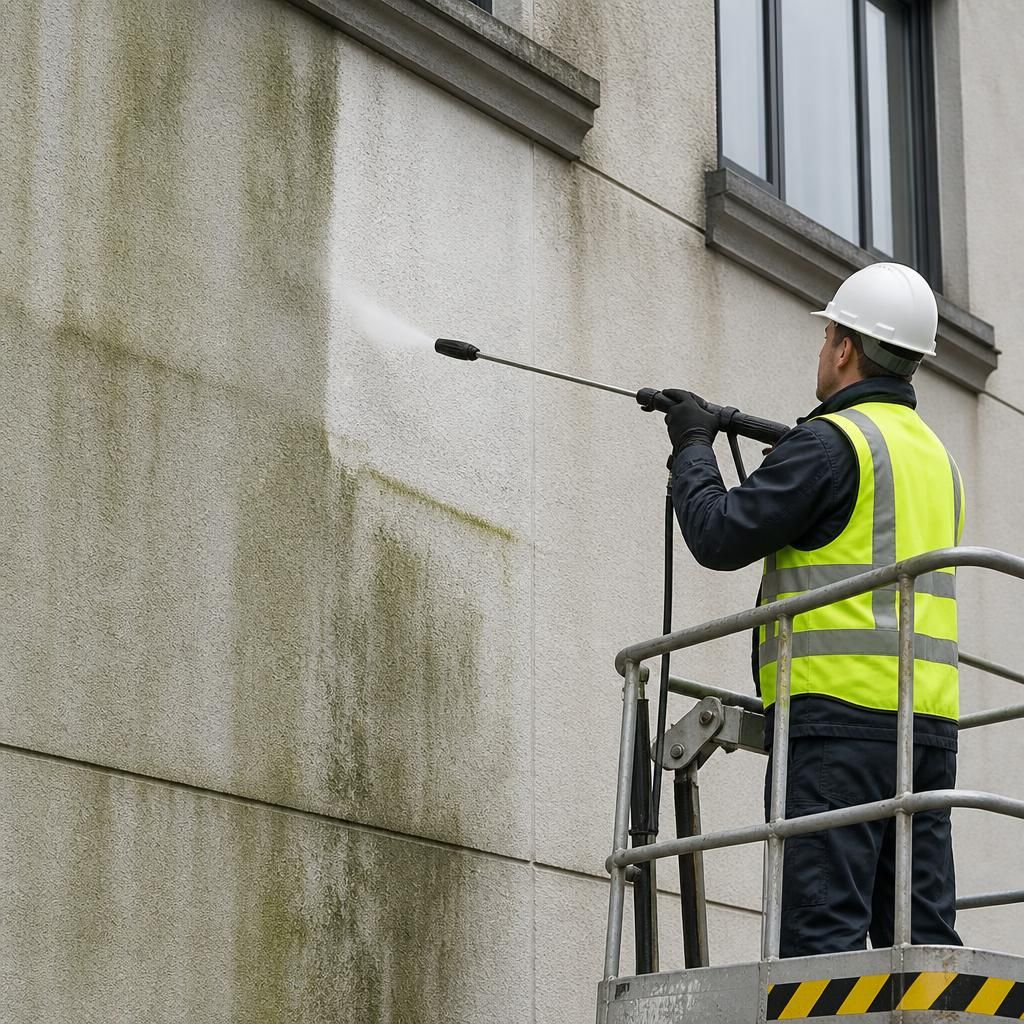
Fungicidal treatment improves render and stucco maintenance by reducing the spores and organic contamination that can cause algae, moss, lichen and fungal growth to return after cleaning. It is most effective when applied with a suitable soft-wash or low-pressure cleaning process and allowed the correct contact time.
However, treatment cannot solve the moisture problems that support regrowth. Leaking gutters, defective downpipes, cracked render, failed sealants, poor drainage and heavily shaded areas should be identified and addressed as part of the maintenance plan. Controlling these conditions helps the treated surface remain cleaner for longer and reduces the need for aggressive repeat cleaning.
The product must also be compatible with the specific render or stucco system. A professional assessment and small test area can help prevent patchiness, bleaching or damage to a weathered or porous finish.