
How can regular maintenance extend the lifespan of exterior render and stucco surfaces?
Regular exterior render maintenance extends the lifespan of render and stucco by removing moisture-retaining dirt, algae, moss, pollutants and staining before they cause surface deterioration. Routine inspections, gentle cleaning, suitable fungicidal treatment and prompt repairs help prevent cracking, water ingress, spalling and costly replacement.
Regular maintenance extends the lifespan of exterior render and stucco by controlling moisture, biological growth, staining and minor defects before they develop into significant deterioration. A planned programme should combine condition inspections, gentle cleaning, appropriate fungicidal treatment, drainage checks and prompt repairs. This protects the finish, reduces the risk of water ingress and helps avoid premature replacement.
Why render and stucco deteriorate
Render and stucco are exposed to driving rain, frost, temperature changes, airborne pollution and physical impact. Their performance is also affected by the condition of surrounding details, including roof edges, gutters, downpipes, window seals and movement joints. Dirt alone is usually cosmetic, but some contamination retains moisture against the surface or provides conditions for further growth.
- Algae, moss and lichen can hold moisture against the finish and may spread across porous or shaded areas.
- Pollution and traffic film can discolour the surface and combine with moisture to leave persistent deposits.
- Cracks and failed joints allow water to enter behind the render, where freeze-thaw action can cause debonding, spalling or local failure.
- Blocked or leaking rainwater goods can create concentrated wetting, streaking and repeated saturation.
- Vegetation and physical impact can damage the coating or open pathways for water.
How planned maintenance protects the surface
Inspections should identify changes in colour, texture, adhesion and moisture exposure rather than focusing only on visible staining. Areas beneath parapets, around openings, at low level and beside downpipes often require particular attention. A professional assessment can distinguish surface contamination from deeper defects that need repair before cleaning.
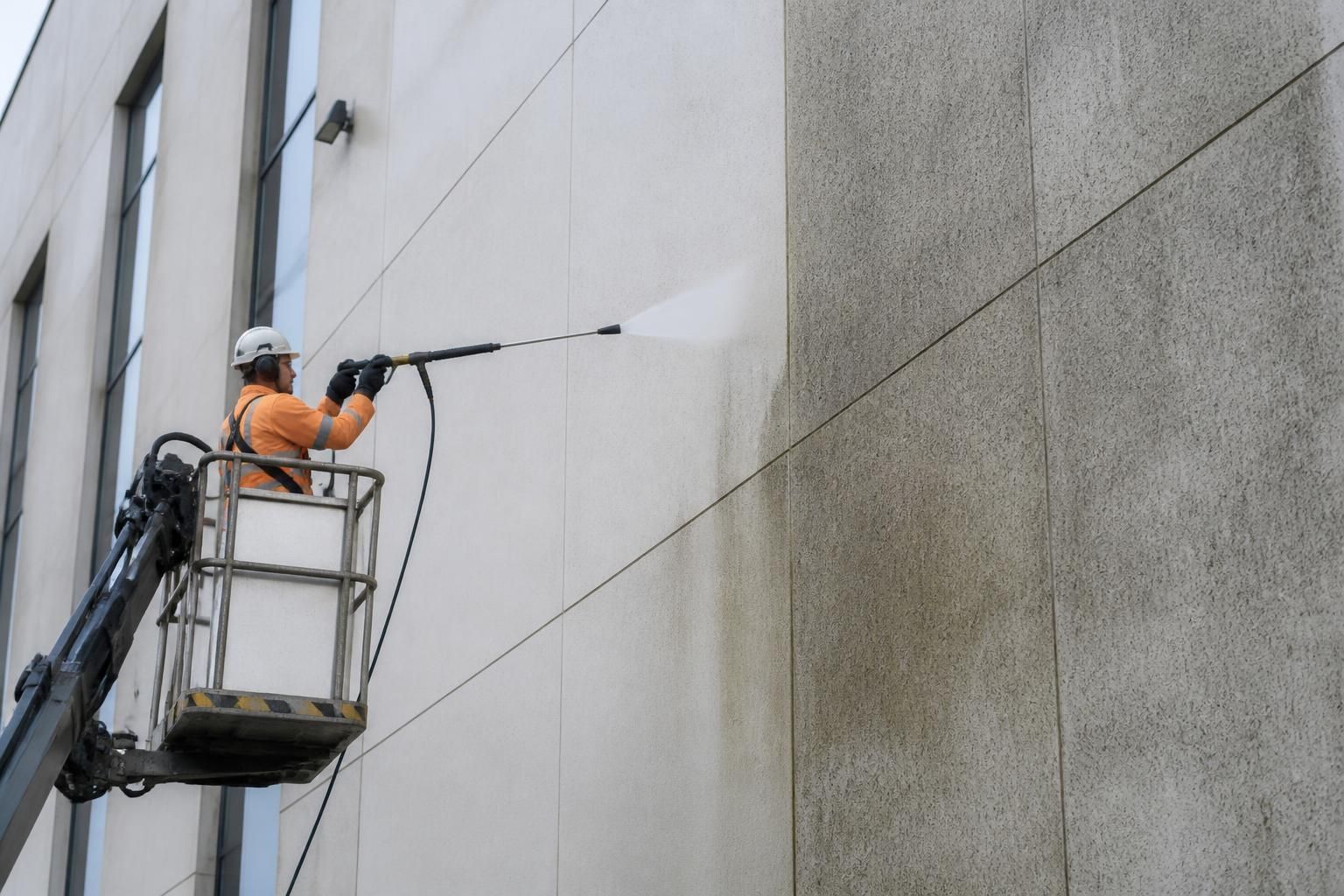
Cleaning removes deposits that can retain moisture and obscure early defects. The method should be matched to the render type, coating, age, condition and level of contamination. Soft washing, controlled low-pressure cleaning and steam cleaning may be suitable in different circumstances. Excessive pressure, aggressive abrasion or unsuitable chemicals can erode the surface, open pores, remove coatings or force water behind the render, so cleaning should be controlled and tested in an inconspicuous area.
Where organic growth is present, a suitable fungicidal or biocidal treatment can help address remaining spores after physical deposits have been removed. Treatment selection, dilution, dwell time and rinsing requirements must follow the product guidance and the surface manufacturer’s recommendations. It should not be treated as a substitute for correcting persistent dampness, leaking gutters or defective details.
Repairs are an essential part of maintenance
Cleaning cannot correct structural or substrate problems. Cracked, hollow, loose or detached render should be assessed by a competent person. Small defects can often be repaired before they admit substantial water, while larger areas may require local removal and reinstatement. Repairs should use compatible materials and finishes; an incompatible patch can remain visibly different or behave differently as the wall moves and dries.
Maintenance should also include checks of:
- gutters, hoppers, downpipes and discharge points for leaks, blockages and overflow;
- flashings, copings, parapets and roof junctions for defective seals or exposed edges;
- window, door and service penetrations for failed mastic or gaps;
- movement joints and render beads for cracking, corrosion or separation;
- ground levels and splashback zones where the finish is exposed to persistent dampness;
- nearby trees, climbing plants and signage that may retain moisture or cause abrasion.
Using a condition-led maintenance plan
The appropriate cleaning frequency depends on exposure, orientation, surface porosity, nearby traffic or industrial activity, shading, vegetation and the building’s drainage performance. Rather than relying on a fixed interval for every property, inspections should record contamination, recurring problem areas and any change in the surface condition. This allows cleaning and treatment to be scheduled before staining becomes established or biological growth returns extensively.
For commercial and industrial premises, a useful maintenance record should include photographs, the areas inspected, the cleaning method and products used, observed defects, access requirements and any recommended remedial work. This provides continuity between visits and helps property managers demonstrate that the external envelope is being monitored responsibly.
Cleaning should be planned around suitable weather and site conditions. Render must be allowed to dry appropriately, and work should be controlled where rainfall, frost, strong sunlight or high wind could affect chemical dwell times, rinsing, drying or safe access. Protecting windows, doors, landscaping, vehicles and drainage systems is also important during the process.
Signs that maintenance is overdue
Recurring green or black growth, persistent damp patches, efflorescence, flaking coatings, widening cracks, rust staining, loose areas and streaking below rainwater outlets all justify closer inspection. A surface that appears clean but remains damp, sounds hollow when assessed, or shows repeated staining may have an underlying defect rather than a simple cleaning requirement.
Regular, appropriately specified maintenance therefore preserves both the appearance and function of render and stucco. Removing contamination, managing moisture and repairing defects at an early stage helps maintain weather resistance, reduces the likelihood of extensive substrate damage and supports a longer service life with less disruptive remedial work.
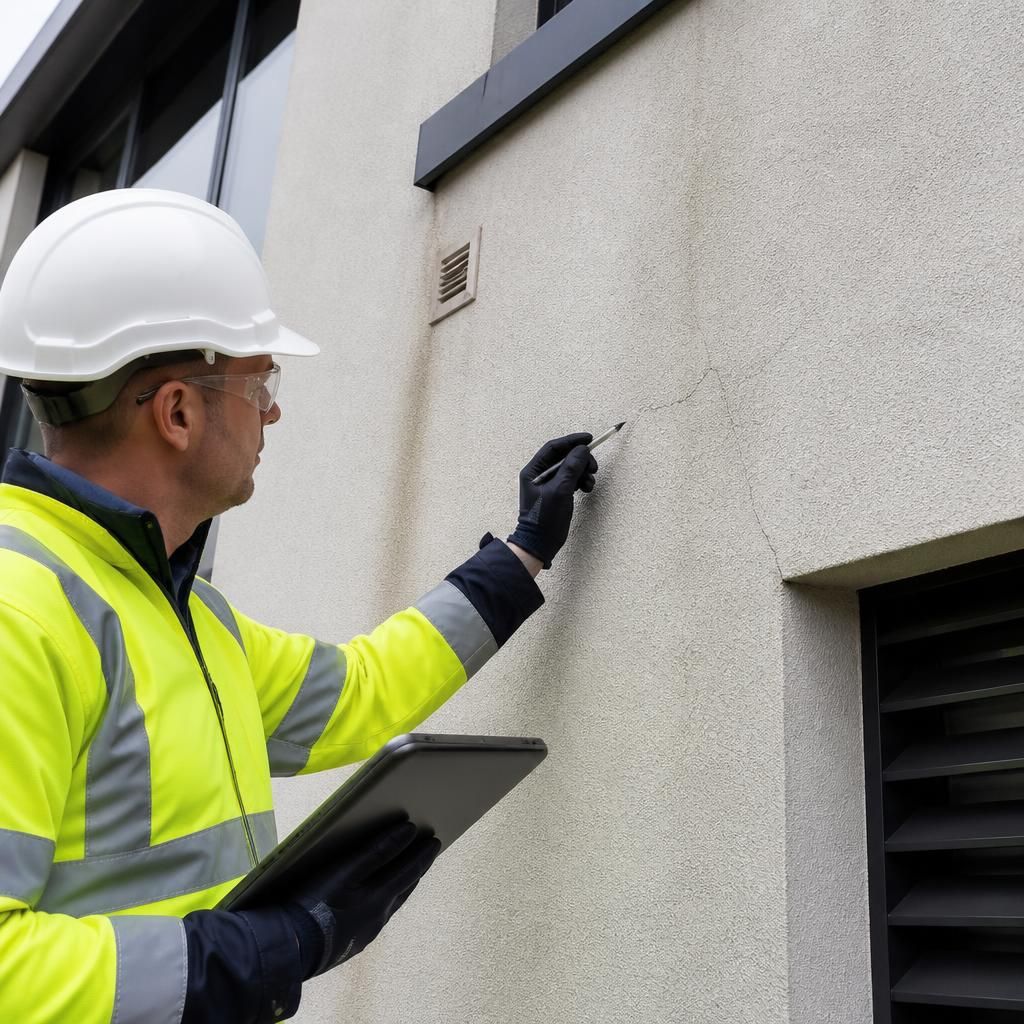
Regular inspections extend the lifespan of exterior render and stucco by identifying moisture pathways and minor defects before they cause widespread deterioration. Particular attention should be given to cracks, hollow or loose areas, failed joints, leaking gutters, downpipes, parapets and window seals, as these defects can allow repeated saturation behind the finish.
Cleaning should be combined with prompt, compatible repairs rather than used to conceal damage. Removing algae, moss and pollution helps the surface dry more effectively, while correcting drainage and sealing defects reduces the risk of freeze-thaw damage, spalling, staining and premature replacement.
Arrange a professional render maintenance assessment
Arrange a professional render maintenance assessment with Encanto Exterior Cleaning to identify contamination, moisture pathways and defects before they lead to more extensive deterioration. We can recommend an appropriate cleaning, treatment and repair programme for your property.