
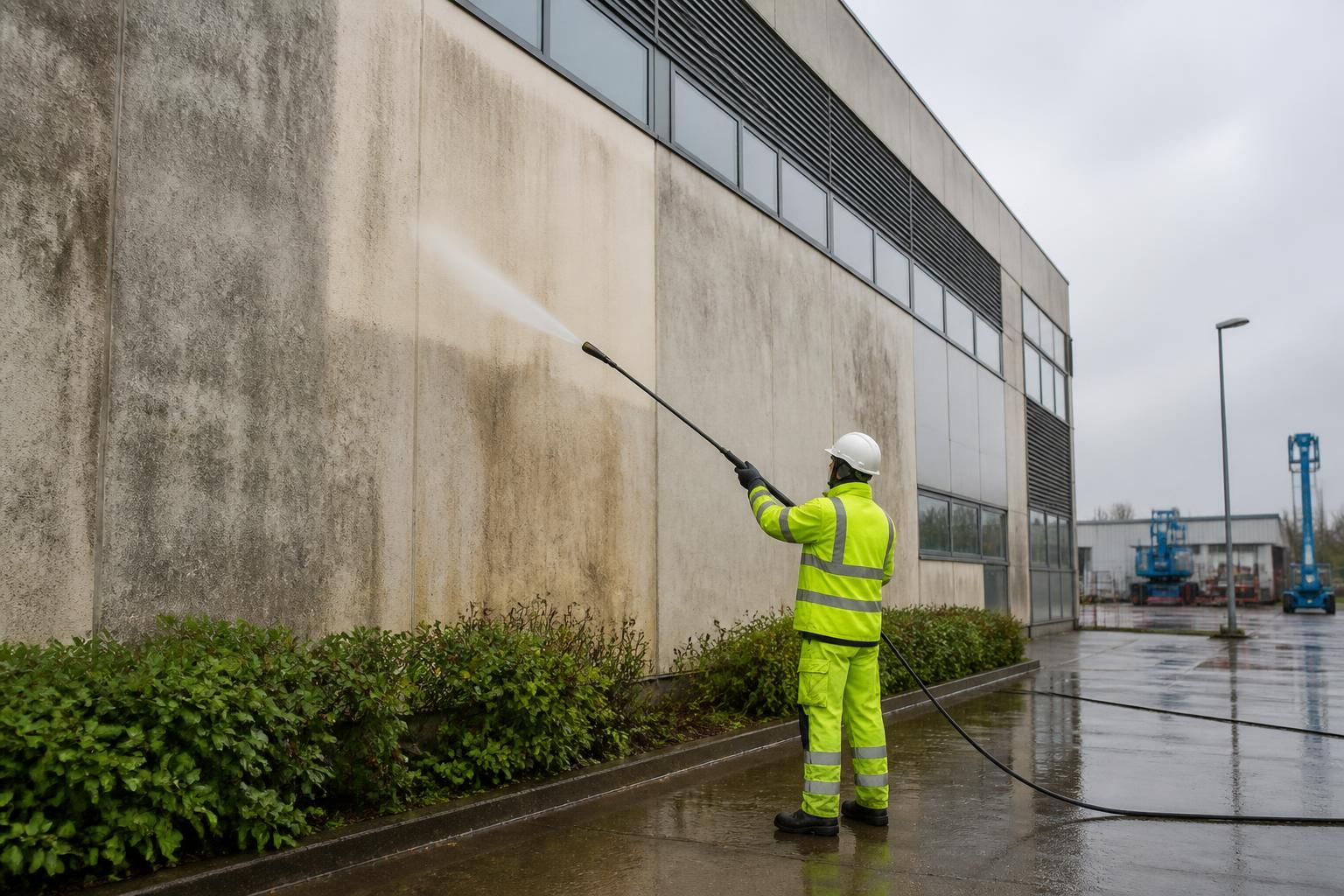
Can render and stucco surfaces be cleaned during any weather conditions?
No—render and stucco surfaces should not be cleaned in every weather condition. The safest results are achieved in dry, mild conditions with limited wind, while heavy rain, freezing temperatures, strong sunlight and high winds can affect cleaning effectiveness, drying times and surface safety.
No. Render and stucco should not be cleaned in every weather condition. The safest and most consistent results are normally achieved in dry, mild weather with limited wind and no immediate risk of frost or heavy rain. Weather affects chemical dwell time, water pressure, drying, access equipment and the risk of damage to the surface or surrounding areas.
Cleaning may still be possible during light, stable overcast conditions, provided the render or stucco can dry properly afterwards and the selected method is suitable for the substrate. A professional assessment should consider the forecast, the condition of the surface, the cleaning system being used and the requirements of the building before work begins.
How different weather conditions affect cleaning
- Heavy rain: Rain can dilute detergents and fungicidal treatments, wash products away before they have worked and make it difficult to judge whether staining has been removed. It can also carry loosened dirt onto windows, paths, vehicles and other parts of the building. Persistent rainfall usually means cleaning should be postponed.
- Light rain or drizzle: This is not automatically a problem for every cleaning task, but it can still reduce the effectiveness of applied treatments and extend drying times. Work should only continue where the method, surface and forecast make the conditions suitable.
- Freezing conditions: Water can enter small cracks, pores and defective areas, then expand as it freezes. This may worsen existing damage, particularly on older, hollow or poorly bonded render. Frozen surfaces also prevent reliable cleaning and can create slip and access hazards. Cleaning should be deferred until the substrate has thawed and can dry safely.
- Strong sunlight and high temperatures: Direct sun can cause cleaning solutions to dry on the surface before they have acted evenly. This may create runs, patchiness or residue, especially on highly absorbent render. Sections in full sun may need to be managed differently from shaded areas, with controlled application and rinsing.
- High winds: Wind can cause spray, detergent and removed debris to travel beyond the intended work area. It can also affect ladders, elevated platforms and other access equipment. Strong or gusty conditions may therefore make the work unsafe or prevent controlled application.
- Cold, damp or humid weather: These conditions can slow evaporation and leave the surface wet for longer. Longer drying periods increase the chance of renewed marking, biological growth or contamination from nearby traffic and construction activity.
Why drying conditions matter
Render and stucco are often textured and absorbent, so they can retain water after the visible surface appears clean. Adequate drying helps reveal the final appearance, confirms that residues have been removed and reduces the likelihood of streaking or persistent damp patches. It is especially important where the building has limited ventilation, shaded elevations, deep reveals or areas that remain wet because of defective rainwater goods.
Weather also affects any treatment applied after cleaning. Fungicidal or biocidal products need suitable contact time and should not be immediately diluted by rain. Protective coatings, repairs and sealants have their own application requirements, so cleaning and follow-on work may need to be scheduled separately.
How the cleaning approach may be adjusted
An experienced contractor can sometimes work around changing conditions by selecting sheltered elevations, starting on shaded areas, controlling water volumes and using a soft wash or steam-cleaning process suited to the render. Temporary protection may be needed around doors, windows, vents, landscaping and pedestrian routes. However, adapting the method does not remove the need for safe weather conditions. Pressure should never be increased simply to compensate for poor weather, as excessive force can strip coatings, open defects or drive water behind the render.
Before work starts, the surface should be checked for cracks, hollow areas, failed repairs, exposed reinforcement, loose coatings and water ingress. These defects can make weather conditions more significant and may require repair before cleaning. A test clean in an inconspicuous area can also confirm how the render responds to the proposed pressure, temperature, detergent and rinse process.
When cleaning should be postponed
- Heavy or persistent rain is forecast during application or shortly afterwards.
- Frost, ice or near-freezing conditions are present.
- Wind makes spray control or access equipment unsafe.
- Strong sunlight is likely to dry cleaning products unevenly.
- The surface is already saturated and has no reasonable opportunity to dry.
- Thunderstorms or rapidly changing conditions create risks for people, equipment or the building.
For commercial properties, postponing a clean is often safer and more economical than proceeding in unsuitable conditions and needing additional rinsing, remedial treatment or repairs. The work should be planned around a reliable weather window, with suitable controls for pedestrians, vehicles and adjacent properties. This approach protects the render or stucco, improves the consistency of the finish and helps ensure that cleaning and any biological treatment perform as intended.
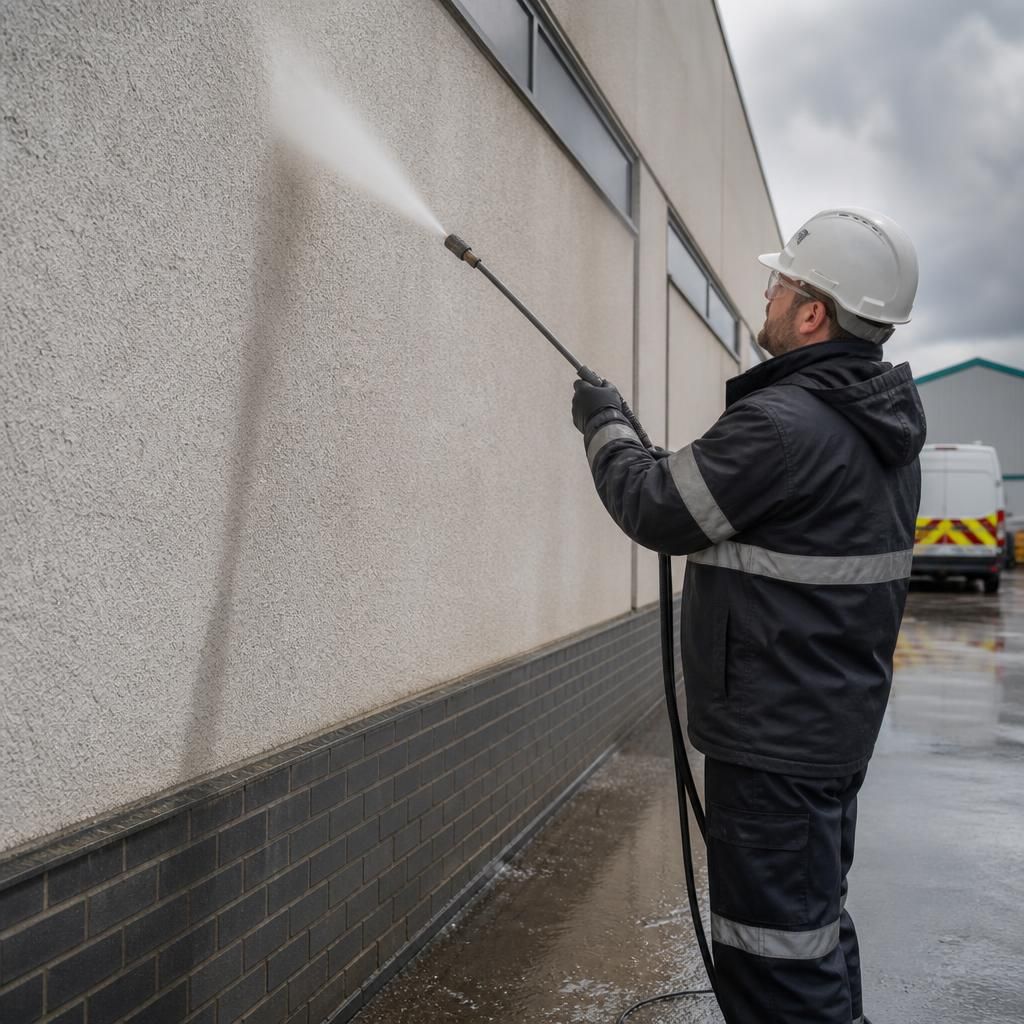
Render and stucco cleaning is safest when the surface can remain frost-free and dry for long enough after treatment. Rain can dilute detergents and fungicidal products, while freezing conditions may allow water to expand inside cracks or porous areas, increasing the risk of damage. Before work begins, the forecast, substrate condition and drying time should be checked so the cleaning system can be applied and rinsed under controlled conditions.