
Are there specific pollutants that render and stucco are more vulnerable to?
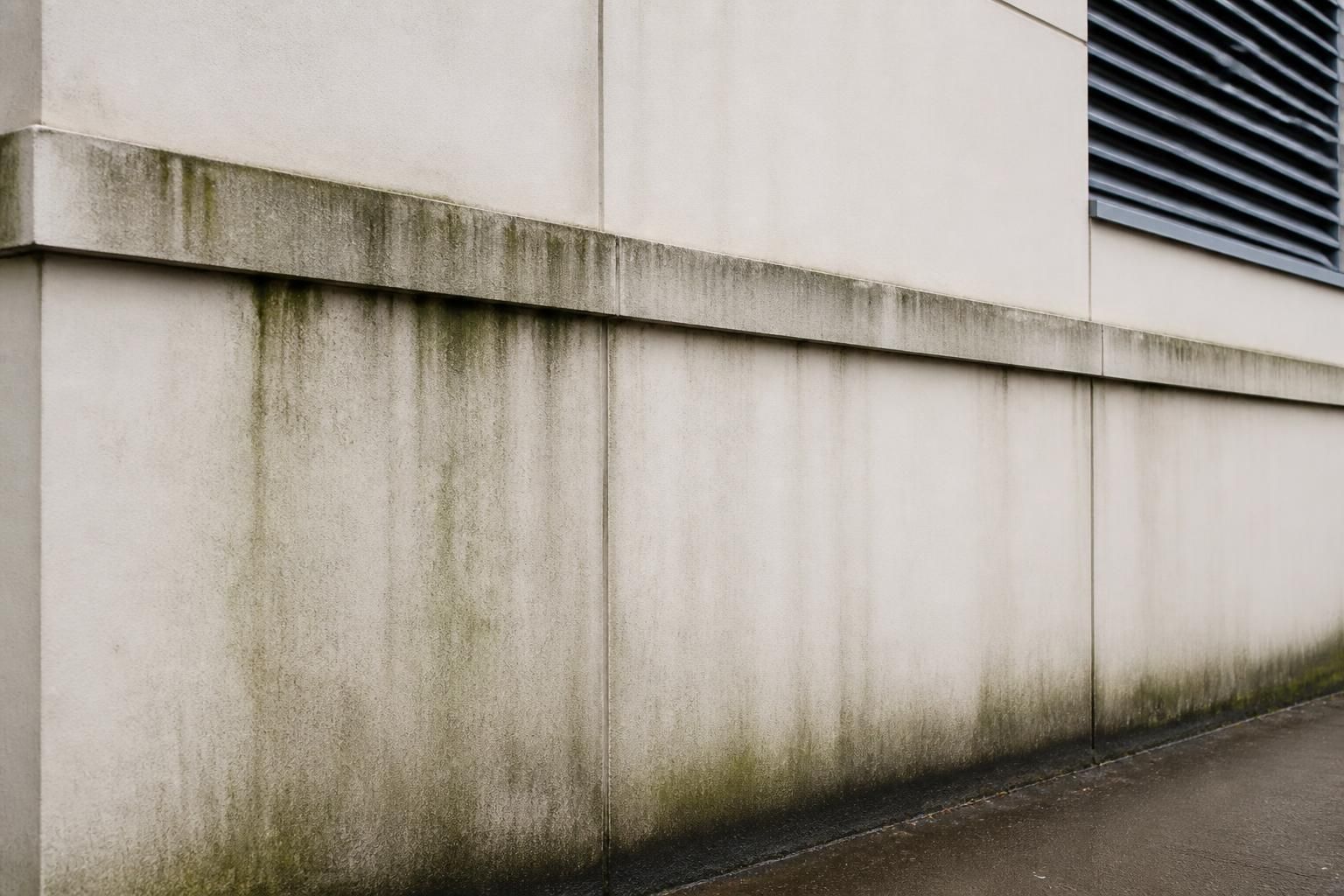
Render and stucco are particularly vulnerable to traffic grime, airborne soot, algae, moss, lichen, mould, bird deposits and pollution-related acidic residues. These contaminants can discolour porous surfaces, retain moisture and gradually contribute to staining or surface deterioration if they are not removed using suitable, low-impact cleaning methods.
Render and stucco are especially vulnerable to pollutants that either penetrate their porous surface, retain moisture or react with the cementitious finish. The most common causes of staining and gradual deterioration are traffic grime, airborne soot, algae, moss, lichen, mould, bird deposits, salt contamination and pollution-related acidic residues. The risk depends on the render or stucco system, its age and condition, exposure, drainage and how quickly deposits are removed.
Unlike dense, glazed materials, many rendered and stucco surfaces contain a network of pores and fine texture. Contaminants can become lodged in these irregularities, making them difficult to remove with simple rinsing. Aggressive pressure washing or unsuitable chemicals may then cause more damage than the original pollutant by eroding the finish, opening the surface or driving water behind cracks and weak areas.
- Traffic grime and road film: Properties near busy roads, car parks and loading areas are exposed to a mixture of dust, soot, rubber residue, oily particles and moisture. This produces grey or black staining, particularly around lower wall sections, entrances, vehicle routes and areas sheltered by architectural details. Porous render can absorb the finer particles, while splashback may carry contaminants higher up the wall.
- Airborne soot and industrial dust: Combustion residues and fine dust from traffic, heating systems, construction activity and industrial operations can settle on façades. These particles are often more noticeable on pale render and may form an uneven film that becomes bonded to the surface during damp weather. Dry brushing alone may not remove embedded deposits, and excessive agitation can mark textured finishes.
- Algae: Algae commonly appears as green, yellow-green or dark staining on shaded or damp elevations. It is associated with persistent surface moisture, poor drying, leaking gutters, defective downpipes and nearby vegetation. Algal growth may initially be superficial, but it can make the wall look permanently dirty and contribute to a damp environment that encourages other biological growth.
- Moss and lichen: Moss is more likely to establish where water remains on the surface or where debris accumulates on ledges and around details. Lichen attaches firmly and can be particularly difficult to remove from textured render and stucco. Both can hold moisture against the finish. Attempting to scrape them off forcefully may dislodge the surface coating or leave visible scars.
- Mould and fungal contamination: Mould may present as black, brown, green or diffuse discolouration, often on elevations with limited sunlight and ventilation. It can be associated with recurring dampness, condensation, water penetration or organic deposits. Cleaning can remove the visible contamination, but persistent moisture must also be investigated or the staining may return.
- Bird deposits: Bird droppings contain organic matter and salts and can adhere strongly as they dry. They may leave concentrated marks, especially on projecting features, sills, signs and sheltered areas. Deposits should be treated as a hygiene concern and softened before removal rather than scraped across the finish. Care is also needed where nesting material or active nests are present.
- Plant matter and organic debris: Leaves, pollen, seeds and decomposing vegetation can stain render and provide nutrients for algae and mould. Climbers and overhanging branches may also reduce airflow and keep the façade damp. Removing the source of the contamination is an important part of preventing repeat staining.
- Salt and mineral deposits: Efflorescence appears as a white, powdery or crystalline deposit when soluble salts move through masonry or render as moisture evaporates. It can result from moisture entering the wall, drying construction materials or defective drainage. Salts should not simply be concealed with paint, because recurring deposits may indicate an underlying moisture route. Hard deposits and run-off marks may also form where water repeatedly dries on the façade.
- Pollution-related acidic residues: Atmospheric pollutants can combine with moisture and form mildly acidic deposits. Over time, these residues may contribute to the weathering of cement-based finishes, discolouration and deterioration around cracks or exposed areas. The effect is usually gradual rather than immediate, but façades in heavily trafficked or industrial locations may require closer inspection and more consistent maintenance.
- Rust and metal run-off: Corroding fixings, railings, signs, roofline components and balcony details can create orange, brown or dark streaks. These marks are not always removed by general façade cleaning because the source may continue releasing corrosion products. The affected metalwork and surrounding junctions should be assessed before treating the render.
- Paint, adhesive and construction residues: Overspray, sealant, mortar splashes, dust and other residues from building or repair work may bond to render and stucco. Removing them requires particular care because the coating may be softer or more textured than the contaminant. Solvents, abrasive methods and high pressure can cause patchiness, colour loss or localised damage if used without testing.
Pollutants are most damaging when they remain on the surface in combination. For example, traffic dust may settle on an already damp wall, while algae and mould can develop beneath accumulated dirt. Organic growth can retain moisture, and repeated wetting and drying may place additional stress on a weathered coating. Cracks, failed joints, exposed aggregate, previous pressure-washing damage and areas of delamination make the finish more vulnerable because contaminants can enter weakened points.
Building position has a significant effect on the type and severity of contamination. Lower façades are more exposed to road spray and splashback, while upper elevations may collect airborne soot and bird deposits. North-facing or shaded walls usually dry more slowly, and walls below defective gutters or leaking downpipes may develop concentrated biological growth. Coastal or exposed locations can also experience salt-laden moisture, while construction sites and industrial premises may accumulate fine dust more rapidly than ordinary commercial buildings.
Identifying the pollutant before cleaning is important. Green staining does not always confirm algae, and black marks may be mould, soot, carbon deposits, failed paint or a combination of contaminants. White deposits may be surface salts, limescale or residue from a previous cleaning product. A professional assessment should consider the colour, texture, location and spread of the staining, as well as the condition of the render, drainage arrangements and any signs of water ingress.
Cleaning should be matched to both the contaminant and the substrate. Soft washing or low-pressure application is often appropriate for biological growth and general surface dirt because it reduces the risk of removing the render finish. A suitable biocidal or fungicidal treatment can help address algae, mould and other organic contamination, although it does not correct defective drainage or prevent moisture entering the wall. Steam cleaning may be useful for selected deposits where controlled heat and low pressure can lift contamination without abrasive impact. No method should be used across the whole façade without checking compatibility and testing an inconspicuous area first.
High-pressure water, abrasive blasting, stiff mechanical scrubbing and strong acidic or alkaline products can be unsuitable for render and stucco. They may strip protective coatings, expose the underlying material, create visible cleaning lines or force water into cracks and joints. Particular caution is required around windows, seals, vents, electrical fittings, expansion joints and repaired sections, as these areas may not tolerate the same treatment as the main façade.
Pollutant removal should also be combined with source control. Gutters and downpipes should discharge correctly, vegetation should be kept away from the wall, damaged sealants should be repaired and areas of persistent dampness should be investigated. Where bird activity is causing repeated deposits, suitable deterrent measures may be considered after checking relevant wildlife and nesting requirements. Removing the cause is often more effective than repeatedly treating the same stain.
After cleaning, the surface should be allowed to dry and checked for remaining staining, failed areas and signs of recurring moisture. A clean façade can make cracks, hollow patches, open joints and defective rainwater goods easier to identify. Further repairs, repainting or protective treatment should only be carried out once the substrate is sound and sufficiently dry, and any coating selected should be compatible with the existing render or stucco system.
For commercial and industrial properties, a planned inspection and cleaning programme is preferable to waiting for heavy staining or biological growth to become established. The appropriate interval depends on exposure, shade, traffic levels, nearby vegetation, drainage performance and the condition of the finish. Recording recurring contamination can help identify problem elevations and determine whether maintenance, repair or improved water management is required alongside cleaning.
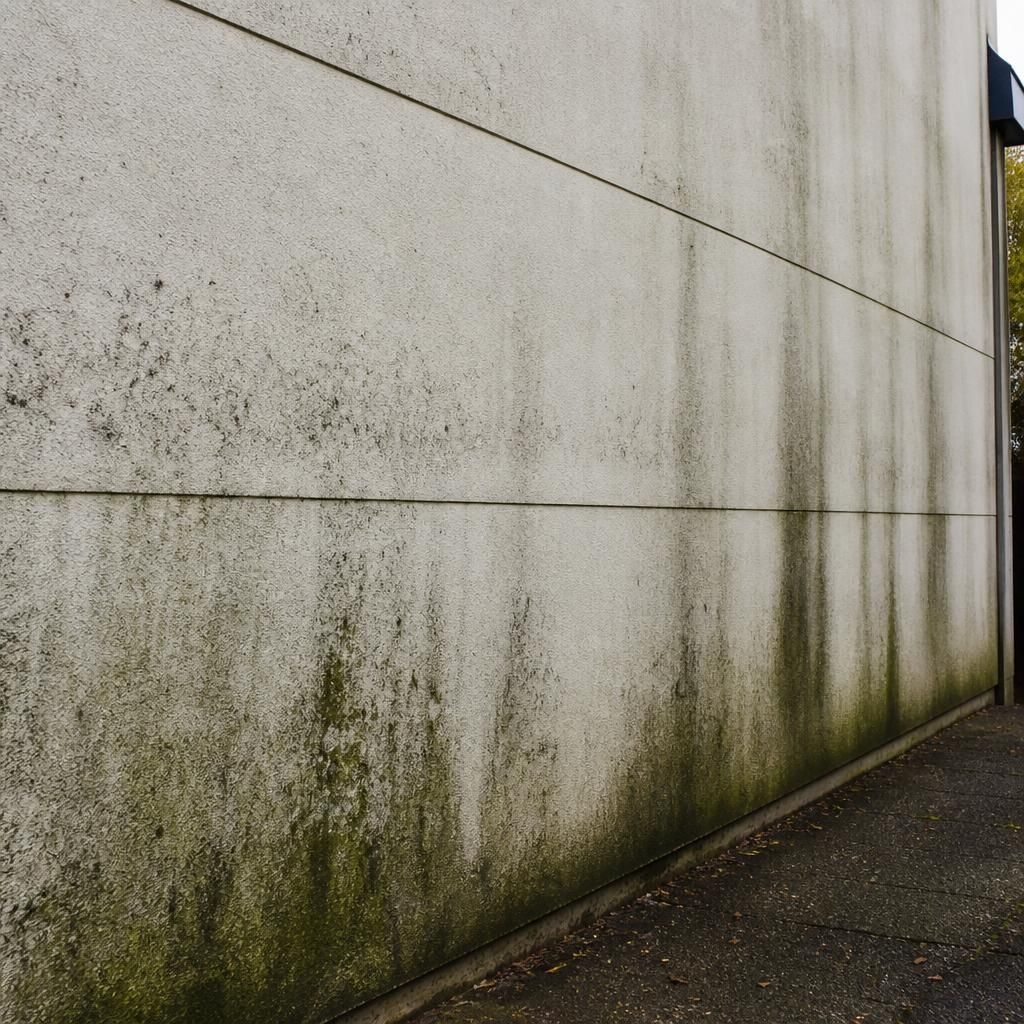
Render and stucco are especially vulnerable to pollutants that settle into their porous, textured surfaces or keep them damp. Traffic grime, soot, algae, mould, moss, lichen, bird deposits and salt residues can all cause staining and may contribute to deterioration when left untreated.
The correct cleaning method depends on identifying the contaminant and checking the condition of the finish. Soft washing or controlled low-pressure cleaning is often suitable for biological growth and general dirt, while steam cleaning may help remove selected bonded deposits without the impact of abrasive methods. High pressure, harsh chemicals and forceful scraping can strip coatings or damage weakened areas, so an inconspicuous test and assessment of drainage, cracks and moisture sources should be completed before treatment.
Arrange a professional render and stucco pollution assessment
Arrange a professional render and stucco pollution assessment to identify the contaminants affecting your surfaces and check for related moisture or drainage issues. We can recommend a suitable cleaning and maintenance approach for your property.