
How does the environmental condition of a location impact facade, cladding, and render cleaning needs?
A location’s environmental conditions determine how quickly façades, cladding and render accumulate traffic film, airborne pollutants, salt, dust, algae, moss and other staining, which affects both cleaning frequency and the safest treatment method. Properties near busy roads, industrial areas, coastal environments, trees or persistent damp and shade generally need more frequent inspection and tailored cleaning than buildings in sheltered, dry locations.
Environmental conditions determine how quickly a façade, cladding or render becomes soiled and which cleaning method can be used safely. Traffic film, industrial pollutants, airborne dust, salt, organic growth, moisture and weather exposure all affect the type, severity and distribution of staining. A building in a damp, shaded or polluted location will usually need closer inspection and more carefully selected treatments than one in a dry, sheltered setting.
Location should therefore be assessed alongside the material, age and condition of the building. Cleaning frequency should not be based on appearance alone: some deposits are mainly cosmetic, while others can retain moisture, obstruct drainage, encourage biological growth or contribute to surface deterioration.
Urban and high-traffic locations
Buildings beside busy roads commonly collect traffic film, soot, brake and tyre residue, dust and oily particulate matter. These deposits are often most visible on lower façades, entrances, architectural projections and areas beneath windowsills where rainwater carries contamination down the surface. Road spray can also transfer dirt onto cladding and render, particularly around loading areas, car parks and pedestrian routes.
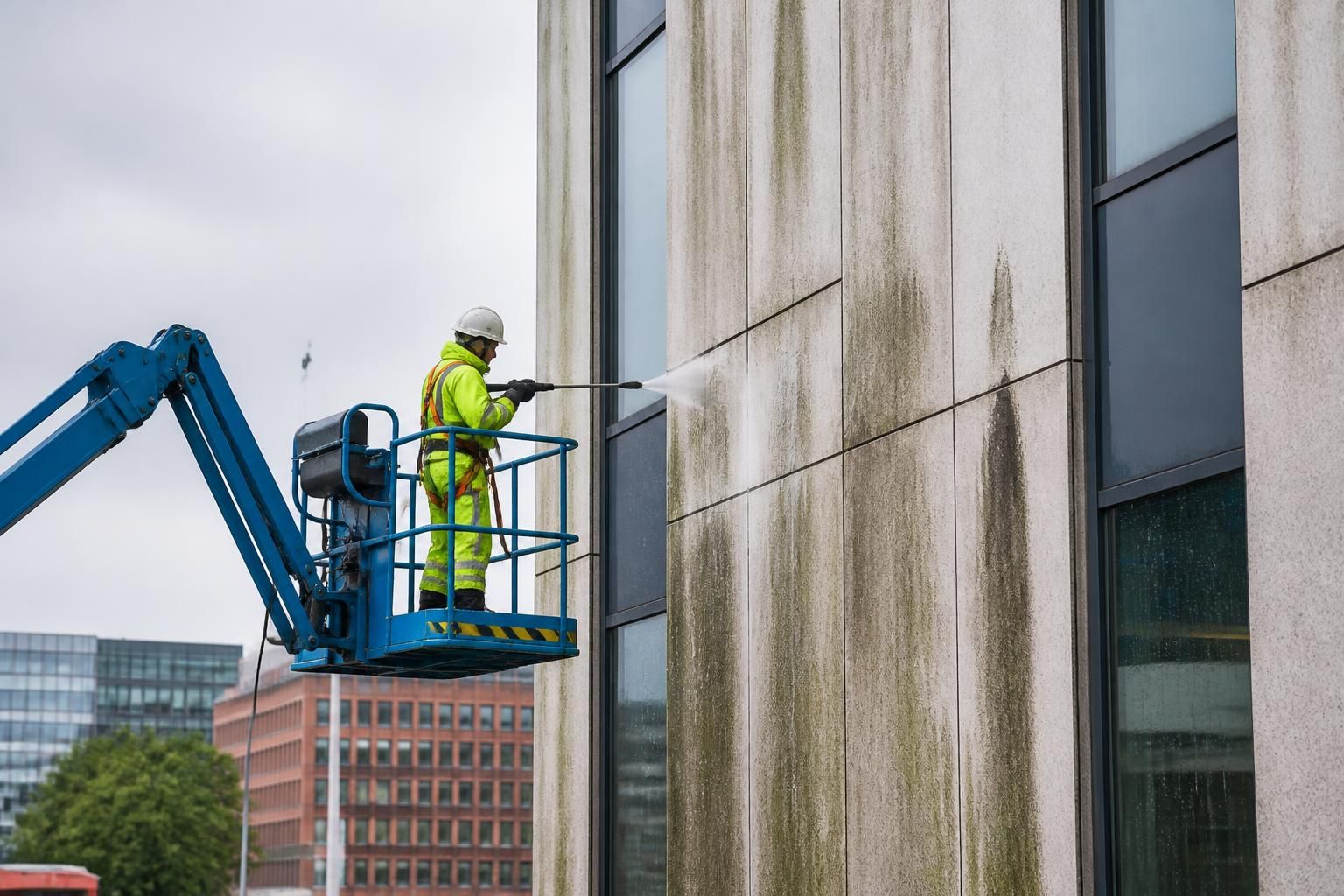
Traffic-related soiling may form a bonded film rather than loose dust. This can require pre-treatment, controlled pressure washing, steam cleaning or a low-pressure chemical process, depending on the surface. Excessive pressure can mark render, drive contamination further into porous brickwork or damage coatings and sealants. Regular planned cleaning helps prevent deposits becoming heavily bonded and reduces the need for more aggressive treatment.
Industrial and construction environments
Properties close to manufacturing, demolition, construction or waste-handling activity may be exposed to fine dust, cement residue, mineral particles, metal deposits and other airborne pollutants. Construction dust can settle on horizontal ledges, cladding joints, window surrounds and textured render. If it becomes wet, it may adhere firmly and be more difficult to remove without affecting the underlying finish.
Industrial contamination should be identified before work begins because the appearance of a stain does not always reveal its composition. Some deposits can react with water or cleaning products, while abrasive particles can scratch coated metal or polished surfaces during agitation. A site assessment should consider nearby processes, prevailing wind direction, dust sources, drainage arrangements and any requirement to contain or recover contaminated wash water.
Coastal and exposed locations
Salt-laden air affects buildings near the coast and can leave deposits on façades, cladding, windows, fixings and roofline components. Salt is hygroscopic, meaning it attracts and holds moisture. Repeated wetting and drying can leave visible tide marks and encourage corrosion of vulnerable metal components, particularly where protective coatings are damaged or joints allow moisture to enter.
Coastal buildings may require careful rinsing to remove soluble salts without forcing water behind panels, into joints or beneath deteriorated coatings. Cleaning should also include attention to fixings, trims, sealants, vents and drainage details. The cleaning process cannot correct corrosion or failed joints, so any defects identified during the work should be recorded for maintenance attention.
Damp, shaded and poorly ventilated areas
North-facing elevations, enclosed courtyards, covered walkways and façades shielded by neighbouring buildings often dry slowly. Persistent dampness and limited sunlight create favourable conditions for algae, moss, lichen and other organic growth. Render, textured coatings and porous masonry can retain moisture, making these surfaces particularly prone to green, black or brown staining.
Organic growth is not always removed effectively by pressure alone. A suitable biocidal or specialist treatment may be needed to deal with growth at the surface and within pores, followed by controlled rinsing. The treatment must be compatible with the substrate and surrounding landscaping, drainage and occupants. Where shade or poor drainage is the underlying cause, cleaning may need to be supported by improvements such as clearing gutters, correcting water run-off or managing vegetation.
Trees, vegetation and biological deposits
Buildings near mature trees may collect pollen, sap, leaves, bird fouling and decomposing organic matter. Overhanging branches can keep walls damp and allow vegetation to contact cladding or render. Leaves and debris may block gutters and outlets, causing dirty water to run repeatedly over the façade and create concentrated staining.
Vegetation should be considered during the cleaning plan, including the protection of plants, soil, ponds and drainage systems. Bird fouling requires appropriate hygiene controls and should not simply be spread across adjacent surfaces. Sap and other organic residues may need a targeted detergent or solvent-compatible approach rather than high pressure, particularly on painted cladding and delicate coatings.
Rainfall, wind and building orientation
Rain can wash loose dirt from exposed elevations, but it can also create streaking when water flows over contaminated ledges, sealants or corroding fixings. Wind-driven rain may carry pollutants into joints and textured finishes. Conversely, sheltered elevations may receive little natural rinsing and can retain deposits for longer.
Different elevations of the same property can therefore require different cleaning intervals and methods. Lower walls may be affected by splashback and grit, while upper elevations may collect windborne dust, bird fouling or staining beneath roof edges. A façade survey should assess each elevation rather than treating the building as a uniform surface.
How environmental conditions influence the cleaning plan
- Inspection: Examine exposure, orientation, drainage, nearby pollution sources, vegetation, access constraints and areas of recurring staining.
- Material assessment: Confirm whether the surface is masonry, coated metal, composite cladding, render, stucco or another finish before selecting equipment or chemicals.
- Testing: Carry out controlled test patches in representative areas to check cleaning effectiveness, colour stability, surface integrity and run-off behaviour.
- Method selection: Match pressure, temperature, dwell time, agitation and rinsing to the contamination and substrate. Steam or low-pressure cleaning may be preferable where high pressure could cause damage.
- Environmental controls: Protect nearby occupants, vehicles, landscaping and drainage. Prevent chemicals, debris and contaminated run-off from entering surface water systems.
- Aftercare: Check joints, coatings, fixings, gutters and outlets once deposits have been removed, as cleaning can reveal defects previously hidden by grime.
Cleaning frequency should be adjusted when the surrounding conditions change, such as after nearby construction, a change in traffic levels, tree growth, drainage problems or deterioration of protective coatings. Planned inspections allow recurring causes to be addressed before staining becomes severe and help avoid unnecessary aggressive cleaning.
For commercial and industrial properties across Birmingham, the West Midlands and the wider UK, the most reliable approach is an environmental and substrate assessment followed by a method statement tailored to each elevation. This ensures that the cleaning removes contamination effectively while preserving façades, cladding and render and managing the risks created by the site’s location.
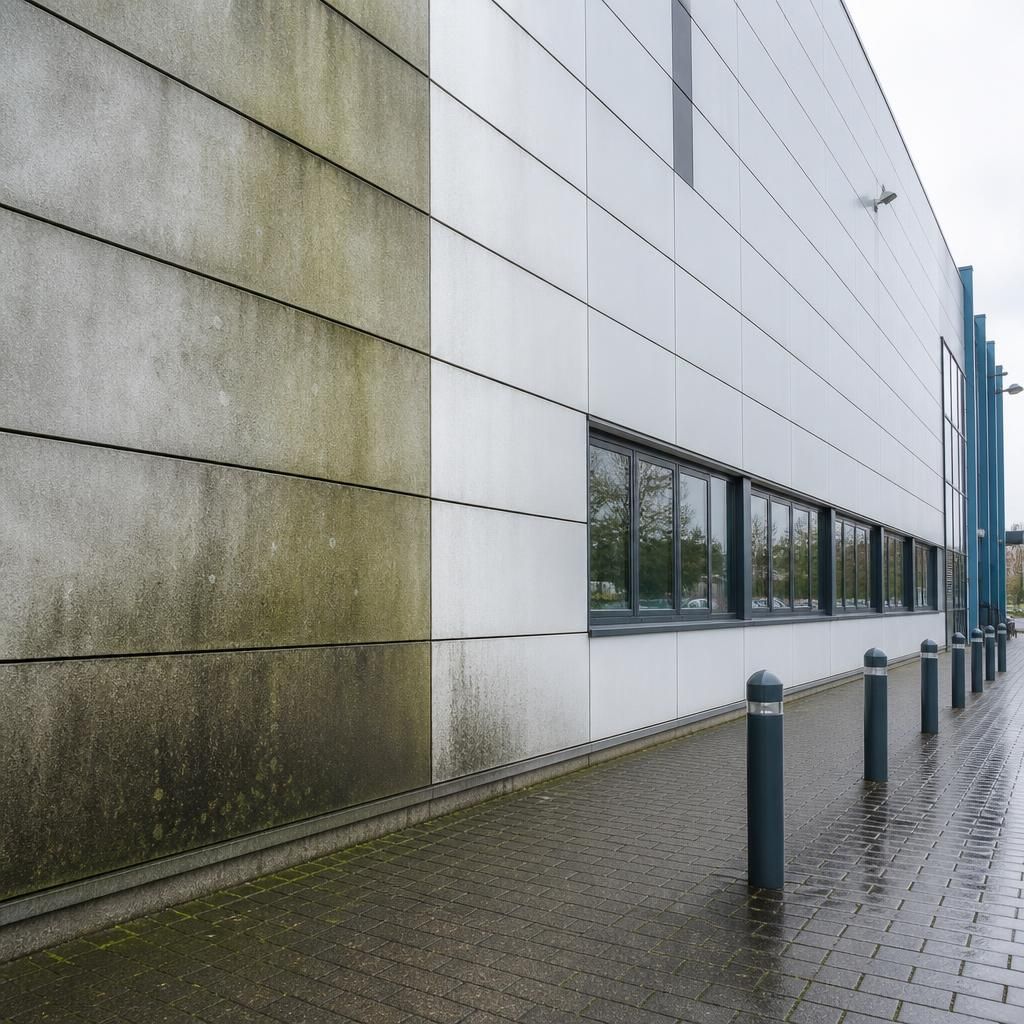
Environmental exposure can vary significantly across the same building, so each façade, cladding elevation or rendered area may need a different cleaning approach. North-facing and shaded surfaces often retain moisture and develop algae or moss, while lower elevations beside roads are more likely to collect traffic film, grit and splashback. Upper and exposed areas may instead show windborne dust, bird fouling or streaking beneath roof edges and projecting details.
A thorough inspection should therefore assess orientation, prevailing weather, drainage, nearby traffic, construction activity, vegetation and the condition of joints and coatings. This helps identify recurring causes of staining and select suitable pressure, steam, chemical treatment and rinsing controls for each surface, rather than applying one method across the entire property.
Arrange a Façade, Cladding and Render Cleaning Assessment
Arrange a façade, cladding and render cleaning assessment to review environmental exposure, surface condition and recurring contamination across your property. We can recommend a suitable cleaning method and maintenance plan for each elevation.