
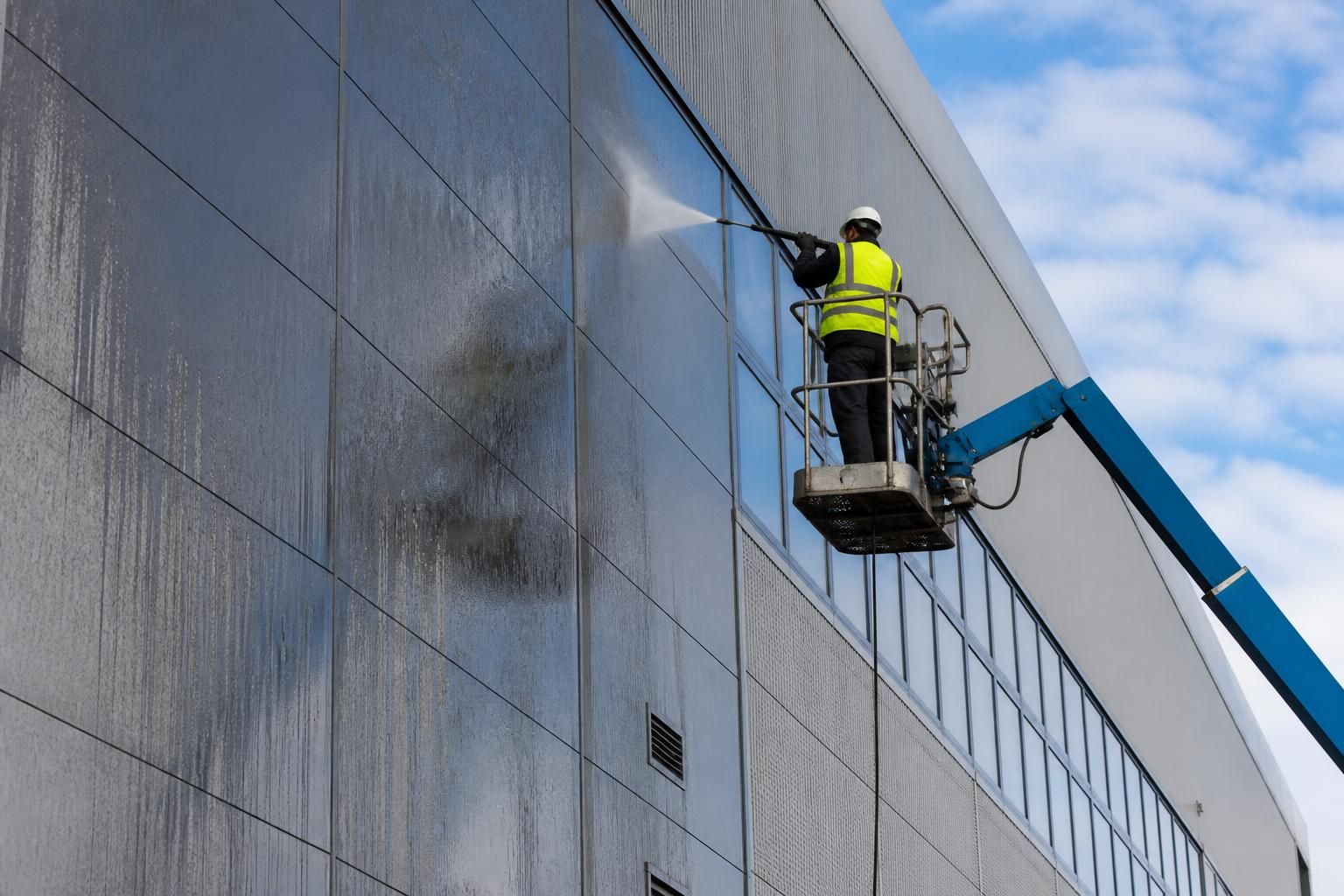
How does regular facade, cladding, and render cleaning benefit a commercial property?
Regular facade, cladding and render cleaning removes dirt, pollution deposits, algae and other contaminants before they contribute to staining, surface deterioration or moisture-related damage. It helps maintain a professional appearance, protect building materials, support safe maintenance and reduce the likelihood of more costly repairs or restoration work.
Regular facade, cladding and render cleaning protects a commercial property by removing pollution deposits, organic growth, staining and other contaminants before they contribute to surface deterioration, moisture retention or more expensive remedial work. It also preserves the building’s appearance, supports planned maintenance and helps keep external areas safer for occupants, visitors and contractors.
Improved appearance and kerb appeal
External walls are continually exposed to traffic pollution, dust, rainwater run-off, bird fouling, algae, moss and general atmospheric soiling. On rendered surfaces, these deposits can create uneven discolouration; on cladding, they can make panels look dull or neglected; and on masonry facades, they may collect around joints, sills and architectural details.
Planned cleaning restores a more consistent appearance without relying on aggressive treatment that could damage the substrate. This is particularly important for offices, retail premises, industrial units, managed estates, apartment blocks, public buildings and properties where the external appearance contributes to tenant, customer or visitor confidence.
Protection of facade and cladding materials
Dirt is not always cosmetic. Some contaminants retain moisture against the surface or contain substances that can accelerate deterioration. Organic growth may spread across porous render, masonry and joints, while pollution residues can become more difficult to remove when allowed to build up. On metal cladding, deposits around laps, fixings and drainage points can contribute to staining and may conceal early signs of coating breakdown or corrosion.
Cleaning removes these deposits so that the condition of the surface can be inspected more accurately. It can also help prevent contaminants becoming embedded, reducing the need for harsher cleaning methods or more extensive restoration later. Cleaning is not a substitute for repairs, repainting, re-coating or replacing failed materials, but it forms an important part of protecting those finishes.
Earlier identification of defects
A heavily soiled facade can conceal cracked render, open joints, damaged sealant, loose coatings, failed fixings, blocked drainage routes and areas of water ingress. Once the surface has been cleaned using a method appropriate to its material, these defects are easier to identify and record.
This supports a more useful maintenance plan. Minor defects can be referred for repair before they develop into larger problems, while areas requiring specialist investigation can be isolated rather than overlooked. Cleaning teams should report significant observations, but cleaning should not be treated as a structural survey. Where movement, instability, extensive cracking or suspected water penetration is found, an appropriately qualified building professional should assess it.
Reduced moisture and organic-growth risks
Algae, moss, lichen and mould are more likely to establish where surfaces remain damp, shaded or poorly drained. Their presence can make render and masonry appear patchy and may keep moisture against the surface. On some buildings, growth can also spread around gutters, downpipes, ledges and joints, indicating that drainage or detailing should be checked.
Removing organic growth and the conditions that support it can help maintain cleaner, more manageable elevations. However, recurring growth may point to persistent dampness, defective rainwater goods, limited sunlight or a surface with high moisture retention. A suitable maintenance approach should address those underlying conditions where possible rather than relying on repeated cleaning alone.
Lower likelihood of costly remedial work
Regular cleaning makes it easier to manage deterioration as part of planned maintenance instead of waiting for extensive staining, coating failure or widespread biological growth. A clean, routinely inspected facade can help property managers identify when repair, repainting, re-sealing or re-coating is needed.
Cleaning frequency should be based on the material, local exposure, building use and condition. A busy roadside property, coastal or industrial location, shaded elevation or building surrounded by mature vegetation may require closer monitoring than a sheltered site. The correct interval is the one that prevents deposits from becoming difficult to remove while avoiding unnecessary cleaning of sound surfaces.
Support for health, safety and site standards
Removing bird fouling, slippery organic growth and accumulated debris can improve the condition of accessible external areas, entrances, service yards and pedestrian routes. Cleaning can also support the presentation and upkeep requirements associated with facilities management, landlord inspections, tenancy obligations and local authority premises.
It is important to control the cleaning process properly. The method should account for work at height, public access, falling debris, electrical equipment, traffic, drainage and the handling of contaminated run-off. Appropriate access equipment, exclusion zones, personal protective equipment and wastewater controls may be required, particularly on larger commercial or industrial sites.
Preservation of coatings and finishes
Facades, cladding and render do not all tolerate the same pressure, temperature or cleaning products. A method suitable for robust metal cladding may be inappropriate for painted render, delicate masonry or a weathered coating. Excessive pressure can mark soft surfaces, force water into joints or remove a finish that was intended to remain intact. Unsuitable chemicals can cause bleaching, streaking, corrosion or breakdown of protective coatings.
Effective maintenance therefore starts with identifying the substrate and its condition. A professional process normally includes a visual assessment, consideration of previous coatings and repairs, selection of the least aggressive effective method, and a small test area where the result and surface response can be checked before wider cleaning. Steam cleaning, soft washing, pressure washing or other specialist techniques may be selected individually or combined according to the building’s requirements.
More consistent maintenance and budgeting
Including facade, cladding and render cleaning within a planned maintenance schedule gives property managers a clearer view of the building’s condition and likely requirements. Work can be coordinated with access arrangements, inspections, repainting, roof maintenance and other external repairs, reducing avoidable disruption to occupants and site operations.
Maintaining records of cleaned elevations, identified defects, surface treatments and recommended review dates also helps compare changes over time. This is useful for multi-site portfolios, managed buildings and properties with different materials or exposure levels across separate elevations.
Environmental and operational considerations
Regular, targeted cleaning can reduce the need for abrasive methods, extensive coating removal and replacement of otherwise serviceable materials. Choosing an appropriate technique also helps control water use, chemical use and the risk of contaminated run-off entering surface-water drainage systems.
These benefits depend on the work being properly specified. The cleaning plan should identify the surfaces involved, likely contaminants, access requirements, sensitive areas, drainage arrangements and any restrictions on chemical use. Where a facade is already damaged or unstable, cleaning should be adjusted or deferred until the relevant repair or safety issue has been addressed.
For commercial properties, the most effective approach is a documented cycle of inspection, suitable cleaning, defect reporting and follow-up maintenance. This keeps facades, cladding and render presentable while helping to preserve their finishes, identify problems earlier and manage the longer-term cost and risk of external building maintenance.
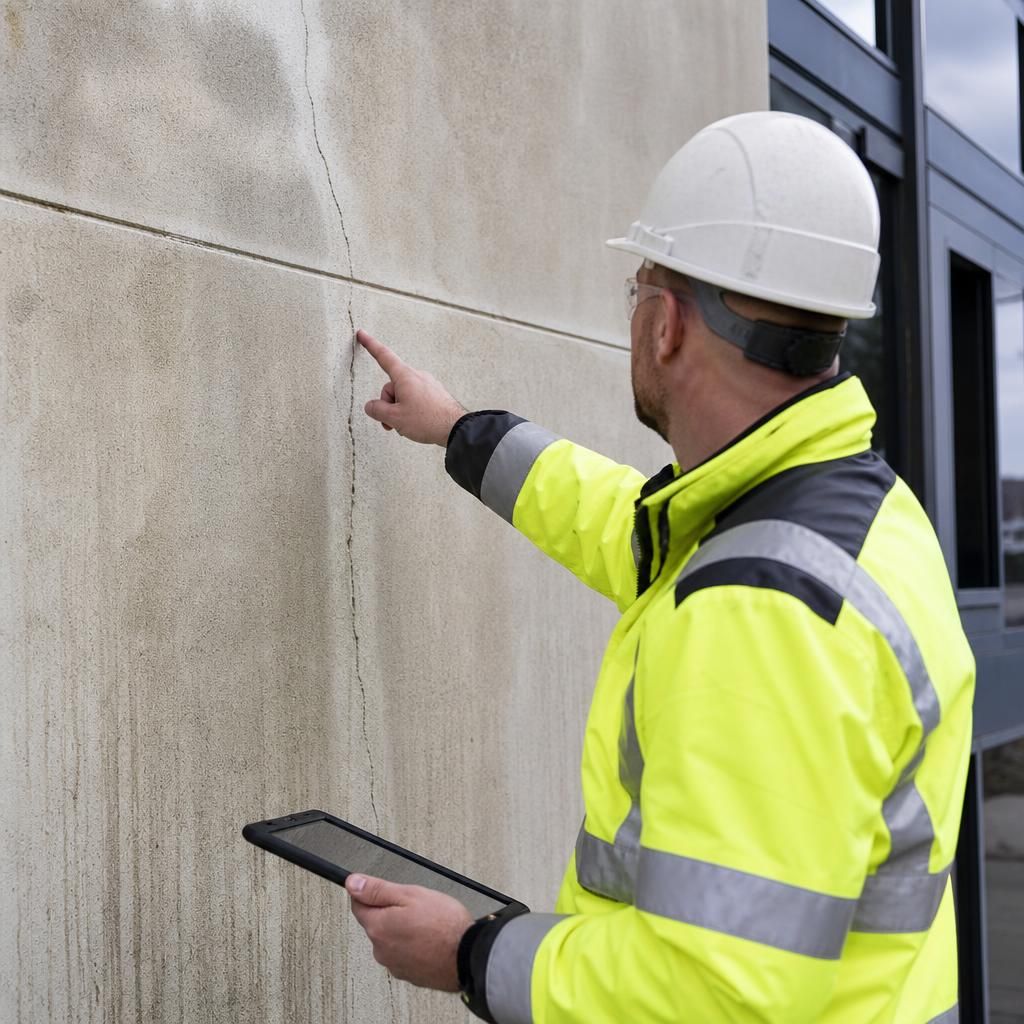
Regular facade, cladding and render cleaning makes surface defects easier to identify before they develop into more extensive maintenance problems. Removing pollution deposits, algae, moss and other soiling can reveal cracked render, open joints, failed sealant, damaged coatings, loose fixings and signs of water ingress.
This supports planned maintenance by allowing issues to be recorded and referred for suitable repair at an earlier stage. Cleaning is not a structural survey, so suspected instability, movement or significant water penetration should be assessed by an appropriately qualified building professional.
Arrange your facade, cladding and render cleaning assessment
Arrange your facade, cladding and render cleaning assessment to review the condition of your external surfaces, identify maintenance priorities and select a suitable cleaning method. Contact Encanto Exterior Cleaning to discuss your property and plan the next steps.