
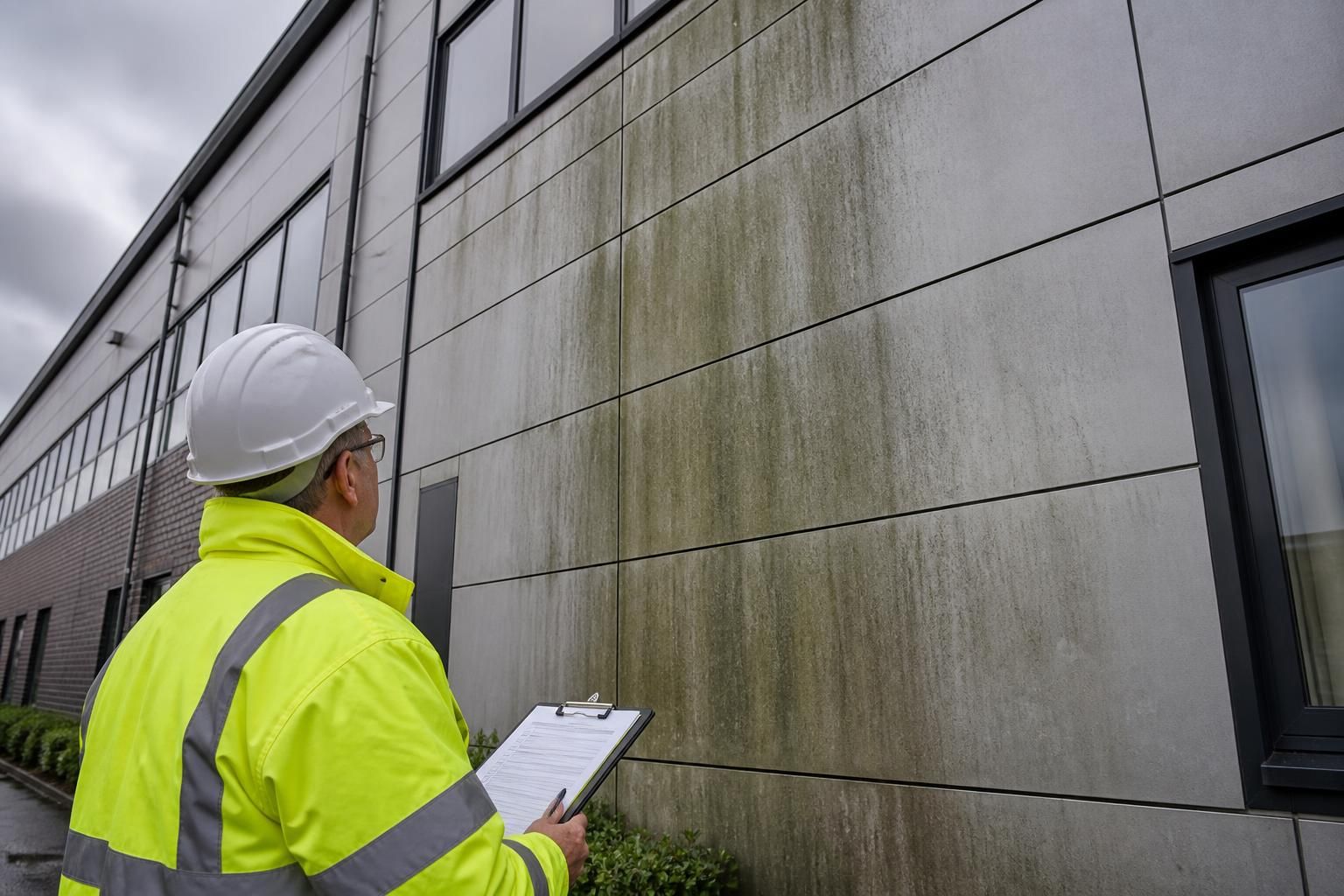
How do the environmental conditions of a location affect the cleaning frequency for facades, cladding, and render?
Local environmental conditions directly affect how often facades, cladding and render need cleaning: damp, shaded, coastal, heavily trafficked and industrial locations usually require more frequent attention because they encourage algae, staining, salt deposits and airborne pollution to accumulate. Drier, less exposed buildings may need less frequent cleaning, but inspection-led maintenance is the best way to set an appropriate schedule.
Environmental conditions are a major factor in determining how often a facade, cladding system or rendered surface needs cleaning. Buildings in damp, shaded, coastal, heavily trafficked or industrial locations generally require more frequent cleaning than those in dry, open and less polluted settings. The appropriate schedule should be based on the building’s exposure, the type of soiling, the surface material and inspection findings rather than a fixed interval alone.
Damp and shaded locations
Moisture is one of the most significant influences on external cleaning requirements. North-facing elevations, areas beneath overhangs and surfaces surrounded by trees or nearby buildings often dry slowly. Persistent dampness can support the growth of algae, moss, lichen and other organic deposits, particularly on porous render, masonry and textured finishes.
These elevations may need inspection and cleaning more frequently than sunny, well-ventilated faces. Cleaning removes existing growth, but it is also important to investigate contributing conditions such as defective rainwater goods, leaking joints, blocked gutters, poor drainage and vegetation touching the building. If the moisture source remains, soiling and biological growth are likely to return sooner.
Urban and high-traffic environments
Buildings beside busy roads are exposed to traffic film, fine dust, soot and other airborne contaminants. These deposits are often most visible around entrances, lower elevations, window surrounds, ledges and recessed areas where rain does not wash the surface effectively. Cladding and render may gradually appear dull or streaked even where there is no biological growth.
High-traffic sites usually benefit from more regular inspections and targeted cleaning of prominent or vulnerable areas. Prompt removal of traffic-related deposits can help prevent staining becoming more difficult to remove, while keeping entrances and public-facing elevations presentable. The cleaning frequency may also need to reflect the building’s use, footfall and the standard required by tenants, visitors or the site owner.
Industrial and construction environments
Industrial premises can be affected by airborne dust, smoke, oily residues, process emissions and deposited particulate matter. The type and concentration of contamination will vary according to the surrounding activity, ventilation arrangements and prevailing wind direction. Nearby construction, demolition or groundworks can also create temporary increases in dust on facades and cladding.
Where deposits are abrasive, chemically active or strongly bonded, delaying cleaning may increase the risk of surface discolouration and make removal more demanding. Industrial buildings should therefore be assessed according to the contaminants present, with the cleaning method selected through surface testing. Pressure, temperature, steam, detergents and recovery arrangements must be controlled to avoid damaging coatings, sealants, render or drainage systems.
Coastal and exposed locations
Buildings near the coast are exposed to salt-laden air, wind-driven moisture and sand or grit. Salt deposits can leave visible marks and may remain on surfaces after moisture evaporates. On metal cladding and associated fixings, persistent salt contamination can contribute to corrosion if it is not removed and if damaged coatings or joints are left untreated.
Coastal exposure does not affect every material in the same way, but it normally warrants closer inspection of cladding joints, trims, fixings, painted finishes and areas where deposits collect. Cleaning should be combined with checks for coating failure, corrosion, open sealant joints and water ingress. Rinsing and wastewater control are particularly important where dissolved salts and cleaning residues could affect surrounding surfaces or drainage systems.
Rural, agricultural and vegetated surroundings
Buildings close to fields, woodland, hedges and mature planting can receive pollen, organic debris, soil dust and bird fouling. Overhanging branches can keep surfaces damp and may deposit tannins or other natural staining. Agricultural activity can also increase dust and airborne residues during particular operating or weather conditions.
Vegetation management can reduce the rate at which soiling returns. Cutting back branches, maintaining clear drainage paths and removing leaves from gutters and ledges may be as important as the cleaning itself. Render and other porous finishes should be checked for trapped moisture and biological growth, especially where planting restricts airflow.
Weather, orientation and building design
Rain does not clean every facade effectively. It may rinse exposed areas while leaving sheltered ledges, soffits, recesses and areas beneath projecting features untouched. Wind can carry pollution and salt towards particular elevations, while driving rain can highlight defects in joints, seals and rainwater goods. Repeated wetting and drying can also make staining more noticeable.
Orientation, height and surrounding structures influence exposure. A tall elevation may receive more wind-driven contamination, whereas a sheltered courtyard may retain moisture and organic growth. Surface detailing is also relevant: deep reveals, horizontal ledges, textured render, open joints and complex cladding profiles provide more places for deposits to collect.
How conditions affect different materials
Porous render, masonry and unfinished concrete can absorb moisture and retain biological growth or staining. Coated metal cladding may resist some contamination but can show streaking, chalking, corrosion or coating breakdown if poorly maintained. Smooth, non-porous panels are often easier to rinse, although joints, fixings and damaged areas still require attention. The cleaning frequency should therefore consider the material’s porosity, coating condition, colour, texture and previous treatment history.
A cleaning schedule should not be based solely on how dirty a building appears. Aggressive or unsuitable cleaning can damage render, remove protective coatings, open defective joints or drive water behind cladding. Before work begins, the surface should be identified, its condition assessed and a representative test area completed where appropriate. This establishes whether the planned process removes the contamination without causing unacceptable change to the substrate or finish.
Setting a practical cleaning frequency
A useful approach is to divide the building into elevations and risk areas rather than applying one schedule to the whole property:
- Inspect damp, shaded, coastal and polluted elevations more closely than clean, exposed elevations.
- Prioritise entrances, public-facing areas, loading bays, lower-level cladding, signage zones and surfaces beneath drainage outlets.
- Record the type of soiling, its location, the material affected and how quickly it returns after cleaning.
- Increase attention when there is recurring algae, moss, traffic film, salt, industrial residue or bird fouling.
- Coordinate facade cleaning with gutter, roof, drainage, landscape and building maintenance so that one defect does not continually recontaminate another surface.
- Review the schedule after changes in nearby traffic, construction, industrial activity, landscaping or building use.
Some premises need a planned programme of routine cleaning, while others are better served by condition-led inspections and targeted treatment. A newly cleaned building should be monitored to establish how quickly deposits return under local conditions. This provides a more reliable basis for future scheduling than adopting a generic frequency intended for a different site.
Environmental conditions can also change seasonally. Organic growth may become more apparent during prolonged damp periods, while dust and salt may accumulate during dry, windy weather. Planned work should take account of temperature, rainfall, wind, access conditions and the time needed for surfaces to dry. Weather is not only a scheduling issue; it can affect the performance of detergents, the safety of access equipment and the control of rinse water and removed contaminants.
For commercial and industrial properties, the most effective maintenance plan combines regular visual inspections, documented condition reports and cleaning methods suited to each elevation. Where conditions are particularly demanding, cleaning should be paired with checks for damaged coatings, failed sealants, corrosion, defective drainage and moisture ingress. This helps distinguish a cleaning problem from an underlying building maintenance issue and supports a safe, proportionate cleaning frequency.
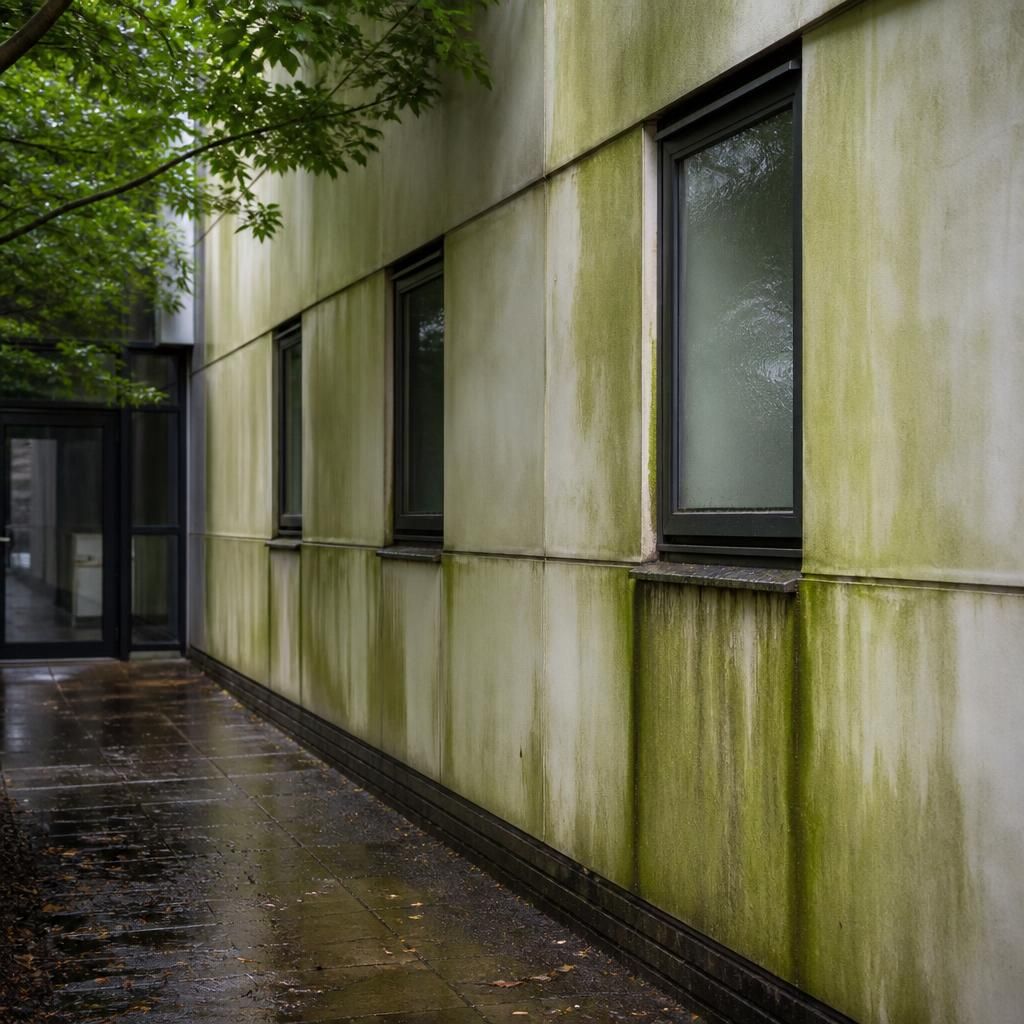
Local moisture levels are a key factor in determining how often a facade, cladding system or rendered surface needs cleaning. Damp, shaded elevations dry slowly and are more likely to develop algae, moss, lichen and persistent staining, particularly where vegetation, blocked gutters or defective drainage keep the surface wet.
These areas should be inspected more frequently than sunny, well-ventilated elevations. Cleaning should also be combined with checks for leaking rainwater goods, failed joints, poor drainage and overhanging vegetation. If the source of moisture is not addressed, biological growth and staining may return soon after cleaning.