
What materials and techniques are best suited for facade restoration in harsh weather conditions?
Facade restoration in harsh weather is best carried out with breathable, weather-resistant materials compatible with the existing substrate, such as lime-based mortars, mineral or silicate coatings, and corrosion-resistant repairs where appropriate. Techniques should include condition surveys, gentle low-pressure or steam cleaning, careful removal of defective material, and staged repairs scheduled in suitable weather to prevent moisture being trapped within the facade.
Facade restoration in harsh weather conditions requires breathable, weather-resistant materials that are compatible with the existing substrate, together with controlled cleaning and repair techniques. Lime-based mortars, mineral or silicate coatings, corrosion-resistant repairs and suitably specified sealants are often appropriate, but the correct specification depends on the facade material, its condition, exposure and previous repairs. Restoration should begin with a detailed survey and be carried out in suitable weather so that moisture is not trapped within the building fabric.
Harsh weather affects facades through wind-driven rain, repeated wetting and drying, frost, temperature changes, strong sunlight, airborne pollutants and de-icing salts. These conditions can open joints, accelerate corrosion, dislodge coatings and increase water penetration. A repair that appears sound when installed can fail prematurely if it is substantially harder, less permeable or less flexible than the surrounding material.
Material selection should be based on compatibility rather than strength alone. The main considerations are permeability, flexibility, thermal movement, resistance to water penetration, resistance to frost and the ability to accommodate movement without cracking. New materials should generally be no less breathable than the original facade, particularly where the wall relies on evaporation to manage moisture.
- Traditional brickwork: A compatible lime mortar is often preferable to a dense cement mortar, especially on older or softer brickwork. Lime mortar can accommodate minor movement and allows moisture to escape. Hard, impermeable pointing can force moisture into the brick, increasing the risk of spalling during freeze-thaw conditions.
- Natural stone: The mortar and repair material should reflect the stone’s porosity, strength and movement characteristics. Lime-based mortars are commonly suitable for many historic stone facades, while overly hard repairs can cause the surrounding stone to deteriorate. Stone replacement or indent repairs should use a compatible stone rather than a visually similar material with different absorption characteristics.
- Concrete: Defective concrete should be carefully broken back to sound material, with corroded reinforcement cleaned and treated using a compatible repair system. The repair must bond properly, resist moisture ingress and accommodate the facade’s exposure. Covering corrosion without addressing the cause can lead to further cracking and delamination.
- Rendered facades: Mineral, lime or other vapour-permeable render systems may be appropriate where the existing wall needs to release moisture. The render should be matched to the substrate and existing build-up. Rigid coatings or impermeable layers can trap water behind the finish and cause blistering, frost damage or debonding.
- Metal cladding and architectural metalwork: Corrosion should be removed to a sound surface before applying a specified protective coating. The coating system must be suitable for the metal, existing finish and level of exposure. Particular attention is needed at laps, fixings, joints and drainage points, where water commonly remains.
- Glass, glazed units and sealed joints: Cleaning methods must not damage seals, finishes or adjacent materials. Failed sealants should be removed and replaced with a product compatible with the frame, panel and expected movement. A sealant should not be used to conceal movement, failed substrates or blocked drainage.
Before repair work, the facade should be surveyed from ground level and, where necessary, from suitable access equipment. The inspection should identify open or recessed joints, cracked render, hollow or detached coatings, spalled brick or stone, staining, biological growth, corrosion, failed sealants, blocked drainage routes and areas of previous incompatible repair. Moisture readings, close visual inspection and small investigative openings can help distinguish surface dirt from deeper defects.
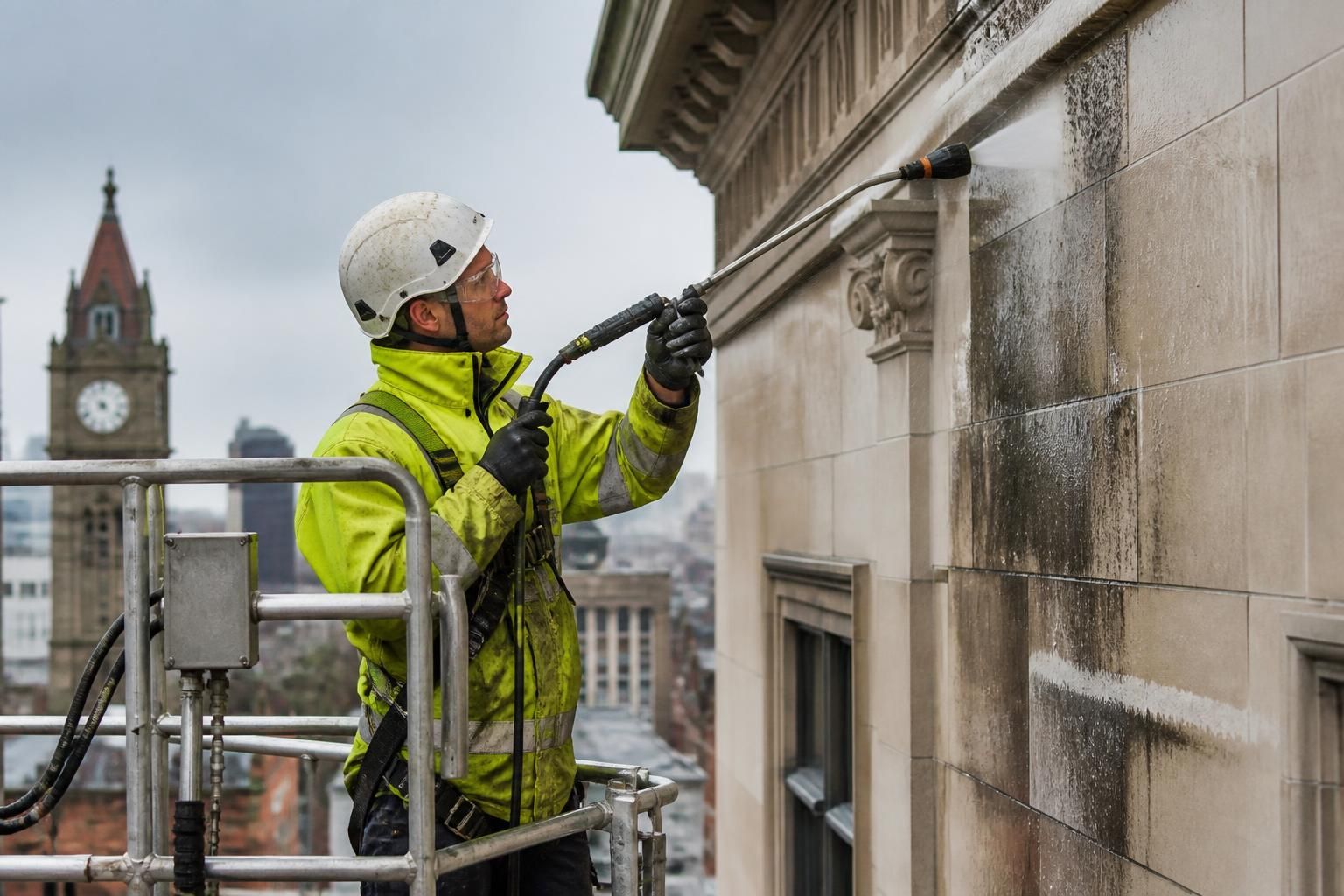
Cleaning should be conservative and directed at the identified problem. Low-pressure water cleaning, controlled steam cleaning and carefully selected non-abrasive methods are generally safer starting points than aggressive pressure washing, abrasive blasting or highly alkaline chemicals. Excessive pressure can drive water into joints, remove a weathered surface or enlarge existing defects. Heat and steam must also be controlled around historic masonry, painted finishes, sealants, windows and vulnerable stone.
A test clean should be completed in an inconspicuous area before the full facade is treated. The test should assess the cleaning result, surface change, water movement and any reaction with existing coatings or repairs. Cleaning is not a substitute for restoration: salts, staining or biological growth may return if defective pointing, failed flashings, leaking rainwater goods or open cracks are left untreated.
Defective materials should be removed carefully rather than stripped indiscriminately. Loose render, failed mortar and delaminated coatings need to be taken back to a sound edge, while sound historic material should be retained wherever possible. Repointing should use appropriate joint profiles and curing practices. Overfilled joints, smeared mortar on brick faces and excessively recessed finishes can all increase water retention or alter the way rain runs across the facade.
In exposed locations, breathable coatings such as mineral or silicate finishes can provide colour and surface protection while allowing vapour to pass through the wall. Their use is dependent on the substrate and existing coating. A coating should not be applied over damp, salt-contaminated, friable or unstable material, and the manufacturer’s preparation and curing requirements must be followed. Impermeable masonry paints may be unsuitable where the wall needs to dry out.
Weather control is a critical part of the technique. Mortar, render and coatings should not be applied to frozen, saturated, overheated or rapidly drying surfaces. Work areas may need temporary sheeting or other protection from rain, wind, direct sunlight and frost, while still allowing adequate ventilation. Temporary protection should be designed so that it does not trap condensation against the facade. Repairs should be phased so that each material has time to cure before it is exposed to severe weather or covered by a subsequent layer.
Moisture management should be addressed alongside surface repairs. Rainwater goods, flashings, parapet details, copings, sills, movement joints and drainage outlets can all determine whether a restored facade remains sound. If water is repeatedly entering from above or behind a repair, a new coating or mortar will only conceal the problem temporarily. The completed work should therefore be checked for correct falls, discharge, jointing and water shedding.
For buildings exposed to coastal air, road spray or de-icing salts, restoration materials and protective coatings need additional consideration. Salts can draw moisture into porous masonry and contribute to surface breakdown or corrosion. Dry deposits should be removed using a method appropriate to the substrate, but aggressive washing can spread contamination or drive it further into the wall. Where contamination is significant, the repair specification should include measures to manage salt movement and allow controlled drying.
Quality control should include recorded photographs, agreed test panels, product data, substrate checks and inspection of completed repairs. Particular attention should be given to transitions between old and new materials, because these are common points for cracking and water entry. After restoration, periodic inspections should check joints, coatings, sealants, drainage details and previously repaired areas so that minor defects can be corrected before another severe weather cycle causes wider damage.
For commercial and industrial premises, the most reliable approach is to combine a condition survey, low-impact facade cleaning, compatible material repairs and a planned maintenance schedule. This protects the existing building fabric while reducing the risk of moisture entrapment, frost damage, corrosion and premature coating failure. Where the facade is historic, highly exposed or showing structural movement, the cleaning and repair method should be confirmed by an appropriately qualified facade, masonry or conservation professional before work begins.
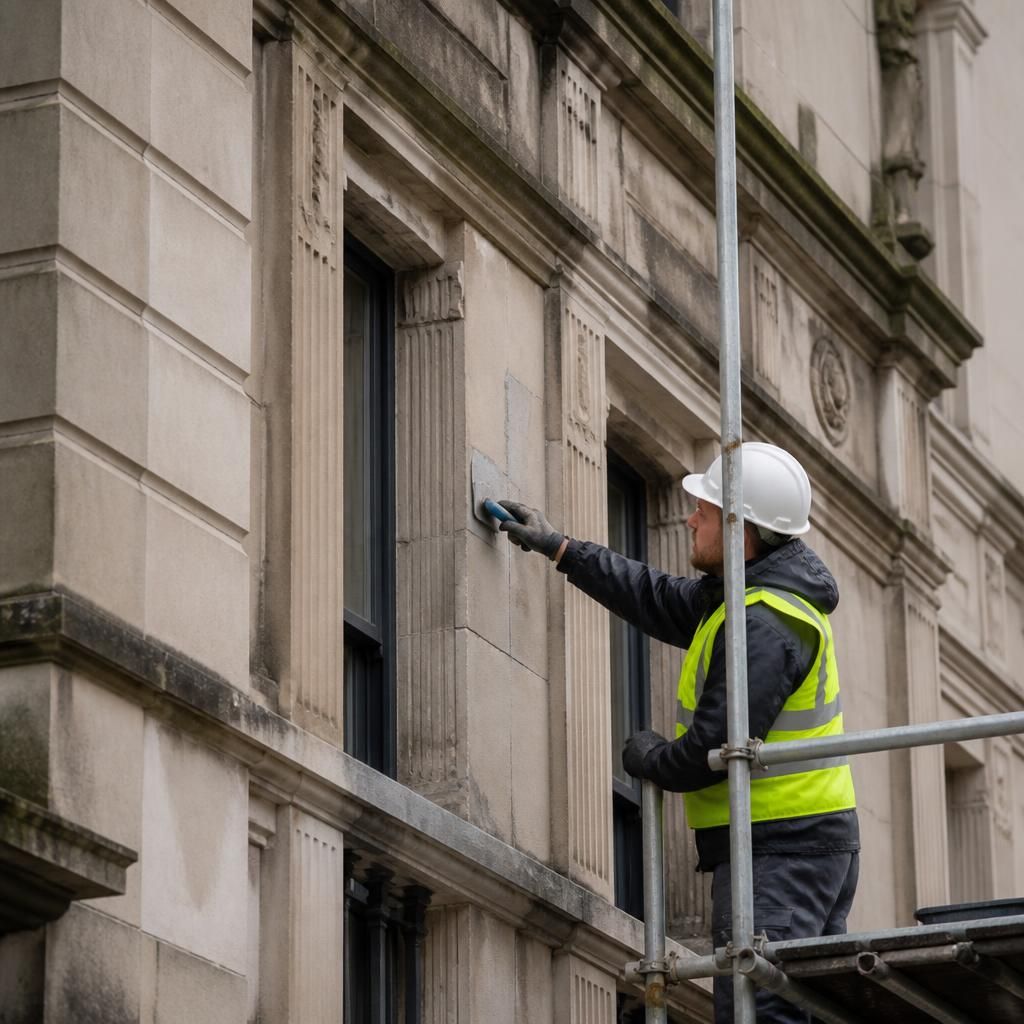
Weather-resistant facade restoration depends on using materials that remain compatible with the existing building fabric. Breathable lime-based mortars and mineral or silicate coatings can allow moisture to escape, while flexible, corrosion-resistant repair systems help accommodate movement and repeated exposure. Dense cement mortars or impermeable coatings may trap moisture, increasing the risk of frost damage, blistering and debonding.
Installation conditions are equally important. Mortar, render and coatings should not be applied to frozen, saturated or overheated surfaces. Temporary protection from rain, wind and direct sunlight may be needed, but it must allow ventilation and prevent condensation. A small test area should be assessed before full application to confirm that the selected cleaning and repair system does not damage the existing facade.