
What factors determine the cost of facade maintenance and restoration?
The cost of facade maintenance and restoration is mainly determined by the building’s size, facade material and condition, the extent of cleaning or repair required, access requirements, and the materials and techniques specified. Project location, site constraints, health and safety measures, and whether work is planned as a one-off restoration or ongoing maintenance can also affect the final quotation.
The cost of facade maintenance and restoration is determined by the building’s size, facade material, condition, required scope of work, access arrangements, specified methods and materials, and the risks associated with the site. Location, scheduling, regulatory requirements and whether the work is planned as a one-off project or an ongoing maintenance programme will also influence the final quotation.
A reliable cost assessment starts with a site survey. This allows the contractor to identify the facade construction, assess defects, establish suitable cleaning or repair methods and determine how safely the work can be carried out. A quotation based only on photographs or floor area may not account for hidden deterioration, difficult access or restrictions on the use of water and cleaning products.
Building size and facade area
The overall facade area is an important starting point because it affects labour, equipment, water usage, cleaning products and the time required on site. However, the size of the building alone does not determine the price. A large, straightforward elevation may be more efficient to work on than a smaller building with multiple setbacks, enclosed courtyards, projecting features or difficult-to-reach areas.
The number of elevations, the height of the building and the proportion of windows, doors, loading bays, architectural details and other interruptions will also affect productivity. Detailed areas generally require more careful preparation and slower cleaning or restoration than broad, accessible wall surfaces.
Facade material and construction
Different facade materials require different levels of care, testing and specialist knowledge. Brickwork, natural stone, concrete, render, painted surfaces, metal cladding, glazed panels and composite materials can all respond differently to pressure, heat, moisture and cleaning chemicals.
- Brick may require controlled cleaning to avoid damaging the surface or forcing water into open joints.
- Natural stone may need a low-pressure or steam-based method, particularly where the surface is weathered, friable or historically significant.
- Render and painted finishes can be marked, softened or removed by unsuitable pressure or chemicals.
- Metal cladding may need treatment for oxidation, staining, failed coatings or corrosion around fixings and joints.
- Concrete can require both surface cleaning and repairs to cracking, spalling or exposed reinforcement.
The presence of sensitive finishes, sealants, coatings, glazing, signage and adjoining materials can increase preparation and testing requirements. Where the facade is listed or located within a conservation area, the approved method may be more restricted and specialist materials may be necessary.
Existing condition and extent of deterioration
Cleaning costs are usually lower than restoration costs because restoration may involve removing defective material, repairing substrates and reinstating protective finishes. The condition survey should distinguish between surface contamination and underlying defects such as cracking, spalling, failed pointing, open joints, water staining, corrosion, biological growth and loose or unstable sections.
Costs can increase where deterioration is widespread, difficult to access or likely to continue unless the cause is addressed. For example, cleaning staining without repairing defective joints or failed sealants may provide only a temporary improvement. Water ingress, inadequate drainage, leaking gutters and damaged copings may therefore need to be dealt with as part of the project.
Some defects are not visible from ground level. Close inspection, sample areas or access equipment may be needed to assess upper elevations and determine whether additional repairs are required. If concealed damage is discovered after cleaning or during preparation, the scope may need to be revised before restoration can proceed.
Required scope of work
The final cost depends on what the project is intended to achieve. A maintenance visit may involve washing, steam cleaning, stain removal, algae treatment or limited repointing. A restoration project may include more extensive preparation, masonry repairs, replacement materials, coating removal, joint renewal and protective treatments.
- Routine cleaning and removal of general atmospheric soiling.
- Removal of algae, moss, bird fouling, oil marks, paint or graffiti.
- Localised repointing, sealant replacement and crack repairs.
- Replacement or repair of damaged bricks, stone, render, panels or concrete.
- Removal and reinstatement of coatings or protective finishes.
- Waterproofing or other treatments intended to reduce future deterioration.
- Cleaning and protection of associated features such as sills, ledges, parapets and architectural details.
Additional preparation, curing time and quality checks may be needed where several trades or processes are involved. The specification should make clear whether items such as waste removal, water management, making good, final rinsing and post-work inspections are included.
Access and working at height
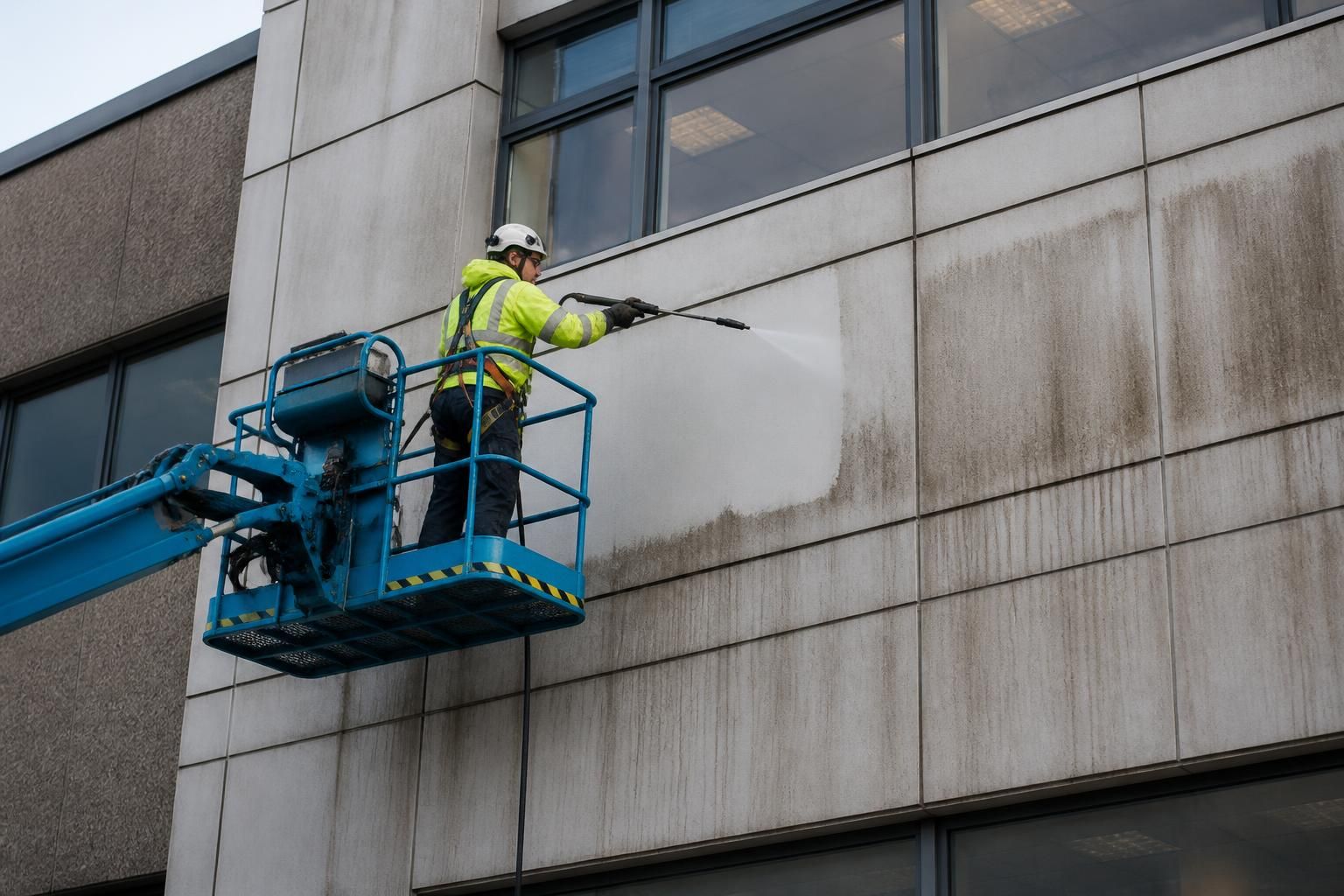
Access is often one of the most significant cost factors on commercial facade projects. Ground-level elevations may be suitable for specialist pressure washing or steam-cleaning equipment, while upper levels and recessed areas may require mobile elevated work platforms, scaffolding, towers, abseil access or a combination of systems.
The appropriate solution depends on building height, ground conditions, reach, working duration, pedestrian movement, nearby roads and the need to protect occupants and the public. Scaffolding can provide a stable working platform for extended restoration, but it may involve additional design, installation, hire, inspection, sheeting and dismantling requirements. Powered access can be efficient where there is sufficient space and suitable ground bearing capacity, but may be unsuitable in confined yards or areas with overhead obstructions.
Access costs may also rise where equipment must be moved between elevations, where entrances need to remain open, or where the building has restricted delivery times. A detailed survey helps identify these requirements before work begins.
Cleaning method and level of control
The selected cleaning method affects labour, equipment, water use, preparation and the risk of damage. Pressure washing can be effective on robust surfaces when pressure, nozzle selection and distance are properly controlled. Steam cleaning may be preferred for sensitive materials, delicate detailing or the removal of certain deposits with less mechanical impact. Chemical treatments may be needed for specific staining, biological growth, coatings or graffiti, but they require correct selection, application and rinsing.
Test patches are an important part of responsible facade cleaning. They confirm whether a method removes the contamination without marking, etching, discolouring or loosening the substrate. A slower, more controlled method may cost more initially but can reduce the risk of damage and avoid expensive remedial work.
Materials, repairs and specialist finishes
Restoration materials must be compatible with the existing facade. Costs may include matching bricks or stone, mortar, render, sealants, repair compounds, primers, coatings and water-repellent treatments. Material selection can be affected by colour, texture, porosity, flexibility, breathability and exposure to weather.
Where matching or bespoke materials are required, sourcing and preparation may extend the programme. Some products also require controlled weather conditions, drying periods or multiple applications. The specification should identify whether materials are intended to provide visual reinstatement, structural repair, water resistance or protection against future staining, as these are different purposes.
Site conditions and location
Project location affects transport, equipment delivery, parking, storage, waste removal and the time needed for mobilisation. Sites in busy Birmingham and wider West Midlands locations may require traffic management, pedestrian segregation, delivery coordination or restricted working hours. National projects can involve additional travel and logistical planning.
Limited water supply, drainage restrictions, sensitive landscaping, occupied premises and nearby public areas can also affect the work method. Where wastewater cannot be discharged directly, collection, filtration or controlled disposal may be required. These measures protect drainage systems and the surrounding environment but add to project planning and operating costs.
Health, safety and compliance requirements
Facade work often involves working at height, pressurised equipment, chemicals, falling debris, public interface risks and vehicle movements. The cost of a compliant project may include risk assessments, method statements, equipment inspections, exclusion zones, trained operators, protective equipment and supervision.
Occupied commercial buildings may require additional controls to protect staff, visitors and tenants. Noise, overspray, access routes, emergency exits and business continuity must be considered. If the work is near roads or public footways, permits, barriers or traffic management may be necessary. These are essential project requirements rather than optional additions.
Timing, weather and programme constraints
Weather can affect cleaning, drying, coating and repair work. Cold temperatures, rain, high winds or direct heat may make certain products unsuitable or require the work to be paused. Seasonal demand and restricted access during trading hours can also influence availability and programme length.
A short programme may require additional operatives, more access equipment or extended working arrangements. Conversely, a planned maintenance programme can allow work to be phased around building use and may reduce mobilisation and repeat survey requirements over time. The cheapest quotation is not necessarily the lowest overall cost if it excludes necessary preparation or creates a need for early rework.
One-off restoration or planned maintenance
One-off restoration is commonly driven by visible deterioration, a change of tenancy, an insurance requirement or preparation for sale or refurbishment. It may involve a wider scope and more intensive remedial work. Planned maintenance focuses on controlling contamination and identifying defects before they become extensive, which can make future work more predictable.
An ongoing programme may include scheduled inspections, targeted cleaning, minor repairs and condition reporting. The price will depend on visit frequency, areas covered, response requirements and whether access can be shared across multiple tasks. A maintenance plan should be based on the facade material, exposure, building use and known defect history rather than an arbitrary interval.
What a useful quotation should include
For meaningful comparison, quotations should describe the areas included, the proposed method, access arrangements, repair assumptions, materials, preparation, waste and wastewater handling, safety controls, programme and any exclusions. They should also state whether the price is fixed, provisional or subject to confirmation after test patches or closer inspection.
- Confirm whether the quotation covers cleaning only or includes repairs and protective treatment.
- Check which elevations, features and difficult-access areas are included.
- Ask whether access equipment, permits, traffic management and waste disposal are allowed for.
- Review the proposed test areas and acceptance standard for the finished facade.
- Clarify how concealed defects or additional repairs will be priced and authorised.
- Ensure the method is suitable for the facade material and any environmental or conservation restrictions.
Accurate pricing therefore depends on defining the required outcome as well as measuring the facade. Providing drawings, previous inspection reports, access restrictions and information about building use can help improve the initial assessment. For larger commercial or industrial properties, a phased survey and sample treatment may be the most practical way to establish the correct scope before committing to full restoration.
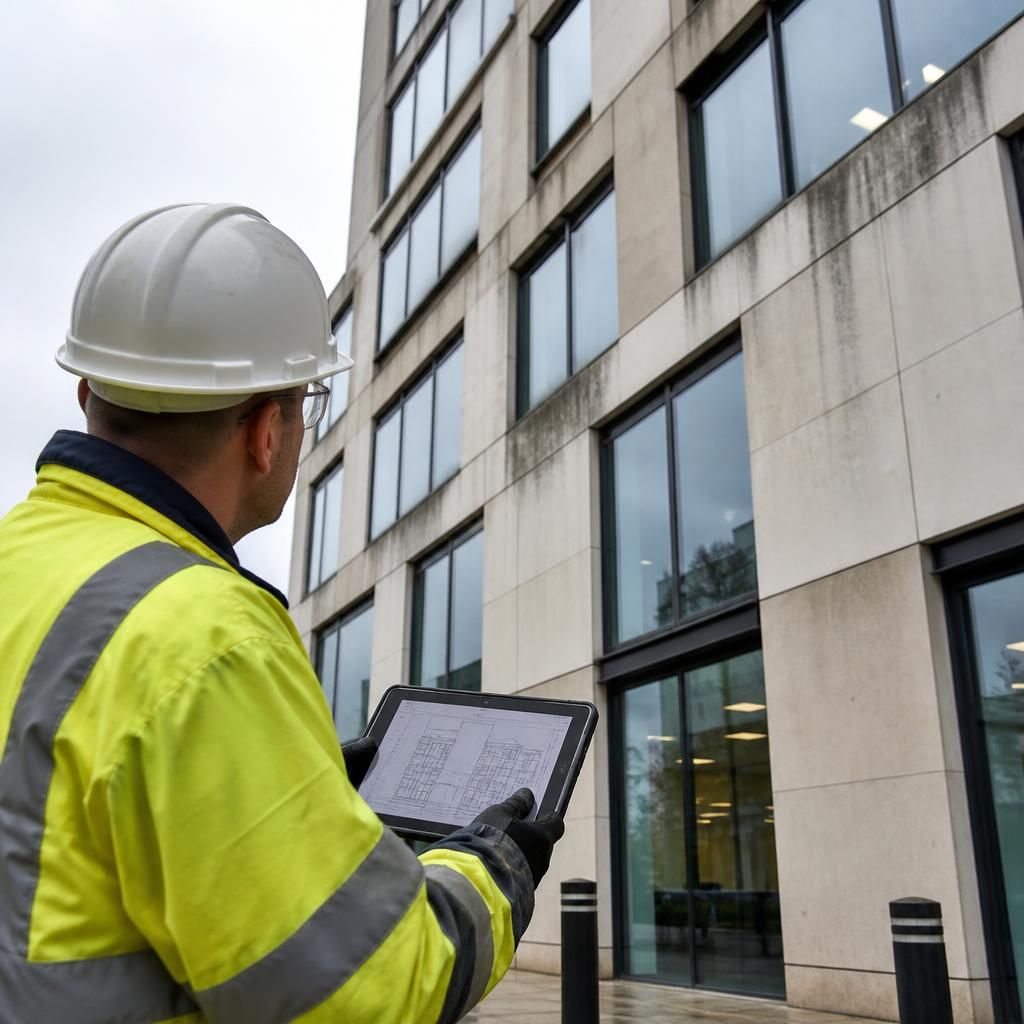
The most reliable way to establish facade maintenance and restoration costs is through a site survey. A survey assesses the facade material, extent of deterioration, required cleaning or repairs, access arrangements and site restrictions before a method and quotation are confirmed.
Photographs and floor area measurements can provide an initial indication, but they may not reveal loose material, failed joints, concealed water damage or difficult-to-reach areas. A proper assessment should also consider:
- whether scaffolding, powered access or other specialist equipment is required;
- how wastewater, debris and cleaning products will be controlled;
- whether the building will remain occupied during the work; and
- whether test patches or specialist materials are needed.
This approach helps separate straightforward cleaning from remedial restoration and reduces the risk of unexpected costs once work begins.
Request a facade maintenance and restoration cost assessment
Contact Encanto Exterior Cleaning to arrange a facade maintenance and restoration cost assessment. A site survey will help define the required work, access arrangements, materials and any site-specific controls before a quotation is prepared.