
What are the most effective methods for preventing facade deterioration over time?
Preventing facade deterioration requires a planned programme of inspections, appropriate cleaning, prompt repairs and effective control of water penetration. Regularly removing pollutants, checking joints, coatings, drainage and fixings, and using suitable access and cleaning methods helps protect facade materials and identify defects before they become extensive.
Facade deterioration is best prevented through a planned maintenance programme that combines regular inspections, controlled cleaning, moisture management, prompt repairs and suitable protective treatments. The objective is to remove damaging contaminants, prevent water entering the building fabric, deal with small defects before they spread and use methods that are compatible with the facade material.
Start with a documented condition assessment
A facade should be assessed before cleaning or repair work is specified. An inspection should identify the construction materials, existing coatings, previous repairs, areas of staining, failed joints, cracks, loose components, corrosion, biological growth and signs of water penetration. The condition of difficult-to-reach areas, such as parapets, roof edges, canopies, reveals and interfaces with adjoining materials, is particularly important because defects in these locations often allow water to travel into the facade.
Photographs, marked-up elevations and maintenance records provide a useful baseline. Comparing later inspections with this information helps establish whether a crack, stain, coating failure or movement joint is changing over time. Where defects may affect structural stability or public safety, a suitably qualified building professional should assess them before cleaning or cosmetic work begins.
Control water penetration
Moisture is one of the main causes of facade deterioration. Repeated wetting and drying can damage masonry, coatings and jointing materials, while trapped moisture can contribute to corrosion, frost damage, efflorescence, mould and internal dampness. Preventative maintenance should therefore include checks on:
- Roof coverings, flashings, parapets and coping stones
- Gutters, downpipes, outlets and drainage channels
- Window and door perimeter seals
- Movement joints, mortar joints and sealant joints
- Cladding laps, fixings and penetrations
- Balconies, ledges, canopies and other areas where water can collect
Blocked gutters and defective outlets should be cleared or repaired promptly. Failed sealants and open joints should be removed and renewed with a product suited to the substrate and expected movement. Repairs should also address the source of water rather than simply covering the visible stain.
Clean the facade using a material-appropriate method
Atmospheric pollution, traffic film, soot, algae, moss, bird deposits and other contaminants can hold moisture against a facade and accelerate surface degradation. They can also conceal cracks, corrosion and failed joints. However, cleaning that is too aggressive can remove sound coatings, erode masonry, open pores or drive water behind cladding. The safest approach is to select the least aggressive method capable of achieving the required result.
Low-pressure washing may be suitable for some robust surfaces when water can be safely managed. Steam cleaning can be effective for removing ingrained deposits and biological growth with reduced reliance on detergents. Pressure washing must be carefully controlled around mortar joints, aged masonry, render, painted surfaces, seals and vulnerable details. Abrasive cleaning should not be treated as a standard solution, as it can permanently alter the surface profile and expose the substrate to further weathering.
Test patches should be carried out in discreet areas before full cleaning. The test should assess the cleaning result, the effect on the substrate, the risk of streaking or colour variation and whether residues or run-off could affect adjacent materials. Cleaning methods should also account for nearby pedestrians, vehicles, landscaping, drainage systems and occupied premises.
Repair defects before they become extensive
Small defects can allow water and pollutants into the facade, where deterioration may continue out of sight. Cracked render, damaged masonry, open mortar joints, failed sealants, loose tiles, chipped coatings and corroded fixings should be recorded and prioritised. Repairs should use compatible materials and techniques; a hard or impermeable repair can sometimes transfer stress to surrounding masonry or prevent the facade from drying properly.
On masonry buildings, repointing should match the existing joint profile and be appropriate for the brick or stone. Damaged units may require careful replacement rather than surface filling. Rendered facades may need localised patching followed by a compatible finish coat, while metal cladding requires attention to corrosion, protective coatings, fixings and panel joints. Timber elements should be kept dry, protected with suitable coatings and checked for decay around end grain, joints and water traps.
Repairs should be completed using safe access arrangements and should not conceal movement or structural defects. If cracking is substantial, recurring or associated with distortion, consultation with a structural engineer or other competent professional may be necessary.
Maintain coatings and protective treatments
Paints, render finishes, sealants and other protective coatings help limit water uptake and protect the substrate from pollutants and weathering. Their effectiveness depends on preparation, compatibility and condition. Peeling, blistering, chalking, flaking and widespread discolouration can indicate that a coating has reached the end of its serviceable life or that moisture is present behind it.
Before recoating, the surface should be cleaned, allowed to dry as appropriate and checked for salts, biological growth, loose material and underlying defects. The replacement coating should be selected for the facade material, exposure conditions, vapour movement and expected maintenance requirements. Applying a new coating over damp or unstable surfaces usually provides only a temporary improvement and can make later diagnosis more difficult.
Water-repellent treatments should not be applied automatically. They need to be compatible with the substrate and should not prevent the wall from releasing trapped moisture. Their suitability should be confirmed through product information, substrate assessment and controlled testing.
Inspect fixings, joints and interfaces
Facade panels, signs, screens, rails, rainwater goods and other attached items can introduce movement and additional load. Fixings should be checked for looseness, corrosion, staining and failure of surrounding sealants. Interfaces between different materials, such as brickwork and metal cladding or windows and render, deserve particular attention because they expand, contract and weather differently.
Movement joints should remain flexible and free from hard bridging materials. Where sealant has split, debonded or pulled away from the edges, it should be replaced following appropriate preparation. Any repair should preserve intended drainage paths and should not block weep holes or ventilation openings.
Use a planned inspection and cleaning cycle
Maintenance is more effective when it is scheduled rather than triggered only by visible failure. The inspection frequency should reflect the facade material, exposure, building use, local pollution, previous defects and consequences of falling debris or water ingress. Additional checks are sensible after severe weather, construction activity, nearby works or incidents that may have affected the building envelope.
A practical programme can include routine visual checks by site staff, planned detailed inspections by competent personnel, and cleaning or repair works based on the recorded condition. Each visit should document defects, actions taken, areas requiring monitoring and recommendations for the next review. This creates continuity between maintenance periods and helps prevent minor issues being overlooked.
Plan access and cleaning controls properly
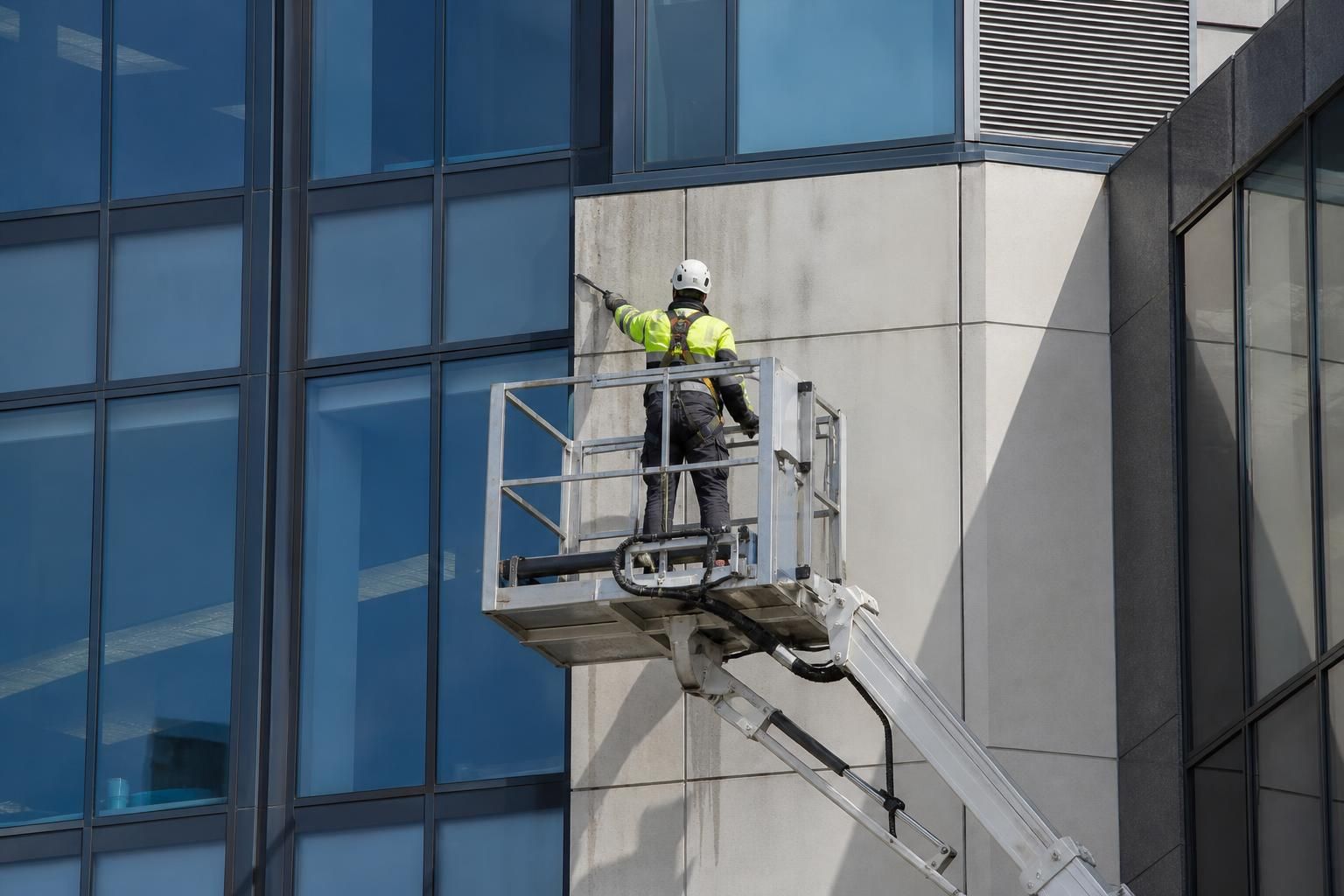
Access equipment should be selected according to the height, geometry and condition of the facade, rather than as an afterthought. Mobile elevated work platforms, towers, rope access or other systems may be appropriate in different circumstances, subject to a suitable risk assessment and site controls. Operatives should be protected from falls, falling materials, pressurised water, cleaning chemicals, traffic and public access.
Good preparation also protects the building and its surroundings. Windows, vents, electrical equipment, signage, vulnerable finishes and landscaping may require shielding. Run-off should be controlled, and any detergents or residues should be handled in accordance with the product instructions and applicable environmental requirements.
Preventing facade deterioration is therefore a continuous process, not a single cleaning operation. Regular condition checks, compatible repairs, controlled removal of contaminants and reliable water management will extend the useful life of the facade while helping maintain its appearance, safety and value.
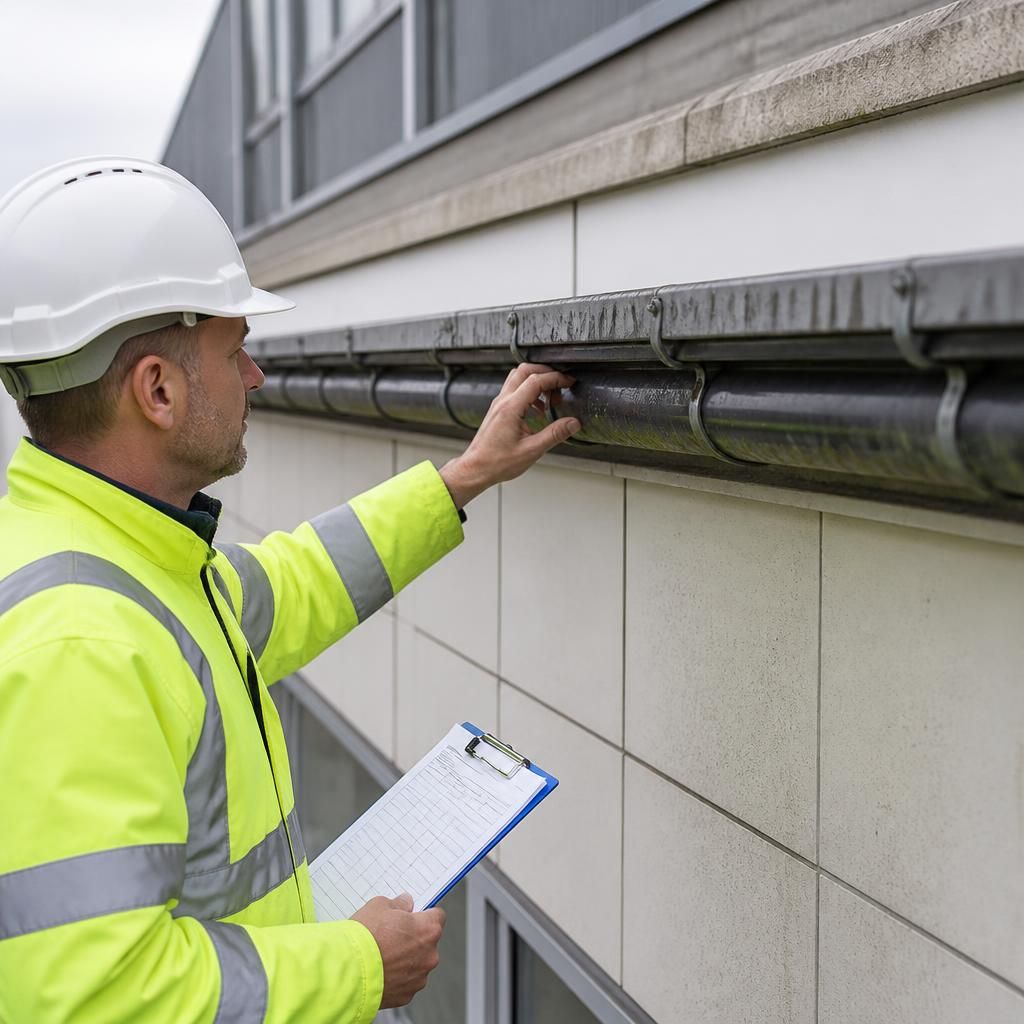
Controlling water penetration is one of the most effective ways to prevent facade deterioration. Regular checks should cover gutters, downpipes, flashings, parapets, window seals, movement joints and cladding interfaces, as defects in these areas can allow moisture into the building fabric.
Blocked drainage, failed sealants and open joints should be repaired promptly, with work focused on removing the source of the water rather than covering resulting stains. Keeping the facade dry where possible helps reduce corrosion, frost damage, efflorescence, mould growth and deterioration of masonry, render, coatings and fixings.
Arrange a Facade Condition Assessment
Arrange a facade condition assessment to identify water ingress, surface deterioration, failed joints and other defects before they require more extensive repairs. Contact Encanto Exterior Cleaning to discuss a suitable inspection and maintenance plan for your building.