
What are the latest advancements in facade restoration technologies?
The latest facade restoration technologies include low-pressure steam cleaning, laser cleaning, advanced access equipment, drone-assisted surveys and smart protective coatings. These methods enable more precise removal of dirt, staining, biological growth and graffiti while reducing the risk of damage to sensitive masonry, cladding and glazed surfaces.
The latest advancements in façade restoration technologies combine low-impact cleaning, digital surveying, improved repair materials and protective surface treatments. These methods allow contractors to remove contamination, identify defects and restore external finishes with greater control, while reducing the risk of damage to masonry, cladding, glazing and sensitive architectural details.
Technology selection still depends on the façade material, the type of deterioration, the building’s location and the required finish. A method that is suitable for robust brickwork may be inappropriate for natural stone, historic terracotta, curtain walling or coated metal panels. Restoration should therefore begin with a condition survey and controlled testing rather than applying a standard cleaning process across the whole elevation.
Low-pressure steam and nebulous water cleaning
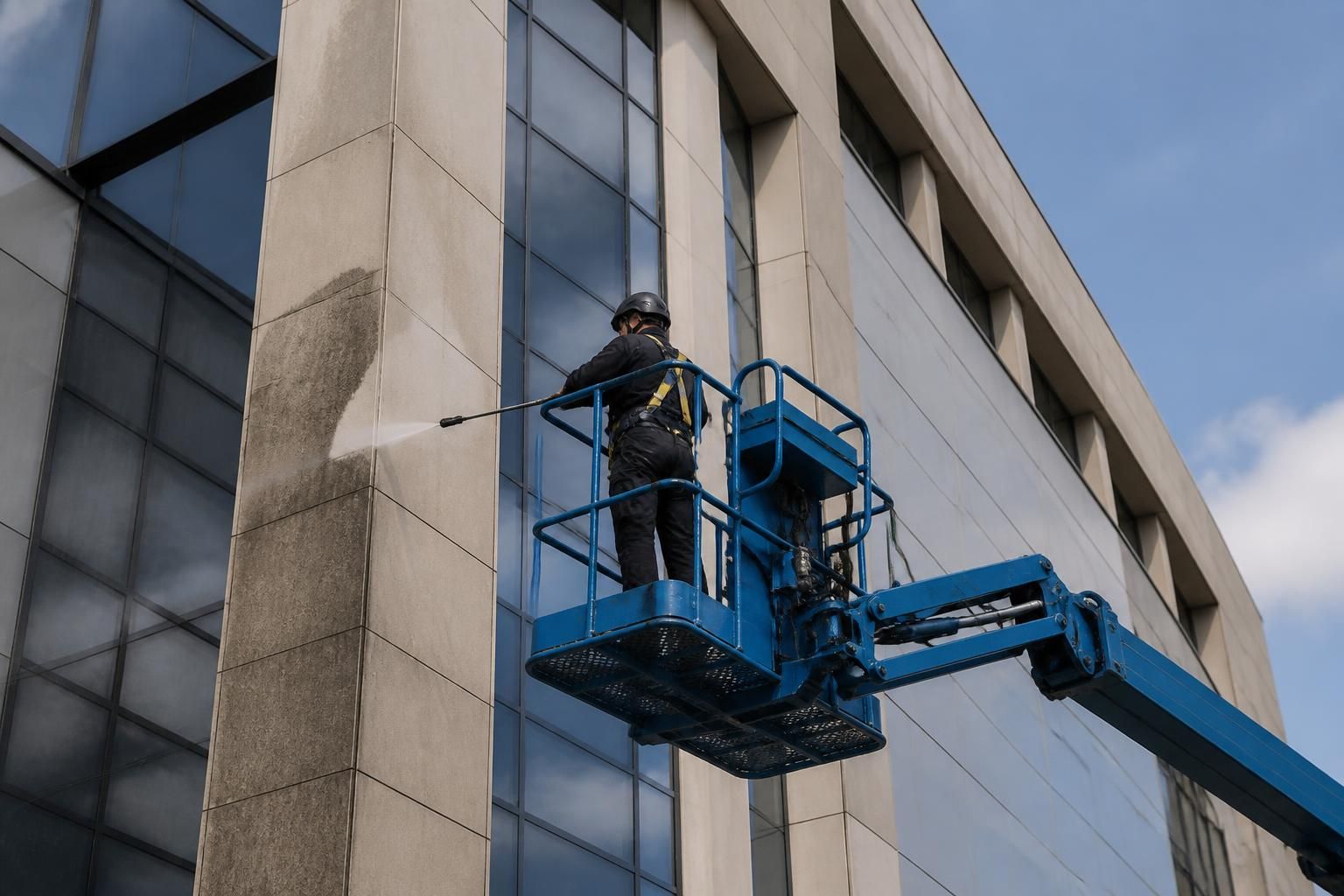
Modern steam-cleaning equipment enables the controlled removal of atmospheric soiling, algae, moss, oil residues and some biological growth using heat and limited water. Low-pressure systems are particularly useful where high-pressure water could erode mortar joints, drive moisture into the structure or damage friable stone.
Specialist equipment can regulate pressure, temperature and water flow to suit the substrate. This gives the operator more control around architectural detailing, joints, windows and previously repaired areas. Steam cleaning can also reduce the need for aggressive chemical treatments, although detergents or biocidal products may still be appropriate for particular contaminants following a suitable assessment.
Laser cleaning for sensitive façades
Laser cleaning uses a concentrated beam of light to break down or lift surface deposits, including carbon staining, paint, certain coatings and graffiti. The process can be highly precise, making it useful for historic masonry, carved stone, monuments and detailed façades where abrasive methods could remove the original surface.
Laser settings must be carefully selected. Excessive energy or unsuitable wavelengths can discolour, heat or mark some materials, so testing is essential before wider application. Laser cleaning is usually most valuable for localised or highly sensitive areas rather than as an automatic replacement for conventional cleaning across every building elevation.
Improved abrasive and micro-abrasive systems
Where a surface can tolerate controlled abrasion, modern micro-abrasive equipment offers finer regulation of pressure, media flow and particle size than traditional abrasive blasting. Suitable media may include low-impact mineral products or other carefully selected materials designed to remove coatings and staining while limiting substrate loss.
These systems are used selectively on materials such as robust brick, concrete and some stone. They require effective containment because dust, spent media and removed coatings must be controlled and disposed of responsibly. Abrasive cleaning is not appropriate for every façade, particularly soft stone, weathered mortar, glazed finishes or surfaces with uncertain historical value.
Drone-assisted inspections and digital surveying
Drones fitted with high-resolution cameras can inspect difficult-to-reach elevations, roofs, parapets and cladding without immediately installing extensive access equipment. They can help identify cracking, failed sealants, staining, biological growth, open joints, damaged render and loose elements during an initial assessment.
Photogrammetry and other digital survey techniques can create detailed elevation records that support defect mapping and project planning. Thermal imaging may also help identify areas associated with moisture movement, heat loss or changes behind a façade, although the results require interpretation by a competent professional and should not be treated as a substitute for physical investigation where safety-critical defects are suspected.
Drone surveys are most effective when combined with close inspection from suitable access equipment. Small cracks, delamination, fixings and sealant failures may not be confirmed reliably from aerial imagery alone.
Advanced access equipment
Developments in access equipment have made it easier to carry out targeted restoration with less disruption to occupied commercial premises. Mobile elevating work platforms, compact platforms, articulated booms and specialist suspended access systems can provide safer and more adaptable access to complex elevations.
The appropriate system depends on ground conditions, working height, façade geometry, public areas, overhead restrictions and the need to protect the building or surrounding surfaces. Proper planning remains essential, including inspection of equipment, operator competence, exclusion zones, rescue arrangements and controls for falling materials.
Smart protective coatings
Newer façade coatings are designed to provide more than a decorative finish. Depending on the product, they may improve water repellence, reduce the adhesion of dirt, limit biological growth, reduce graffiti penetration or help protect mineral surfaces from repeated weathering.
Hydrophobic treatments can reduce rainwater absorption while allowing a suitable substrate to release water vapour. Photocatalytic or self-cleaning coatings use light-activated surface reactions to help break down certain organic deposits, although their performance depends on exposure, surface orientation, local pollution and correct preparation.
Anti-graffiti coatings may be sacrificial, allowing future marks to be removed with the coating, or permanent, creating a more durable cleanable surface. Compatibility must be checked carefully, as an unsuitable coating can alter appearance, trap moisture or interfere with future repairs.
Low-impact biological and chemical treatments
Biocidal treatments have become more controlled and targeted. They can help manage algae, moss, lichen and other biological contamination before or after physical cleaning. The treatment selected should be appropriate for the substrate and used in accordance with the product instructions, site controls and environmental requirements.
Modern cleaning formulations may also be selected for specific contaminants such as carbon deposits, efflorescence, paint or oil. Chemical cleaning should never be judged solely by how quickly it produces a visible result. Run-off, staining, substrate compatibility, nearby vegetation, drainage and the need for neutralisation or collection must all be considered.
Improved repair mortars and façade materials
Restoration materials are increasingly formulated to match the physical and visual behaviour of the existing façade. Lime-based mortars, compatible masonry repair compounds, colour-matched renders and flexible sealants can be selected to accommodate movement and moisture transfer rather than creating rigid patches that fail prematurely.
For masonry repairs, compatibility is more important than simply choosing the strongest material. Mortar that is too hard or impermeable can cause damage to softer brick or stone by redirecting moisture and stress into the surrounding units. Repointing, crack repair and replacement materials should therefore reflect the construction type, exposure and condition of the original façade.
Digital project records and condition monitoring
Digital photographs, mapped elevations and structured inspection records make it easier to compare a façade over time. A consistent record can show whether staining is recurring, whether cracks are changing, and whether previous repairs or protective treatments remain effective.
For larger commercial or industrial buildings, this information can support planned maintenance rather than relying solely on reactive cleaning. It also helps coordinate façade work with roof maintenance, window repairs, sealant replacement, access planning and other building activities.
How these technologies should be applied
- Assess the façade: identify the substrate, finish, contamination, defects, previous treatments and areas requiring close inspection.
- Test the proposed method: carry out representative sample areas and check cleaning effectiveness, colour, texture, moisture response and any damage after drying.
- Select the least aggressive effective process: use controlled pressure, temperature, chemical strength and dwell time rather than assuming that a more powerful method will provide a better result.
- Plan access and containment: protect occupants, pedestrians, vehicles, drainage systems, landscaping, glazing and adjacent properties from water, dust, debris and cleaning residues.
- Repair before protecting: resolve defective joints, cracks, failed sealants, loose material and water-entry points before applying a coating or completing final cleaning.
- Verify the completed work: inspect the façade after drying and retain photographs, test results and product information for future maintenance.
The most effective restoration programmes do not rely on a single new technology. Laser cleaning, steam cleaning, drone surveys, advanced access systems, compatible repair materials and protective coatings each address different risks. In UK commercial and industrial settings, the best solution is normally a carefully tested combination that preserves the façade, controls environmental impact, satisfies site safety requirements and provides a practical basis for ongoing maintenance.
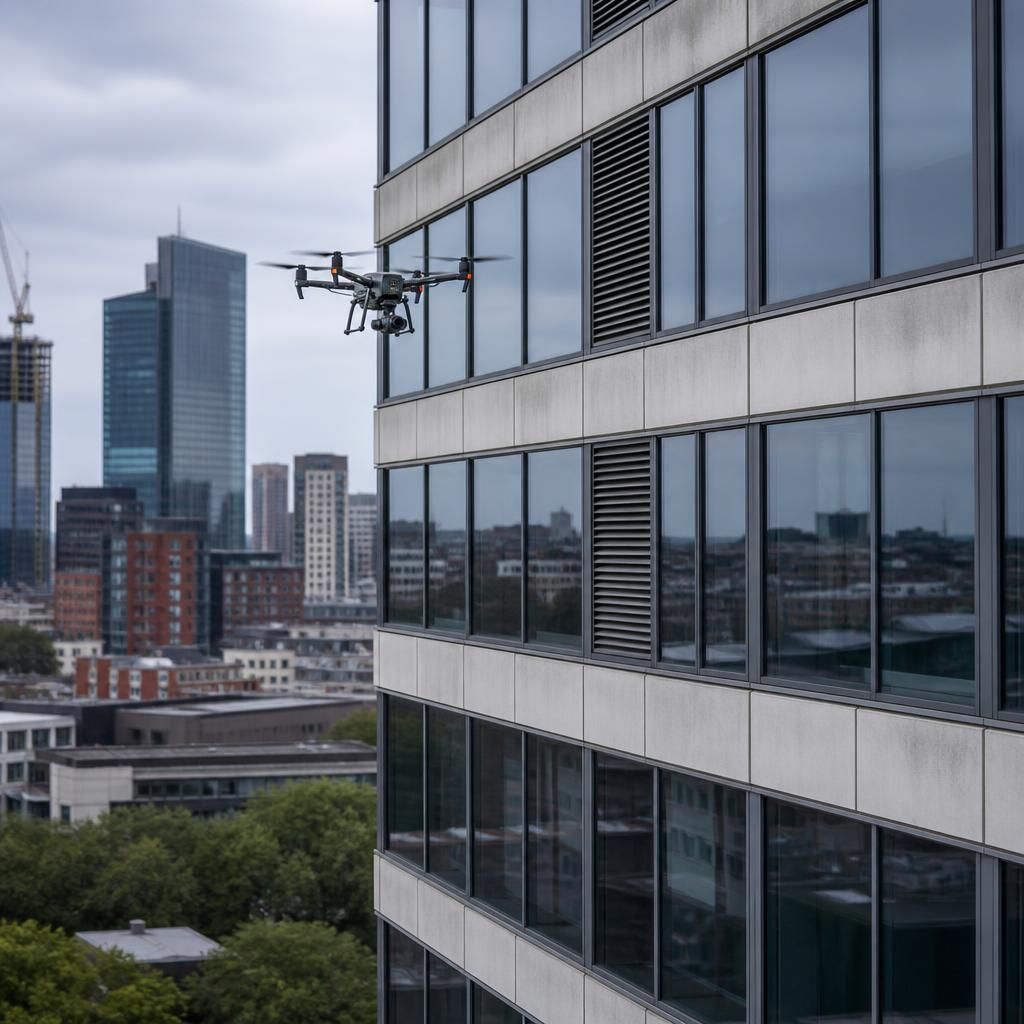
Drone-assisted façade surveys use high-resolution imagery to inspect difficult-to-reach elevations, roofs, parapets and cladding before restoration work begins. They can help identify cracking, staining, biological growth, failed sealants, damaged render and loose elements without immediately installing extensive access equipment.
These surveys are most effective for initial condition mapping and project planning. Close inspection from suitable access equipment is still required to confirm small cracks, delamination, defective fixings and other safety-critical defects. Combining aerial imagery with photographs, mapped elevations and physical testing gives restoration teams a clearer record of the façade and supports more accurate repair decisions.