
What are the key maintenance tips for preserving facade materials?
Preserve facade materials by carrying out regular inspections, removing dirt and contaminants using suitable cleaning methods, keeping joints, seals, coatings and drainage systems in good condition, and repairing minor defects before water can penetrate. Maintenance should be adapted to the facade material and its exposure, with specialist advice used where staining, cracking, corrosion, biological growth or coating failure is present.
Preserving facade materials depends on planned inspections, compatible cleaning, effective water management and prompt repair of defects. Maintenance should be matched to the facade’s material, construction and exposure. A rendered wall, glazed curtain wall, brick elevation, metal cladding system and natural stone facade each respond differently to moisture, chemicals, abrasion, temperature changes and pollution. Using the wrong method can cause etching, staining, coating failure or permanent surface damage.
A practical maintenance plan should combine routine visual checks with specialist inspections and carefully controlled cleaning. The objective is not simply to make the building look clean; it is to prevent contaminants and minor defects developing into water ingress, corrosion, material failure or expensive restoration work.
Inspect the facade systematically
Regular inspections should cover the entire elevation, including areas that are difficult to see from ground level. Look for changes in colour or texture, cracking, spalling, loose finishes, staining, blistering, corrosion, open joints and damaged fixings. Pay particular attention to parapets, sills, copings, corners, projecting features and the junctions between different materials, as these areas commonly collect water and contaminants.
Inspection findings should be recorded with photographs, locations and descriptions of the defect. Comparing records over time helps distinguish established staining from active deterioration. Cracks that widen, recurring damp marks, loose panels or staining below joints should be investigated rather than covered up through cleaning or repainting.
Keep water away from vulnerable areas
Water is one of the main causes of facade deterioration. Check that gutters, downpipes, outlets, flashings, copings and drainage channels are clear and securely attached. Defective rainwater goods can repeatedly wet masonry, render, cladding and entrance surrounds, leaving mineral deposits and creating conditions for frost damage, algae or corrosion.
Sealant joints around windows, doors, movement joints and service penetrations should remain flexible, continuous and firmly bonded. Failed sealant should be removed and replaced with a product compatible with the surrounding materials. Applying new sealant over loose, damp or contaminated material generally provides only a temporary result and can conceal ongoing water penetration.
Remove contaminants using a material-appropriate method
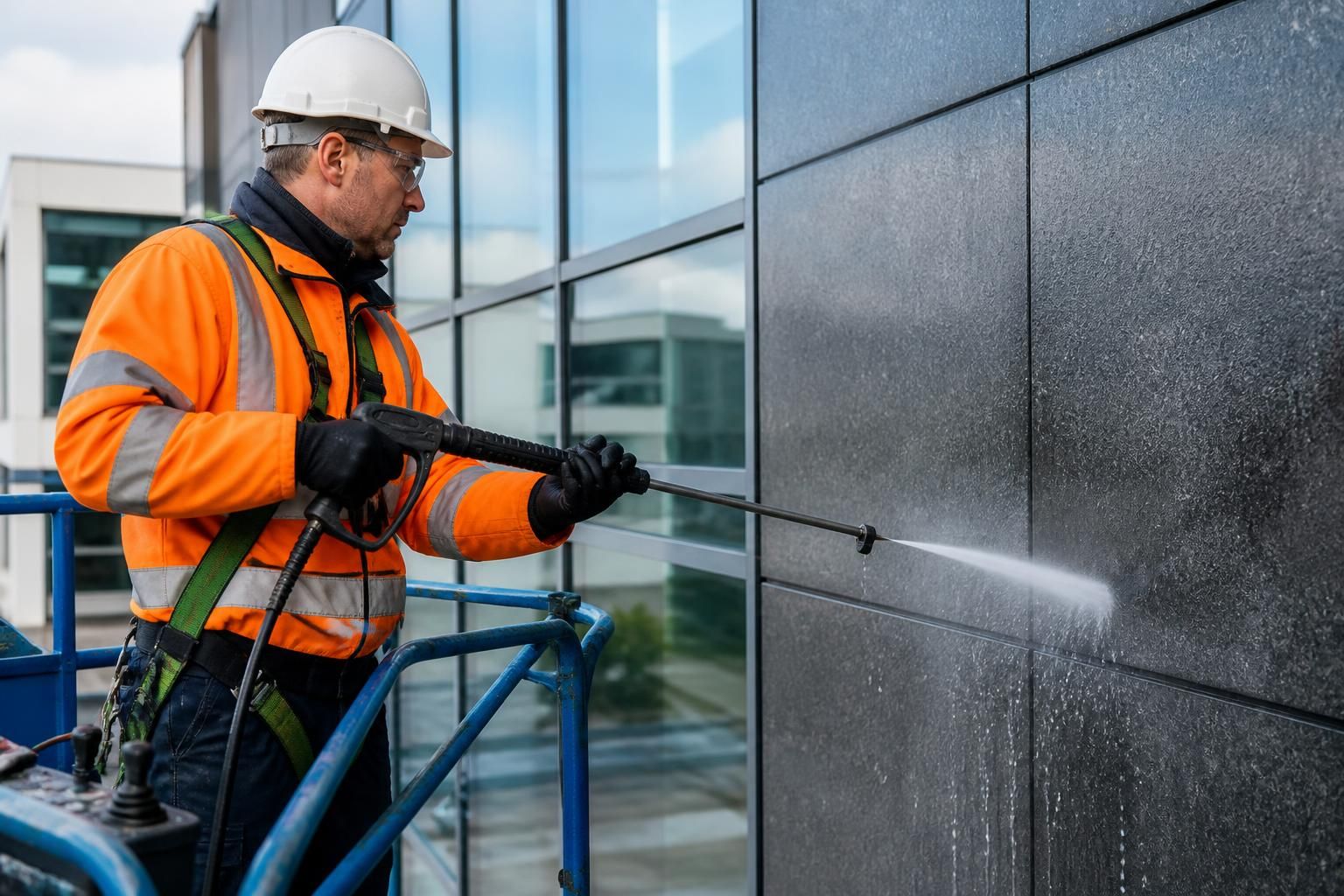
Dirt, traffic film, soot, bird deposits, algae and other pollutants can retain moisture and gradually attack finishes. Cleaning should begin with the least aggressive suitable method, followed by a controlled increase in pressure, temperature or cleaning solution only where necessary. Test cleaning in an inconspicuous area first and assess the result after the surface has dried.
Pressure washing can be effective on robust, well-bonded surfaces, but excessive pressure or an unsuitable nozzle can erode mortar, drive water behind cladding, damage coatings and mark softer stone. Steam cleaning may be more appropriate where controlled heat can loosen deposits without heavy mechanical impact. Chemical treatments require particular care because acids, alkalis and solvents can react with stone, metals, glass, sealants, coatings or adjacent surfaces.
- Identify the facade material and existing finish before selecting a cleaning system.
- Use appropriate protection for windows, doors, vents, landscaping, signage and sensitive details.
- Control run-off so that cleaning residues do not enter unsuitable drainage systems or contaminate neighbouring surfaces.
- Rinse or neutralise treated areas in accordance with the product and surface requirements.
- Avoid abrasive cleaning unless it has been specifically assessed as suitable for the substrate.
Maintain masonry, render and stone
Brickwork should be checked for open or eroded mortar joints, cracked bricks, spalling and deposits caused by prolonged dampness. Repointing should use a mortar compatible with the brick’s strength and movement characteristics. A mortar that is too hard can transfer stress into the brick and accelerate face damage. Efflorescence should be treated as an indication of moisture movement rather than simply a cosmetic mark.
Rendered and painted facades need inspection for hairline cracking, hollow or detached areas, blistering, flaking and biological growth. Damaged render should be repaired before repainting, and the replacement coating should be suitable for the render system and its vapour permeability. Trapped moisture behind an unsuitable coating can cause further debonding and staining.
Natural stone requires careful identification because limestone, sandstone, granite and other stones have different porosity and chemical resistance. Avoid untested acidic products and aggressive abrasion. Where a stone facade has deep staining, surface scaling or suspected salt damage, specialist assessment is preferable to repeated general cleaning.
Control corrosion on metal facades
Metal cladding, flashings, rails, grilles and fixings should be checked for rust, white corrosion deposits, coating breakdown, distortion and water trapped at laps or joints. Salt deposits and industrial pollutants should be removed with a compatible cleaning process, particularly in exposed or heavily trafficked locations.
Corroded areas should be cleaned and repaired according to the metal and coating system. Simply painting over active corrosion can trap moisture and cause the defect to return. Check for contact between dissimilar metals as well, because moisture at the junction can cause galvanic corrosion. Damaged protective coatings should be repaired before corrosion spreads beneath adjacent areas.
Protect coatings, glazing and cladding systems
Painted, powder-coated and factory-finished cladding should be cleaned with non-abrasive materials and compatible solutions. Avoid scouring pads, harsh solvents and unapproved treatments that can dull the finish or affect its protective properties. Inspect panel laps, fasteners, trims and joint seals for movement, staining or gaps.
Glass should be cleaned without allowing abrasive grit or dried residues to scratch the surface. Check adjacent gaskets, sealants and glazing beads for shrinkage, cracking or detachment. If a facade includes photovoltaic panels, specialist coatings or proprietary finishes, follow the relevant maintenance instructions rather than applying a standard pressure-washing procedure.
Remove biological growth and prevent its return
Moss, algae, lichen and mould are more likely to persist where surfaces remain damp or shaded. Cleaning removes the visible growth, but recurring problems often indicate blocked drainage, poor ventilation, leaking joints or a surface that does not dry effectively. Address the moisture source and use a compatible treatment where appropriate. Do not allow biocidal solutions to damage nearby vegetation, watercourses or sensitive building materials.
Repair small defects before they develop
Minor defects should be assessed and prioritised rather than left until the next major refurbishment. Replace failed sealant, secure loose trims, repair damaged coatings, clear blocked outlets and address localised corrosion while the affected area is limited. Larger cracks, unstable materials, persistent dampness and movement around structural joints require investigation by a suitably qualified professional.
After cleaning or repair, inspect the facade again to confirm that surfaces are sound, joints are sealed and water is being discharged correctly. Keep records of methods, products, test areas, defects and follow-up work. This creates a useful maintenance history and helps ensure that future contractors do not use incompatible treatments.
For large commercial or industrial buildings, planned maintenance should also consider safe access, exclusion zones, weather conditions, work at height controls and protection of occupants and visitors. Specialist facade cleaning and restoration advice is particularly important where the building has fragile finishes, historic materials, complex access requirements, extensive staining or signs of water ingress.
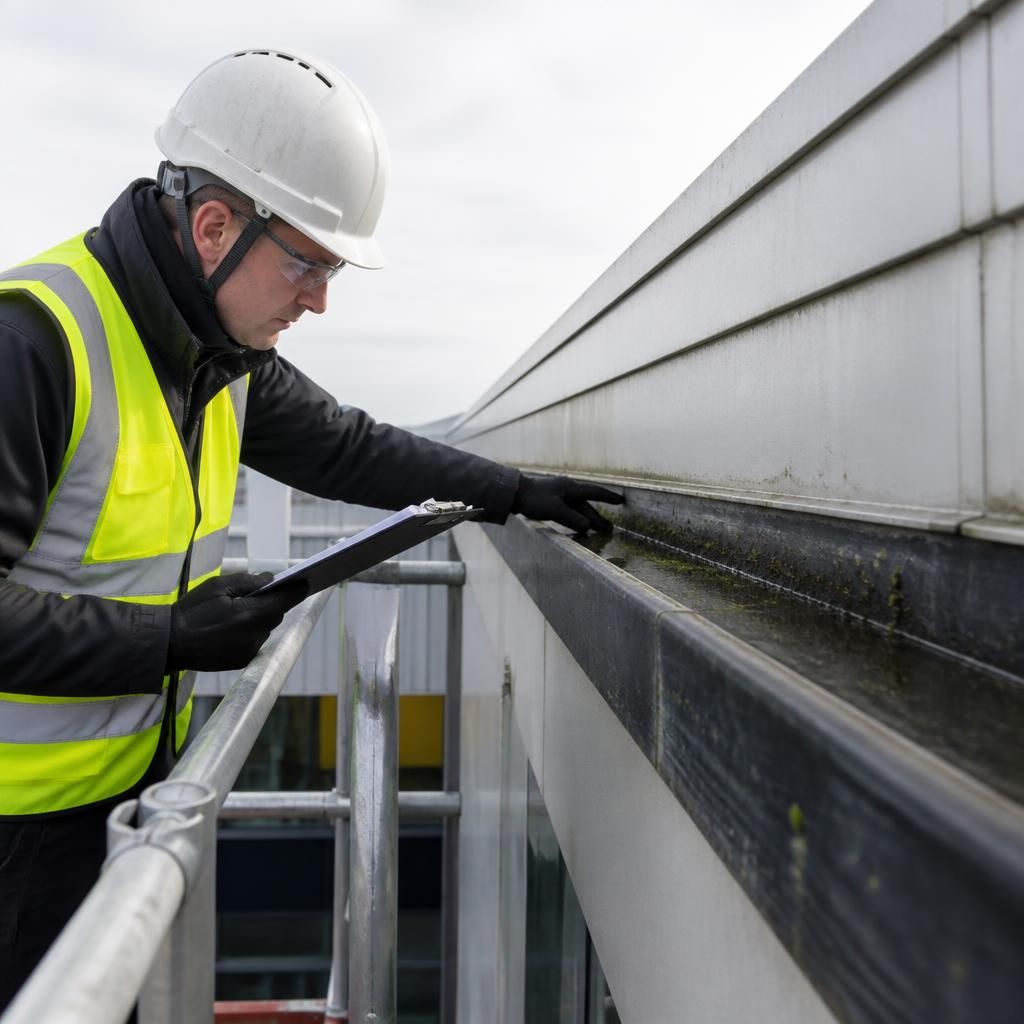
Water management is one of the most important parts of preserving facade materials because repeated wetting can cause staining, frost damage, corrosion, biological growth and water ingress. Inspect gutters, downpipes, flashings, copings, drainage outlets and sealant joints regularly, particularly where staining or dampness appears below a junction.
Cleaning should not be used to conceal a moisture problem. Clear blocked drainage, repair failed joints and investigate recurring damp marks before treating the surface. Keeping a record of defects and repairs helps identify changes over time and allows minor faults to be corrected before they affect larger areas of masonry, render, stone or cladding.