
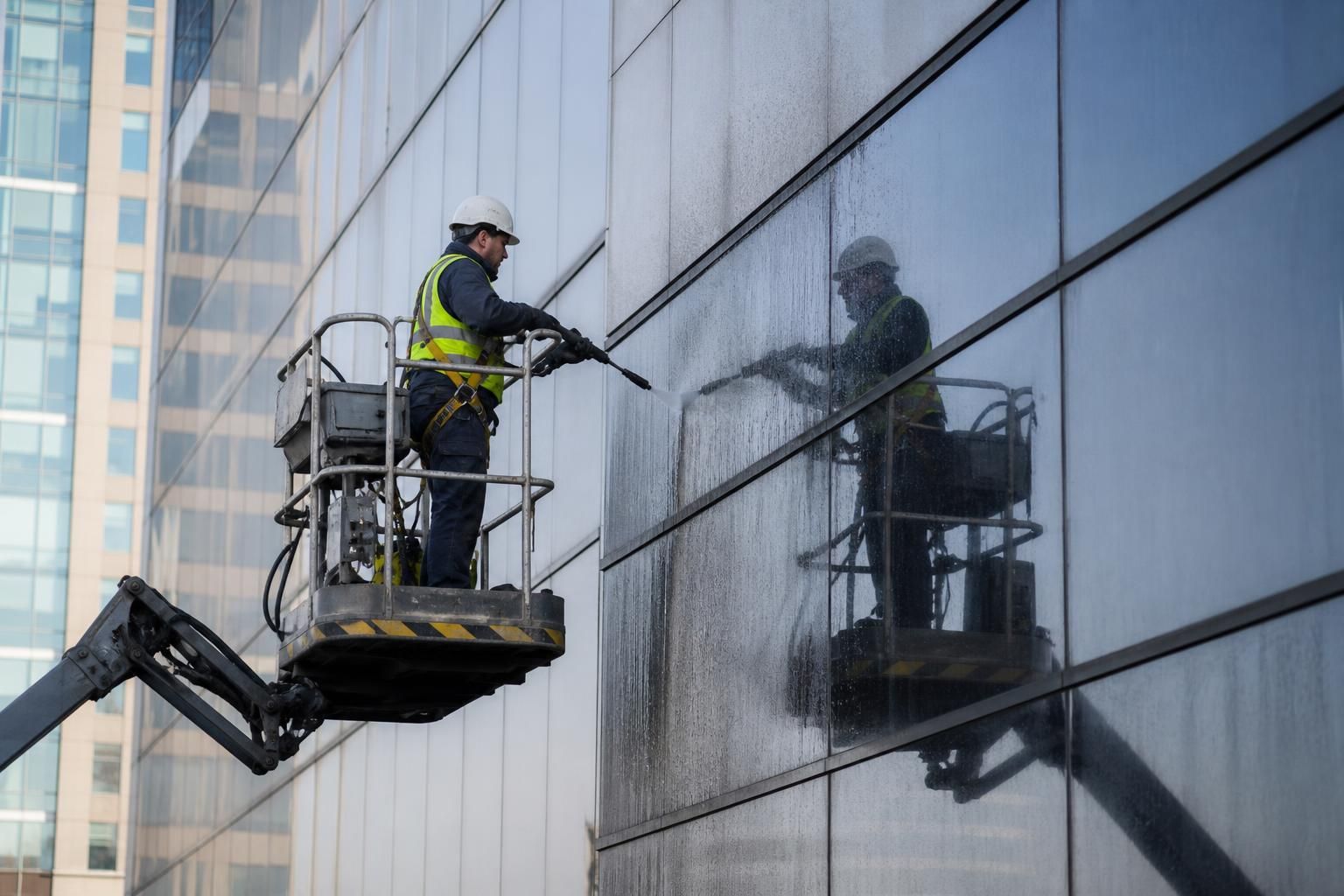
What are the key benefits of regular facade maintenance for commercial buildings?
Regular facade maintenance protects the building envelope from weathering, staining, water ingress and material deterioration. It also helps reduce reactive repair costs, maintain safe conditions, preserve property value and keep commercial premises looking professional.
Regular facade maintenance is the planned inspection, cleaning, repair and protection of a commercial building’s external envelope. It prevents minor defects and surface contamination from developing into water ingress, material failure, unsafe conditions and costly remedial work. A consistent maintenance programme also helps the building remain presentable, compliant with site requirements and suitable for occupants, visitors and neighbouring properties.
It protects the building fabric
Facades are exposed to rain, wind, frost, sunlight, airborne pollution, traffic residue, biological growth and accidental impact. Over time, these factors can stain surfaces, weaken coatings, corrode fixings and open joints or cracks. Regular inspections identify deterioration at an early stage, while appropriate cleaning removes contaminants that can hold moisture against the facade or accelerate surface breakdown.
Maintenance may include pressure washing, soft washing, steam cleaning, targeted chemical treatment, repointing, sealant replacement, coating repairs and localised material repairs. The correct method depends on the facade construction and its condition. Brickwork, stone, concrete, render, metal cladding, glazed surfaces and composite panels each have different tolerances, so cleaning should be controlled to avoid etching, abrasion, coating loss or water penetration.
It reduces reactive repair costs
Planned maintenance makes it easier to deal with isolated defects before they affect larger areas. For example, repairing failed sealant around openings can help prevent moisture entering the wall build-up, while removing moss or organic growth can reduce persistent dampness and staining. Early intervention is generally more straightforward than arranging urgent access, replacing extensive finishes or addressing damage inside the building.
A maintenance record also supports better budgeting. Inspection findings can be prioritised according to safety, water protection, appearance and long-term fabric preservation. This allows property managers to plan necessary works rather than responding only when a visible failure or complaint occurs.
It helps prevent water ingress
Water penetration is a common cause of facade deterioration. Defective pointing, cracked render, open joints, damaged flashings, blocked drainage details and failed sealants can allow rainwater into areas that should remain dry. Once moisture reaches insulation, internal finishes or structural components, the consequences can extend well beyond the external surface.
Regular facade maintenance helps locate likely entry points and confirms whether previous repairs remain effective. Cleaning alone does not correct water ingress, but it can make defects easier to identify and can remove deposits that obscure cracks, joints and drainage paths. Where necessary, maintenance should be coordinated with detailed surveys, leak investigation or specialist repair work.
It improves safety
Loose masonry, damaged cladding panels, failing coatings, unstable render and corroded fixings can present hazards to people and property below. Routine visual inspections and close-access assessments help identify potential falling materials before they become an incident. High-level cleaning and repair work should be planned with suitable access equipment, exclusion zones and risk controls.
Facade maintenance can also improve visibility around entrances, walkways, loading areas and car parks by removing heavy dirt, algae, graffiti and other deposits. This is particularly important where slippery contamination or poor visibility could contribute to an accident. Cleaning does not replace formal health and safety inspections, structural assessments or statutory duties, but it forms an important part of responsible site upkeep.
It preserves appearance and kerb appeal
A clean, well-maintained facade gives occupants, visitors, tenants and customers a clear indication that the property is being managed properly. Removing traffic film, staining, algae, graffiti and construction residue can restore the appearance of external surfaces without requiring full replacement or decoration.
Consistent maintenance is usually more effective than occasional intensive cleaning. When contamination is allowed to build up, stronger treatments or more disruptive access arrangements may be required, and staining can become difficult to remove without affecting the underlying finish. A planned approach helps maintain a consistent appearance across elevations and avoids obvious differences between recently cleaned and neglected areas.
It supports property value and building performance
The facade is a significant part of a commercial property’s visible condition. Keeping it weather-tight, intact and presentable supports the building’s long-term value and can reduce concerns during inspections, lease events, refinancing or sale. Maintenance cannot prevent every form of structural or material failure, but it helps preserve serviceable external finishes and provides evidence that the asset has been managed responsibly.
Maintaining the building envelope may also support internal comfort and energy performance where defects affect air leakage, dampness, insulation or the condition of windows and external doors. The effect depends on the construction and the nature of the defect; cleaning a facade will not by itself improve insulation, but repairing failed envelope components can help prevent avoidable heat loss and moisture-related problems.
It helps meet operational and environmental requirements
Commercial premises often need to remain accessible and operational while work is completed. Planned facade maintenance allows access, cleaning methods, working hours, traffic management and tenant communications to be arranged in advance. This can reduce disruption to staff, visitors, deliveries and neighbouring properties.
Good planning also supports responsible environmental control. The cleaning method should account for water use, chemical selection, run-off, waste capture and the risk of contaminants entering drains or surrounding ground. Where appropriate, low-pressure or steam-based methods and targeted treatments can reduce the need for aggressive cleaning, but the safest option must always be selected for the material and contamination involved.
It gives property managers better control
A useful maintenance programme combines inspection findings with a clear record of completed work, remaining defects and recommended follow-up. Reports should identify affected elevations or areas, describe the observed condition, record access limitations and distinguish cosmetic cleaning from repairs requiring further investigation.
When reviewing a facade maintenance plan, consider:
- the age, construction and previous repair history of each facade;
- exposure to coastal air, traffic pollution, prevailing weather, industrial emissions or sheltered damp conditions;
- the presence of sensitive materials, coatings, glazing, signage, sealants and architectural details;
- areas at height or above public routes that require specialist access and additional controls;
- evidence of staining, biological growth, cracking, corrosion, open joints, loose materials or water-related defects;
- the effect of proposed work on occupants, tenants, deliveries, pedestrians and nearby roads; and
- the inspection, cleaning, repair and reporting requirements for the next maintenance period.
The most effective programme is based on the facade’s materials, exposure and condition rather than a fixed cleaning routine applied to every building. Regular professional assessment allows cleaning and repairs to be scheduled at an appropriate interval, with urgent safety or water-ingress issues prioritised ahead of purely cosmetic work. This protects the external envelope, controls avoidable costs and maintains a safer, more professional commercial property over the long term.
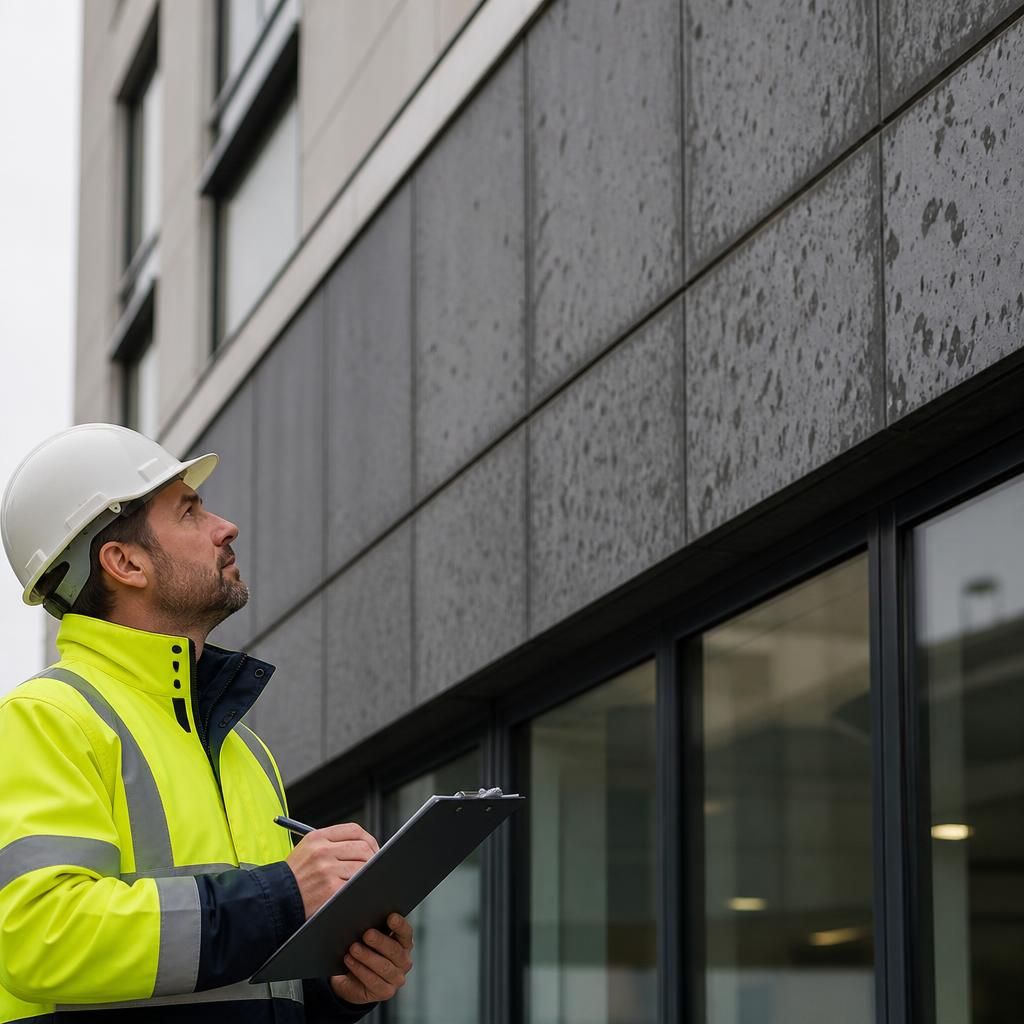
Regular facade maintenance reduces reactive repair costs by identifying defects before they spread or affect concealed parts of the building envelope. Early attention to failed sealants, open joints, damaged pointing, cracked render and blocked drainage details can help limit water ingress and prevent more extensive remedial work.
A planned inspection also gives property managers time to coordinate access equipment, traffic management and suitable repair methods, rather than arranging urgent works after a leak, falling material or serious surface failure. Cleaning can expose defects that are hidden by dirt, algae or staining, but repairs should be specified separately where the facade has suffered material or structural damage.
Arrange a Commercial Facade Maintenance Assessment
Arrange a commercial facade maintenance assessment to identify deterioration, water-ingress risks and priority cleaning or repair requirements. We can help you plan suitable works around your building’s materials, access needs and operational requirements.