
How often should facade maintenance be scheduled for optimal results?
Facade maintenance should be reviewed at least annually, with cleaning and remedial work scheduled according to the facade material, condition and exposure to pollution, weather and traffic. High-risk or heavily soiled buildings may need more frequent inspections and planned cleaning to prevent staining, surface deterioration and costly repairs.
Facade maintenance should be reviewed at least annually, with inspections, cleaning and remedial work scheduled according to the building’s materials, condition, exposure and use. Commercial façades in polluted, coastal, high-traffic or heavily shaded locations may require more frequent monitoring and cleaning than sheltered buildings in cleaner environments. The aim is to remove damaging deposits, identify defects early and prevent minor deterioration becoming costly repair work.
A practical maintenance schedule should include:
- Routine visual checks: Inspect accessible areas regularly for staining, moss, algae, graffiti, cracking, failed sealant, loose coatings, damaged cladding, blocked drainage points and water run-off marks.
- A detailed annual review: Assess the complete facade, including areas that are difficult to see from ground level. This should consider changes in appearance, weathering, previous repairs and any signs of water penetration or material failure.
- Planned cleaning: Schedule cleaning before deposits become firmly bonded or begin to affect the surface. The interval will depend on the type of soiling, the facade material and the building’s exposure rather than a fixed date for every property.
- Prompt remedial work: Repair defective joints, damaged coatings, cracked render, failed pointing and areas of corrosion as soon as they are identified. Cleaning without addressing the underlying defect may only provide a short-term improvement.
Annual reviews do not always mean annual deep cleaning. Some façades remain presentable and technically sound for longer, while others need more regular cleaning because of traffic pollution, industrial emissions, bird fouling, airborne dust, vegetation or persistent damp. A building beside a busy road, for example, may develop carbon and traffic-film deposits more quickly than a building in a quieter location. North-facing or shaded elevations can also retain moisture for longer, encouraging algae and organic growth.
Facade material is another important factor. Glass, metal cladding, brick, stone, render, concrete and coated surfaces each have different cleaning tolerances and failure risks. Brick and stone may be affected by inappropriate pressure or abrasive methods, while coated panels can be marked or stripped by aggressive cleaning. Render and painted surfaces may require lower-pressure washing or steam cleaning, depending on their condition. The schedule should therefore specify both when the facade is maintained and which method is suitable for each elevation and material.
Increase inspection frequency where risk is higher. More frequent checks are appropriate when a facade has a history of water ingress, recurring staining, loose or deteriorating elements, recent construction work, ageing sealants or previous repairs. The same applies to buildings exposed to severe weather, salt-laden air, industrial pollution or heavy public use. Properties with complex façades, high-level access requirements or occupied areas below should also be assessed carefully so that defects can be managed before they create a safety or operational issue.
Additional inspections should be arranged after events that could accelerate deterioration. These may include severe wind, driving rain, frost, accidental impact, nearby construction, changes to roof drainage or reports of damp inside the building. Newly completed or recently restored façades also benefit from an early follow-up inspection to confirm that finishes, joints, drainage details and repaired areas are performing as intended.
Use condition-based triggers as well as calendar dates. A reliable maintenance plan records what was found during each inspection and sets clear actions for the next visit. Useful triggers include:
- Visible staining that is spreading or becoming difficult to remove.
- Organic growth on render, masonry, paving interfaces or shaded elevations.
- Blocked or overflowing gutters, downpipes, outlets and other drainage details.
- Cracks, spalling, delamination, open joints or loose facade components.
- Peeling paint, blistering coatings, rust staining or exposed fixings.
- Failed mastic and sealant around windows, doors, expansion joints or cladding panels.
- Graffiti, bird fouling or other contamination requiring prompt removal.
- Reports of damp, draughts, leaks or visible internal damage near the external wall.
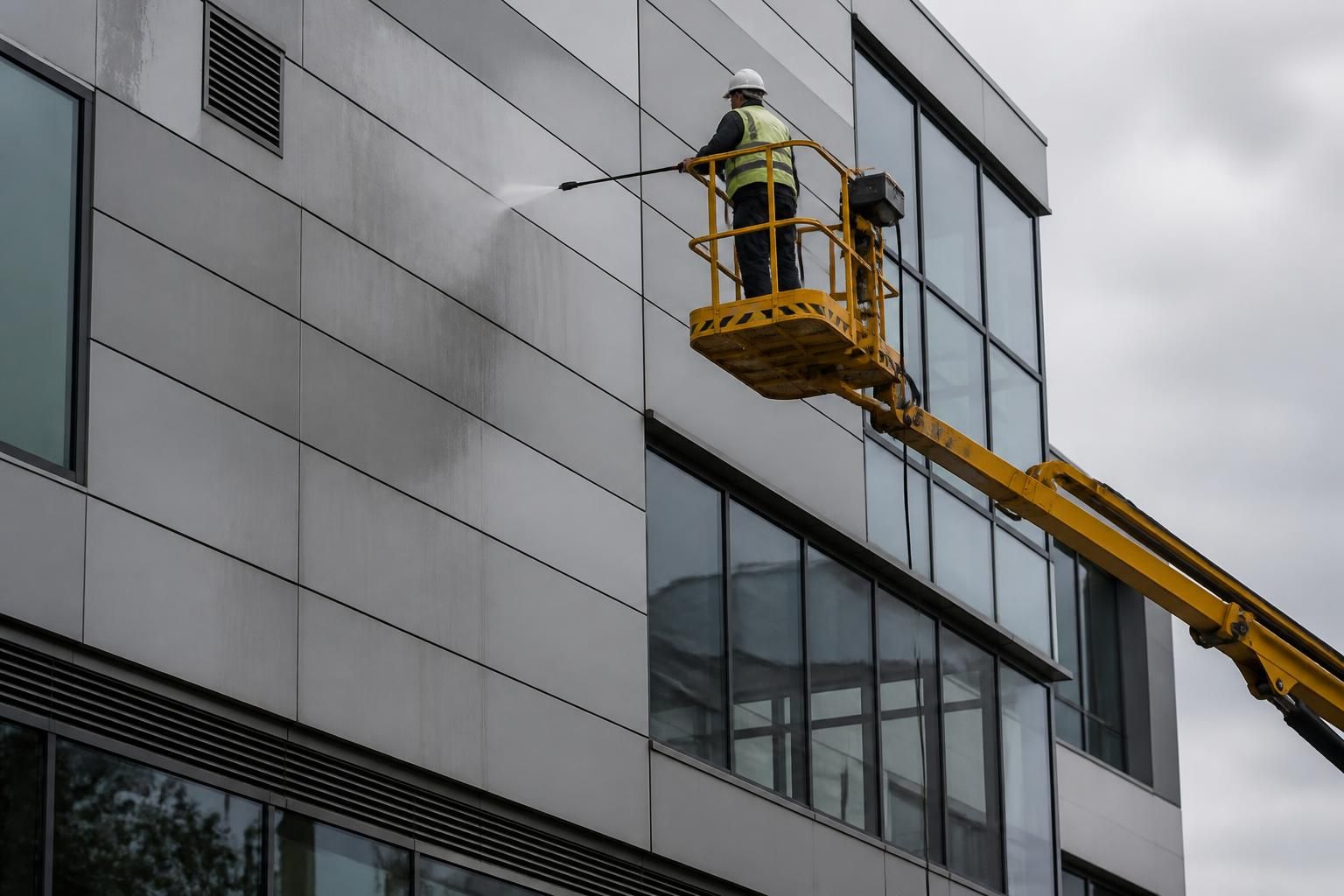
When cleaning is required, the method should be selected after identifying the surface, the type of contamination and the condition of the substrate. A competent contractor may use pressure washing, soft washing, steam cleaning or another controlled technique, but pressure alone is not a maintenance strategy. Test cleaning should be carried out where necessary to confirm that the chosen process removes the deposit without etching masonry, driving water into joints, damaging coatings or discolouring the finish. Run-off, surrounding surfaces, access arrangements and the safe protection of occupants should also be considered.
For larger commercial and industrial premises, facade maintenance is best managed through a planned programme rather than reactive call-outs. The programme should identify each elevation, record its material and condition, note areas requiring specialist access, and separate routine cleaning from repairs or restoration. Photographic records and inspection notes make it easier to compare changes over time and prioritise work according to risk. They can also help property managers demonstrate that foreseeable maintenance issues are being monitored.
A suitable starting point for many commercial buildings is an annual condition review supported by routine visual monitoring and cleaning when deposits or defects warrant it. Buildings with high exposure, sensitive materials or known defects may need a shorter review cycle, while low-risk areas may be maintained less frequently after inspection confirms that condition is stable. The schedule should be revised after each assessment, after significant weather or building work, and whenever the facade’s appearance or performance changes.

Facade maintenance should be scheduled according to the building’s condition and exposure, not only by a fixed calendar date. Regular visual checks can identify spreading staining, organic growth, cracked render, failed sealant, corrosion, loose components and blocked drainage before these issues cause water penetration or more extensive deterioration.
Cleaning or repair should be brought forward when deposits become established, defects worsen, or the facade is affected by severe weather, nearby construction or changes to drainage. A condition-based schedule allows each elevation and material to receive the appropriate treatment, helping prevent unnecessary cleaning while ensuring higher-risk areas receive closer attention.