
How does environmental exposure affect facade maintenance requirements?
Environmental exposure increases facade maintenance requirements by accelerating weathering, staining, corrosion and biological growth. The building’s location, orientation, materials and exposure to pollution, moisture, wind and temperature changes determine how often it should be inspected, cleaned and repaired, and which methods are suitable.
Environmental exposure affects facade maintenance by accelerating weathering, staining, corrosion, biological growth and material failure. The building’s location, orientation, surrounding pollution, moisture levels, wind, temperature changes and facade materials all influence how often it should be inspected, cleaned, repaired and protected. A commercial building in a busy urban or coastal setting will usually require a different maintenance regime from a sheltered building in a cleaner rural environment.
Weathering and moisture
Rain is one of the main causes of facade deterioration. Repeated wetting and drying can carry dirt into porous masonry, weaken surface coatings and expose defects around joints, sills, parapets and coping stones. Where water is able to enter cracks or open joints, it can reach the substrate and cause staining, damp-related damage or corrosion of embedded metalwork.
In colder conditions, water within porous materials can freeze and expand. Repeated freeze-thaw cycles may cause brick faces to spall, stone to fracture and render or coatings to detach. The risk is greater where surfaces remain damp, drainage is poor or existing defects allow water to collect. Maintenance therefore needs to address the source of moisture, not simply remove the visible mark.
Rainwater goods, flashings, seals, expansion joints and drainage outlets should be checked as part of facade inspections. Blocked gutters or defective downpipes can concentrate water onto a relatively small area, producing streaking, saturation and localised deterioration. Cleaning alone will not provide a lasting result if these defects remain.
Wind, driving rain and airborne debris
Wind increases the impact of driving rain and can force water into joints, cracks and poorly sealed interfaces. It also carries dust, grit and other abrasive particles against the facade. Exposed elevations, corners, roof-level features and buildings near open ground may weather more quickly than sheltered elevations.
Wind-driven debris can mark coatings, abrade delicate stone and contribute to the gradual loss of surface detail. Access equipment, temporary works and nearby construction activity can also introduce dust or impact damage. Inspections should consider whether soiling is evenly distributed or concentrated on particular elevations, as the pattern can help identify the environmental cause.
Urban pollution and traffic deposits
Traffic emissions, industrial particulates and general urban dust can settle on facade surfaces. These deposits are often most noticeable beneath ledges, around windows, at parapets and in areas protected from direct rainfall. Some pollutants combine with moisture to form acidic or chemically active deposits, which may discolour stone, attack coatings and contribute to the corrosion of metal components.
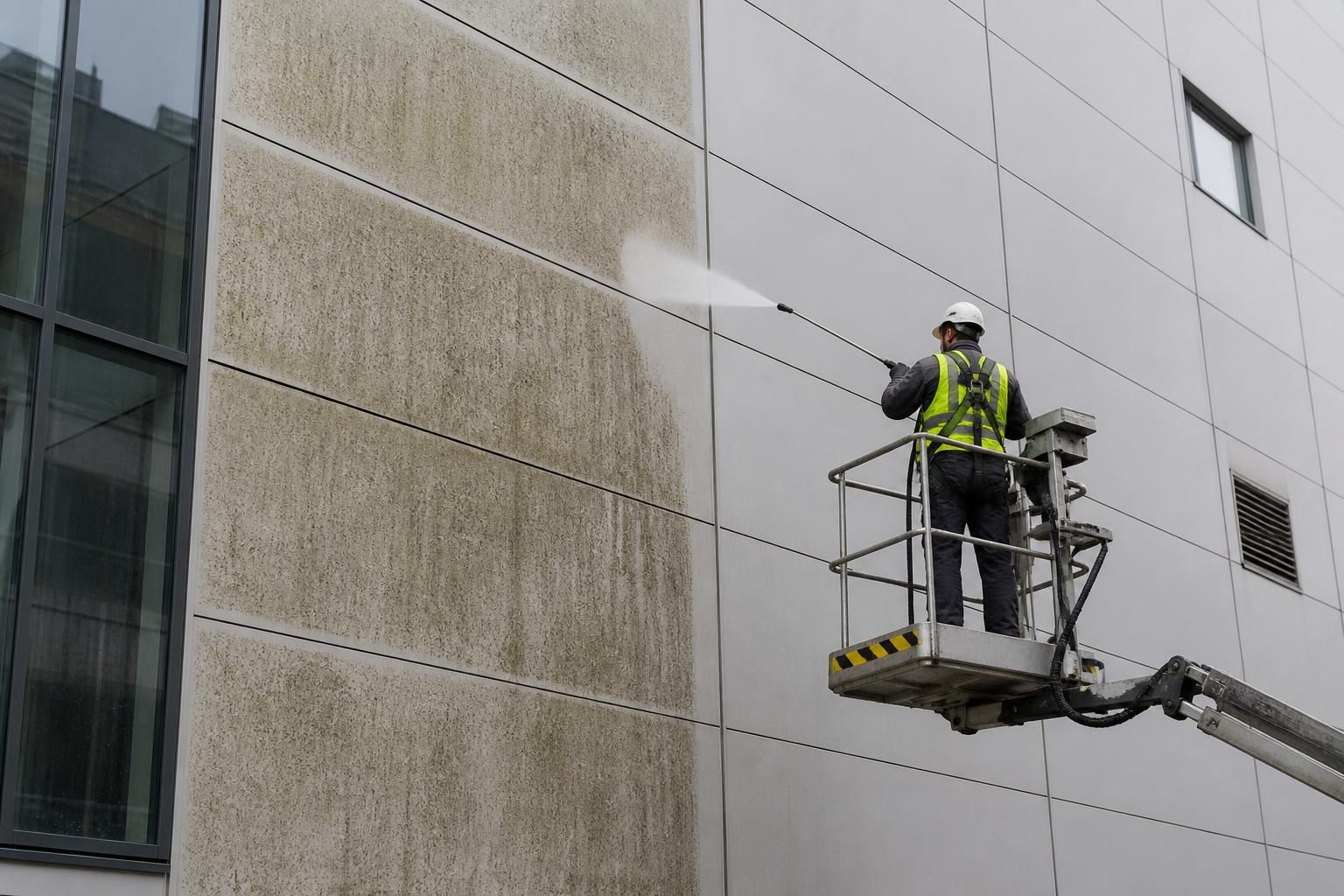
Pollution-related soiling can become bonded to the surface over time. A routine low-pressure wash may be suitable for light deposits, but established staining may require controlled steam cleaning, carefully selected detergents or another method appropriate to the material. Abrasive cleaning should not be used as a default solution because it can remove the weathered face of masonry, roughen stone or damage protective coatings.
Salt exposure and coastal conditions
Coastal buildings are exposed to airborne salt, while buildings near roads may receive salt and de-icing residues during winter. Salt can enter porous masonry and attract moisture, increasing the likelihood of efflorescence, surface breakdown and corrosion of metal fixings. Stainless steel, painted metal, aluminium and other components may still require inspection because adjacent materials, fixings and joints can fail even where the visible surface appears sound.
Salt deposits should be removed using a method that does not drive contamination deeper into the facade. The appropriate approach depends on the substrate, the amount of salt present and whether the material can tolerate water. Repeated cleaning may be necessary where exposure is ongoing, but the maintenance plan should also address failed pointing, open joints and sources of water penetration.
Algae, moss, lichen and other biological growth
Moisture, shade and limited air movement encourage algae, moss, lichen and mould to develop. North-facing elevations, areas beneath overhangs, landscaped boundaries and surfaces affected by leaking rainwater are particularly susceptible. Biological growth can retain moisture against the facade, obscure defects and make paths, entrances or other adjacent surfaces slippery.
Removal should be matched to the material and the type of growth. Excessive pressure can damage masonry faces, mortar joints, render and sealants, while aggressive chemicals may affect vegetation, drainage systems or nearby finishes. A suitable treatment may include controlled cleaning followed by an appropriate biocidal or protective treatment, subject to environmental controls and the manufacturer’s guidance. The underlying damp condition should also be corrected to reduce regrowth.
Sunlight and temperature changes
Ultraviolet exposure can fade paints, coatings, sealants and some cladding finishes. Solar heating causes facade materials to expand, while cooler periods cause them to contract. These movements place stress on joints, fixings, render systems and coatings, particularly where different materials meet. Repeated movement may lead to hairline cracking, failed sealant or local detachment.
East-, south- and west-facing elevations may experience different levels of solar exposure, while shaded elevations may remain damp for longer. A facade assessment should record these differences rather than treating every elevation as having the same maintenance requirement. Coatings and sealants should be renewed with products compatible with the substrate and capable of accommodating the expected movement.
How exposure should influence the maintenance plan
An effective plan combines scheduled inspections with responsive checks after severe weather, building work or a change in site conditions. The inspection should assess:
- Cracked, loose, hollow or spalled masonry, render, stone and cladding panels.
- Open or eroded mortar joints, failed sealants and defective movement joints.
- Water staining, damp areas, efflorescence and signs of penetrating moisture.
- Corrosion, staining or movement around fixings, brackets, flashings and other metalwork.
- Blocked or leaking gutters, downpipes, outlets and drainage details.
- Algae, moss, lichen, mould and other biological contamination.
- Faded, chalking, blistered or peeling coatings.
- Damage concentrated on exposed elevations, corners, roof lines or areas beneath projecting details.
Cleaning frequency should be based on the rate and cause of soiling rather than an arbitrary timetable. A building beside a busy road, in a damp shaded location or close to industrial activity may need more frequent cleaning than a sheltered site. Conversely, unnecessary cleaning can wear surfaces and increase costs, particularly where the facade is delicate or historic.
Selecting suitable cleaning and repair methods
The facade material and its condition determine the safe cleaning method. Brick, natural stone, concrete, render, metal cladding, glass and coated systems each respond differently to pressure, heat, moisture and chemicals. Before full-scale work, the proposed method should be assessed on a discreet test area to confirm its cleaning effect and check for colour change, surface damage, water penetration or other adverse reactions.
Low-pressure washing is often appropriate for loose dirt on robust surfaces, while steam cleaning can help soften bonded urban deposits with less mechanical force. More intensive methods require careful control, especially on friable masonry, historic surfaces, painted finishes and deteriorated joints. Repairs should normally follow cleaning and drying, because soiling can conceal cracks, failed pointing and corrosion.
Where environmental exposure is severe, protective measures may include repairing weathering details, improving rainwater discharge, renewing sealants, repointing compatible joints or applying a breathable protective treatment. Any coating or treatment must be suitable for the substrate; trapping moisture behind an unsuitable coating can worsen deterioration rather than prevent it.
Record findings and prioritise work
Keep inspection and cleaning records for each elevation, including photographs, observed defects, environmental conditions and the methods used. This makes it easier to identify recurring problems, compare deterioration over time and plan remedial work before defects become extensive. Safety-critical issues, loose materials, unstable cladding and water ingress should be prioritised, followed by defects that are accelerating surface deterioration.
For commercial premises, facade maintenance is most effective when it is treated as an ongoing asset-management task rather than an occasional cosmetic clean. Understanding how the site is exposed allows cleaning, repairs and protective work to be scheduled at appropriate intervals, using methods that preserve the facade while addressing the conditions responsible for its deterioration.
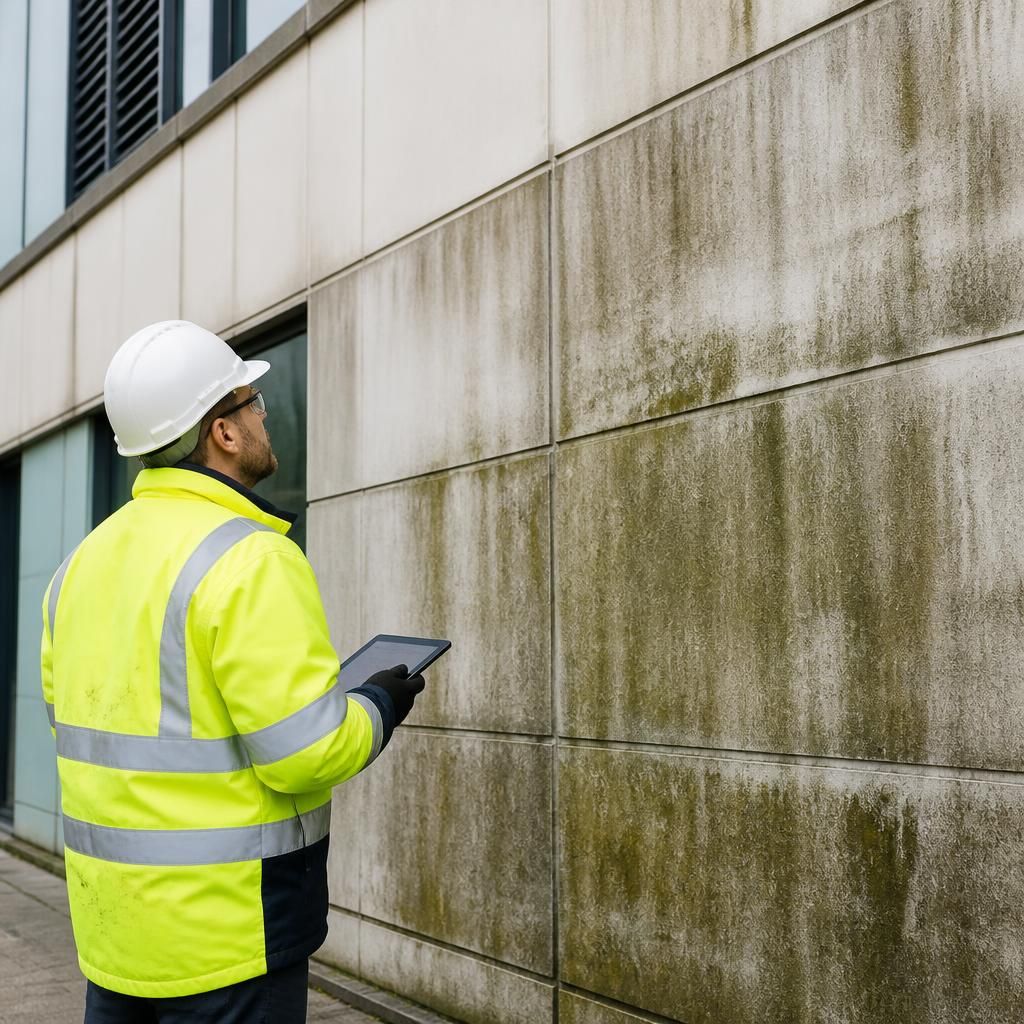
Environmental exposure should determine both the frequency of facade inspections and the cleaning method used. Elevations facing prevailing wind, heavy traffic, coastal air or persistent shade generally accumulate contamination and moisture-related defects more quickly than sheltered elevations.
During each inspection, compare exposed and protected areas for staining, open joints, coating failure, biological growth, corrosion and signs of water penetration. This helps identify whether the facade needs cleaning, repairs or improved drainage rather than repeated cleaning alone. Cleaning should then be selected according to the material and its condition: low-pressure washing may suit loose dirt on robust surfaces, while controlled steam cleaning can remove bonded deposits with less abrasion. A discreet test area should be assessed before wider work begins.