
What safety measures are implemented during facade cleaning?
Facade cleaning safety measures include risk assessments, method statements, suitable access equipment, exclusion zones, personal protective equipment and controlled use of water, steam and cleaning chemicals. Encanto Exterior Cleaning also considers working at height, falling debris, public access, electrical hazards, weather conditions and protection of the building and surrounding property before work begins.
Facade cleaning is carried out safely through a planned combination of risk assessments, method statements, suitable access equipment, trained operatives, exclusion zones, personal protective equipment and controlled cleaning techniques. Before work starts, Encanto Exterior Cleaning assesses the building, its materials, surrounding areas and the risks to operatives, occupants, visitors and members of the public.
Planning and risk assessment
A site-specific risk assessment identifies hazards such as working at height, fragile surfaces, falling debris, vehicle movements, overhead services, electrical equipment, public access and adverse weather. The findings are recorded in a method statement that explains the proposed cleaning method, access arrangements, equipment, control measures and emergency procedures.
The assessment also considers the condition and construction of the facade. Loose masonry, damaged render, failing sealants, unstable cladding or concealed services may affect how the work is approached. Cleaning is adapted or paused where the building presents a risk that cannot be controlled safely.
Safe access and work at height
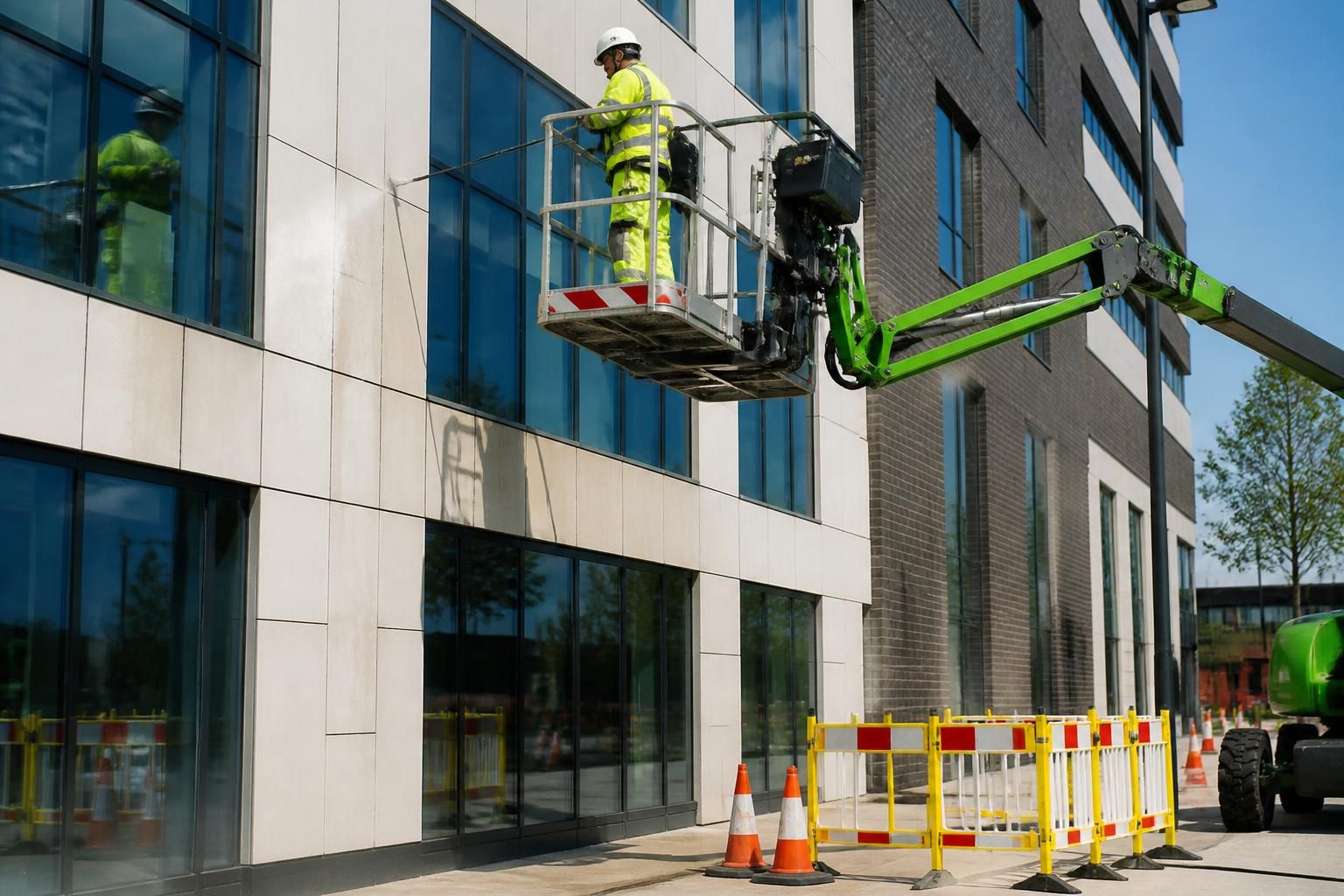
Access equipment is selected according to the building height, facade layout, ground conditions and duration of the work. This may include mobile elevating work platforms, scaffold, towers, cradle systems or water-fed pole equipment where appropriate. Operatives use equipment only for its intended purpose and follow the relevant inspection, maintenance and operating requirements.
Work-at-height controls include secure positioning, suitable edge protection, harness systems where required, safe access and egress, and measures to prevent tools, hoses or materials from falling. Equipment is checked before use, and ground conditions, overhead obstructions and nearby traffic are considered before a platform or other access system is positioned.
Exclusion zones and protection of people below
Work areas are segregated with barriers, cones, warning signs or controlled access points. The size and arrangement of the exclusion zone depend on the height of the work, the risk of falling debris, the cleaning equipment being used and the proximity of pedestrians or vehicles.
Where the facade borders a pavement, entrance, road or occupied area, the work is coordinated to maintain safe routes or to arrange temporary restrictions. A competent person monitors the area when necessary, and cleaning is not allowed to continue if members of the public enter an unsafe zone.
Personal protective equipment
Personal protective equipment is selected from the risks identified in the assessment. Depending on the task, this can include protective footwear, gloves, eye protection, hearing protection, head protection, waterproof clothing, respiratory protection and fall-arrest equipment. PPE supplements, rather than replaces, safer planning, equipment and work practices.
Operatives are also provided with instruction on the correct use, limitations, inspection and storage of their PPE. Contaminated or damaged items are removed from service and replaced where necessary.
Controlled use of water, steam and cleaning products
Pressure washing and steam cleaning are controlled to prevent injury, damage and uncontrolled runoff. Operators select pressure, temperature, nozzle type and working distance according to the facade material and its condition. Test cleaning is used where appropriate to confirm that the selected method will remove soiling without causing surface erosion, water penetration, coating failure or damage to joints and seals.
Water is directed away from electrical installations, openings, vulnerable finishes and occupied areas. Hoses are routed to reduce trip hazards and are protected from vehicle movements where required. Drainage and runoff are considered before cleaning begins so that dirty water, sediment and cleaning residues do not enter unsuitable areas or create slip hazards.
Where chemicals or biocidal treatments are needed, the product information and Control of Substances Hazardous to Health requirements are followed. Products are stored, diluted, applied and disposed of in accordance with their safety instructions. Operatives use the required protection, prevent contact with people and sensitive surfaces, and take steps to avoid contamination of soil, drains, plants and watercourses.
Protection of the building and surrounding property
Windows, doors, vents, signage, lighting, security systems, vehicles, landscaping and other vulnerable items are identified and protected before cleaning. Openings may be closed or covered, while sensitive surfaces are shielded from spray, heat, chemicals and dislodged debris.
Facade condition is monitored during the work. If cleaning reveals loose material, unexpected damage, water ingress or a reaction between the cleaning method and the surface, the area is made safe and the approach is reviewed rather than continuing regardless of the result.
Electrical, plant and vehicle safety
Electrical hazards are assessed before water or steam is used. Electrical installations, external lighting, cables, communications equipment and temporary power supplies are kept clear, isolated or protected as appropriate. Equipment is checked before use, and water is not directed towards exposed or vulnerable electrical components.
Where cleaning takes place near loading bays, car parks or roads, vehicle and pedestrian movements are controlled through segregation, signage, agreed working times and communication with the site contact. Plant is positioned on suitable ground and secured against movement.
Weather and changing site conditions
Wind, rain, frost, heat, poor visibility and icy surfaces can make facade cleaning unsafe or affect the performance of the cleaning method. Weather conditions are checked before and during the work. High winds can affect access platforms, suspended equipment, hoses and spray control, while rain or frost can increase slip risks and reduce visibility.
Work is delayed, altered or stopped if conditions exceed the safe limits for the equipment or task. The facade is also allowed to dry where required before it is inspected or treated further.
Training, supervision and communication
Operatives must be competent for the equipment, access system and cleaning processes they use. Site arrangements are explained before work starts, including the hazards, exclusion zones, emergency contacts, welfare arrangements and reporting procedure for defects or near misses.
Encanto Exterior Cleaning coordinates with the building manager, facilities team or principal contractor where other activities are taking place. Clear communication helps manage occupied buildings, deliveries, alarm systems, restricted areas and changes to the agreed work sequence.
Emergency arrangements and final checks
The method statement includes arrangements for incidents such as a fall, equipment failure, chemical exposure, electrical contact, falling material, fire or uncontrolled water release. Access to emergency services, first-aid provision, rescue arrangements and site contact details are considered in advance, particularly where work is carried out at height or in restricted areas.
On completion, the area is checked for loose debris, standing water, chemical residue, displaced protection or remaining hazards. Barriers are removed only when the area is safe, equipment and waste are cleared, and any defects or recommendations are reported to the responsible client contact.
These controls are reviewed for every project because facade materials, access conditions, building occupancy and surrounding risks vary. Providing information about fragile surfaces, known defects, restricted access, sensitive occupants or previous cleaning issues before attendance helps ensure that the final safety arrangements are appropriate for the site.
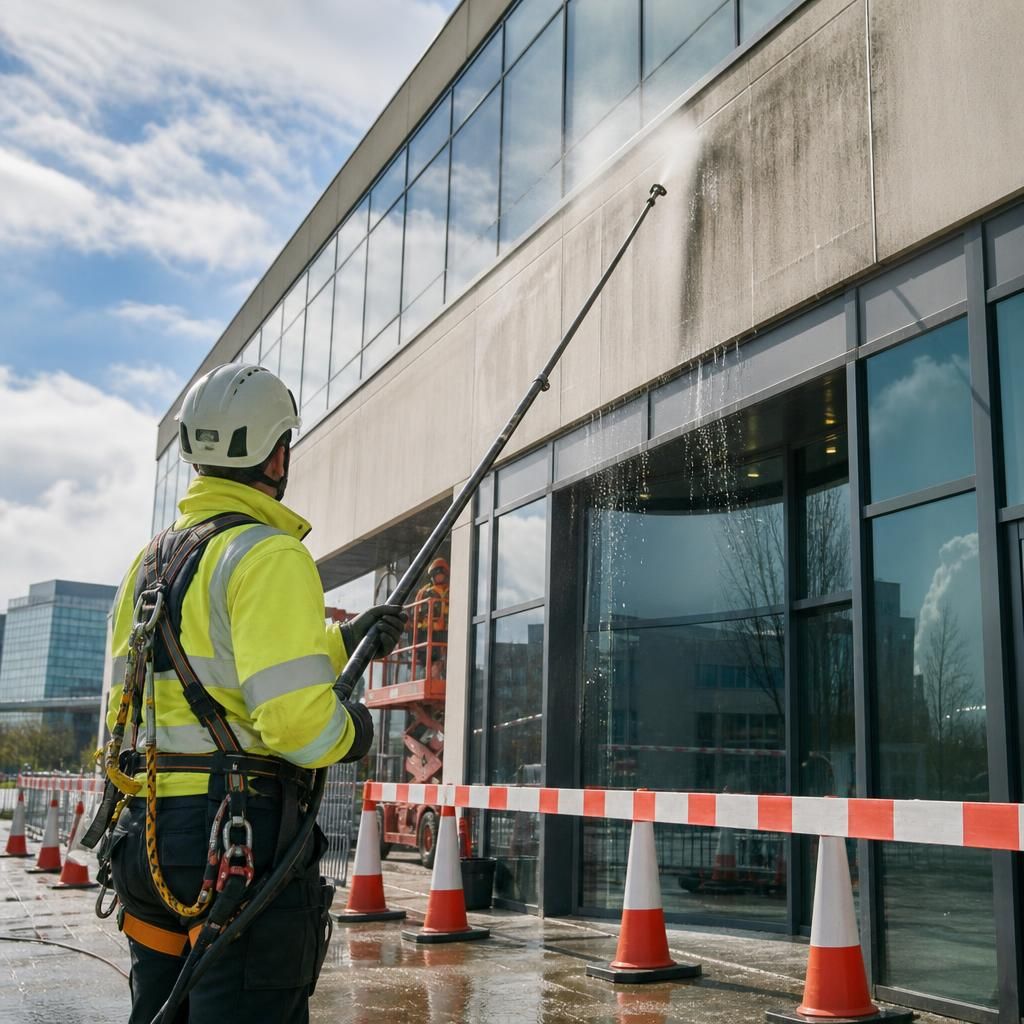
Facade cleaning safety measures are the controls used to protect operatives, building occupants, pedestrians and the property while work is carried out. A site-specific risk assessment determines the required access equipment, personal protective equipment, exclusion zones and cleaning method before work begins.
Where there is a risk of falling debris, spray, equipment movement or contaminated runoff, the work area is separated with barriers, warning signs and controlled access points. Windows, doors, vents, electrical fittings, vehicles and landscaping are protected from water, steam, chemicals and dislodged material. Work is monitored throughout and paused if weather, building conditions or public access make the agreed controls ineffective.