
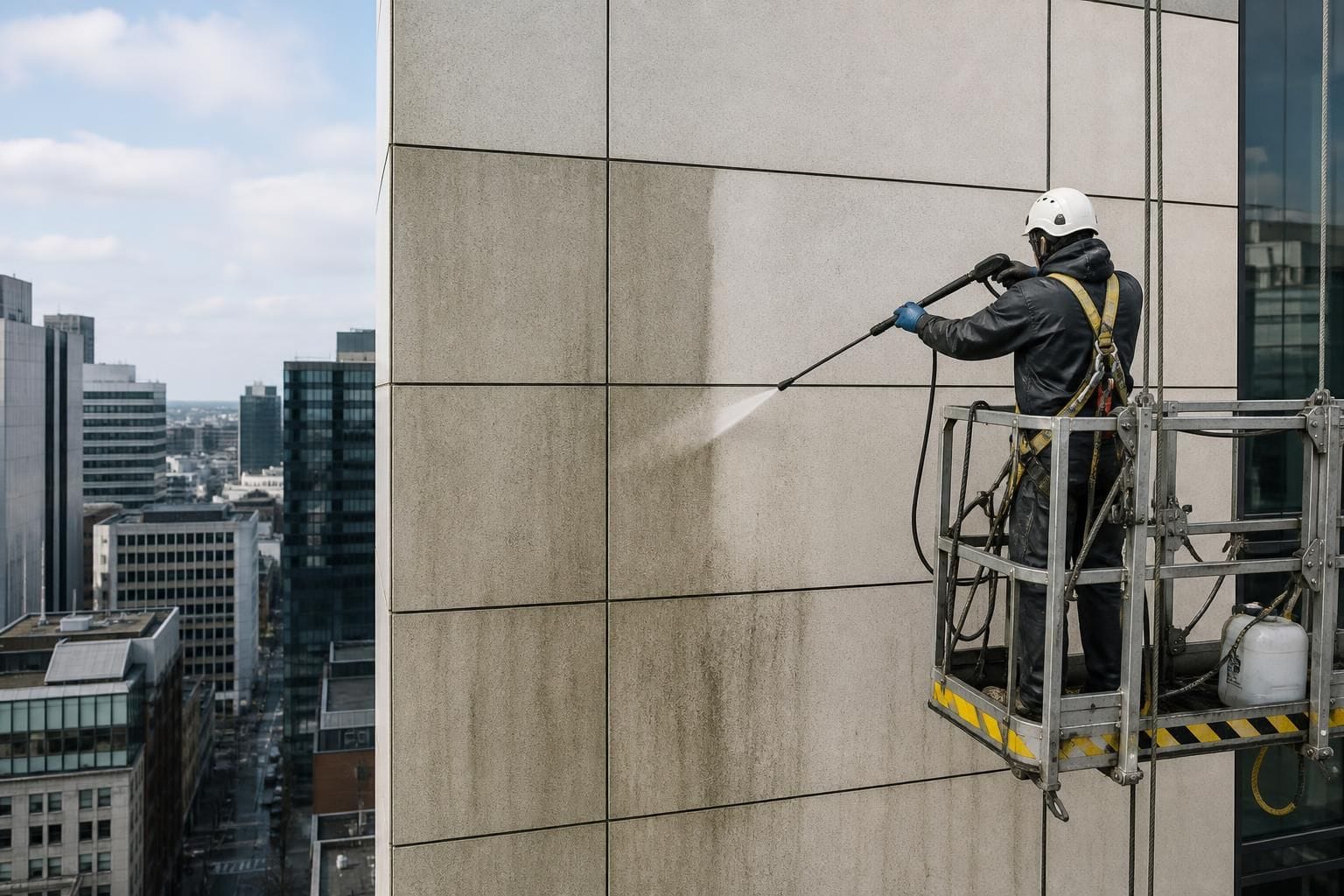
What factors should be considered when selecting a facade cleaning service for a commercial property?
When selecting a facade cleaning service for a commercial property, consider the contractor’s experience with your building materials, proposed cleaning methods, health and safety procedures, access arrangements, environmental controls and insurance. A suitable provider should also offer clear pricing, dependable scheduling, thorough risk assessments and evidence of delivering comparable commercial or industrial projects.
The right facade cleaning service for a commercial property should be selected on more than price. The contractor’s experience with the building materials, proposed cleaning method, safety controls, access plan, environmental procedures, insurance, availability and ability to deliver consistent results are all important. A suitable provider should inspect the facade before work begins and provide a clear, site-specific proposal rather than applying the same process to every building.
Experience with commercial and industrial facades
Ask whether the contractor has completed comparable work on properties of a similar size, height, use and construction. Commercial facades may include brickwork, stone, concrete, render, aluminium, steel, glass, curtain walling, composite panels or coated cladding. Each material can react differently to pressure, heat, chemicals and abrasion.
Relevant experience should include an understanding of:
- How different facade materials absorb water and cleaning products.
- The risks of damaging pointing, sealants, coatings, joints, gaskets and protective finishes.
- Contaminants such as traffic film, algae, moss, carbon deposits, bird fouling, rust staining, cement residue and graffiti.
- Cleaning around windows, vents, signage, electrical equipment, loading areas and sensitive landscaping.
- The practical requirements of occupied offices, retail premises, industrial sites, schools, healthcare buildings and public spaces.
Ask for evidence of relevant commercial projects and references where appropriate. A contractor should be able to explain the problems encountered, the method used and how risks to the facade and surrounding property were controlled.
A proper survey and suitable cleaning method
A reliable contractor should assess the facade before confirming the work. The survey should consider the material, condition, height, contamination, previous treatments, access restrictions, nearby surfaces and the effect of weather on the planned work. It should also identify areas that may require repair before cleaning, such as loose masonry, defective sealant or failed coatings.
The proposed method should match the surface and the type of dirt. Depending on the building, this may involve pressure washing, low-pressure washing, steam cleaning, soft washing, specialist chemical treatment, abrasive techniques or a combination of methods. The contractor should explain why the method is appropriate and what limitations apply.
For sensitive, historic or previously coated surfaces, request a small test area before full cleaning. A test helps confirm the cleaning result, dwell time, pressure, temperature and chemical concentration while reducing the risk of unexpected damage. It can also reveal differences in colour or condition across the facade.
Health and safety arrangements
Facade cleaning can involve work at height, pressurised water, chemicals, moving vehicles, electrical systems and members of the public. The contractor should provide suitable risk assessments and method statements and explain how the work will be managed on the specific site.
Check that the proposal addresses:
- Safe access and working-at-height arrangements.
- Competence and training for operators using pressure washing, steam cleaning and access equipment.
- Inspection and safe use of equipment, including mobile elevated work platforms, scaffolding or other access systems.
- Exclusion zones, barriers, warning signs and control of pedestrians and vehicles.
- Protection of windows, doors, vents, electrical equipment, stock and neighbouring property.
- Safe storage, handling and use of cleaning chemicals in line with relevant COSHH requirements.
- Emergency procedures, weather limits, rescue arrangements and communication with the site contact.
Where access equipment is required, confirm who will arrange it, who will operate it and whether the equipment will be inspected and used by competent personnel. The safest access solution depends on the building, ground conditions, surrounding obstacles and the duration of the work.
Access, disruption and site logistics
Access planning is particularly important for occupied commercial premises. The contractor should identify where vehicles, hoses, water supplies, equipment and waste containers will be positioned. They should also consider delivery routes, loading bays, fire exits, pedestrian walkways, customer entrances and neighbouring businesses.
Discuss whether the work can be completed during normal operating hours or whether sections need to be scheduled outside them. A good plan should minimise disruption without compromising safety. It should set out how noisy equipment, overspray, wet surfaces and temporary closures will be managed, and how the site will be left at the end of each working period.
Environmental controls and wastewater management
Facade cleaning can produce contaminated water containing dirt, oils, cleaning chemicals, paint residues or biological matter. Ask how wastewater will be contained, filtered, collected and disposed of. It should not be allowed to enter surface-water drains or neighbouring land without appropriate controls and permission.
Other environmental considerations include water consumption, chemical selection, runoff protection, noise, overspray, dust and the treatment of removed graffiti or coating residues. The contractor should explain how sensitive planting, watercourses, drainage systems and adjacent properties will be protected. Lower-impact methods may be suitable in some situations, but they must still be effective for the particular material and contamination.
Insurance, compliance and documentation
Before appointing a contractor, confirm that they hold suitable employers’ liability and public liability insurance for the work being undertaken. Ask for current evidence of cover and check whether the policy limits and exclusions are appropriate for the building, access methods and potential risks.
The contractor should also be able to provide relevant business and operator documentation, including risk assessments, method statements, chemical safety information, equipment inspection records and waste-transfer documentation where applicable. For projects involving design decisions, structural issues or significant construction work, clarify how responsibilities will be managed under the applicable UK health and safety requirements, including the Construction (Design and Management) Regulations where relevant.
Clear scope and transparent pricing
A quotation should describe exactly what is included. It should identify the elevations or areas to be cleaned, the expected finish, preparation work, access equipment, protection measures, wastewater handling, removal of graffiti or other specialist contamination, and any exclusions.
Be cautious of a low price that does not explain the method or access arrangements. Costs can change if the facade is more heavily contaminated than expected, access is restricted, repairs are needed or additional protection is required. A dependable quotation distinguishes confirmed work from possible extra work and explains how variations will be authorised.
Quality control and the expected finish
Cleaning should be assessed against the condition and material of the facade, not an unrealistic promise of uniform newness. Ask how the contractor will inspect completed areas, deal with missed or uneven sections and protect the building after cleaning. Before-and-after photographs, agreed inspection points and a named site supervisor can make the expected standard clear.
Where appropriate, discuss whether a protective treatment, stain inhibitor or maintenance recommendation is suitable after cleaning. Such treatments should never be applied without checking compatibility with the facade and confirming how they may affect future cleaning, appearance or warranties.
Reliability and ongoing maintenance
For commercial property, the contractor’s reliability is as important as the initial result. Check their availability, response arrangements, supervision, communication process and ability to work around planned site activity. A written programme should identify preparation, cleaning, inspection and completion stages, together with the site contact responsible for approvals.
If the building requires ongoing maintenance, ask whether the contractor can recommend an appropriate inspection and cleaning cycle based on exposure, surrounding traffic, vegetation, building use and the type of contamination. Regular planned cleaning can help prevent heavy build-up, but the interval should be based on the facade’s actual condition rather than a generic schedule.
In practice, the best selection is the contractor that combines material-specific knowledge with safe access planning, environmental responsibility, clear documentation and dependable project management. Comparing method statements and scope of work—not quotations alone—gives a more accurate indication of whether the service is suitable for the property.
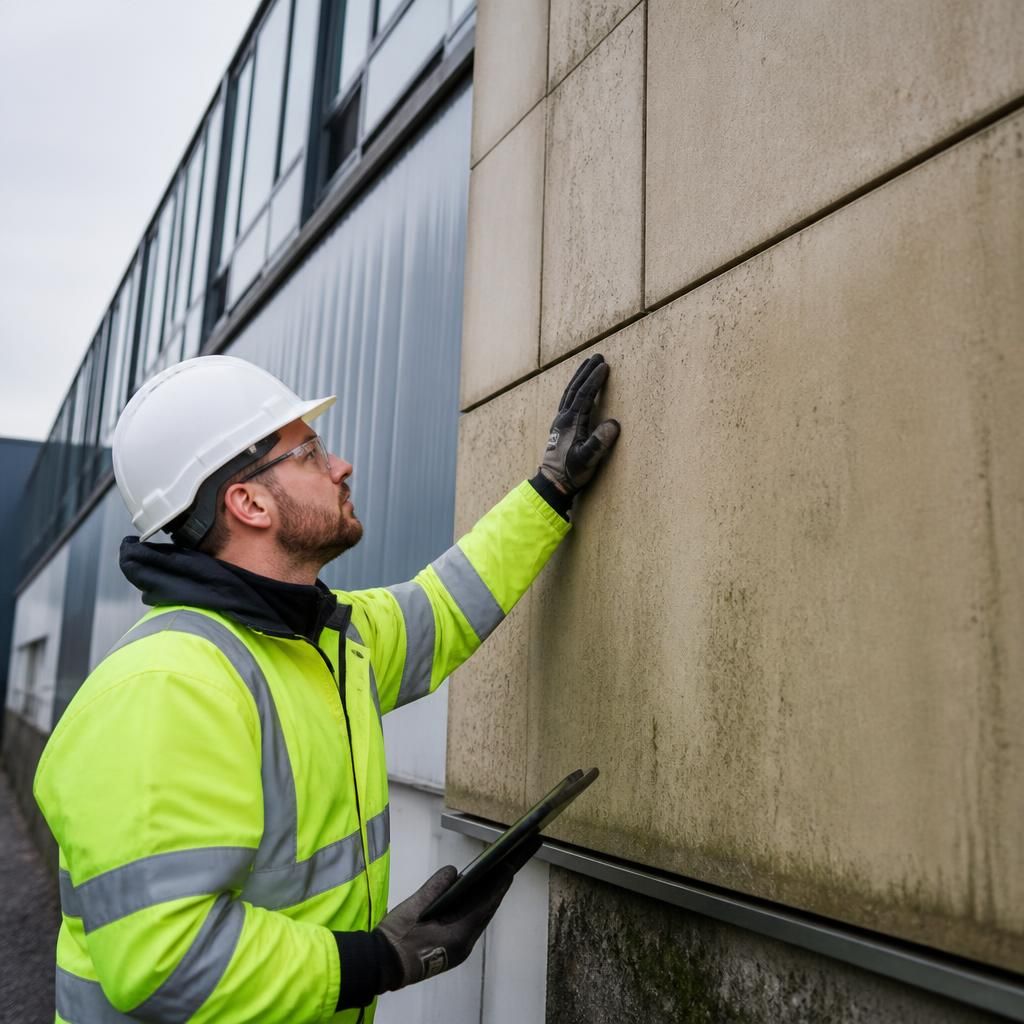
A pre-cleaning facade survey is essential because the correct method depends on the building material, surface condition, contamination and available access. The contractor should inspect the elevations, identify vulnerable features such as pointing, sealants, coatings and window seals, and note any areas requiring repair before cleaning.
For delicate, historic or previously treated surfaces, a controlled test area should be completed before the main work begins. This allows the cleaning pressure, temperature, dwell time and chemical concentration to be checked against the required finish, helping prevent staining, surface damage or an unsuitable result across the wider facade.