
What factors affect the cost of facade cleaning services?
The cost of facade cleaning services depends on the building’s size, facade material and condition, access requirements, cleaning method, and the amount of preparation or specialist treatment needed. Factors such as working height, site location, environmental controls, and whether the work is a one-off clean or part of a planned maintenance programme can also affect the quotation.
The cost of facade cleaning services is mainly affected by the size and complexity of the building, the facade material and its condition, access requirements, the cleaning method needed, and the level of preparation or specialist treatment involved. Site location, working-at-height controls, environmental requirements and whether the work is a one-off clean or part of a planned maintenance programme can also influence the quotation.
Building size and surface area
The total area to be cleaned is a primary consideration. A larger facade generally requires more labour, water, cleaning solution and equipment time. However, the price is not determined by surface area alone. A building with a straightforward elevation may be quicker to clean than a smaller property with multiple rooflines, recessed sections, covered walkways, balconies or intricate architectural details.
The quotation may also distinguish between different areas of the building. For example, glazing, masonry, metal cladding, render and decorative features may require separate cleaning processes. Areas that do not need treatment should be identified during the survey so that the scope is accurate and unnecessary work is excluded.
Facade material and construction
Different materials have different tolerances and cleaning requirements. Brick, stone, concrete, render, curtain walling, aluminium cladding and painted surfaces cannot all be treated in the same way. Some materials can withstand carefully controlled pressure washing, while others require low-pressure washing, steam cleaning, soft washing or specialist chemical treatment.
The construction of the facade is also relevant. Joints, sealants, drainage channels, vents, fixings and areas where materials meet may need additional care. Delicate finishes or older materials can increase the time required for testing, masking and controlled application, but these precautions help prevent etching, staining, water penetration or damage to coatings.
Existing dirt, staining and facade condition
The type and severity of soiling affect both the method and the time needed. Light atmospheric dirt may be removed during a routine clean, whereas oil deposits, traffic film, algae, moss, bird fouling, carbon staining, paint or graffiti may need pre-treatment or more than one cleaning stage.
Weathering, failed coatings, cracked pointing, loose masonry and water ingress can also affect the work. A cleaning contractor should identify defects before starting, as cleaning may expose or worsen an existing problem. Repairs, redecoration, sealant replacement or graffiti protection may need to be priced separately from the cleaning itself.
Access and working height
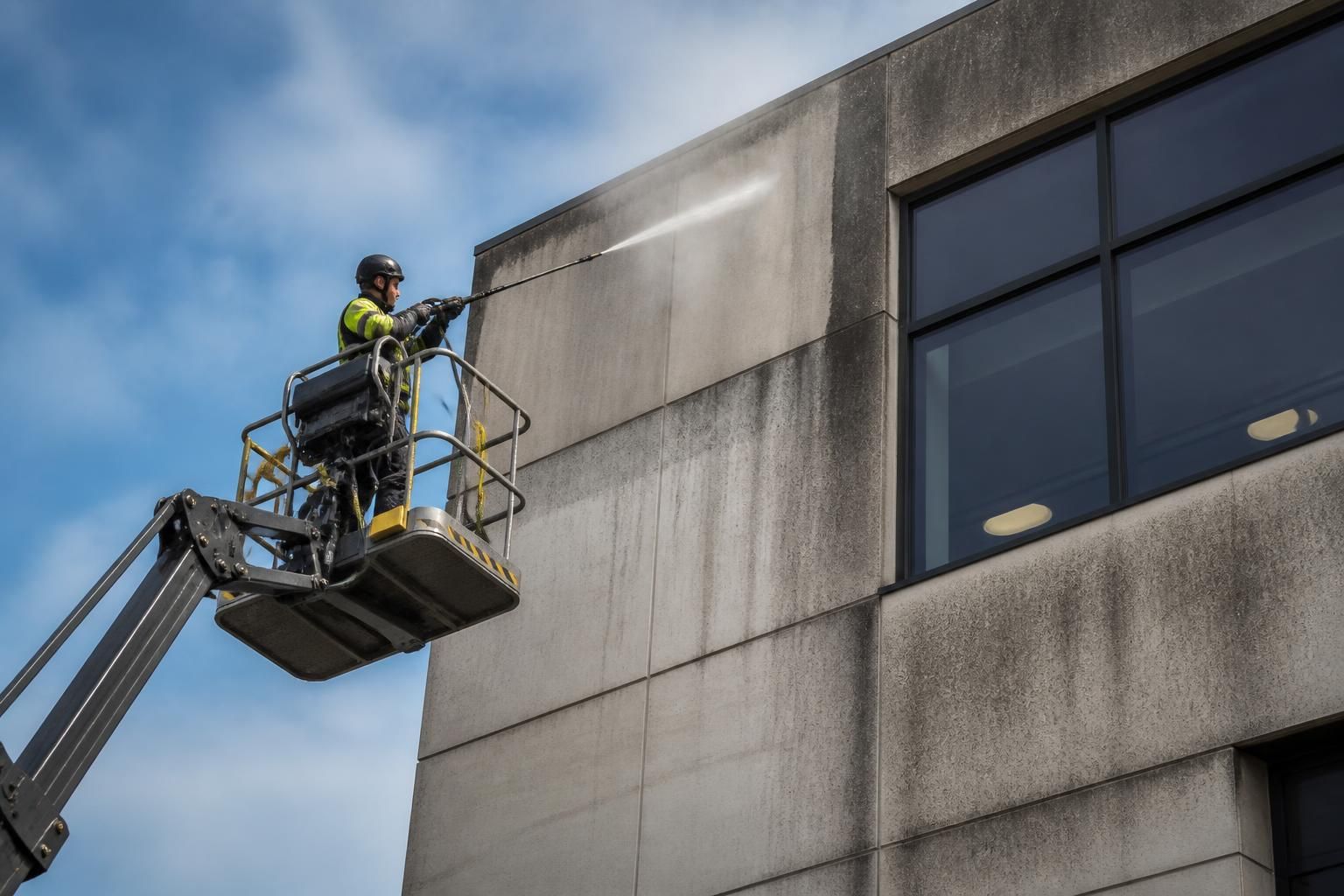
Access is often one of the most significant cost factors on commercial and industrial buildings. Ground-level elevations with clear vehicle access may be treated efficiently using a suitable reach system or mobile platform. Higher or obstructed areas may require access equipment, scaffold, rope access or other specialist arrangements.
The choice depends on the building height, surrounding ground conditions, overhead restrictions, nearby traffic, roofs and canopies, landscaping, tenant activity and the need to protect the public. Equipment delivery, setup, relocation and dismantling all take time. Where access must be installed or hired specifically for the project, this will be reflected in the quotation.
Working at height also requires suitable planning, inspection and control measures. A method statement, risk assessment, exclusion zone, banksman or traffic management may be necessary, particularly at busy commercial premises. These are essential project requirements rather than optional additions.
Cleaning method and specialist treatments
The selected method is determined by the facade material, soiling and required finish. Pressure washing can be effective for suitable robust surfaces, while steam cleaning or low-pressure systems may be more appropriate for delicate materials or areas where water use and splashback must be controlled. Chemical treatments may be needed for biological growth, stubborn staining, paint or graffiti.
Specialist treatments can involve product selection, dilution, dwell time, agitation, rinsing and neutralisation. A test patch is normally advisable before wider cleaning to confirm that the method is safe and effective. The time and materials involved in this process can affect the overall cost, particularly where the facade has mixed materials or several types of staining.
Preparation and protection
Preparation can include moving vehicles, protecting entrances and glazing, covering sensitive equipment, isolating electrical items, securing work areas and arranging access around trading or operational hours. Additional preparation may be required where the building contains occupied offices, retail units, manufacturing areas, loading bays or public routes.
Protection of nearby surfaces and property is especially important when using water or cleaning products. The need to control overspray, prevent runoff and keep entrances open can extend the duration of the work. If furniture, signage, stock or external fixtures must be moved and reinstated, this should be agreed as part of the scope.
Water management and environmental controls
Water supply, drainage and the disposal of contaminated runoff can influence the work plan. Some sites have limited water access or drainage that cannot accept cleaning residues. Where runoff could enter surface-water drains, additional containment, collection or filtration may be required.
Environmental controls may also involve biodegradable or lower-impact products, water-saving equipment, recovery of wastewater and measures to prevent damage to nearby planting or habitats. The appropriate approach depends on the site, the substances being removed and any requirements imposed by the client, landlord, local authority or environmental procedures.
Location and site logistics
The building’s location affects travel, equipment transport, parking, permits and mobilisation time. City-centre sites, industrial estates and properties on busy roads may require delivery scheduling, pedestrian management or temporary traffic controls. Restricted parking and limited storage space can make setup and equipment movement more complicated.
Site rules can also affect productivity. Inductions, security checks, permit-to-work systems, noise restrictions, delivery windows and coordination with other contractors may need to be included in the programme. Providing these details at the enquiry stage helps produce a more realistic quotation.
Timing and cleaning frequency
Urgent, out-of-hours or phased work may cost more than a planned clean completed during normal site operations. Weekend or night work can be useful where the facade borders public areas or the building must remain open, but it may require additional planning and supervision.
A planned maintenance programme can make costs more predictable by allowing work to be scheduled before heavy staining or biological growth becomes established. It may also reduce mobilisation and access duplication when facade cleaning is coordinated with other external maintenance. The right frequency depends on the facade material, exposure, surrounding environment and the building’s appearance and compliance requirements.
What should be included in a quotation?
A useful quotation should state the areas and materials included, the proposed cleaning method, access arrangements, preparation, protection, waste or wastewater handling, and any assumptions or exclusions. It should also clarify whether stain removal, repairs, protective coatings, traffic management and out-of-hours working are included or priced separately.
For complex buildings, a site survey and test patch provide a more reliable basis than a price based only on photographs or floor area. During the survey, access, facade condition, water supply, drainage, operational restrictions and safety requirements can be assessed together. This reduces the risk of unexpected extras and helps ensure that the chosen method is suitable for the building.
When comparing quotations, the lowest initial price may not represent the lowest overall cost if it excludes access, preparation, environmental controls or specialist treatment. A clear scope, appropriate method and realistic programme are more useful measures of value. Providing accurate site information and discussing any known problem areas with the cleaning contractor will help produce an efficient, transparent quotation.
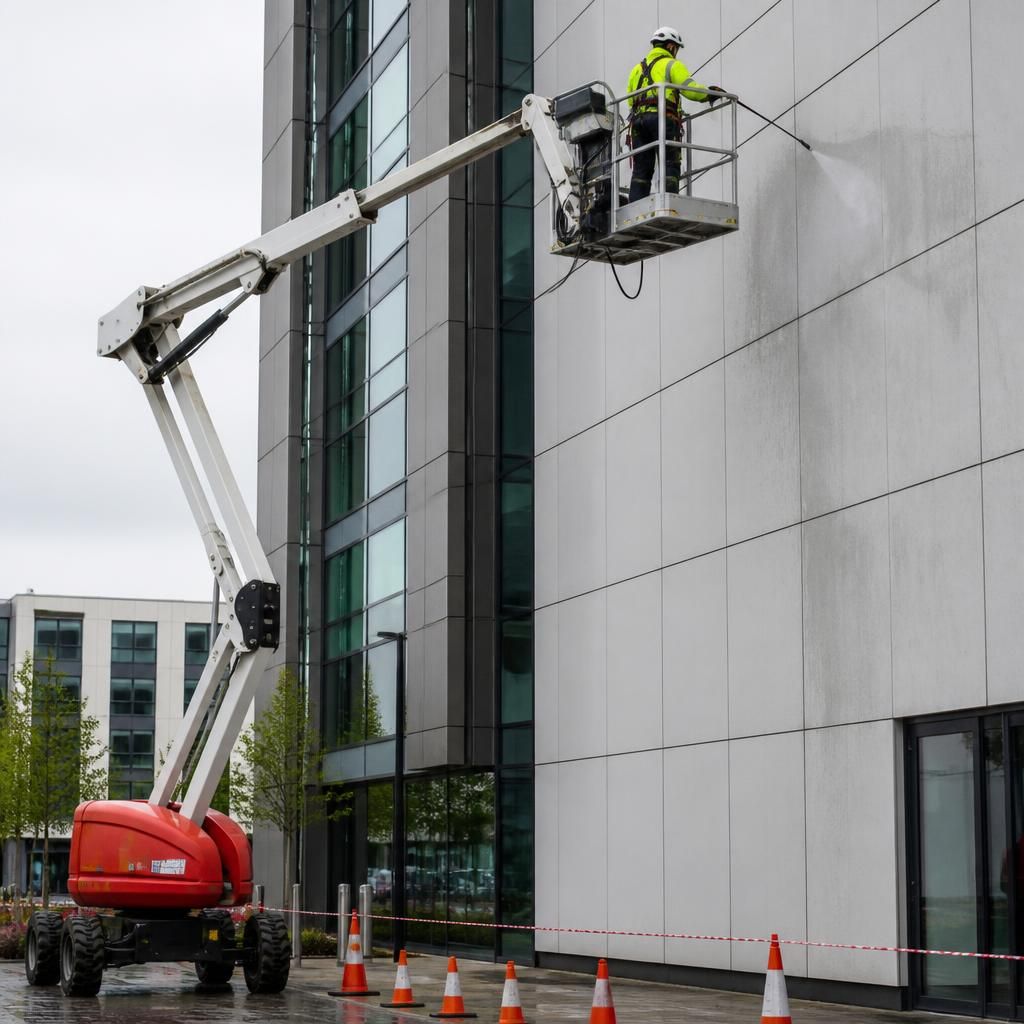
Access arrangements are often a major factor in the cost of facade cleaning, particularly on tall or obstructed commercial buildings. Ground-level areas with clear access may be cleaned using existing reach equipment, while higher elevations or restricted locations may require a mobile platform, scaffold, rope access or other specialist equipment.
The quotation should account for equipment delivery, setup, relocation, dismantling and the safety controls needed to protect building users and the public. Nearby traffic, canopies, landscaping, restricted parking and occupied entrances can all increase preparation time. A site survey helps identify the most practical access solution and prevents essential requirements from being missed.