
What are the most effective methods for cleaning different types of façade materials?
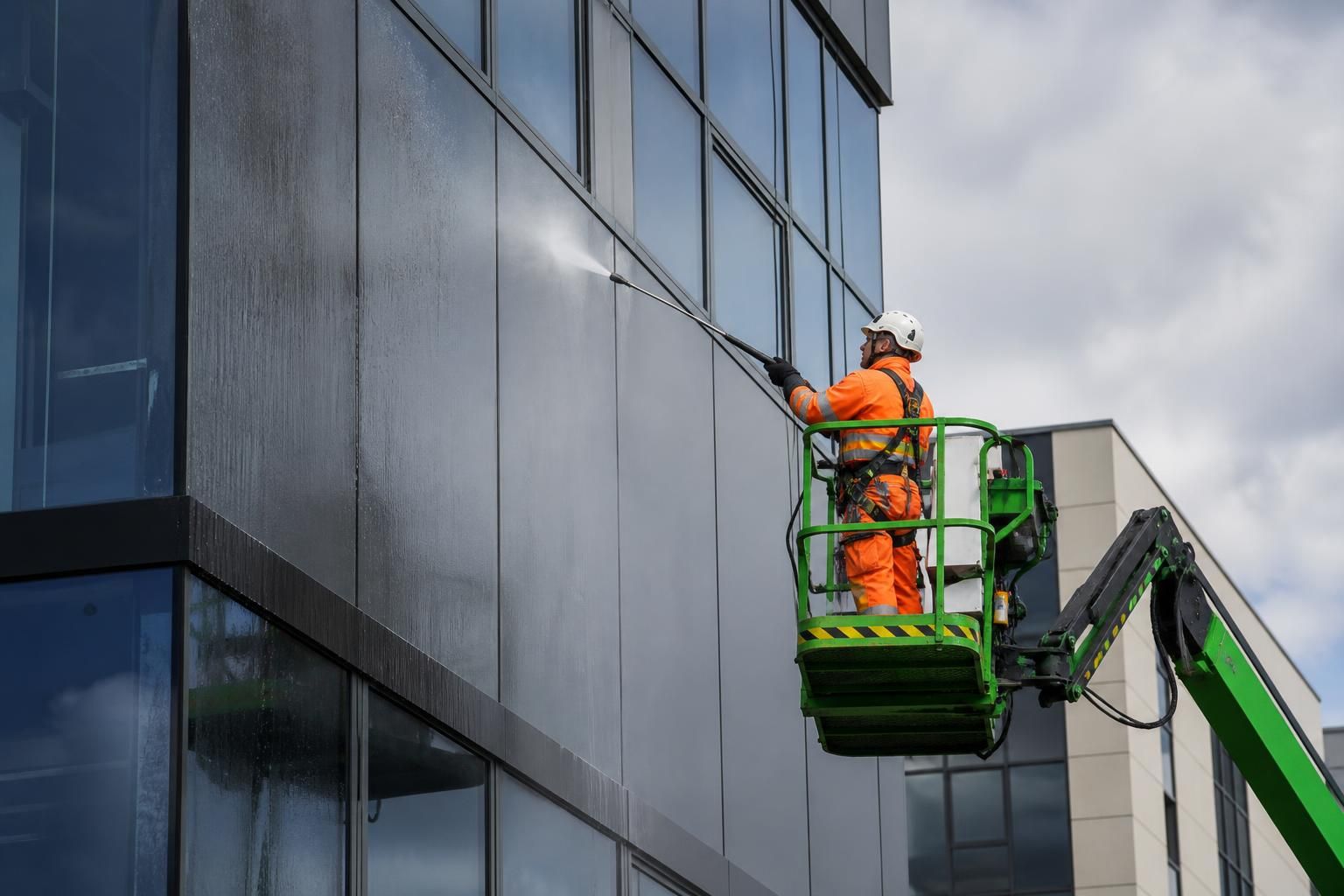
The most effective façade cleaning method depends on the material, surface condition and type of contamination: low-pressure washing is often suitable for robust brick and cladding, while steam cleaning or controlled soft washing can be safer for delicate stone, glass and painted surfaces. Professional assessment is essential to select the correct pressure, temperature and cleaning solution, preventing etching, staining, water ingress or damage to protective coatings.
The most effective façade cleaning method is determined by the material, its condition, the type of contamination and the building’s construction. Robust brick and some modern cladding may tolerate controlled low-pressure washing, whereas historic stone, glass, painted finishes and weathered surfaces often require gentler steam cleaning, soft washing or specialist chemical treatment. A professional assessment and small test area should always be completed before full cleaning to confirm that the chosen method removes contamination without etching, staining, driving water into the structure or damaging protective coatings.
Brickwork
Brick façades are commonly cleaned using low-pressure water washing, sometimes combined with a suitable masonry detergent. This approach is effective for general atmospheric soiling, dust, algae and light organic growth while reducing the risk of damaging the brick face or mortar joints. Pressure should be kept under control, particularly where the brick is soft, friable or already weathered.
Steam cleaning can be preferable for older, delicate or heavily stained brickwork because it uses heat and relatively low water volume to loosen dirt. It may also be useful around detailed features, recessed joints and areas where excessive water could enter the building. Paint, cement deposits, oil and other stubborn contaminants may need a carefully selected poultice or chemical treatment, followed by thorough rinsing. Abrasive blasting is generally unsuitable for vulnerable brick because it can remove the fired surface and accelerate future water absorption.
Natural and architectural stone
Stone must be treated according to its type and finish. Granite and some dense, polished stone may withstand controlled pressure washing, but limestone, sandstone, marble and historic stone can be more sensitive to pressure, acids, alkalis and prolonged saturation. Steam cleaning or low-pressure nebulous water cleaning is often safer for removing atmospheric dirt and biological growth from delicate masonry.
Alkaline or neutral detergents may be appropriate for greasy or organic deposits, but acidic products should not be used on acid-sensitive stone such as limestone or marble. Rust staining, carbon deposits, paint and biological growth require separate treatments, and the cleaning product must be compatible with both the stone and any adjacent metals or sealants. Care is also needed around open joints, cracks, carved details and previous repairs, where water or chemicals can cause localised damage.
Glass and glazed surfaces
Glass is usually cleaned with a low-pressure rinse, a non-abrasive detergent and suitable applicators that will not scratch the surface. Pure water systems can be effective for routine maintenance where access and drainage arrangements permit. Grease, mineral deposits, mortar splashes, adhesive and construction residue should be identified before cleaning because each may require a different treatment.
Scrapers, abrasive pads and aggressive chemicals can permanently mark glass or damage coatings. Modern façades may include solar-control, reflective, self-cleaning or tinted finishes, so the manufacturer’s guidance should be checked where available. Metal frames, gaskets and sealants should also be protected from incompatible chemicals and excessive water pressure. Cleaning should be carried out in conditions that allow the glass to dry without rapid evaporation, which can leave mineral spotting.
Metal façades
Aluminium, steel, zinc and composite metal panels are generally cleaned using a low-pressure wash and a pH-appropriate detergent. The correct method depends on whether the metal is anodised, powder-coated, painted, galvanised or left untreated. A detergent that is safe for one finish may dull, discolour or strip another.
Steam cleaning can remove traffic film, grease and atmospheric deposits while limiting the amount of water used. Rust, oxidation and white corrosion products should not simply be pressure washed away without addressing the underlying cause, particularly where fixings, joints or drainage defects are involved. Cleaning around panel joints must be controlled to avoid forcing water behind the façade system. After cleaning, the surface should be inspected for coating failure, exposed substrate, failed sealant and signs of galvanic corrosion between different metals.
uPVC, composite panels and rainscreen cladding
uPVC and many modern composite panels can usually be cleaned with a low-pressure wash and mild detergent. Soft washing is useful where algae, mould or other organic contamination is present, provided the solution is compatible with the cladding finish and is rinsed away correctly. Excessive pressure can mark the surface, open joints or force water behind panels.
Powder-coated and painted cladding should be tested for colour stability before detergents are applied across a large area. Strong solvents, abrasive pads and highly caustic products may damage the coating or create patchy gloss levels. Rainscreen façades also require attention to ventilation gaps, drainage paths, seals and penetrations. The objective is not only to clean the visible panel but to avoid compromising the façade system’s ability to manage water.
Concrete, render and painted façades
Concrete can often be cleaned with controlled low-pressure washing, steam or a compatible detergent. However, exposed aggregate, spalled concrete and surfaces with visible cracking require a cautious approach because pressure can loosen weak material. Oil, rust, efflorescence and biological growth should be treated differently rather than using one aggressive product for every stain.
Render and painted façades are more variable. Soft washing or low-pressure cleaning is generally safer than high-pressure washing, particularly where the coating is aged, chalking or poorly bonded. A test patch should confirm that the paint does not soften, flake or change colour. Where a coating is already failing, cleaning may reveal the need for repair or redecoration rather than provide a lasting result on its own.
Terracotta, tiles and glazed architectural features
Terracotta and glazed tiles should normally be cleaned with low-pressure water, steam or a mild, material-compatible detergent. Their joints and edges can be vulnerable to erosion, and glazed finishes may be damaged by abrasive cleaning. Cement, mortar and paint deposits should be removed using a controlled specialist process, with particular care around historic or decorative elements.
Choosing the method for the contamination
- Dust and general atmospheric film: low-pressure water washing with a mild detergent or a controlled steam clean is usually sufficient.
- Algae, moss and mould: soft washing or a compatible biocidal treatment can remove growth and reduce regrowth, followed by appropriate rinsing and attention to nearby drainage or moisture problems.
- Grease and traffic residue: a suitable degreaser, steam or warm-water cleaning may be required, with controls to prevent contaminated run-off entering drains.
- Efflorescence: the cause of moisture movement should be considered before treatment. Dry deposits may be removed mechanically or with a carefully selected product, but acid treatments can damage sensitive masonry.
- Paint, adhesive and construction residue: removal should be localised and tested first, as solvents, scraping and abrasive methods can damage the underlying façade.
- Graffiti: the removal product must match both the graffiti medium and the façade material. Porous masonry may need a poultice or repeat treatment, while coated panels may be damaged by strong solvents or excessive pressure.
How a professional cleaning process protects the façade
- Inspect the façade to identify materials, finishes, repairs, joints, coatings, cracks, drainage points and areas of water ingress.
- Determine the type and severity of contamination, including whether staining is superficial or linked to corrosion, defective seals, leaking gutters or persistent damp.
- Select the least aggressive method likely to achieve the required result, balancing pressure, temperature, water volume, dwell time and chemical strength.
- Test the proposed method on an inconspicuous area and assess cleaning performance, colour change, surface texture, run-off and drying behaviour.
- Protect windows, doors, vents, electrical equipment, landscaping and vulnerable adjacent materials before work begins.
- Clean in manageable sections, working from the least contaminated areas where appropriate and preventing dirty water from drying back onto the surface.
- Rinse or neutralise products as required, collect contaminated run-off where necessary and inspect the finished façade for remaining defects or stains.
High-pressure cleaning is not automatically the most effective option. Excessive pressure can remove mortar, expose aggregate, strip coatings, damage pointing and drive water into cavities. Likewise, chemical cleaning is not inherently better for difficult staining if the product is unsuitable for the substrate. The safest and most effective result comes from matching the method to the façade material, using controlled equipment and recognising when cleaning cannot resolve an underlying building defect.
For a commercial or industrial property, the final method should also account for access requirements, working height, public areas, weather, drainage and the need to keep entrances or operations in use. A written method statement, risk assessment and test-cleaning record provide a clear basis for agreeing the approach before the full façade is treated.
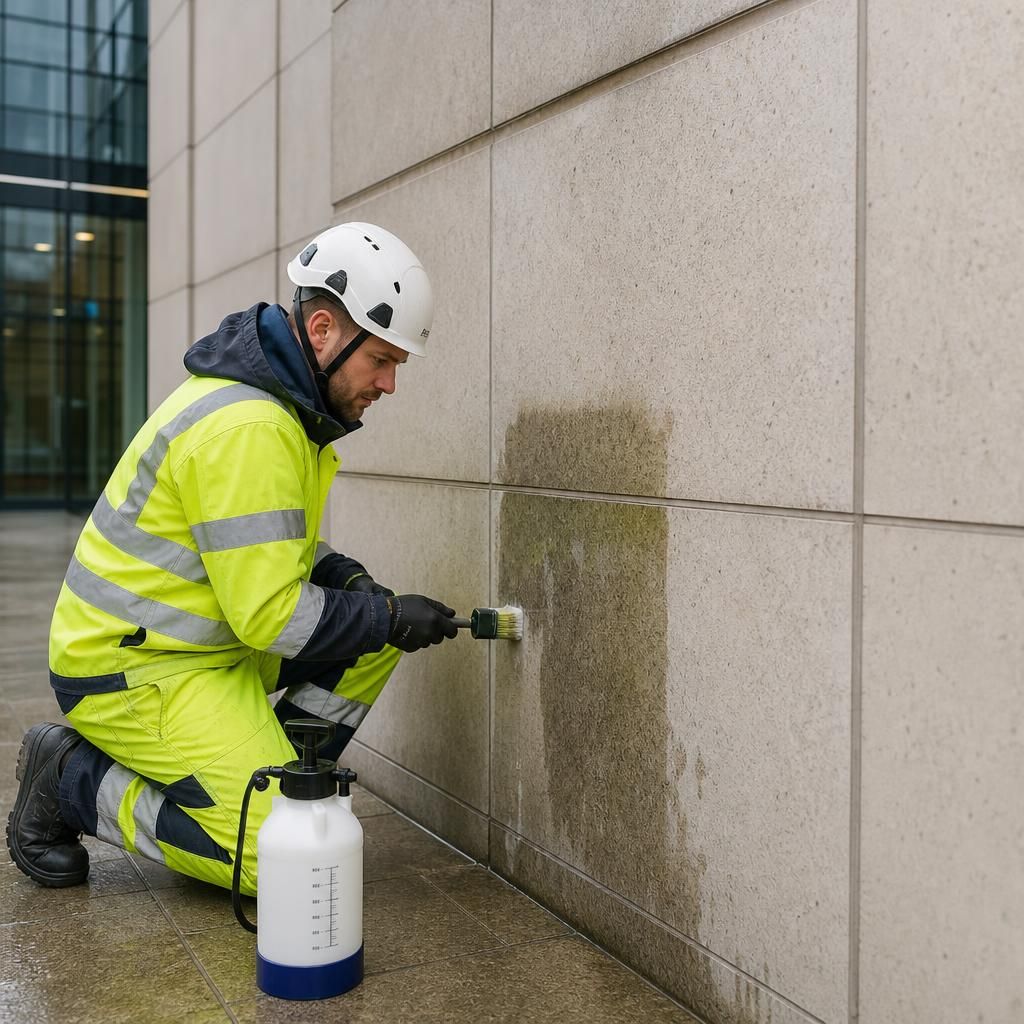
The safest façade cleaning method is the least aggressive process that removes the contamination without damaging the material, coating or joints. Before full cleaning, the proposed pressure, temperature, detergent and dwell time should be tested on an inconspicuous area. This confirms whether the surface changes colour, becomes marked, sheds material or allows water behind the façade.
Testing is particularly important for weathered brick, natural stone, painted render, powder-coated panels and glazed surfaces. The cleaning team can then adjust the method, protect adjacent materials and identify defects such as failed sealant, cracked pointing or persistent damp before they affect a larger area. This controlled approach produces a more reliable result than applying high pressure or strong chemicals across the entire façade.