
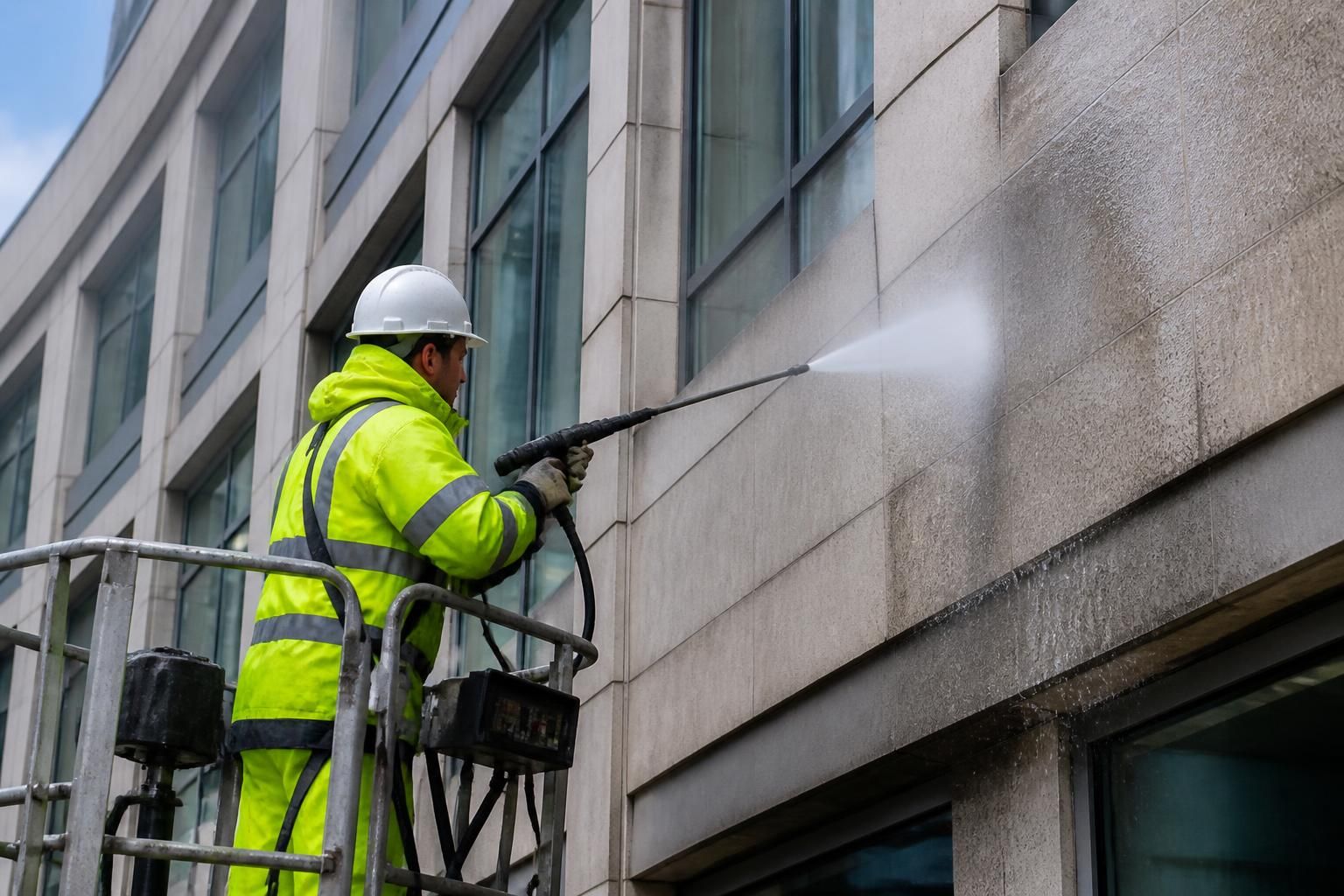
What are the key benefits of regular facade cleaning for commercial properties?
Regular facade cleaning helps commercial properties maintain a professional appearance, remove contaminants that can damage exterior materials, and support safer, more hygienic surfaces. It can also extend the service life of façades, protect the building’s value and reduce the likelihood of expensive remedial work.
Regular façade cleaning is a planned maintenance measure that removes dirt, pollution deposits, organic growth, staining and other contaminants before they affect the building’s appearance or exterior materials. For commercial properties, it supports a professional presentation, safer surfaces, longer-lasting finishes and more predictable maintenance costs.
It protects the building’s appearance
Façades are continually exposed to traffic emissions, dust, rainwater run-off, bird fouling, algae, moss and atmospheric pollutants. If these deposits are left in place, they can create uneven staining and make a well-maintained property appear neglected. Regular cleaning keeps the exterior consistent across elevations, entrances, loading areas and other high-visibility points.
A clean façade also helps commercial premises present the right image to customers, visitors, tenants, employees and neighbouring businesses. This is particularly important for offices, retail units, hospitality venues, managed estates and properties being prepared for inspection, letting or sale.
It helps prevent deterioration of façade materials
Deposits on a façade are not only cosmetic. Pollutants and biological growth can retain moisture against surfaces, while acidic or abrasive contamination may gradually affect coatings, masonry and metal finishes. Moss and other organic growth can enter joints, cracks or porous materials, making existing defects more difficult to monitor and potentially contributing to further deterioration.
Routine cleaning allows contaminants to be removed before they become more difficult to treat. It can therefore help preserve brickwork, stone, concrete, render, glass, cladding and coated metalwork, provided that the cleaning method and pressure are suitable for the material and its condition. Cleaning should not replace necessary repairs; damaged pointing, failed sealants, cracked render or loose cladding should be assessed and addressed separately.
It supports safer external surfaces
Algae, moss, grease and other deposits can make areas around entrances, ramps, walkways and service yards slippery, particularly when wet. Removing contamination from these locations can reduce avoidable slip hazards and support a safer environment for pedestrians, staff, contractors and visitors.
Façade cleaning can also improve visibility around windows, signs, lighting and access points. Where fouling or staining is affecting ledges and building entrances, cleaning forms part of wider housekeeping and site-maintenance controls. A suitable risk assessment is still required, as cleaning alone cannot remove every underlying hazard.
It can reduce long-term remedial costs
Planned cleaning is generally easier to control than allowing heavy contamination to build up until specialist restoration or replacement is required. Regular removal of deposits can make defects easier to identify during routine inspections and may reduce the need for aggressive cleaning, extensive preparation or premature redecoration.
The financial benefit depends on the façade material, building exposure, access requirements and condition of the surface. A maintenance schedule should therefore be based on the property rather than a standard interval. High-traffic locations, coastal or industrial environments, shaded elevations and façades affected by persistent run-off may require more frequent attention.
It helps preserve property value and condition
A clean, well-maintained exterior contributes to the overall condition of a commercial asset. Consistent maintenance records can also help property managers demonstrate that external areas are being monitored and maintained as part of a planned programme. This is useful when managing landlord obligations, preparing for surveys or coordinating work across a wider estate.
Regular cleaning also makes it easier to identify changes in the façade, such as discolouration, failed coatings, staining from defective rainwater goods or localised biological growth. These observations can inform repairs before a minor issue develops into a wider maintenance problem.
It supports operational and compliance requirements
Commercial cleaning work must be planned around building use, occupants, public access, traffic movement and the risks associated with work at height. A regular programme provides an opportunity to coordinate façade cleaning with other planned maintenance, minimise disruption and establish suitable controls for water management, access equipment and pedestrian protection.
Cleaning contractors should select techniques according to the surface and contamination. Pressure washing, soft washing, steam cleaning and low-pressure chemical treatments each have appropriate uses and limitations. Method statements, risk assessments and suitable containment or drainage arrangements are particularly important where cleaning water, chemicals or contaminated run-off could affect people, vehicles, landscaping or drainage systems.
It provides more predictable maintenance
Planned façade cleaning makes exterior maintenance easier to budget and schedule than reactive work following complaints, visible staining or material damage. It can be coordinated with roof cleaning, cladding maintenance, window cleaning, car park cleaning and other external works where access equipment or site controls overlap.
The most effective programme records the façade materials, known problem areas, previous treatments, access constraints and any changes in condition. After cleaning, a competent contractor should report defects or areas requiring further investigation rather than treating every issue as a cleaning problem. This approach keeps the work focused, protects vulnerable surfaces and helps maintain the property over the long term.
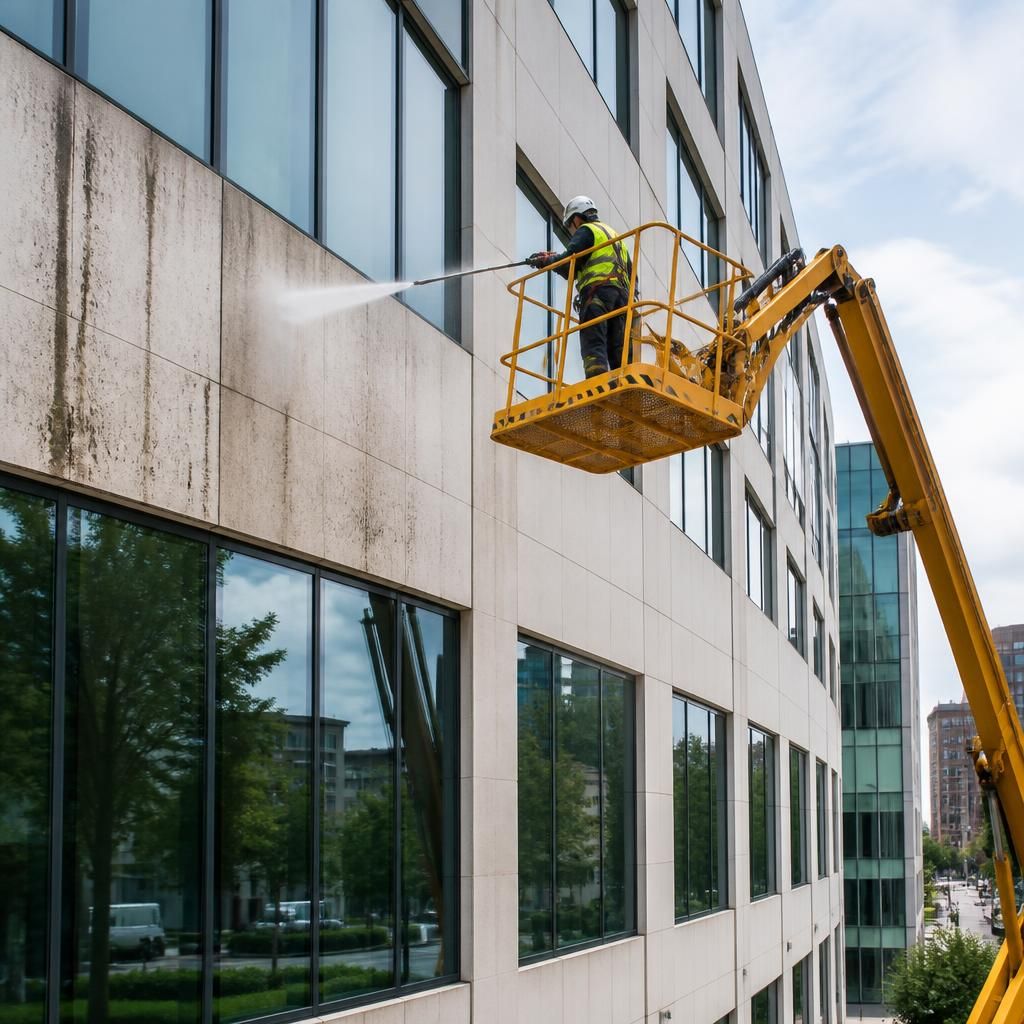
Regular façade cleaning removes pollution, dirt, organic growth and staining before these deposits can affect the appearance or condition of a commercial building. This is particularly important on entrances, retail frontages, office elevations and other visible areas where the exterior influences how customers, visitors, tenants and employees assess the premises.
Cleaning also supports early identification of maintenance problems. Once deposits have been removed, it is easier to see cracked render, damaged pointing, failed sealants, coating defects, blocked rainwater outlets or staining caused by leaks. These issues can then be assessed and repaired separately, rather than being concealed beneath contamination or allowed to worsen.
The cleaning method must match the façade material and its condition. Low-pressure washing, steam cleaning or a suitable soft-wash treatment may be appropriate for some surfaces, while delicate masonry, aged coatings and porous materials require greater control. Correct method selection helps preserve the façade while delivering the practical benefits of a cleaner, more inspectable exterior.