
What are the benefits of regular facade cleaning for commercial buildings?
Regular facade cleaning removes dirt, algae, pollutants, staining and other contaminants before they damage exterior materials or create safety issues. It helps commercial buildings maintain a professional appearance, protect the facade, support compliance and avoid the higher costs associated with neglected maintenance.
Regular façade cleaning removes dirt, traffic film, algae, moss, atmospheric pollutants, bird deposits, graffiti and other contaminants before they affect the appearance or condition of a commercial building. A planned cleaning programme helps preserve façade materials, maintain safer premises, support compliance and control long-term maintenance costs more effectively than occasional reactive cleaning.
Maintains a professional first impression
A building’s exterior is often the first part of the premises seen by customers, employees, visitors, tenants and contractors. Staining, discolouration, cobwebs, algae and accumulated pollution can make a well-managed property appear neglected, even when the interior and wider facilities are maintained properly. Regular cleaning keeps façades, entrances, canopies and surrounding external surfaces presentable and supports a consistent professional image across commercial premises.
This is particularly important for offices, retail units, hospitality venues, healthcare sites, educational buildings, managed property portfolios and premises receiving regular visitors. Cleaning can also help landlords and property managers maintain agreed presentation standards between tenancies or as part of planned estate maintenance.
Protects façade materials from premature deterioration
Contaminants left on a façade can hold moisture against the surface, obstruct drainage details and contribute to staining or biological growth. Some deposits are abrasive, while others may be chemically active. Bird fouling, traffic pollution and industrial residues can be particularly difficult to remove once they have dried or bonded to the surface.
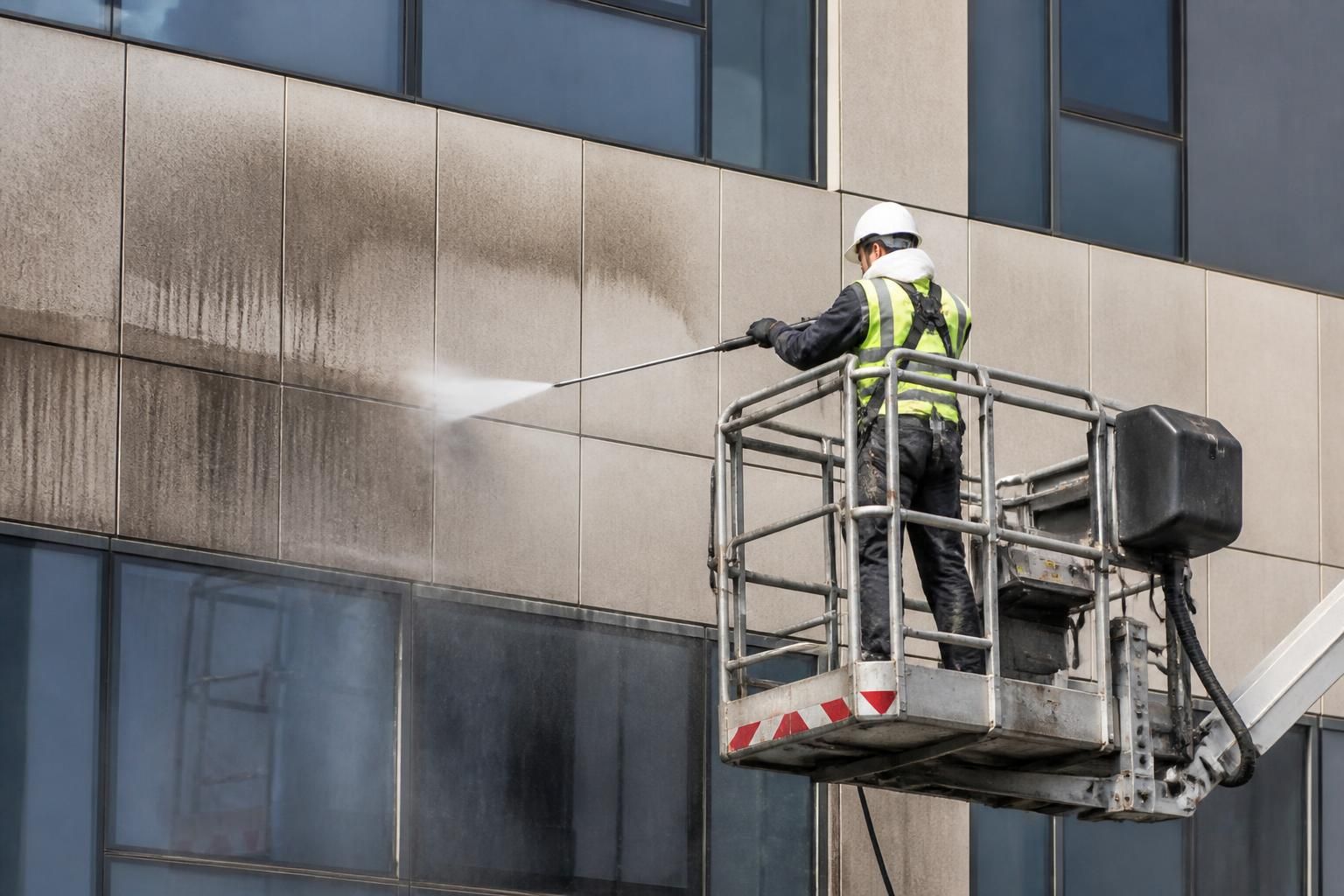
Regular cleaning reduces the time these contaminants remain in contact with the building envelope. This can help protect materials such as brickwork, stone, render, concrete, glass, uPVC, powder-coated surfaces and metal cladding. The appropriate method depends on the material, its finish, its age and its condition. Pressure washing, soft washing, steam cleaning, chemical treatment and manual methods should be selected carefully to avoid damaging joints, coatings, sealants or fragile surfaces.
Cleaning does not replace repairs or remedial work. However, it can make defects easier to identify, including failed sealant, cracked render, loose pointing, corrosion, damaged coatings and blocked outlets. Finding these issues earlier gives the responsible property team an opportunity to investigate them before deterioration becomes more extensive.
Reduces slip and hygiene risks around the building
Algae, moss, grime and bird deposits can create slippery conditions on entrances, steps, walkways, ramps, loading areas and other hard surfaces. Façade cleaning is often planned alongside cleaning of adjacent external areas so that contamination is not simply transferred to pedestrian routes during or after the work.
Removing organic growth and fouling supports better external hygiene and can reduce avoidable hazards for staff, visitors and members of the public. A site-specific risk assessment remains essential because cleaning alone cannot remove every risk. Surface condition, drainage, weather, pedestrian movement and any remaining defects must also be considered.
Supports building maintenance and compliance responsibilities
Commercial property owners, landlords, facilities managers and managing agents must take reasonable steps to maintain safe premises and manage foreseeable risks. Regular façade cleaning forms part of a broader planned maintenance regime. It can support inspection records, cleaning schedules, contractor documentation and evidence that the external areas are being managed systematically.
The exact responsibilities depend on the building, its use, the lease arrangements and applicable health and safety requirements. Cleaning should therefore be coordinated with inspections, repairs, access planning and any site-specific procedures. It should not be treated as evidence of compliance on its own, but as one practical control within a wider maintenance plan.
Helps control long-term costs
Planned cleaning is generally easier to budget and organise than urgent work caused by severe staining, persistent biological growth, graffiti or contamination that has become difficult to remove. Long-standing deposits may require more intensive preparation, specialist treatments, extended access arrangements or additional repairs. Delaying cleaning can therefore increase both the scope of the work and the disruption to the site.
Regular maintenance also allows cleaning contractors and property teams to identify changing conditions. For example, recurring staining may indicate a drainage problem, leaking outlet, defective seal, nearby pollution source or area of persistent moisture. Addressing the underlying cause is more effective than repeatedly treating the same mark.
Preserves the appearance and value of the asset
A clean, well-maintained façade contributes to the overall condition and presentation of a commercial property. It can help protect the visual quality of external finishes and support the standard expected by owners, occupiers, investors and prospective tenants. For property portfolios, a consistent cleaning schedule also makes it easier to apply common maintenance standards across buildings with different levels of exposure.
Cleaning should be carried out using a method appropriate to the façade. Excessive pressure, unsuitable chemicals or poor rinsing can cause etching, colour loss, water ingress or coating damage. A competent contractor should inspect the surface, identify sensitive areas, carry out suitable testing where necessary and set out the proposed method before full cleaning begins.
Improves planning and reduces disruption
When façade cleaning is scheduled in advance, the work can be coordinated with building access, tenant requirements, deliveries, car park use, public routes, security arrangements and other planned maintenance. This is particularly useful for larger buildings or sites requiring mobile elevating work platforms, scaffold, abseiling or other specialist access equipment.
Planned work also allows the cleaning team to choose suitable weather conditions, protect vulnerable areas, control run-off and establish exclusion zones. Occupants can be informed in advance, and cleaning can often be phased so that the building remains operational where site conditions allow.
Helps manage environmental impacts
Regular, controlled cleaning can reduce the need for aggressive treatment of heavily ingrained deposits. Environmental management still depends on the chosen process. Water use, chemical selection, run-off control, waste handling, access equipment and protection of nearby drains or planting should all be considered before work starts.
Responsible façade cleaning involves using the least aggressive effective method, applying products only where required and preventing contaminated water from entering unsuitable drainage systems. The method should be adapted to the building material and the sensitivity of the surrounding site rather than applying the same process to every façade.
When to schedule regular façade cleaning
The appropriate frequency depends on the building’s location, exposure to traffic or industrial pollution, façade material, surrounding trees, biological growth, weather, building use and presentation requirements. High-traffic urban sites, coastal or exposed locations, food and hospitality premises, and buildings beneath trees may need more frequent attention than sheltered, low-use sites.
A practical programme normally combines planned full-façade cleaning with targeted treatment of entrances, signage, canopies, lower elevations and areas affected by recurring contamination. The schedule should be reviewed after inspections and adjusted when the building’s use, surrounding environment or condition changes.
For the best result, façade cleaning should be treated as part of planned exterior maintenance rather than a one-off cosmetic service. Inspection, safe access, material assessment, appropriate cleaning methods, controlled run-off and clear records all contribute to protecting the building and keeping the work proportionate to its needs.
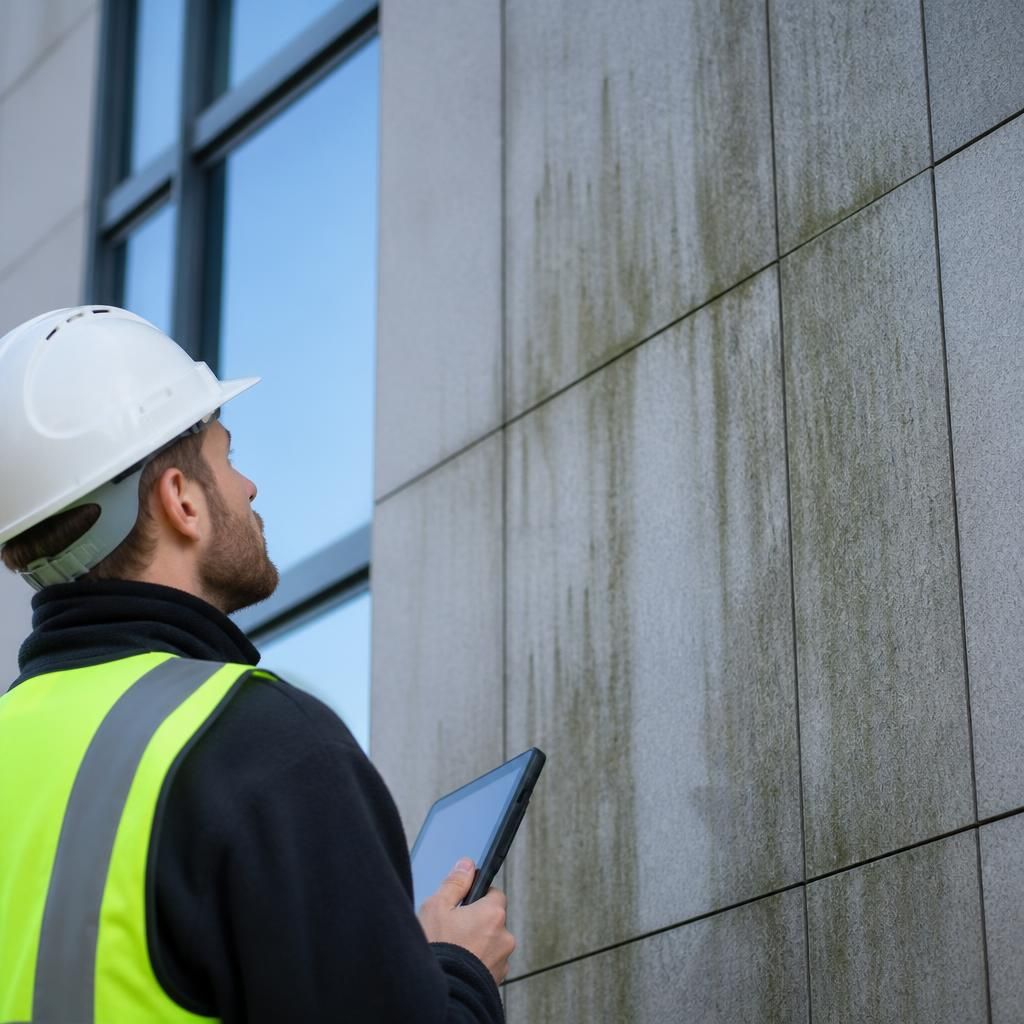
Regular façade cleaning helps prevent minor contamination and surface defects from developing into more costly maintenance problems. Removing pollution, organic growth, bird deposits and staining makes it easier to inspect brickwork, stone, render, cladding, sealants and drainage details.
Cleaning also helps identify issues such as cracked render, failed pointing, corrosion, blocked outlets or leaking components at an earlier stage. Property teams can then arrange appropriate repairs before moisture ingress, material deterioration or extensive staining increases the scope and disruption of the work.