
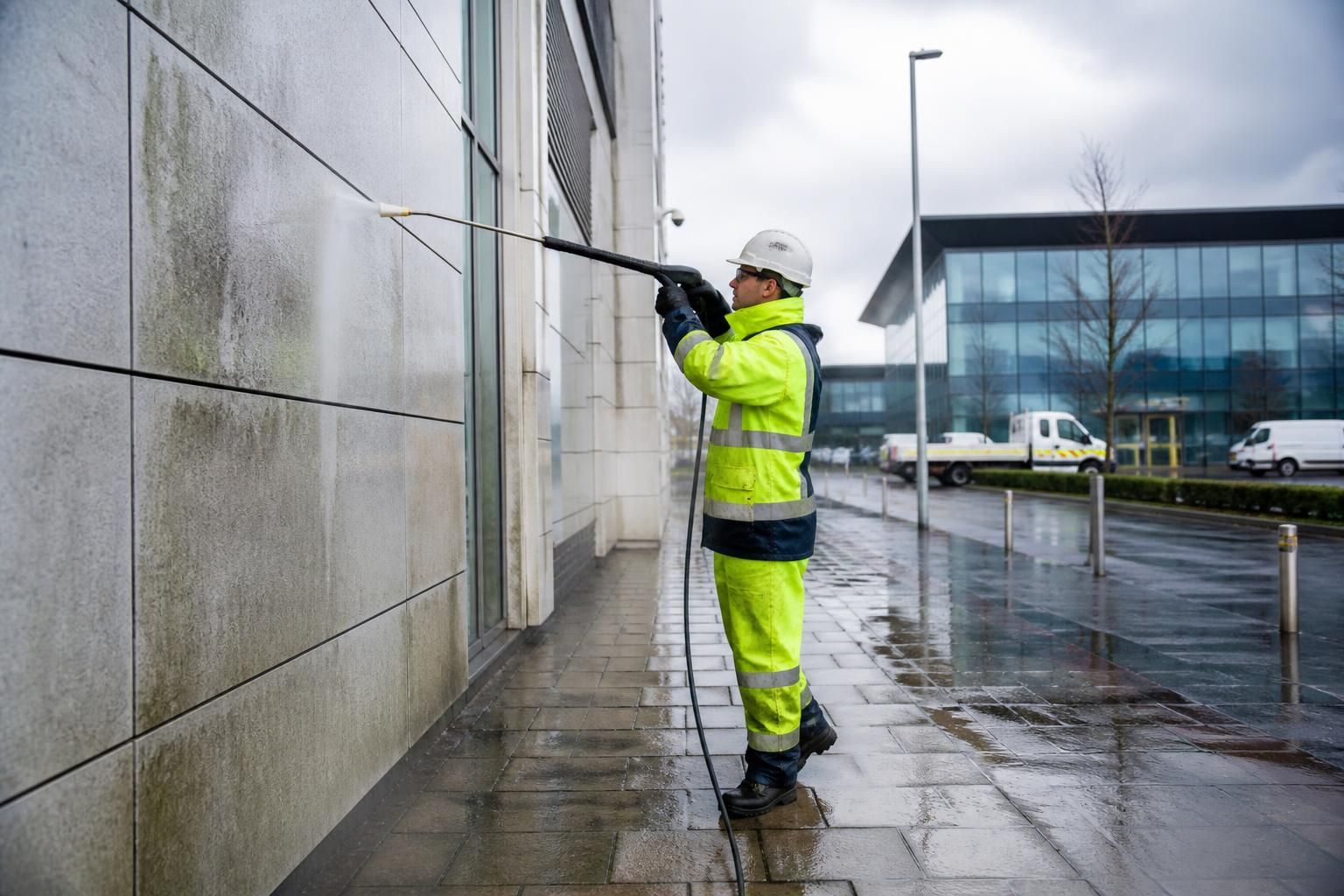
How does seasonal weather impact the choice of facade cleaning methods?
Seasonal weather affects façade cleaning by changing surface temperature, drying time, soiling and the risk of damage from water or cleaning chemicals. In general, pressure washing, steam cleaning or soft washing should be selected according to the façade material, weather conditions and the type of contamination present.
Seasonal weather affects façade cleaning by changing surface temperature, drying time, soiling and the risk of damage from water or cleaning chemicals. Pressure washing, steam cleaning and soft washing should therefore be selected according to the façade material, the contamination present and the conditions on the day. A method that is suitable in mild, overcast weather may be unsuitable during frost, heavy rain, strong sunlight or high winds.
Weather does not usually determine the cleaning method on its own. It changes how safely and effectively an appropriate method can be applied. Before work starts, the façade should be assessed for its material, condition, previous coatings, joints, drainage arrangements and nearby surfaces that could be affected by water or run-off. The forecast, exposure of the elevation and access requirements should also be considered.
Spring conditions: Spring often brings a combination of rain, fluctuating temperatures and increased biological growth. Moss, algae, lichen and organic staining may become more visible after a damp winter, particularly on shaded elevations and areas where water remains on the surface. Soft washing can be appropriate for organic contamination on compatible materials because it uses controlled pressure and a suitable treatment solution rather than relying solely on force. The solution must be selected and rinsed carefully to prevent damage to coatings, planting, drainage systems and adjacent materials.
Pressure washing may be effective for robust masonry, hard paving and certain durable cladding systems, but it should not be used simply because a surface is heavily soiled. Excessive pressure can drive water into joints, remove friable material or damage painted and coated finishes. Spring showers can also extend drying times, so work should be planned around suitable weather windows and the façade should be checked afterwards for remaining moisture, streaking or run-off marks.
Summer conditions: Warmer weather can improve drying, but high surface temperatures and direct sunlight create different risks. Cleaning solutions may dry on the façade before they have been rinsed, leaving residues, tide marks or uneven results. Heat can also accelerate chemical reactions and increase the likelihood of damage to sensitive coatings, sealants or painted surfaces. Shaded elevations may remain suitable for longer than sun-facing elevations, even on the same building.
In bright or hot conditions, cleaning may need to be carried out during cooler parts of the day, in smaller sections or with additional rinsing. Steam cleaning can remove certain atmospheric and oily deposits with relatively low water use, but the heat still needs to be controlled according to the substrate and existing finish. Pressure washing should be adjusted to the material and used with care around window seals, pointing, vents and vulnerable joints. Strong winds can create overspray and make access equipment less stable, so exposed elevations may need to be postponed.
Autumn conditions: Autumn commonly brings falling leaves, increased rainfall and damp surfaces. Organic debris can block gutters, outlets and drainage channels, allowing contaminated water to remain against the façade. Cleaning plans should account for the source of the staining as well as its appearance; otherwise, deposits may quickly return from blocked or overflowing drainage.
Lower light levels and cooler air slow evaporation, making it more important to control water application and allow adequate drying. Soft washing can help address algae and other biological growth, while steam cleaning may be useful for localised ingrained marks or residues where a lower-water process is preferable. Run-off should be contained and managed so that dirty water does not spread across clean areas or enter drainage systems without appropriate controls.
Winter conditions: Frost and freezing conditions place the greatest restrictions on water-based façade cleaning. Water trapped in cracks, joints, porous masonry or damaged coatings can freeze and expand, worsening existing defects. Wet surfaces may also become hazardous for operatives and the public, while ice can affect ladders, access equipment, walkways and collection systems.
Cleaning should normally be postponed when frost, freezing temperatures or rapid freezing are expected. If winter work is necessary, the cleaning plan must account for the substrate temperature rather than relying only on the air temperature. Small, controlled applications, suitable access arrangements and thorough removal of standing water may reduce risk, but they do not make every façade suitable for cleaning in cold conditions. Strong winds, persistent rain and short daylight hours can also affect safe access and visibility.
How weather affects the main cleaning methods:
- Pressure washing uses a larger volume of water and can be affected by freezing conditions, wind, poor drainage and slow drying. It is generally better suited to robust, water-tolerant surfaces after checking joints, coatings and surrounding areas.
- Steam cleaning can be useful for grease, atmospheric deposits, chewing gum residue and some localised staining. The heat and moisture still require control, particularly on painted, sealed or heat-sensitive surfaces and during cold weather.
- Soft washing uses low pressure with a cleaning or treatment solution and can be suitable for biological growth and delicate finishes. Weather affects dwell time, evaporation, rinsing and run-off, so solutions must not be allowed to dry on the façade or spread to vulnerable areas.
Rain does not automatically make cleaning impossible, but it can dilute cleaning solutions, interfere with dwell time, increase run-off and prevent reliable visual assessment. Heavy rain should normally lead to postponement, especially where chemical treatment or access equipment is involved. Light rain may be manageable for some tasks if the method, façade and site controls allow it, but the decision should be based on the specific conditions rather than the forecast alone.
Weather exposure also varies across a building. North-facing or shaded façades may retain moisture and support biological growth, while south- and west-facing elevations may experience stronger sunlight, faster evaporation and greater deterioration of coatings. Upper levels can be more exposed to wind and driving rain, and recessed areas may stay damp for longer. A site-specific assessment is therefore more reliable than applying one method or schedule to every elevation.
For planned maintenance, façade cleaning should be scheduled around a stable period of suitable weather, with time allowed for preparation, cleaning, rinsing, inspection and drying. The work plan should include protection for windows, doors, vents, landscaping and neighbouring surfaces, along with measures for collecting or controlling run-off. After cleaning, the façade should be inspected for remaining stains, moisture retention, coating damage and defects that may need separate repair.
Where weather changes during a project, the safest approach is to adjust the method, reduce the working area or pause the work rather than continue under unsuitable conditions. Matching the cleaning technique to both the façade and the season helps produce a more even result, protects the building fabric and reduces the risk of repeat staining or weather-related damage.

Seasonal weather affects facade cleaning by changing how quickly water and cleaning solutions evaporate, how safely equipment can be used and whether the building fabric can tolerate moisture. The cleaning method should therefore be selected alongside the forecast and the façade’s exposure, not from the level of soiling alone.
In damp spring or autumn conditions, soft washing may be suitable for biological growth, provided the treatment solution can remain on the surface for the required dwell time without being diluted by rain. Steam cleaning can be useful for localised atmospheric or oily deposits where limiting water use is beneficial. Pressure washing is generally better reserved for robust, water-tolerant materials and stable conditions, with care taken around joints, coatings, seals and drainage points.
Frost, heavy rain, strong winds and intense sunlight can make otherwise suitable methods unsafe or unreliable. Work may need to be postponed, moved to a shaded elevation, completed in smaller sections or paused until the surface and weather conditions improve. This helps prevent frozen water damage, chemical residues, uneven drying, overspray and contaminated run-off.