
How do you choose the right facade cleaning method for your building?
Choose a facade cleaning method by assessing the building material, surface condition, type of soiling, surrounding environment and available access. Pressure washing suits robust surfaces, while steam cleaning or gentler techniques are usually more appropriate for delicate, weathered or chemically sensitive façades; a site assessment should confirm the safest effective option.
The right facade cleaning method is the safest technique that removes the identified soiling without damaging the building material, joints, coatings or surrounding areas. Selection should be based on the facade’s construction, surface condition, type of contamination, environmental sensitivities and available access rather than on a single standard cleaning process. A site assessment and small test area should normally confirm the method before full-scale work begins.
Start by identifying the facade material
Different facade materials tolerate different levels of water pressure, heat, agitation and chemical treatment. The assessment should establish whether the building is finished with masonry, brick, stone, concrete, render, metal cladding, glass, painted surfaces or a combination of materials. The age of the facade and any previous repairs are also important, as replacement areas may react differently from the original surface.
- Brick and robust masonry: Low- to moderate-pressure washing may be suitable where the brick, mortar and pointing are sound. Care is needed around friable joints, damaged bricks and areas with existing water ingress.
- Natural stone: The method depends on the stone type and finish. Softer or porous stone can be marked, etched or eroded by aggressive pressure or unsuitable chemicals, so gentler washing, steam or specialist non-abrasive techniques may be preferable.
- Concrete: Pressure washing can remove general dirt and biological growth, but damaged concrete, exposed aggregate and rust staining require controlled treatment. Water must not be forced into cracks or defective joints.
- Render and painted finishes: These surfaces can be loosened or stripped by excessive pressure. A low-pressure approach, suitable detergent or steam cleaning may provide better control, particularly on older or weathered coatings.
- Metal cladding: Cleaning must account for the coating, seams, fixings and drainage paths. Excessive pressure or incompatible chemicals may damage the finish or accelerate corrosion.
- Glass and glazed surfaces: These usually need controlled washing and careful removal of deposits. Abrasive methods can scratch the surface, while residue from cleaning products may affect appearance.
Assess the condition before choosing the equipment
A facade that appears dirty may also have cracked pointing, loose render, failed sealant, open joints, corroded fixings or areas of delamination. Cleaning does not repair these defects and can make them worse if water or pressure enters vulnerable areas. The inspection should record fragile sections, existing staining, previous coatings, sensitive fixtures and any locations where water could enter the building.
Where the surface is weathered or its construction is uncertain, a conservative method should be selected initially. A controlled test patch allows the cleaning team to check whether the process changes the colour, texture, coating or appearance of the facade. It also helps establish the appropriate pressure, temperature, dwell time and distance from the surface before the main work starts.
Match the method to the type of soiling
General traffic film, dust and loose dirt can often be removed with water-based washing. Organic growth such as algae, moss and lichen may require a treatment that addresses the growth as well as the visible residue. Bird fouling, oil, food deposits, rust, paint, cement staining and atmospheric deposits may each need different preparation or specialist treatment.
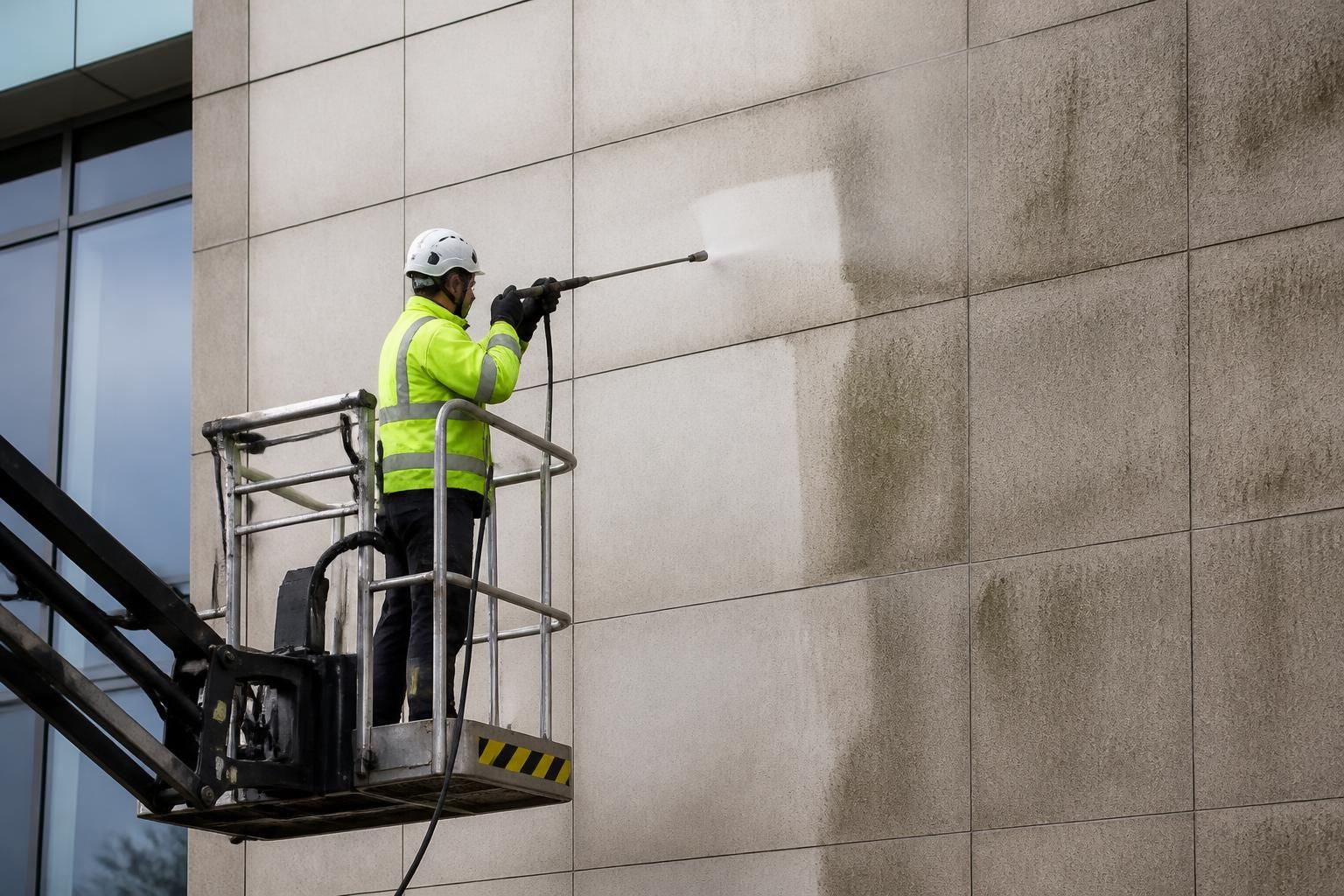
Pressure washing is effective on suitable robust surfaces and can cover large areas efficiently, but the pressure must be controlled. It is not automatically the best option for every facade. Steam cleaning uses heated water at comparatively controlled pressure and can be useful where the surface is delicate or where the combination of heat and moisture helps loosen ingrained dirt. Low-pressure washing, soft washing and carefully selected detergents may be appropriate for coated or sensitive materials. Abrasive cleaning should only be considered where the substrate and finish can safely withstand it, as it can remove the surface layer and leave a permanently altered appearance.
Chemical cleaning should be based on the contaminant and the material’s compatibility with the product. Product selection, dilution, contact time, rinsing and collection of run-off all require control. Chemicals should not be chosen simply because they produce a rapid visual result.
Consider the surrounding environment
The building’s location affects both method selection and work controls. Facades near busy roads, pedestrian routes, neighbouring properties, watercourses, planted areas or sensitive equipment may require additional protection. Run-off, spray mist, noise and access restrictions should be considered before work begins. Where water use or run-off is difficult to manage, a lower-water method or more contained process may be suitable.
Weather conditions also influence the decision. Wind can carry spray or cleaning products beyond the work area, while very cold or hot conditions can affect drying and product performance. Cleaning should be planned around conditions that allow the facade to be treated, rinsed and inspected safely.
Choose the method alongside the access plan
Access equipment must provide a stable working position and allow the operator to maintain the correct angle and distance from the facade. Depending on the building, this may involve mobile elevated work platforms, scaffold, towers, abseiling or other specialist access arrangements. The selected method should be practical from the available platform without forcing operators to work at an unsafe angle or use excessive pressure to reach difficult areas.
Access planning should also account for public protection, vehicle movements, emergency routes, overhead obstructions and the need to keep entrances or business operations available. A method that appears suitable in principle may not be appropriate if it creates uncontrolled spray, obstructs a public area or cannot be carried out safely at height.
Use a documented, evidence-based selection process
- Inspect and identify the facade materials, finishes, defects and vulnerable features.
- Classify the soiling and determine whether it is loose, ingrained, biological, oily, mineral or paint-related.
- Review nearby surfaces, occupants, landscaping, drainage and environmental constraints.
- Choose the least aggressive method likely to achieve the required result.
- Carry out and assess a test patch, adjusting pressure, temperature, product and technique as necessary.
- Agree protection, access, run-off management and inspection arrangements before full cleaning.
- Monitor the work and stop if the surface reacts unexpectedly or concealed defects become apparent.
For many commercial buildings, the final specification combines methods rather than using one process everywhere. For example, controlled washing may be used on sound masonry, steam cleaning around delicate details and manual treatment for sensitive fixtures or localised staining. This targeted approach helps preserve the facade while achieving a consistent, professional finish.
The completed work should be inspected for remaining stains, surface changes, residue, damaged areas and effective run-off removal. Any defects identified during cleaning should be recorded and referred for repair rather than concealed with further treatment. A suitable maintenance schedule can then be based on the facade material, exposure, level of soiling and operational requirements of the property.
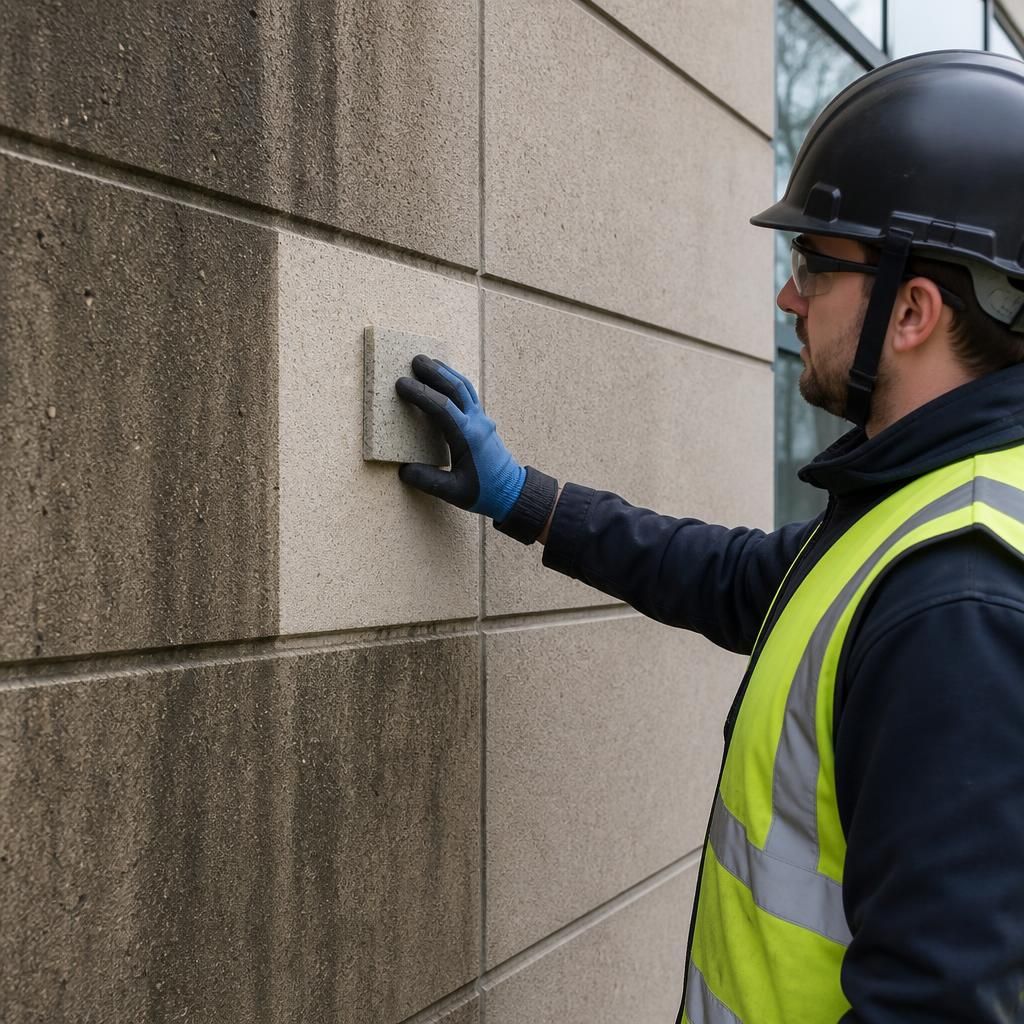
A test patch is a controlled trial of the proposed facade cleaning method on a small, representative area before the full building is treated. It shows whether the chosen pressure, temperature, cleaning product and technique will remove the soiling without changing the surface colour, texture, coating or pointing.
The test area should include the relevant facade material and, where possible, the type of staining present elsewhere. The cleaning team can then inspect the result after rinsing and drying, checking for etching, streaking, residue, water penetration or damage to adjacent details. If the surface reacts unexpectedly, the method can be adjusted or replaced before larger areas are exposed.
This process is particularly important for older, weathered or previously repaired facades, where different sections may respond differently. It provides a practical basis for selecting the least aggressive method that achieves the required finish and helps establish suitable controls for the main cleaning work.