
How do facade cleaning services address environmental concerns?
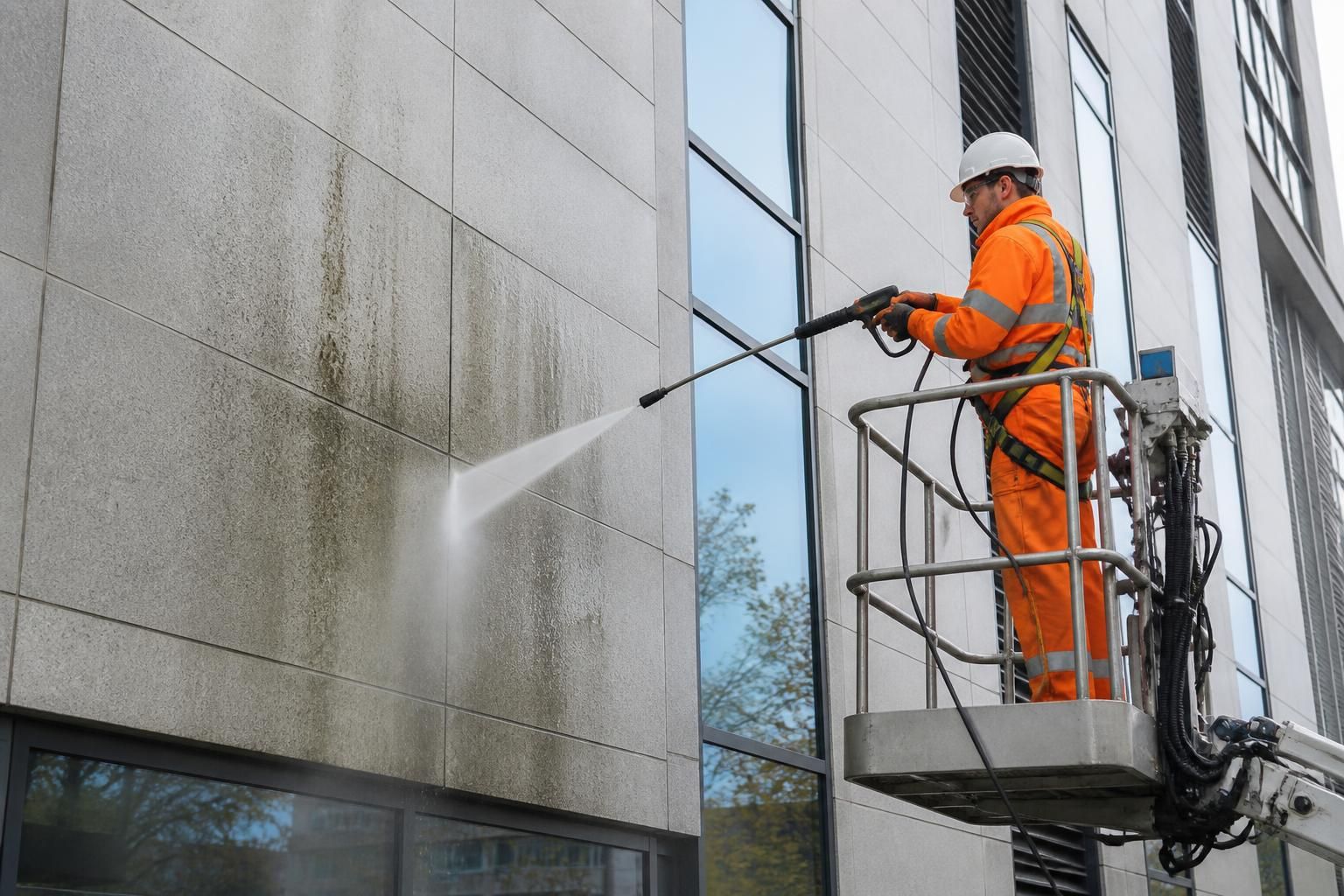
Facade cleaning services address environmental concerns by selecting low-impact methods, using water and cleaning products efficiently, and controlling wastewater and debris to prevent pollution. Appropriate techniques such as soft washing, steam cleaning and targeted pressure washing can remove dirt effectively while reducing damage to façade materials and avoiding unnecessary cleaning or replacement.
Facade cleaning services address environmental concerns by choosing the least intensive effective method, limiting water and chemical use, preventing contaminated runoff, and avoiding damage that could shorten the life of the building envelope. A responsible cleaning plan considers the façade material, type of soiling, surrounding drainage, access requirements and any environmental controls before work begins.
Method selection is the main environmental control. Cleaning should not automatically involve high-pressure water or aggressive chemicals. A specialist contractor can assess whether soft washing, low-pressure rinsing, steam cleaning, dry cleaning or targeted pressure washing is appropriate. Using the gentlest method that will remove the soiling reduces the risk of etching masonry, stripping coatings, opening joints or damaging sealants. Preventing this damage avoids repeat treatments, remedial work and premature replacement of façade materials, all of which have an environmental cost.
Different materials require different approaches. Brick and stone may respond well to controlled low-pressure or steam cleaning, while rendered surfaces, painted cladding, glazed elements and sensitive coatings may need a softer process. Biological growth can often be treated with a carefully selected biocide rather than removed through excessive pressure. The product, concentration, dwell time and rinsing process should be matched to the surface and the contamination rather than applied as a standard treatment across the whole building.
Water use can be reduced through planning and equipment choice. Operators can pre-treat localised staining, use controlled flow rates and avoid repeatedly rinsing areas that are already clean. Steam cleaning can be useful where heat and low moisture are more suitable than large volumes of water. Targeted cleaning also prevents unnecessary washing of unaffected façade areas. Water-saving practices should never compromise the removal of hazardous or contaminated residues, but they can reduce waste during routine maintenance.
Cleaning teams also manage what happens to the water after it contacts the façade. Runoff may contain suspended dirt, biological growth, paint particles, oil, mortar residue or cleaning chemicals. It should not be allowed to enter surface-water drains without assessment. Suitable controls may include drain covers, bunding, temporary collection systems, vacuum recovery and controlled discharge in line with site requirements and local regulations. The correct approach depends on the building, the cleaning agent, the drainage arrangement and the nature of the contaminants.
Debris and removed coatings should be contained rather than allowed to spread across pavements, planted areas or neighbouring property. This is particularly important when cleaning areas affected by flaking paint, bird fouling, heavy biological growth or graffiti. Collected waste must be handled and disposed of responsibly, with hazardous materials identified before work starts where there is a reasonable possibility of contamination.
Product selection is another important consideration. Professional cleaners should use products that are suitable for the façade and proportionate to the problem. Lower-impact formulations may be appropriate where they provide the required result, but an environmentally preferable product is not automatically safe for every surface or drainage system. Safety data, manufacturer instructions and site conditions should be reviewed before use. Chemicals should be stored securely, measured accurately and prevented from entering soil, watercourses or unprotected drains.
Environmental planning also includes access equipment and site logistics. Selecting suitable access equipment can reduce unnecessary repositioning, engine idling and disturbance around the building. Where practical, work can be organised to minimise repeated mobilisation, avoid sensitive landscaping and maintain clear pedestrian and vehicle routes. Equipment must still be selected according to façade height, reach, ground conditions and worker safety; reducing environmental impact must not lead to unsafe access arrangements.
Regular, planned cleaning can support sustainability by preventing heavy deposits from becoming difficult to remove. Removing pollutants, algae, moss, bird fouling and other contaminants before they cause deterioration can help protect coatings, joints, sealants and masonry. It can also reduce the likelihood of abrasive deep cleaning or premature façade refurbishment. However, cleaning should be based on actual condition and exposure rather than carried out unnecessarily, since every visit uses equipment, water and labour.
A practical environmental plan for a commercial or industrial building should normally cover:
- an inspection of façade materials, soiling and vulnerable details before cleaning;
- selection of the least aggressive effective cleaning method;
- estimated water and product requirements, with measures to prevent avoidable use;
- protection of drains, landscaping, neighbouring surfaces and public areas;
- collection, filtration or controlled management of wastewater where required;
- containment and appropriate disposal of removed debris and contaminated residues;
- safe storage, handling and application of cleaning products; and
- records of the method, products, site controls and any recommendations for future maintenance.
For properties in Birmingham, the West Midlands and elsewhere in the UK, the cleaning plan should also reflect the site’s drainage layout, proximity to watercourses, local access restrictions and the requirements of the building owner or facilities manager. Listed buildings, conservation areas and façades with specialist coatings may require additional assessment or approval before cleaning begins.
The most reliable way to reduce environmental impact is to combine a careful survey with controlled cleaning and effective wastewater management. A specialist contractor should be able to explain why a method has been selected, how water and chemicals will be controlled, what precautions will protect the surrounding area, and how the completed work will be checked. This approach delivers the required façade standard while reducing pollution risk, material damage and avoidable resource use.
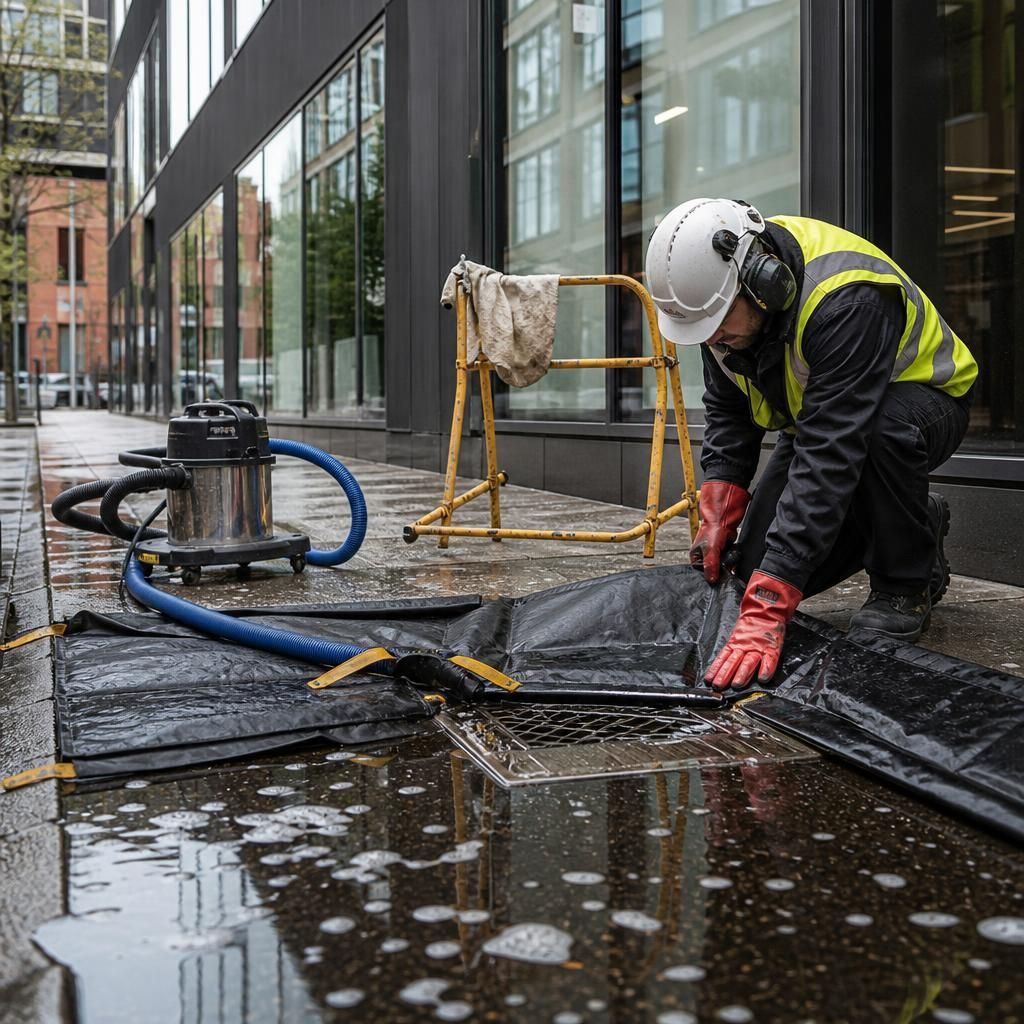
Responsible façade cleaning includes controlling wastewater so removed dirt, biological growth, paint particles and cleaning products do not enter unprotected drains, soil or nearby watercourses.
Before work begins, the cleaning team should assess the drainage layout and the type of contamination present. Suitable controls may include drain covers, bunding, temporary collection, vacuum recovery and filtration. The chosen method must reflect the building, the façade material and the site conditions, while collected water and debris are handled in line with site requirements and applicable UK regulations.