
What safety measures are taken during cladding cleaning?
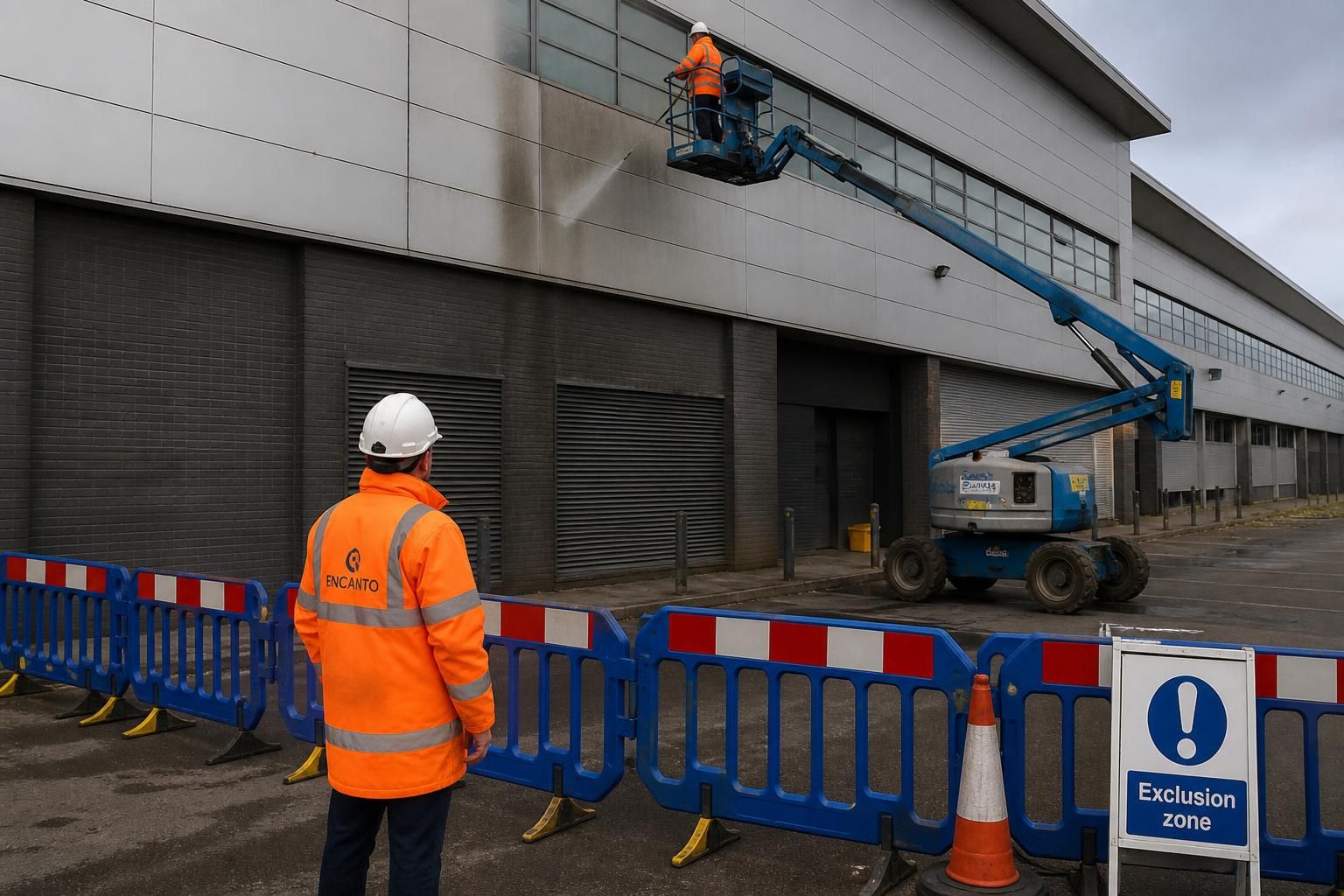
Cladding cleaning is carried out using documented risk assessments, suitable access equipment, personal protective equipment, controlled work areas and methods selected for the building’s materials and condition. Encanto Exterior Cleaning also protects occupants, pedestrians and surrounding property through exclusion zones, equipment checks, safe water and chemical handling, and appropriate site supervision.
Cladding cleaning is managed as a controlled work-at-height and surface-cleaning operation, with safety measures designed to protect operatives, building occupants, pedestrians, the cladding system and surrounding property. Before work begins, the cleaning method, access arrangements, equipment, products, weather conditions and site-specific hazards are assessed and recorded.
Site assessment and documented planning
A competent supervisor reviews the building elevations, cladding materials, roof edges, balconies, windows, doors, overhead services, nearby roads and pedestrian routes. The condition of the cladding is checked for loose panels, damaged coatings, failed sealants, fragile areas and existing defects. These findings inform the risk assessment and method statement, often referred to as RAMS, which set out the approved cleaning process, controls and emergency arrangements.
The planned method is selected for the material and condition of the cladding. Pressure, temperature, steam, chemical use and agitation are controlled so that cleaning does not damage coatings, joints, insulation systems, seals or fixings. Test cleaning is used where the surface response is uncertain, and the agreed method can be revised if the cladding behaves differently from expected.
Safe access and work at height
Access equipment is selected according to the height, layout and duration of the work. This may include mobile elevated work platforms, scaffold, towers, water-fed systems or other suitable equipment. Equipment is positioned on stable ground, inspected before use and operated by appropriately trained personnel. Where required, ground conditions, outriggers, edge protection, fall restraint and rescue arrangements are considered before access equipment is deployed.
Operatives do not work from unsuitable surfaces or rely on improvised access arrangements. Work at height is planned in line with the relevant UK requirements, with preference given to methods that reduce exposure to falls and limit the need to carry tools or hoses while climbing. Access routes and working platforms are kept clear, and equipment is secured against movement where site conditions require it.
Personal protective equipment and equipment checks
Personal protective equipment is selected for the task and the substances being used. Depending on the work, this may include protective footwear, gloves, eye protection, helmets, protective clothing, hearing protection and suitable respiratory protection. Harnesses and other fall-protection equipment are used where the access system and risk assessment require them, and are checked before use.
Pressure washers, steam equipment, pumps, hoses, ladders, access platforms and electrical supplies are inspected and maintained. Hoses are routed to reduce trip hazards and protected from vehicle movements, sharp edges and excessive bending. Electrical equipment and connections are kept away from water wherever possible, with suitable controls used for wet working environments.
Controlled work areas
Exclusion zones, barriers and warning signs are installed below or around the cleaning area where falling tools, debris, spray or contaminated water could create a hazard. Pedestrian routes, entrances, loading areas and vehicle movements are considered when the work area is set up. A banksman or other site control may be used where access equipment or hoses could affect vehicles and pedestrians.
Building occupants and site representatives are informed about the planned work, restricted areas, access changes and any temporary disturbance. Entrances, fire exits, ventilation points and emergency routes are kept usable unless an agreed site plan provides a safe alternative. Cleaning may be arranged in sections or at quieter times where this reduces disruption and risk.
Control of water, chemicals and contaminated run-off
Cleaning products are assessed before use, with controls set out in the relevant COSHH assessment. Products are stored, labelled, diluted and applied according to their instructions. Operatives use the required protective equipment and avoid mixing substances unless this is specifically permitted. Nearby glazing, painted surfaces, vegetation, vehicles, signage and drainage points are protected from unintended contact.
Water and loosened contamination are managed so they do not create slip hazards, enter sensitive areas or discharge improperly. Drainage points may be protected or isolated, and run-off is collected, filtered or directed in accordance with the site arrangements and applicable environmental requirements. Spill kits and suitable response procedures are available where chemicals, fuels or contaminated water could present a risk.
Protection of the cladding and building
Cleaning is carried out at a pressure, temperature and distance appropriate to the cladding. Operatives avoid forcing water behind panels, into joints, vents, seals or openings. Windows, doors, air intakes, electrical fittings and vulnerable architectural details are protected before cleaning starts. Any pre-existing damage identified during the inspection is recorded and brought to the client’s attention rather than being concealed by the cleaning process.
Weather conditions are monitored because wind can spread spray, affect access equipment and reduce control of chemicals. Rain, ice, poor visibility, high winds or other unsafe conditions may require the work to be paused. The surface and surrounding area are checked during the work for unexpected leakage, coating failure, loose material or other changes that require the method to be stopped and reassessed.
Communication, supervision and emergency arrangements
Operatives receive site-specific instructions and understand the risks, controls and limits of the agreed method. Work is supervised at a level appropriate to the complexity of the site, particularly where there are multiple contractors, public areas, traffic movements or challenging access conditions. Changes to the building, weather, access equipment or work sequence are communicated before the task continues.
Emergency arrangements cover falls, equipment failure, chemical exposure, electrical incidents, injury, fire, spills and contact with building services. The site team must know how to raise an alarm, summon assistance, isolate equipment and provide first aid. Where work at height is involved, rescue planning is considered in advance rather than relying solely on the emergency services.
Checks after cleaning
On completion, the work area is inspected for residual water, loose debris, chemical residue, trip hazards and damage to surrounding surfaces. Barriers are removed only when the area is safe, and access equipment is dismantled or moved using the planned controls. The client or site representative can then review the cleaned elevations, any defects observed and any recommendations for follow-up maintenance.
These measures help ensure that cladding cleaning is not treated as a straightforward wash-down. It is a planned operation involving work at height, water, cleaning products, access equipment and an occupied commercial environment. The risk assessment, method statement and site conditions should always determine the final controls for the particular building.
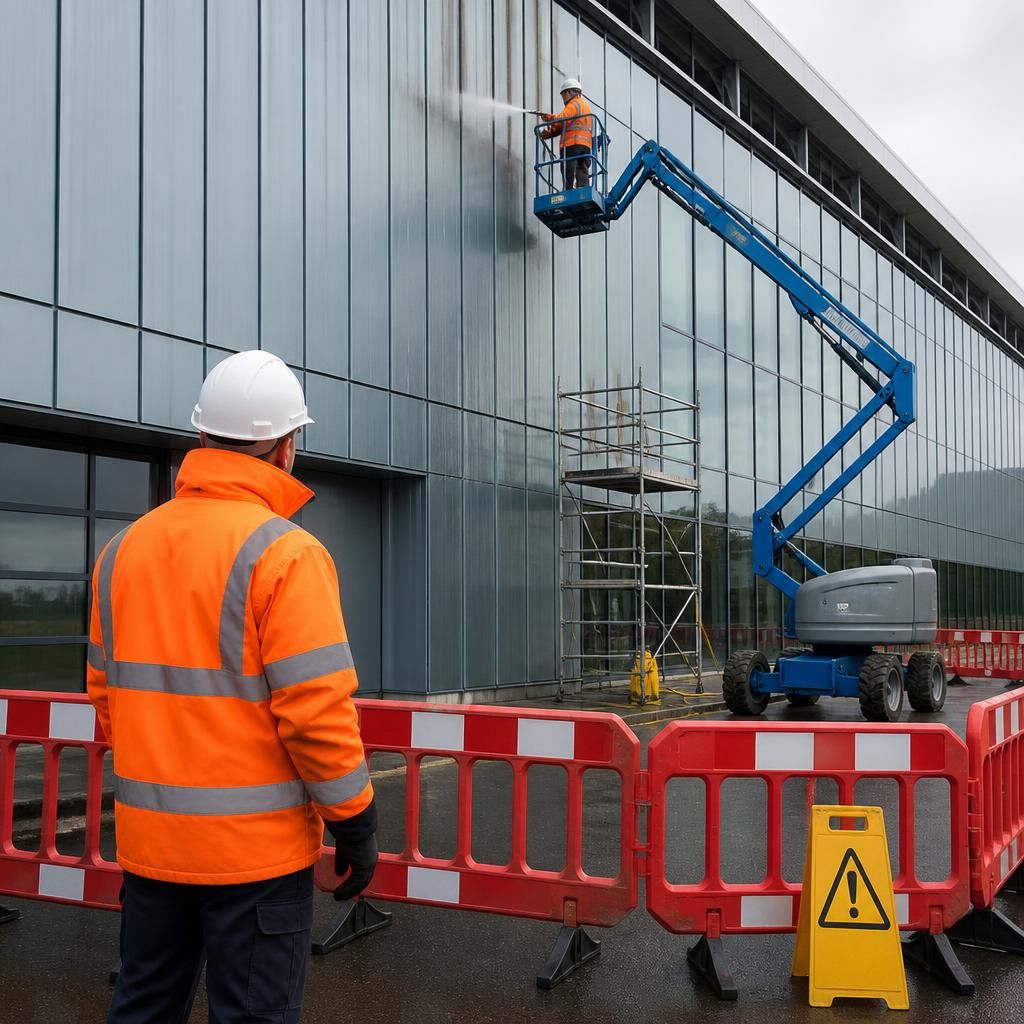
Cladding cleaning safety depends on controlling the area beneath and around the work, particularly where operatives use elevated access equipment or water-fed systems. Encanto Exterior Cleaning establishes exclusion zones with barriers and warning signs to protect pedestrians, occupants, vehicles and other contractors from falling debris, spray, hoses and moving equipment.
Before cleaning starts, entrances, fire exits, loading areas, ventilation points and vehicle routes are reviewed. Access changes are communicated to the site representative, and a banksman or other site control may be used where equipment affects traffic or pedestrian movement. Work can be completed in sections or during quieter periods to reduce disruption without compromising safe access.