
What materials can cladding cleaning services effectively treat?
Professional cladding cleaning services can effectively treat many common materials, including metal, powder-coated steel, aluminium, uPVC, composite panels, render, brick slips and certain coated or painted surfaces. The cleaning method and pressure must be selected for the specific material and finish to remove dirt, algae, staining and pollution without causing damage.
Professional cladding cleaning services can treat most common external façade materials, including coated metal, aluminium, steel, uPVC, composite panels, render, fibre cement, brick slips and some masonry or stone-faced systems. The suitable cleaning method depends on the material, surface coating, age, condition and type of contamination. Pressure, temperature, steam, detergents and access equipment must be selected carefully so that deposits are removed without damaging the finish, joints or underlying substrate.
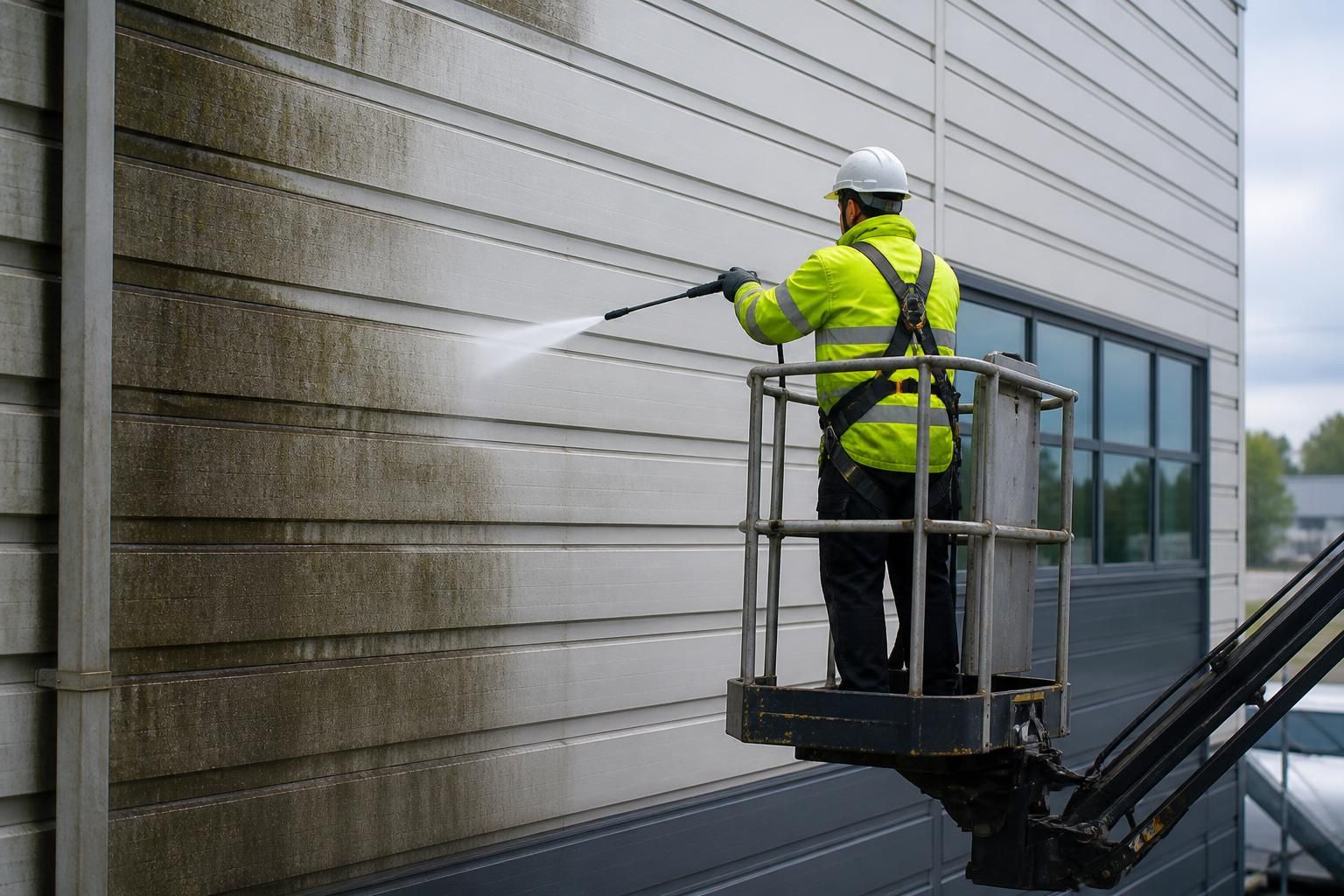
Metal cladding is commonly cleaned on industrial units, warehouses, offices and retail premises. This includes profiled steel, aluminium panels and insulated composite panels with coated or painted faces. Cleaning can remove traffic film, airborne pollution, bird fouling, algae, moss and general weathering. Low-pressure washing, controlled steam cleaning or a suitable detergent may be used, depending on the coating and the severity of the soiling.
Metal surfaces require particular care because aggressive pressure, unsuitable chemicals or abrasive methods can mark the finish, expose bare metal or force water behind laps and seals. Powder-coated and painted surfaces should be assessed for fading, chalking, corrosion, flaking and previous repairs before cleaning begins. Where corrosion is present, cleaning may improve the appearance but will not restore damaged metal or replace a failed coating.
Aluminium cladding can usually be cleaned effectively, including anodised, painted and powder-coated finishes. These surfaces are vulnerable to scratching, alkaline damage and staining caused by incompatible cleaning products. A professional process normally starts with a small test area to confirm that the detergent, dwell time and rinsing method are appropriate. Particular attention is needed around window frames, trims, sealants and drainage outlets.
Steel cladding may include plastisol, polyester-painted, powder-coated or other factory-applied finishes. It can be treated for dirt, algae, pollution and organic growth, but the condition of the coating is important. Loose paint, exposed fixings, rust and damaged edges should be recorded before work. Cleaning should not be used to disguise a coating failure or structural defect; those issues may require repair or recoating after the surface has dried.
Composite panels, such as aluminium-faced panels or insulated façade systems, can generally be cleaned using controlled low-pressure washing, softwashing or steam. The method must account for panel joints, edges, sealants and the possibility of water entering behind the cladding. Strong solvents, abrasive pads and excessive pressure can affect the decorative layer, so the cleaning specification should be based on the manufacturer’s guidance where it remains available.
uPVC and plastic-based cladding can be treated for surface dirt, algae, mildew and atmospheric staining. These materials can become brittle or discoloured through age, ultraviolet exposure and previous chemical treatment. Gentle cleaning is normally preferable, particularly on older panels, trims and soffits. Deep staining, permanent discolouration or degraded plastic may not be removable without replacing the affected sections.
Render and insulated render systems can be cleaned, including painted render, textured render and some external wall insulation finishes. These surfaces often collect algae, moss, lichen, traffic film and carbon deposits. Softwashing or low-pressure cleaning is generally more suitable than intense pressure, which may cause pitting, strip paint, loosen the finish or drive water into cracks. Cracks, hollow areas, failed sealant and damaged insulation should be identified before cleaning.
Brick slips and brick-faced panels can usually be treated for dirt, algae, atmospheric pollution and mortar residue, provided the slips and joints are sound. The cleaning approach depends on whether the surface is sealed, painted, newly installed or part of a rainscreen system. Aggressive cleaning can erode softer brick faces, damage mortar joints or leave water trapped behind panels. New construction residue may also require a different treatment from established weathering.
Fibre cement and cement-based cladding may be cleaned where the boards are intact and the surface coating is stable. Low-pressure washing and compatible detergents can remove organic growth and general soiling. Care is needed around board joints, cut edges and older coatings, as excessive water or pressure can cause damage. If the material is suspected of containing asbestos, it must not be disturbed until its composition has been confirmed and the appropriate specialist controls are in place.
Stone, terracotta and ceramic-faced systems may also be suitable for professional cleaning, although their porosity, glaze, age and fixings must be considered. Steam or low-pressure methods can be appropriate for some surfaces, while abrasive cleaning or strong acids may permanently mark, etch or discolour them. A test clean is particularly important where the façade contains natural stone with varied mineral content.
Some surfaces require a more restricted approach. Timber cladding, fragile laminates, heavily oxidised coatings, flaking paint, damaged render and aged sealants may not tolerate standard pressure washing. They may need a low-moisture process, specialist restoration, repainting or repair before cleaning. Internal-facing panels, concealed cavities and areas with failed waterproofing should also be assessed separately rather than treated as ordinary external cladding.
Before work starts, the cleaning team should establish:
- the exact cladding material and any applied coating, paint or protective treatment;
- the condition of panels, joints, fixings, sealants, trims and drainage details;
- the type and extent of contamination, including algae, moss, graffiti, rust, oil or construction residue;
- whether the surface is porous, brittle, chalking, delaminating or otherwise vulnerable;
- the suitable water pressure, temperature, detergent and rinsing requirements;
- how dirty water, detergents and access equipment will be controlled around the building; and
- whether manufacturer instructions, surveys or hazardous-material controls are required.
A test patch on an inconspicuous area helps confirm the expected result and identifies changes in colour, gloss, texture or coating adhesion before the full clean. It is also useful for deciding whether a stain is removable or is actually embedded in, or caused by deterioration of, the cladding finish.
Cleaning can restore the appearance of many cladding materials and remove contaminants that contribute to ongoing deterioration. It cannot correct corrosion, failed coatings, cracked panels, loose fixings, defective seals or water ingress. Where these conditions are found, the cleaning work should be coordinated with inspection and repair so that the façade is not damaged or its defects concealed.
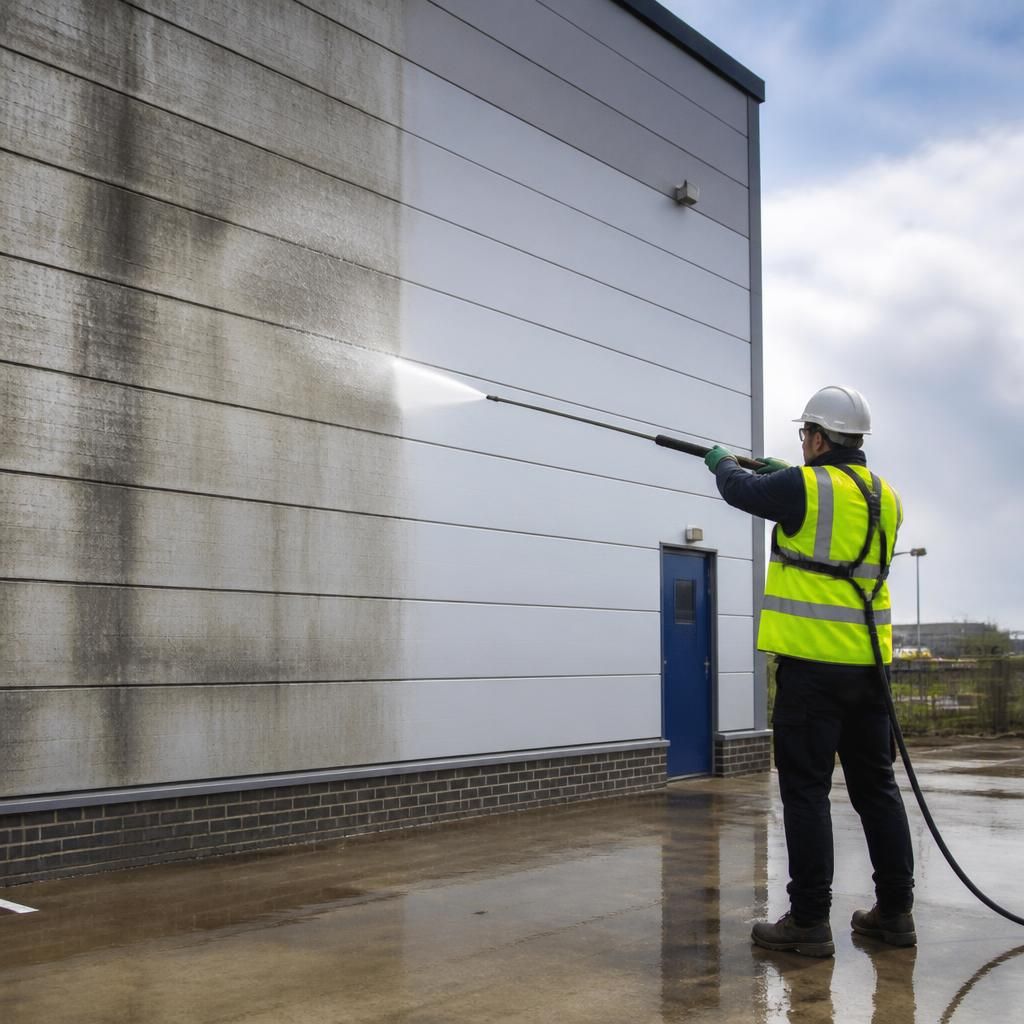
Cladding cleaning services can treat metal, aluminium, steel, uPVC, composite panels, render, fibre cement, brick slips and some stone or ceramic-faced systems. The correct process depends on the material, its coating and its condition, so the same pressure, temperature or detergent should not be used across every façade.
A small test area should be cleaned before the main work begins. This confirms that the method removes the dirt or organic growth without changing the surface colour, gloss or texture, and can reveal whether staining is embedded in a failing coating rather than sitting on the surface. It also allows the cleaning team to adjust pressure, dwell time and rinsing before treating the full elevation.