
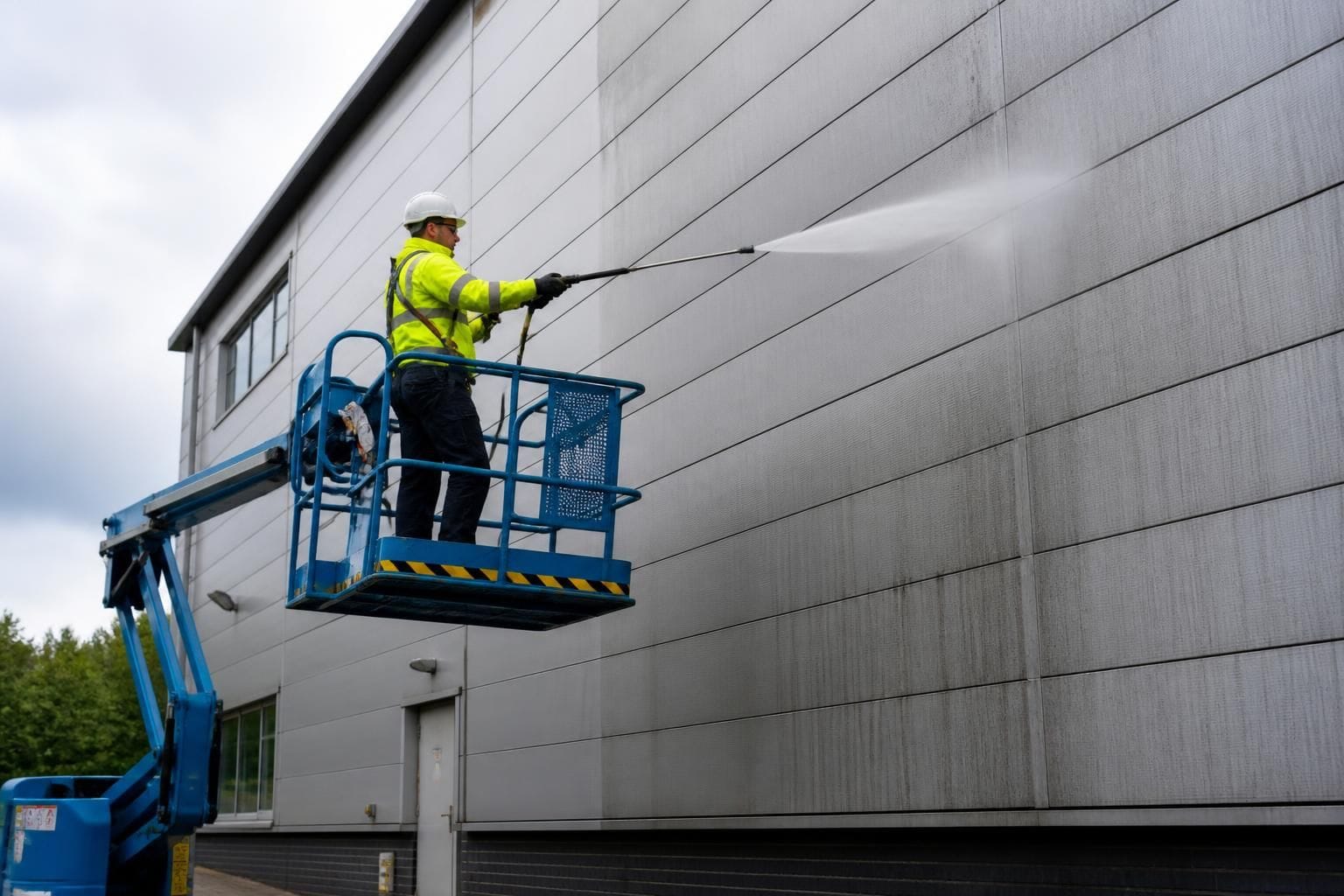
What factors should be considered when selecting a professional cladding cleaning service?
A professional cladding cleaning service should be assessed on its experience with your cladding material and building type, proposed cleaning methods, health and safety procedures, environmental controls, insurance and relevant competence. Check that the contractor provides a clear site-specific quotation explaining access requirements, preparation, cleaning, rinsing, waste-water management and any planned maintenance.
Select a professional cladding cleaning service by assessing its experience with your specific cladding material and building type, the suitability of its proposed cleaning method, its health and safety controls, environmental procedures, insurance, competence and quotation detail. A reliable contractor should inspect the building before work begins and provide a site-specific plan covering access, preparation, cleaning, rinsing, waste-water control and any required aftercare.
Experience with the building and cladding material
Cladding may be made from powder-coated or painted metal, aluminium composite panels, steel, concrete panels, uPVC, fibre cement, glass or other specialist materials. Each surface has different tolerances to pressure, heat, chemicals and agitation. Ask whether the contractor has cleaned the same or a comparable material and whether it understands common defects such as oxidisation, chalking, corrosion, failed coatings, open joints and damaged sealants.
Experience with similar buildings is also important. A low-rise industrial unit, a multi-storey commercial property and a site beside a public road can require very different access arrangements, risk controls and cleaning sequences. The contractor should be able to identify areas where cleaning could worsen existing damage and explain when a specialist repair or coating contractor may be needed instead.
Inspection and method selection
A suitable service should not recommend a cleaning method solely from photographs or the building’s appearance. A pre-cleaning survey should consider the cladding finish, soiling type, surface condition, surrounding materials, drainage and access. Algae, moss, atmospheric grime, traffic film, bird fouling, oils, cement residue and graffiti may require different treatments.
The contractor should explain why it has selected pressure washing, soft washing, steam cleaning, manual agitation or a combination of methods. The proposal should identify intended pressure, temperature, chemical products and dwell times where relevant, together with any test-cleaning process. Test areas help confirm that the method removes soiling without affecting colour, gloss, protective coatings, seals or joints. High pressure should not be used as a default where it could drive water behind panels or damage a vulnerable finish.
Ask how the contractor will protect windows, doors, vents, signage, electrical equipment, roof coverings, landscaping and neighbouring surfaces. It should also explain how residues will be rinsed away and how difficult areas such as panel joints, parapets, undersides and around fixings will be treated.
Health and safety arrangements
Cladding cleaning can involve work at height, powered equipment, chemicals, slippery surfaces, falling debris, vehicle movements and members of the public. The contractor should provide a suitable risk assessment and method statement and demonstrate that its operatives are trained for the equipment and access systems being used.
Check how the service will manage mobile elevated work platforms, towers, ladders, cradles, rope access or other access equipment. The plan should cover ground conditions, exclusion zones, dropped-object prevention, weather limits, rescue arrangements and emergency procedures. Where cleaning takes place above entrances, pavements or roads, the contractor should explain how people and traffic will be segregated from the work area.
Operatives should use appropriate personal protective equipment and follow the product manufacturer’s instructions for detergents, biocides and other treatments. You should also establish who is responsible for isolating or protecting sensitive equipment and for reporting defects discovered during the work.
Environmental and waste-water controls
Cleaning can release detergents, removed coatings, oil, biological growth and other contaminants into surface-water drains. Ask how run-off will be contained, filtered, collected or safely discharged. A professional proposal should take account of drainage routes and should not assume that contaminated water can enter a storm drain.
Consider whether the contractor can minimise water and chemical use through appropriate equipment, targeted application and controlled rinsing. It should explain how chemical products will be stored, diluted and disposed of, and how nearby planting, soil, watercourses and wildlife will be protected. Environmental controls should be proportionate to the site, the contamination and the local drainage arrangements rather than presented as a generic statement.
Insurance, competence and documentation
Request evidence of suitable public liability and employers’ liability insurance, along with any additional cover relevant to the project. Insurance does not by itself prove technical competence, so also check the contractor’s training, industry memberships or external accreditations where applicable, and its experience in commercial or industrial environments.
A suitable contractor should be willing to provide written risk assessments, method statements, product information and completion records. For larger or recurring projects, agree how defects, damaged areas, photographs, cleaning results and recommendations will be recorded. This documentation can support facilities management records and help plan future maintenance.
Clarity of the quotation
Compare quotations on the basis of scope rather than price alone. The document should state the areas to be cleaned, the expected level of cleaning, preparation requirements, access equipment, protection measures, labour, chemicals, rinsing, waste-water management and removal of any temporary barriers or equipment.
Clarify whether the price includes test patches, repeat treatment, stain removal, graffiti removal, out-of-hours working, traffic management and making good minor items. Ask what could lead to additional charges, such as concealed damage, difficult access, excessive contamination or the need to stop work because of weather. A clear scope reduces disputes and makes competing proposals easier to compare.
Be cautious of a quotation that promises to restore every mark or discolouration without inspecting the surface. Some staining is caused by corrosion, coating failure, sealant breakdown or permanent etching rather than removable dirt. The contractor should distinguish between cleaning and remedial work and state any limitations in advance.
Programme and disruption
Agree the proposed sequence, working hours and expected disruption before work starts. The contractor should explain how it will maintain access for staff, tenants, deliveries, customers and emergency routes, and whether noisy equipment, overspray, water supply or temporary closures will affect the site.
For occupied premises, a phased programme may reduce disruption. Weather-sensitive work should include a practical arrangement for postponement and safe shutdown. The contractor should also confirm who will act as the site contact and how changes or unexpected findings will be communicated.
Aftercare and ongoing maintenance
Ask what inspection takes place after cleaning and whether the contractor will provide photographs, completion notes or recommendations for repairs. If biological growth or heavy atmospheric soiling is likely to recur, discuss a planned maintenance schedule rather than waiting until the cladding is heavily contaminated.
The best choice is the service that offers a technically appropriate method, controlled access and safe working practices, responsible waste-water management, transparent pricing and clear communication. These checks help protect the cladding finish, prevent avoidable damage and ensure that the cleaning work supports the building’s longer-term maintenance plan.
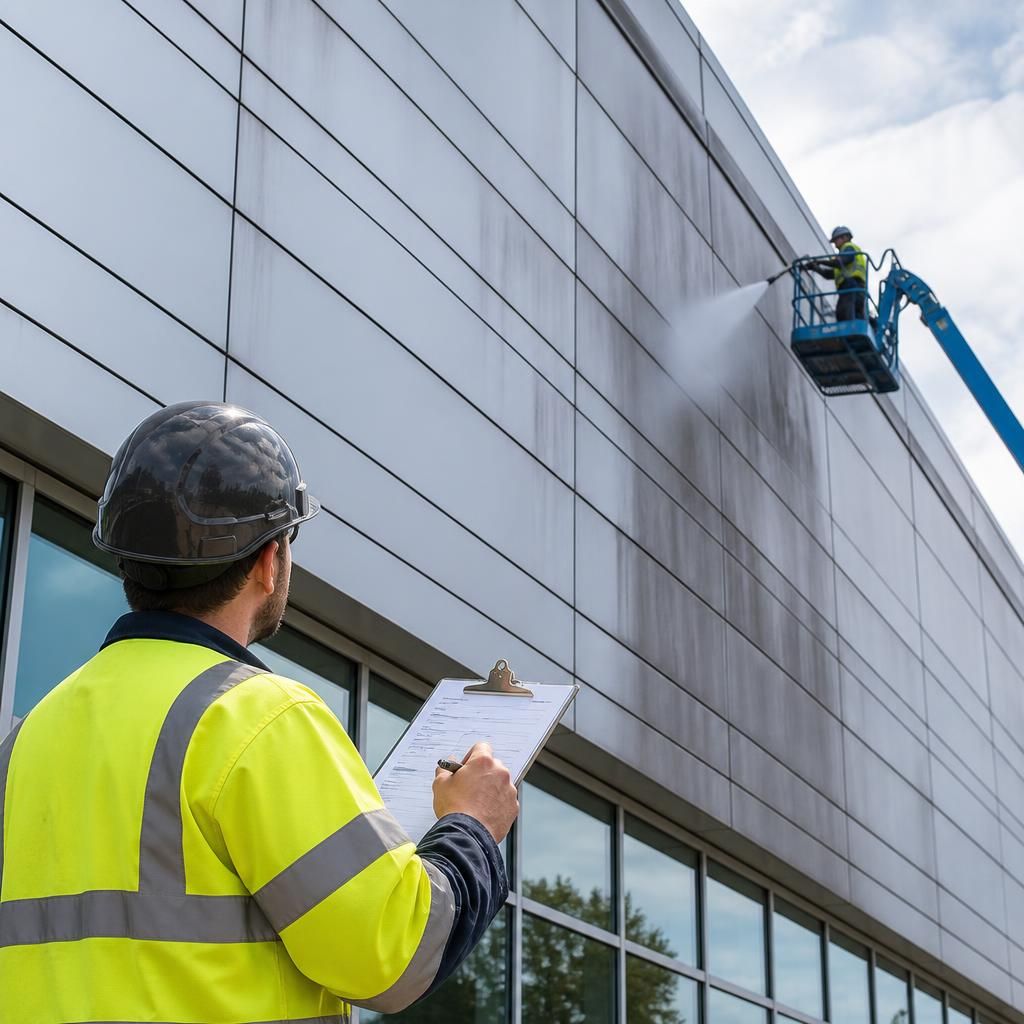
The most important factor when selecting a professional cladding cleaning service is whether its proposed method is suitable for the specific cladding material and its existing condition. A competent contractor should inspect the surface, identify the type of soiling and complete a test area before full cleaning begins.
Ask for an explanation of the equipment, pressure, temperature and cleaning products being considered. Powder-coated metal, aluminium composite panels, fibre cement, uPVC and concrete cladding can react differently to heat, chemicals and agitation. The contractor should also explain how it will protect seals, joints, windows, vents, signage and nearby surfaces, and how contaminated rinse water will be controlled.
A detailed, site-specific proposal is more useful than a low price or a general promise to restore the building. It should distinguish removable dirt from corrosion, coating failure or permanent staining, while setting out access arrangements, safety controls, cleaning limits and any recommended follow-up work.