
What factors influence the cost of cladding cleaning services?
The cost of cladding cleaning services is mainly influenced by the building’s size, cladding material and condition, access requirements, cleaning method, site location and any additional preparation or repairs needed. Complex access, heavy staining, fragile surfaces and work around occupied premises can all increase the time, equipment and specialist expertise required.
The cost of cladding cleaning services is determined by the scale and condition of the building, the type of cladding, access requirements, cleaning method, site location and the amount of preparation required. A straightforward, accessible façade with light surface dirt will usually cost less to clean than a high-rise or heavily stained building requiring specialist access, testing and multiple cleaning stages.
For an accurate quotation, the contractor should assess the building rather than price the work from floor area alone. The following factors commonly have the greatest effect on the overall cost.
- Building size and cladding area: Larger elevations require more labour, water, cleaning solution and equipment. The shape of the building also matters, as recessed sections, canopies, roof-level details and separate elevations can increase working time beyond the basic wall area.
- Cladding material and finish: Aluminium composite panels, profiled metal, powder-coated surfaces, render boards, brick slips and other systems can have different cleaning tolerances. Some finishes are more susceptible to scratching, discolouration or damage from unsuitable chemicals and pressure. The required method may therefore involve lower pressure, steam, manual treatment or additional rinsing.
- Current condition: Light dust and general atmospheric soiling are normally simpler to remove than ingrained dirt, traffic film, oil deposits, hard-water marks, algae, moss, lichen or bird fouling. Long-standing staining may need pre-treatment, agitation, repeated applications or a separate specialist process.
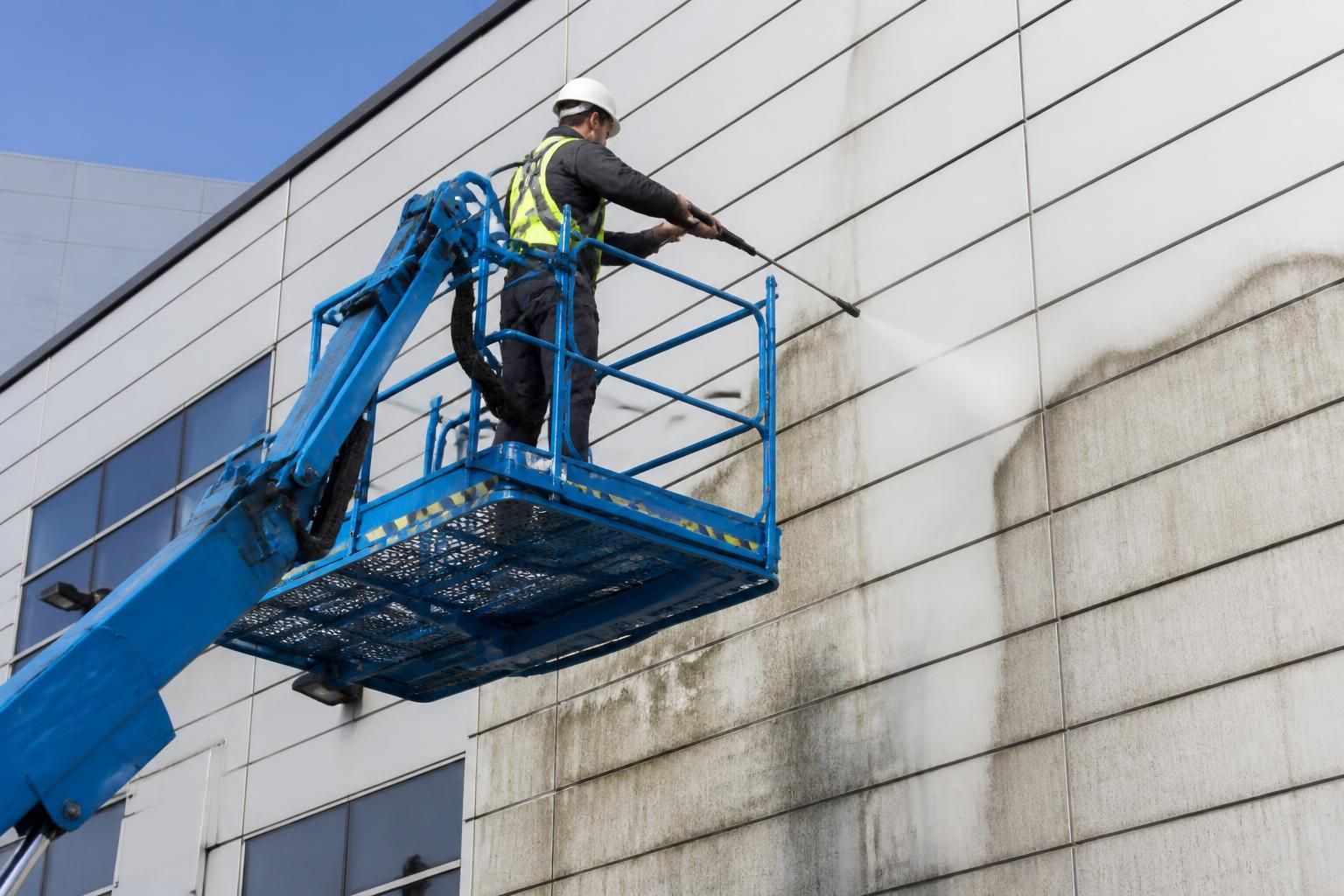
- Access and working height: Ground-level elevations with clear access are generally more efficient to clean. High or obstructed façades may require mobile elevated work platforms, scaffold, rope access, abseiling systems or other specialist equipment. The quotation may also need to allow for equipment delivery, set-up, relocation, operating restrictions and trained access personnel.
- Ground conditions and site layout: Sloping ground, soft surfaces, narrow service yards, busy loading areas and restricted parking can make it harder to position equipment. Where machinery cannot reach the façade directly, additional manual work or alternative access arrangements may be needed.
- Cleaning method: Pressure washing, soft washing, steam cleaning and chemical treatment each involve different equipment, preparation and operating times. A contractor should select the least aggressive effective method for the cladding rather than using high pressure by default. More controlled methods can sometimes cost more initially but reduce the risk of surface damage and remedial work.
- Testing and preparation: A small test area may be required to confirm that the method is safe and effective. Protecting windows, doors, vents, signage, lighting, landscaping and sensitive equipment also adds preparation time. Loose debris, failed sealant or surface contamination may need to be dealt with before the main clean.
- Water management and waste control: Some sites allow ordinary wash-down and collection arrangements, while others require controlled run-off, recovery of contaminated water or measures to prevent cleaning products entering drains. Environmental controls, water supply limitations and disposal requirements can affect both labour and equipment costs.
- Site location and logistics: Travel distance, congestion, parking restrictions, permits and the availability of water and power can influence the quotation. Projects in busy Birmingham or wider West Midlands locations may also need carefully planned deliveries and work periods to minimise disruption.
- Business operations and working hours: Cleaning around customers, staff, residents, vehicles or deliveries requires segregation, communication and phased working. Out-of-hours, weekend or night work may involve additional planning, supervision and access costs, particularly where lighting or traffic management is required.
- Health and safety requirements: Risk assessments, method statements, exclusion zones, traffic control and specialist training are essential for commercial work. The complexity of the site and the access system affects how much planning and supervision is necessary.
- Scope of the contract: A quotation may cover only the cladding or include windows, frames, trims, soffits, entrance areas, canopies, roofs, signs and surrounding hard surfaces. It is important to confirm exactly which elevations and associated items are included.
The timing and frequency of the work can also influence value. Planned maintenance is generally easier to organise than an urgent clean before an inspection, handover or property letting. Regular cleaning can prevent heavy build-up, helping future visits remain more predictable, although the appropriate interval depends on the building’s exposure, use and cladding material.
When comparing quotations, check whether they include access equipment, testing, protective measures, water and waste management, traffic control, cleaning of associated surfaces and any required follow-up treatment. The cheapest price may not represent the lowest overall cost if it excludes essential preparation or uses a method unsuitable for the cladding.
A reliable assessment should record the cladding type and condition, identify access constraints, confirm the proposed cleaning system and explain any exclusions. Providing photographs, elevation plans, site restrictions and preferred working times can help produce a more accurate quotation. For larger or complex premises, a site survey is usually the most dependable way to establish the work involved and identify cost risks before cleaning begins.
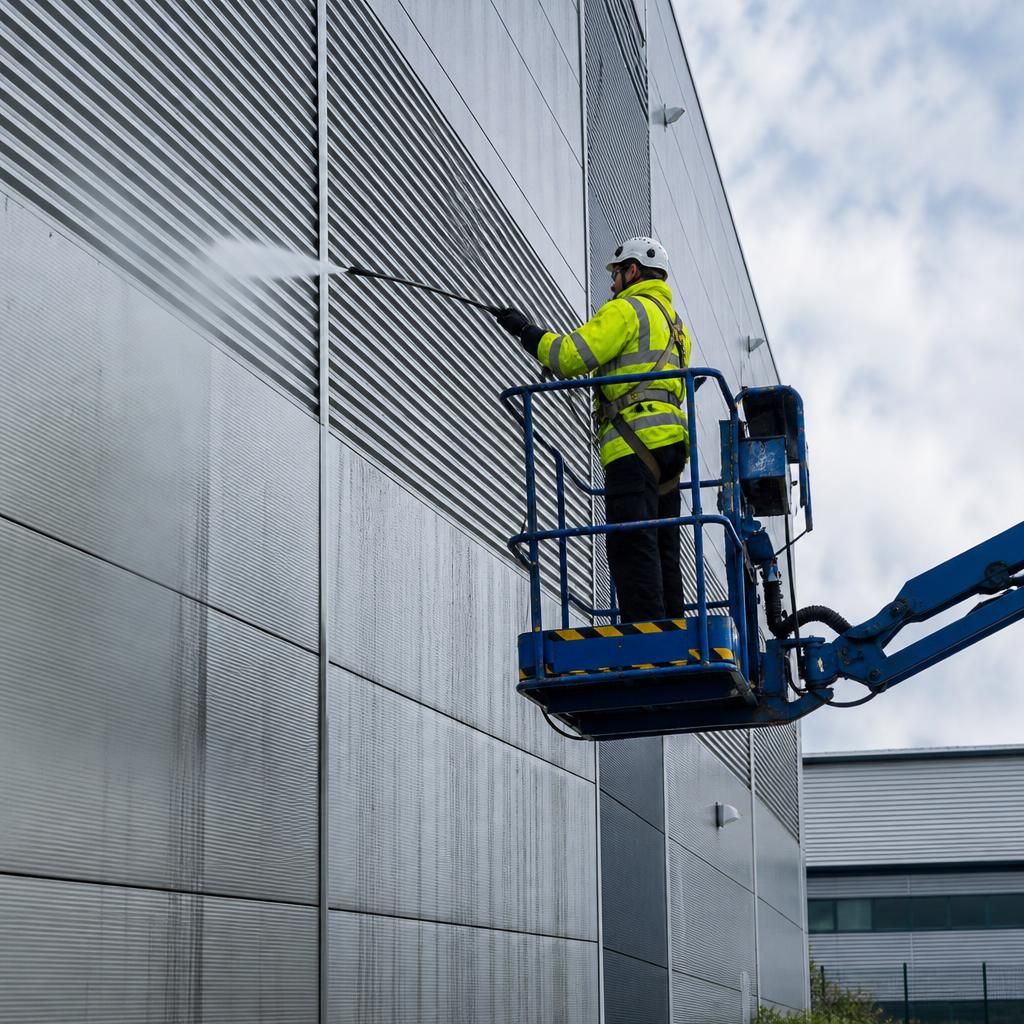
Access requirements are often a major factor in the cost of cladding cleaning because they determine the equipment, preparation and specialist personnel needed to reach each elevation safely. Ground-level walls with clear working space are generally quicker to clean, whereas high, recessed or obstructed façades may require a mobile elevated work platform, scaffold or rope-access system.
The quotation should account for equipment delivery, set-up, relocation, exclusion zones and any restrictions caused by vehicles, loading areas or occupied premises. A site survey helps identify these requirements before work begins, reducing the risk of additional charges and ensuring that the proposed cleaning method is suitable for the building.