
What are the environmental considerations for cladding cleaning processes?
Cladding cleaning processes should minimise water and chemical use while preventing contaminated runoff from entering drains, soil or watercourses. Responsible contractors select the least harmful effective method, control and collect wastewater, and follow relevant environmental requirements for the site.
Environmentally responsible cladding cleaning minimises water, chemical and energy use while preventing contaminated wash water, debris and residues from reaching drains, soil or watercourses. The appropriate process depends on the cladding material, the type of soiling, the building’s surroundings and the condition of the surface. A professional contractor should assess these factors before work begins and use the least intensive method that will achieve a safe, effective result.
Water use and recovery
Water consumption should be controlled rather than treated as an unlimited resource. Low-pressure washing, targeted rinsing, steam cleaning or other suitable techniques may use less water than prolonged high-volume pressure washing, depending on the surface and contamination. The method should be selected to avoid unnecessary repeat cleaning, overspray and rinsing.
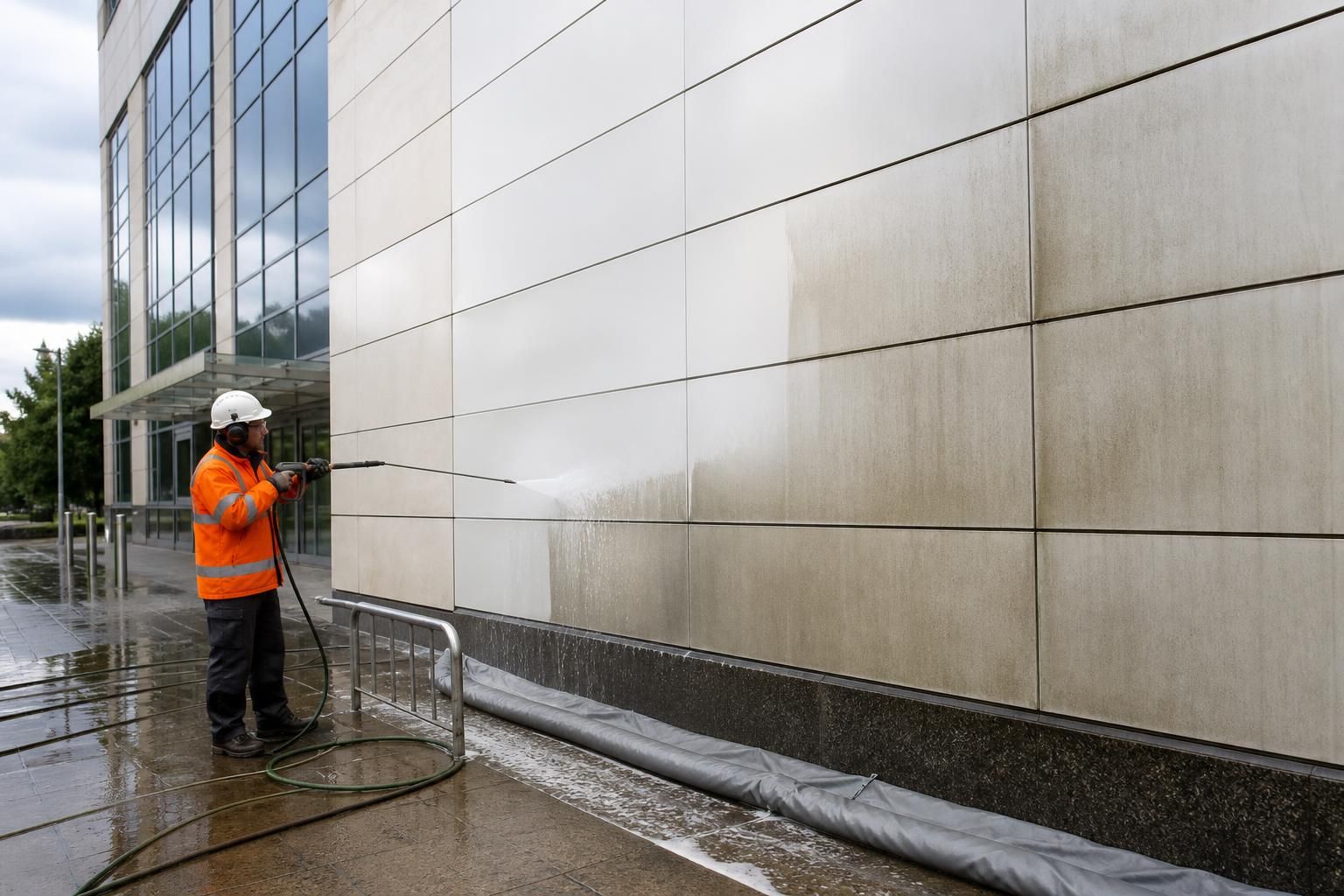
Where wash water may contain dirt, oils, biological growth, paint residues or cleaning products, it should be contained and recovered. Drain covers, bunding, temporary barriers, wet vacuums, collection points and other controls can help prevent uncontrolled discharge. Water should not be allowed to flow into surface-water drains, nearby ground or watercourses unless it is demonstrably suitable and discharge is permitted.
Cleaning chemicals
Chemicals should be used only where they are necessary and appropriate for the cladding material and the contamination. The contractor should choose the lowest-impact product capable of delivering the required result, apply it at the correct dilution, limit contact time and prevent spray drift. Using more product than necessary can increase the risk of damage to coatings, vegetation, drainage systems and aquatic environments.
Product selection should take account of biodegradability, pH, toxicity, surfactants and any restrictions stated in the product safety data sheet. Strong acids, alkalis, solvents and biocides require particular care. A product that is suitable for one cladding system may stain, corrode or degrade another, so compatibility testing and manufacturer guidance are important.
Responsible handling also includes secure storage, accurate mixing, suitable personal protective equipment and preventing spills. Chemicals should never be mixed unless the manufacturer specifically permits it. Empty containers, contaminated absorbents and leftover solutions must be managed in accordance with the relevant waste requirements rather than poured into drains.
Runoff, drainage and legal controls
Before cleaning, the site should be surveyed to identify surface-water drains, foul-water drains, gullies, inspection chambers, landscaping, watercourses and sensitive neighbouring areas. Surface-water systems commonly discharge directly to the environment, so contaminated cleaning water must not be directed into them without suitable controls and permission.
Depending on the site and the cleaning solution, discharge may require approval from the drainage operator, local authority or environmental regulator. If the wastewater is unsuitable for discharge, it may need to be collected, stored safely and removed by an appropriately authorised waste contractor. The site plan and method statement should explain how runoff will be contained, tested where necessary and disposed of.
These controls are particularly important at industrial premises, transport sites, petrol stations, food-related facilities, construction sites and locations close to rivers, ponds or protected habitats. A contractor should stop work and review the arrangements if unexpected contamination, a damaged drain or a spill is discovered.
Protecting vegetation, soil and wildlife
Cleaning solutions, dirty water and high-pressure spray can harm planted areas, soil organisms, aquatic life and nesting or roosting wildlife. Plants near the work area should be identified and protected with suitable sheeting or temporary barriers, while avoiding heat build-up or chemical contact that could damage them. Overspray should be controlled, particularly around landscaped areas and neighbouring properties.
Seasonal checks may be needed where birds or other protected species could be affected by access equipment, noise, disturbance or cleaning activity. Existing nests, habitats and water features should be considered during the planning stage. If protected wildlife may be present, work should be paused until appropriate advice has been obtained.
Energy use and equipment
Pressure washers, steam equipment, pumps, vacuum systems and access platforms all consume energy. Efficient, well-maintained equipment reduces fuel or electricity use and helps prevent leaks, excessive noise and unnecessary operating time. Planning the work properly, using the right equipment for the surface and avoiding repeated passes can reduce the overall environmental load without compromising the cleaning result.
Where practical, electric equipment may reduce local exhaust emissions and noise, although the suitability of the power supply, equipment capacity and site conditions must be considered. Access equipment should be selected to avoid damage to ground surfaces, drainage areas and planted zones.
Waste and contaminated materials
Removed coatings, heavy deposits, algae, moss, paint fragments, absorbent materials and disposable protective items should be collected rather than left on the ground. Waste should be assessed, segregated where possible and transferred through the correct disposal or recovery route. Materials contaminated with oil, chemicals or other hazardous substances may require specialist handling and documentation.
Good housekeeping reduces the risk of windblown debris, blocked drains and secondary contamination. It also makes it easier to demonstrate that the site was left clean and that waste was not mixed with general refuse without assessment.
Choosing the cleaning method
The most sustainable method is not automatically the one that uses the least water or no chemicals. A poorly chosen low-impact process may require repeated applications, cause surface damage or leave contamination that quickly returns. A controlled chemical treatment, steam clean or carefully managed pressure wash may have a lower overall impact when it delivers the required result in a single planned operation.
The assessment should consider:
- the cladding material, coating, joints and existing defects;
- the type and severity of soiling, such as algae, traffic film, oil, cement residue or graffiti;
- the minimum pressure, temperature and chemical strength needed;
- water availability, collection arrangements and discharge restrictions;
- nearby drains, soil, vegetation, watercourses and sensitive occupants;
- access requirements, equipment emissions and noise;
- the likelihood of staining, corrosion or damage if the wrong method is used; and
- how wastewater, debris, packaging and unused products will be managed.
A small test area is useful where the cladding finish or contamination is uncertain. It allows the contractor to confirm cleaning performance, dwell time, pressure, temperature and rinsing requirements before the full area is treated. This can reduce rework, water use and the risk of damage.
What a responsible site plan should include
For commercial and industrial work, environmental controls should be recorded in the risk assessment and method statement. The documentation should identify the products and equipment being used, drainage arrangements, runoff controls, spill response, waste routes, weather limitations and responsibilities on site. Safety data sheets should be available for relevant substances, and the team should understand what to do if a spill or uncontrolled discharge occurs.
Heavy rain, strong wind or freezing conditions can make containment and spray control unreliable. Work may need to be postponed until conditions are suitable. After cleaning, the area should be inspected for residual slurry, blocked drains, chemical traces, damaged vegetation and waste. Keeping records of the method, products, wastewater arrangements and disposal route provides useful evidence for property managers and site compliance files.
When reviewing a cladding cleaning proposal, ask how water will be used and controlled, where dirty water will go, which products are proposed, how nearby drains and planting will be protected, and how waste will be disposed of. These details provide a more meaningful indication of environmental performance than describing a process as simply “green” or “eco-friendly”.
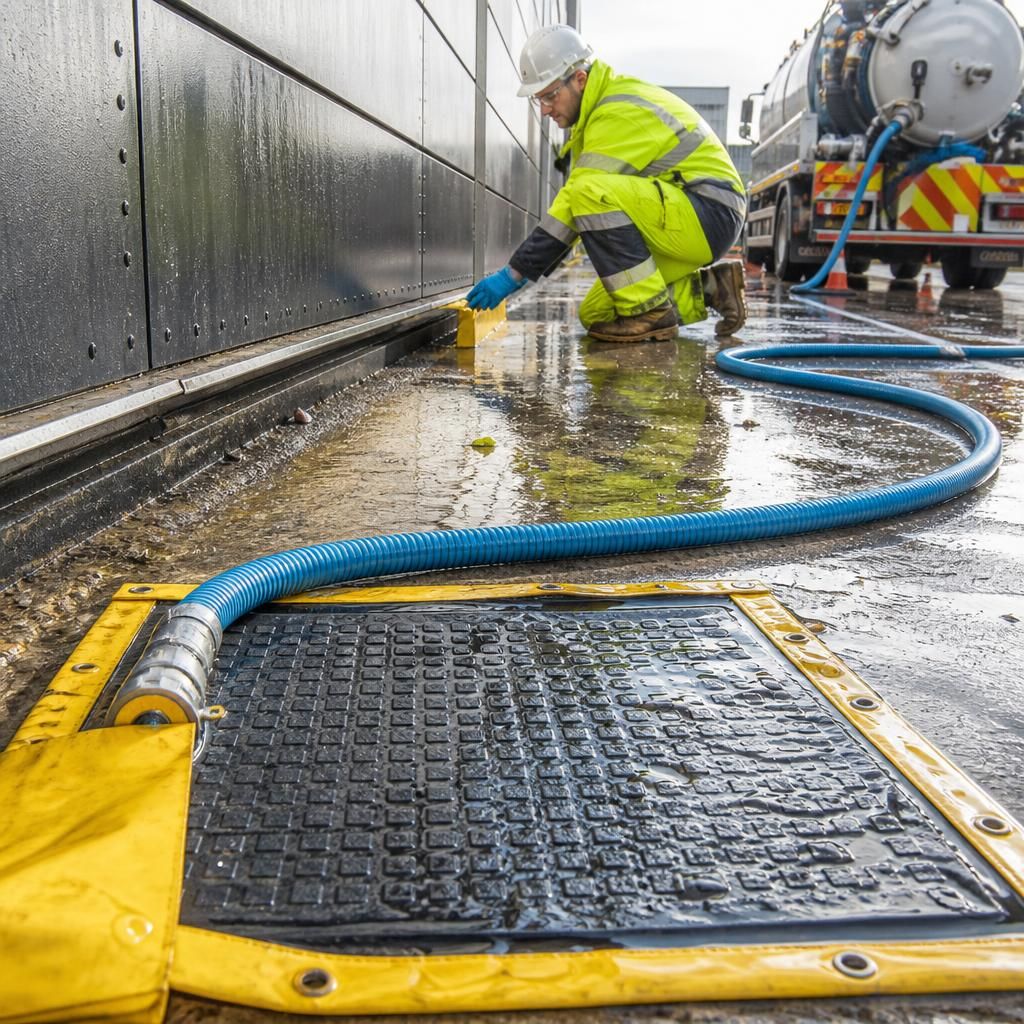
Controlling contaminated wash water is one of the most important environmental considerations during cladding cleaning. Runoff can contain dirt, oils, biological growth, paint residues or cleaning products, so it must not be allowed to enter surface-water drains, soil or nearby watercourses without suitable assessment and permission.
Before work starts, the cleaning team should identify drainage points and sensitive areas, then use appropriate controls such as drain covers, temporary barriers, bunding and wet-vacuum recovery. Where discharge is not permitted, wastewater should be collected, stored safely and transferred through an appropriate waste route. The site should also be inspected after cleaning for residual slurry, blocked drains and signs of uncontrolled runoff.