
What are the environmental benefits of professional cladding cleaning?
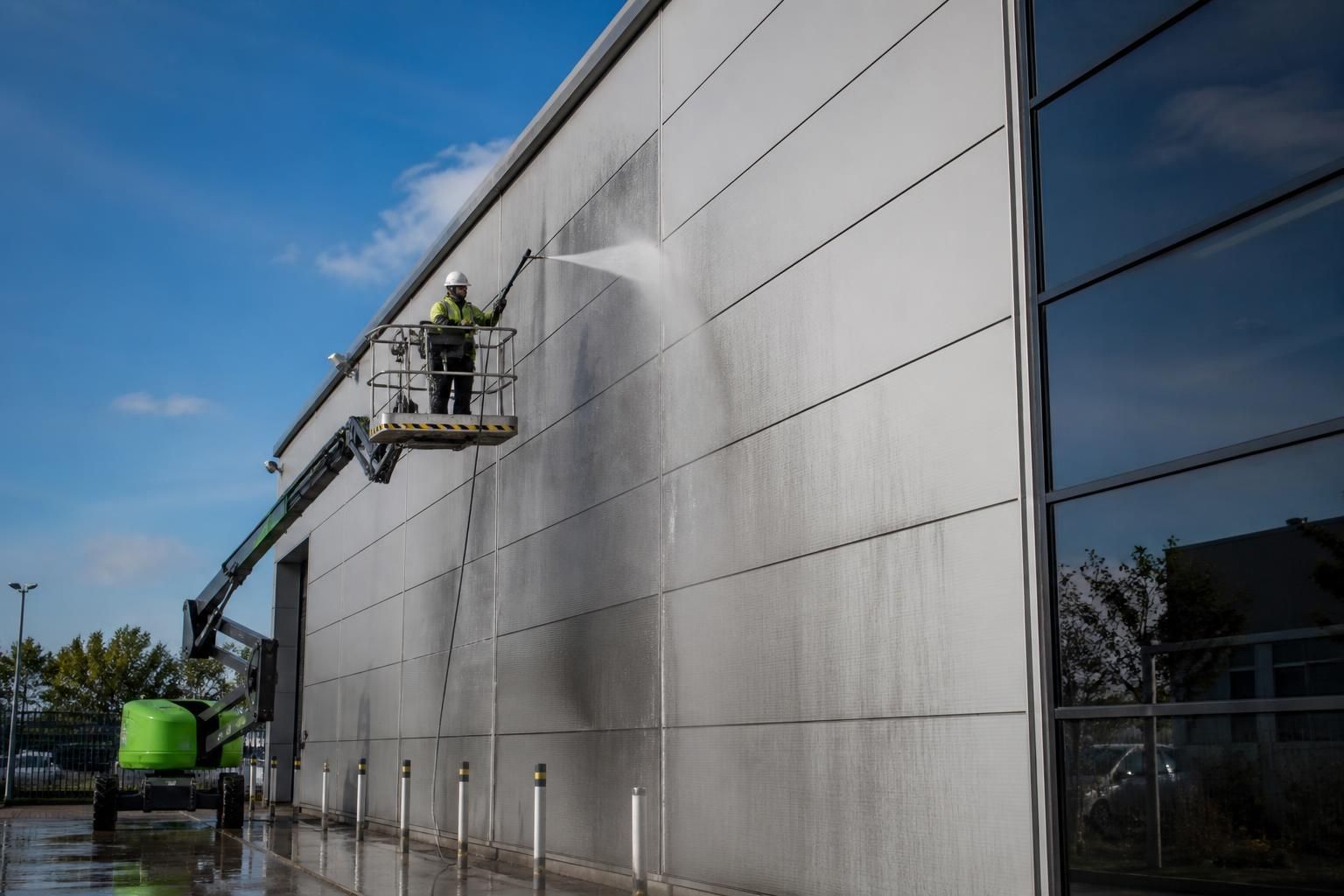
Professional cladding cleaning can reduce environmental impact by extending the service life of existing panels, helping to avoid premature replacement and the waste and resources associated with manufacturing and installation. Trained contractors can also select efficient cleaning methods, control water and chemical use, and manage wastewater responsibly to limit pollution and unnecessary consumption.
Professional cladding cleaning can reduce a building’s environmental impact by extending the useful life of existing panels, limiting waste, and controlling the resources used during maintenance. The benefit depends on the cleaning method, the condition and material of the cladding, the products selected, and how wastewater and removed contaminants are managed.
Extending the service life of cladding
Regular removal of dirt, algae, moss, traffic film, bird fouling and atmospheric deposits helps preserve the cladding’s surface and protective finishes. Accumulated contamination can retain moisture, contribute to staining and corrosion, block drainage details, or conceal early signs of damage. Removing it as part of a planned maintenance programme allows defects to be identified before they require extensive repair or panel replacement.
Avoiding premature replacement is an important environmental advantage. Manufacturing new cladding involves raw materials, energy, transport and packaging, while installation can create additional waste and require access equipment. Keeping serviceable panels in use generally avoids these impacts and reduces the demand for new materials.
Reducing construction and demolition waste
Cleaning is usually a lower-waste intervention than removing and replacing otherwise sound cladding. It can help retain panels, coatings, fixings and associated building components rather than sending them to recycling or disposal facilities. Even where some repairs are needed, early cleaning and inspection may allow a targeted repair instead of wholesale replacement.
Professional contractors should still assess whether cleaning is suitable. Severely corroded, delaminated or damaged panels may need repair or replacement, and aggressive cleaning can create more harm than benefit. A condition survey and material assessment help ensure that cleaning is used where it provides a genuine maintenance advantage.
Using water more responsibly
Trained operatives can select a process that matches the type and severity of contamination. Low-pressure washing, controlled rinsing, steam cleaning or targeted treatment may use less water than repeated high-volume washing, depending on the surface and site conditions. The correct approach also reduces the risk of over-cleaning, which can damage coatings and lead to further maintenance.
Water use should be controlled through suitable equipment, carefully directed application and avoidance of unnecessary repeat passes. Where site conditions and equipment allow, recovery and reuse may also reduce demand for fresh water. The most suitable option depends on the building, access arrangements, drainage and the contaminants being removed.
Limiting chemical use and protecting surfaces
Professional cleaning can reduce environmental risk by using the least aggressive product that will achieve the required result. This may involve a detergent, biocide or specialist treatment, but products should be selected for the cladding material, contamination and surrounding environment. Correct dilution and controlled application help prevent unnecessary chemical consumption.
Environmentally preferable products are not automatically harmless. Any cleaning agent can present a risk if it enters soil, surface water or drainage systems without suitable controls. Contractors should follow the product’s safety and disposal instructions, protect nearby planting and watercourses, and prevent uncontrolled overspray or run-off. Mechanical methods or steam may be appropriate where they can remove contamination without relying on stronger chemicals.
Managing wastewater and contaminants
Cladding wash water can contain detergents, oils, heavy deposits, biological growth, paint particles, bird fouling and other pollutants. Allowing this water to run directly into surface-water drains can transfer contamination into the wider environment. Responsible cleaning plans identify drainage routes in advance and include measures such as drain covers, bunding, collection, filtration or controlled discharge where appropriate.
Collected wastewater and solid residues should be handled in accordance with the requirements of the site, the local drainage authority and relevant environmental regulations. Waste transfer and disposal arrangements should be clear, particularly on industrial sites where residues may contain oils or other hazardous substances. This is one of the main differences between a controlled professional operation and unplanned washing that simply moves pollutants from the façade into the drainage system.
Reducing fuel use and disruption
Well-planned work can reduce unnecessary fuel consumption by selecting suitable access equipment, positioning machinery efficiently and coordinating cleaning with other planned maintenance. Cleaning during a scheduled visit may avoid a separate mobilisation later. The environmental effect of access equipment varies by site, so the practical choice may include mobile elevated work platforms, water-fed systems, rope access or other methods subject to a proper risk assessment.
Efficient planning also reduces repeat visits, idling equipment and disruption to occupied premises. This does not make every cleaning method environmentally preferable, but it supports a lower-impact approach when combined with appropriate equipment and realistic scheduling.
Supporting preventative maintenance
Clean cladding is easier to inspect. During a professional clean, operatives may identify failed sealant, loose panels, blocked outlets, corrosion, damaged coatings or water ingress indicators. Reporting these issues promptly can prevent deterioration and the more resource-intensive repairs that may follow. Cleaning therefore forms part of a wider maintenance strategy rather than being only a cosmetic service.
For the strongest environmental outcome, ask for a method statement that explains how water and chemicals will be controlled, how wastewater will be managed, what access equipment is required and how the cladding material will be protected. A contractor should be able to explain why the proposed process is suitable for the surface and what steps will be taken to prevent pollution. Professional cladding cleaning is most sustainable when it preserves the existing building, uses only the resources needed, and leaves the site with contaminants properly contained rather than transferred elsewhere.
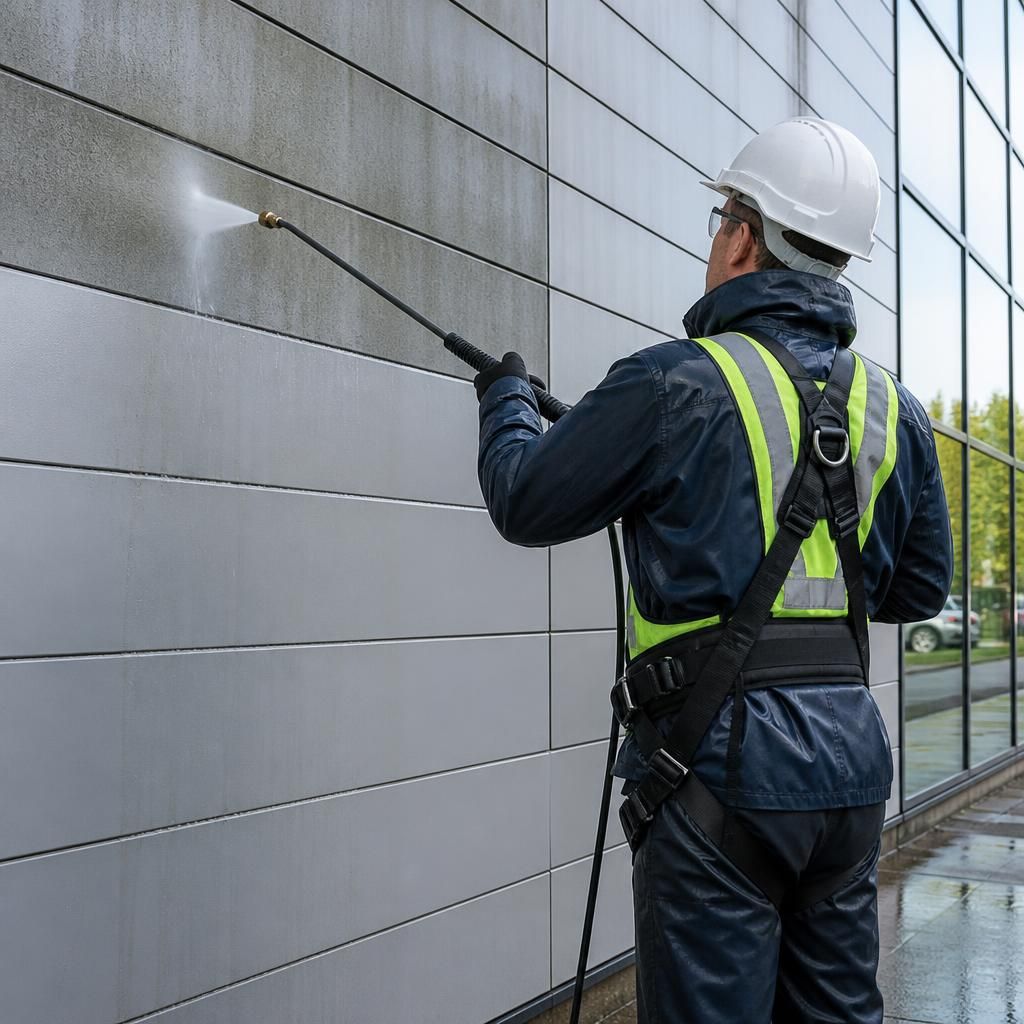
Professional cladding cleaning can reduce environmental impact by extending the life of serviceable panels, helping avoid the material use, transport and waste associated with premature replacement. Removing algae, moss, traffic film and atmospheric deposits also makes defects easier to identify before they develop into more extensive repairs.
The environmental benefit is greatest when the cleaning process is carefully matched to the cladding material and contamination. Controlled water use, suitable low-impact treatments and responsible wastewater management help prevent pollutants from being transferred into soil or drainage systems. A planned clean can therefore preserve the existing façade while limiting the resources used during maintenance.