
What are the best methods for removing algae from cladding surfaces?
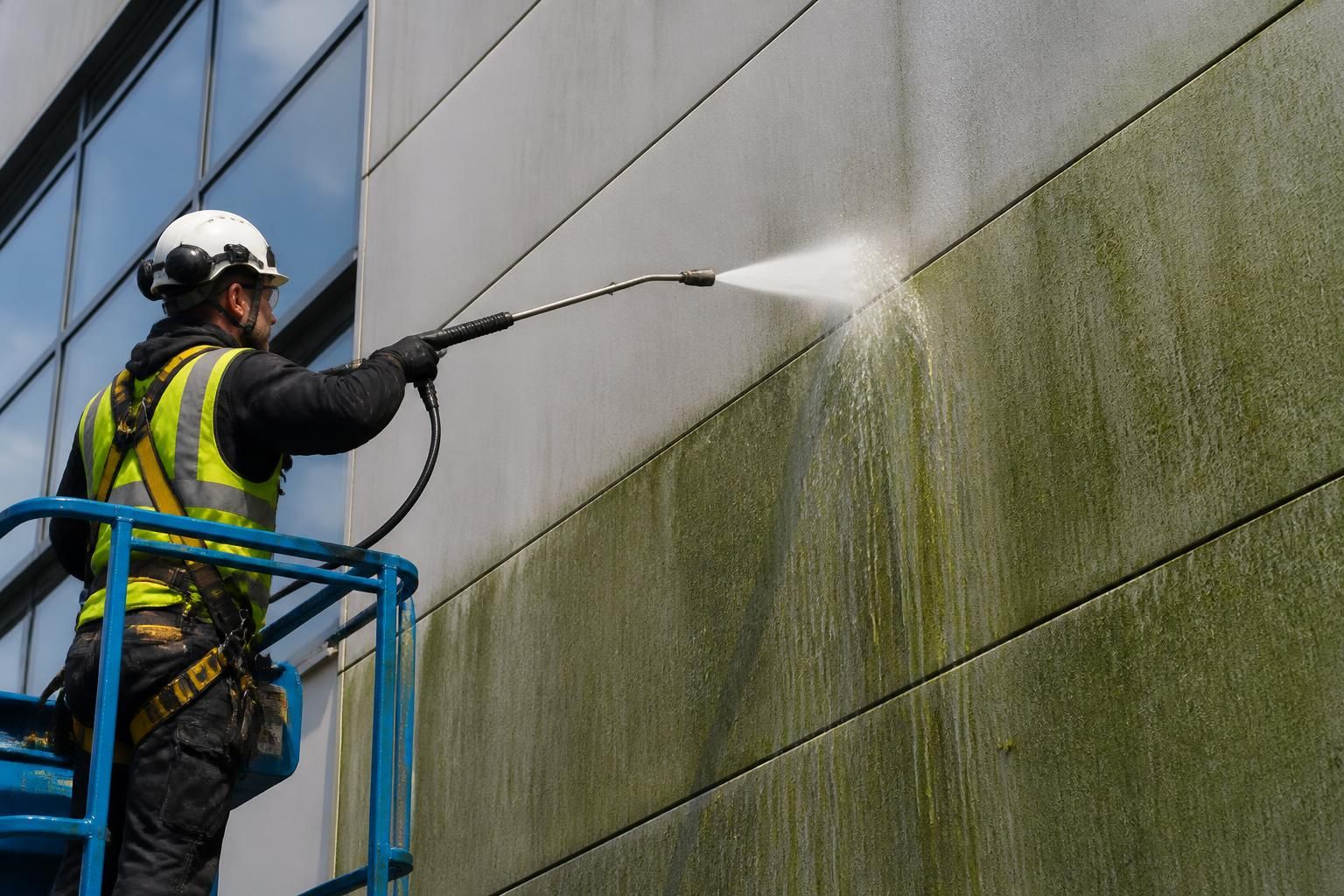
The most effective method for removing algae from cladding is usually a controlled soft-wash treatment using an appropriate biocidal solution, followed by a low-pressure rinse. Pressure washing may be suitable for robust cladding, but the method should be selected according to the material, coating condition and risk of water or surface damage.
The most effective method for removing algae from cladding is usually a controlled soft-wash treatment with a suitable biocidal solution, followed by a low-pressure rinse. This approach treats the algae at its source while reducing the risk of damaging coatings, seals and joints. Pressure washing or steam cleaning may also be appropriate, but the correct method depends on the cladding material, surface finish, level of contamination and condition of the building.
Algae typically appears as green, dark green or black staining on areas that remain damp or receive limited sunlight. It is often found on north-facing elevations, beneath roof edges, around drainage points and near vegetation. Although the growth may initially look cosmetic, it can retain moisture against the surface and make façades appear neglected. Cleaning should therefore remove both the visible growth and, where suitable, the organic contamination that encourages it to return.
Soft washing with a biocidal treatment
Soft washing is commonly the safest starting point for commercial cladding. The surface is pre-wetted where appropriate, and a controlled cleaning solution is applied at low pressure. The solution loosens algae and other organic matter, allowing it to be rinsed away without relying on force alone. A suitable biocide can also help reduce residual spores and slow regrowth, although it does not remove the need to address persistent dampness, blocked gutters or overhanging vegetation.
The solution must be selected and diluted according to the cladding type and the manufacturer’s guidance. Aluminium, coated steel, composite panels and painted finishes can react differently to cleaning chemicals. The surrounding glass, sealants, signage, landscaping, vehicles and drainage systems should be protected, and run-off must be controlled so that the treatment does not cause damage or enter unsuitable drainage routes.
Low-pressure rinsing
After the treatment has had adequate dwell time, the loosened algae can normally be removed using a low-pressure rinse. The operator should work methodically from upper sections downwards, using enough water to clear the contamination but not so much pressure that water is forced behind panels or into joints. A controlled rinse is particularly important where cladding includes ageing coatings, exposed fixings, open laps or deteriorated sealants.
In some cases, algae may need gentle agitation with a soft brush or suitable non-abrasive pad before rinsing. Abrasive pads, wire brushes and aggressive scraping can mark coatings and create areas where dirt and moisture accumulate. Any manual agitation should be tested first and used only where it is compatible with the finish.
When pressure washing is suitable
Pressure washing can be effective on robust, well-maintained cladding and may be useful where algae is mixed with heavy dirt, traffic film or other deposits. It is not automatically the best option for every façade. Excessive pressure, an unsuitable nozzle or working too closely to the surface can strip paint, etch finishes, lift edges, damage seals and drive water behind the cladding system.
Before pressure washing, the cleaning contractor should identify the cladding material, inspect the coating and sealant condition, and complete a discreet test area. Pressure, nozzle selection, spray distance and direction should then be adjusted to achieve cleaning without surface damage. Direct spraying at vents, joints, flashings, electrical fittings and panel overlaps should be avoided.
Steam cleaning and specialist methods
Low-pressure steam cleaning may be considered where a controlled, low-chemical process is preferred or where heat can help break down biological deposits. Steam is not suitable for every coating or composite system, and heat and moisture must be managed carefully around sealants, membranes, electrical components and vulnerable finishes. It should be used only after assessing the manufacturer’s requirements and the condition of the façade.
Heavily established growth may require a staged treatment rather than one aggressive cleaning operation. The first visit may remove loose contamination and apply a treatment, with a later rinse or maintenance clean dealing with remaining staining. This is generally safer than increasing pressure or using harsh chemicals to force an immediate result.
How the cleaning process should be managed
- Survey the façade: Identify the cladding material, coating, access requirements, drainage arrangements, previous repairs and areas of biological growth. Look for corrosion, failed sealants, loose panels and existing water ingress.
- Test the proposed method: Apply the selected chemical, pressure and agitation technique to an inconspicuous area. Check the cleaning result and inspect for colour change, streaking, coating failure or other reaction before proceeding.
- Prepare the work area: Protect adjacent surfaces and equipment, manage pedestrian and vehicle movements, and plan safe access. Any chemical handling and work at height should be covered by the relevant risk assessments and control measures.
- Apply the treatment evenly: Avoid allowing the solution to dry on the cladding unless the product instructions specifically permit this. Maintain control of overspray and run-off throughout the work.
- Rinse and inspect: Remove loosened algae using an appropriate low-pressure rinse or other approved method. Inspect the façade from different angles and repeat only where necessary, rather than increasing the cleaning intensity indiscriminately.
- Check the cause of regrowth: Review nearby vegetation, overflowing gutters, leaking downpipes, persistent condensation and shaded damp areas. Correcting these conditions can make the cleaning result last longer.
Methods and materials should be matched carefully
Pre-finished metal cladding generally requires careful chemical selection and pressure control to protect its coating. Powder-coated or painted surfaces can fade, chalk or lose adhesion if exposed to unsuitable products. Composite panels may have a sensitive face finish, while older systems may have brittle seals or concealed damage. Profiled sheets, rainscreen panels and insulated panel systems also differ in how water can move through joints and cavities.
For this reason, a method that works well on one elevation should not automatically be used across the whole building. A professional assessment should distinguish between sound and deteriorated areas, identify repairs that may be needed before cleaning, and record any pre-existing defects. Cleaning cannot restore failed coatings, corroded metal or defective sealants, and high-pressure washing can make those problems worse.
Why professional treatment is preferable
Commercial cladding cleaning often involves work at height, chemical controls, water management and protection of occupied premises. Experienced operatives can select access equipment and cleaning techniques that limit disruption while maintaining control of the façade and surrounding area. They can also recognise when algae is masking corrosion, water ingress or a failing finish that requires attention from another specialist.
The best long-term approach is usually a planned maintenance programme combining periodic inspection, suitable soft-wash or low-pressure cleaning and early attention to drainage or building defects. If algae returns quickly after cleaning, the cause should be investigated rather than repeatedly increasing pressure or chemical strength. This protects the cladding system, supports a consistent appearance and helps maintain a safe, professional commercial exterior.
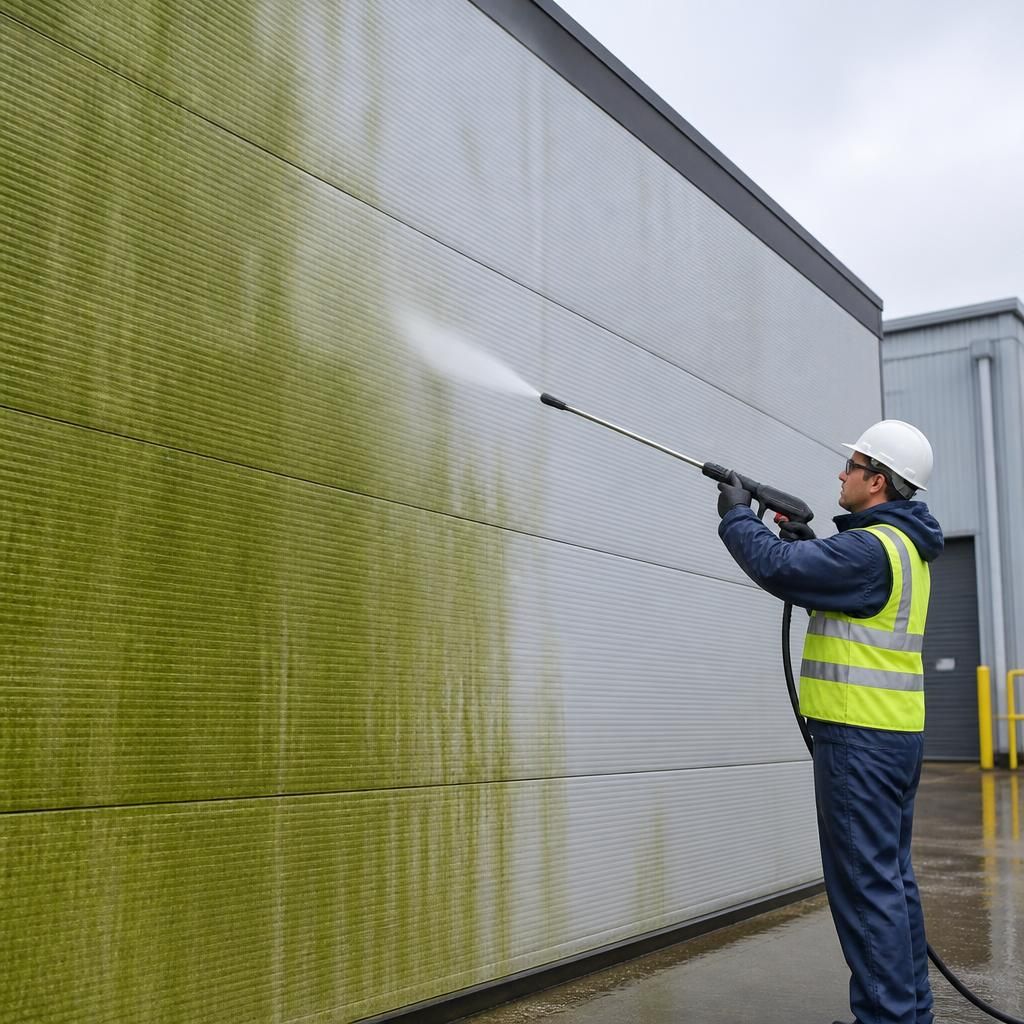
Algae should be removed from cladding using the least aggressive method that achieves a thorough clean. A controlled soft-wash treatment followed by a low-pressure rinse is often suitable, but the material, coating condition and sealant integrity must be assessed first.
A professional test patch helps confirm that the chosen solution, pressure and dwell time will not cause fading, streaking, coating failure or water ingress. This is particularly important on painted metal, powder-coated finishes, composite panels and older cladding with deteriorated joints. Where algae is firmly established, gentle brushing may assist removal; abrasive pads, wire brushes and excessive pressure should be avoided because they can permanently mark the surface.
The surrounding area also requires protection. Glass, signage, vehicles, landscaping and drainage routes should be shielded from cleaning chemicals and contaminated run-off. Once the algae has been removed, persistent dampness, blocked gutters, leaking downpipes and overhanging vegetation should be addressed to help prevent rapid regrowth.