
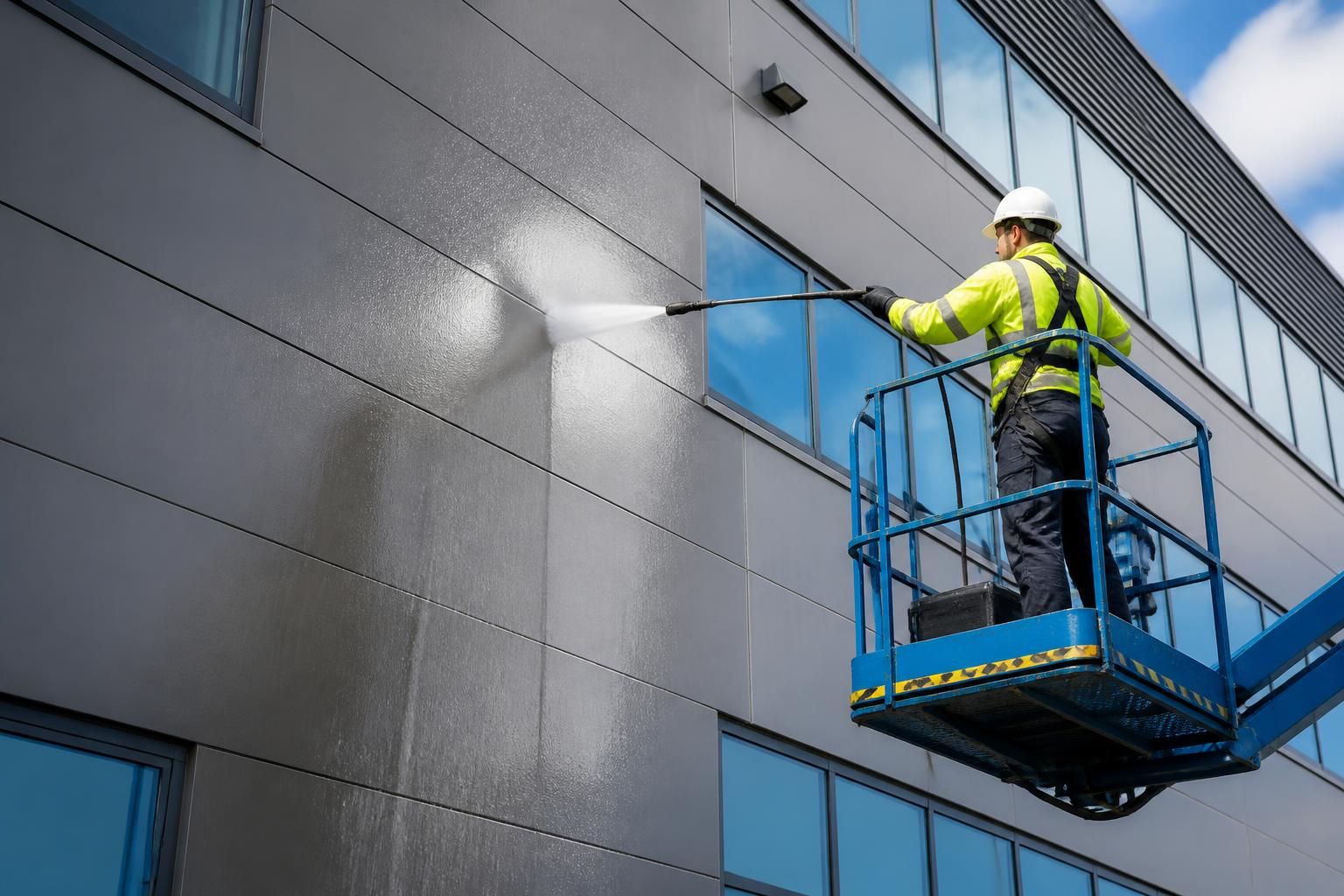
How often should cladding on commercial buildings be cleaned to ensure longevity and safety?
Commercial cladding should generally be professionally cleaned on a planned annual or biennial cycle, with more frequent attention for buildings exposed to heavy traffic, industrial pollutants, coastal conditions, algae or persistent moisture. Regular inspections should also identify staining, corrosion, damaged coatings and safety risks so the cleaning schedule can be adjusted to protect the cladding and extend its service life.
Commercial cladding should usually be professionally cleaned on an annual or biennial cycle, supported by regular visual inspections. Buildings exposed to heavy traffic, industrial emissions, coastal salt, persistent moisture, algae or vandalism may need cleaning more frequently. The correct interval depends on the cladding material, site conditions, existing coating and the type of contamination present.
Cleaning at planned intervals removes dirt and pollutants before they become difficult to treat or begin to affect the cladding system. Deposits can retain moisture, encourage algae and organic growth, obscure corrosion or coating failure, and make surfaces more slippery around entrances, walkways and access areas. Regular cleaning therefore supports appearance, maintenance planning and the safe operation of the building, although it cannot repair defective panels, joints, fixings or substrates.
A practical cleaning schedule should include:
- Routine inspections: Check elevations, roof-edge areas, entrances, loading bays and shaded sections for staining, biological growth, corrosion, blocked drainage, loose components and damaged coatings.
- Planned professional cleaning: Arrange cleaning before contamination becomes established, rather than waiting until the façade is heavily stained.
- Targeted treatments: Clean high-risk areas, such as sheltered elevations or vehicle entrances, when deposits appear rather than waiting for the next full-building service.
- Post-work checks: Inspect the finish after cleaning and record any defects that require repair by a suitable building-envelope or cladding specialist.
Site conditions that may shorten the interval
Cladding near busy roads can accumulate traffic film, soot and airborne particles. Industrial premises may be affected by dust, oil residues or chemical pollutants, while buildings close to the coast can receive salt deposits that accelerate deterioration of vulnerable metals and fixings. Shaded elevations, north-facing walls and areas beneath roof details often remain damp for longer, increasing the likelihood of algae, moss or lichen. Dense vegetation, leaking gutters and poor drainage can have a similar effect.
Buildings with frequent deliveries or high pedestrian use may also require more regular local cleaning. Finger marks, food residues, tyre film, exhaust deposits and graffiti are best dealt with promptly, both to maintain a professional appearance and to prevent staining or repeated aggressive treatment later.
The cladding material also matters
Metal panels, coated steel, aluminium composite panels, glass-reinforced plastic, render systems, brick slips and other façade materials do not all respond to the same cleaning methods. The condition of the coating, the age of the installation and the manufacturer’s maintenance guidance should be considered before work begins. A method that is suitable for one elevation may damage another through excessive pressure, unsuitable chemicals, heat or abrasive action.
Professional cleaning should therefore start with a site assessment and, where appropriate, a small test area. The operative can then determine whether a low-pressure wash, steam cleaning, a controlled soft-washing process or another treatment is appropriate. The aim is to remove contamination without stripping protective coatings, forcing water behind joints or damaging seals and fixings.
Cleaning should be linked to inspection and repair
A clean surface makes some defects easier to identify, but cleaning alone does not resolve structural or maintenance problems. During an inspection, look for discolouration that may indicate corrosion, blistering or peeling coatings, cracked sealant, open joints, loose panels, damaged flashings and staining below fixings. Water ingress, movement or unexplained changes in the façade should be assessed by a competent specialist before cleaning proceeds.
Where cladding is damaged or unstable, the area may need to be isolated and repaired before operatives work nearby. Cleaning teams should not use pressure or access equipment in a way that could worsen an existing defect. Findings should be documented with photographs and included in the building’s planned maintenance records so future cleaning intervals are based on evidence rather than appearance alone.
Safety and environmental controls affect the schedule
A planned service should account for safe access, pedestrian and vehicle management, work at height, weather conditions, electrical equipment and runoff. Contaminated water should be controlled and disposed of in accordance with site requirements and applicable regulations. Where cleaning is delayed, deposits may become more difficult to remove, potentially increasing the need for stronger treatments, longer access arrangements or additional containment.
For most commercial properties, an annual inspection with cleaning scheduled annually or every two years provides a useful starting point. Review that plan after the first service and adjust it according to the rate at which contamination returns, the condition of the finish and any changes to the surrounding environment. A shorter interval is usually justified when staining returns quickly, organic growth is persistent, the building is exposed to industrial or coastal conditions, or safety and access areas become contaminated between planned visits.
Keeping inspection records, noting problem elevations and responding to localised contamination promptly will help protect the cladding and avoid unnecessary cleaning. A professional assessment can confirm the appropriate method and frequency for the specific building, rather than applying the same interval to every façade.
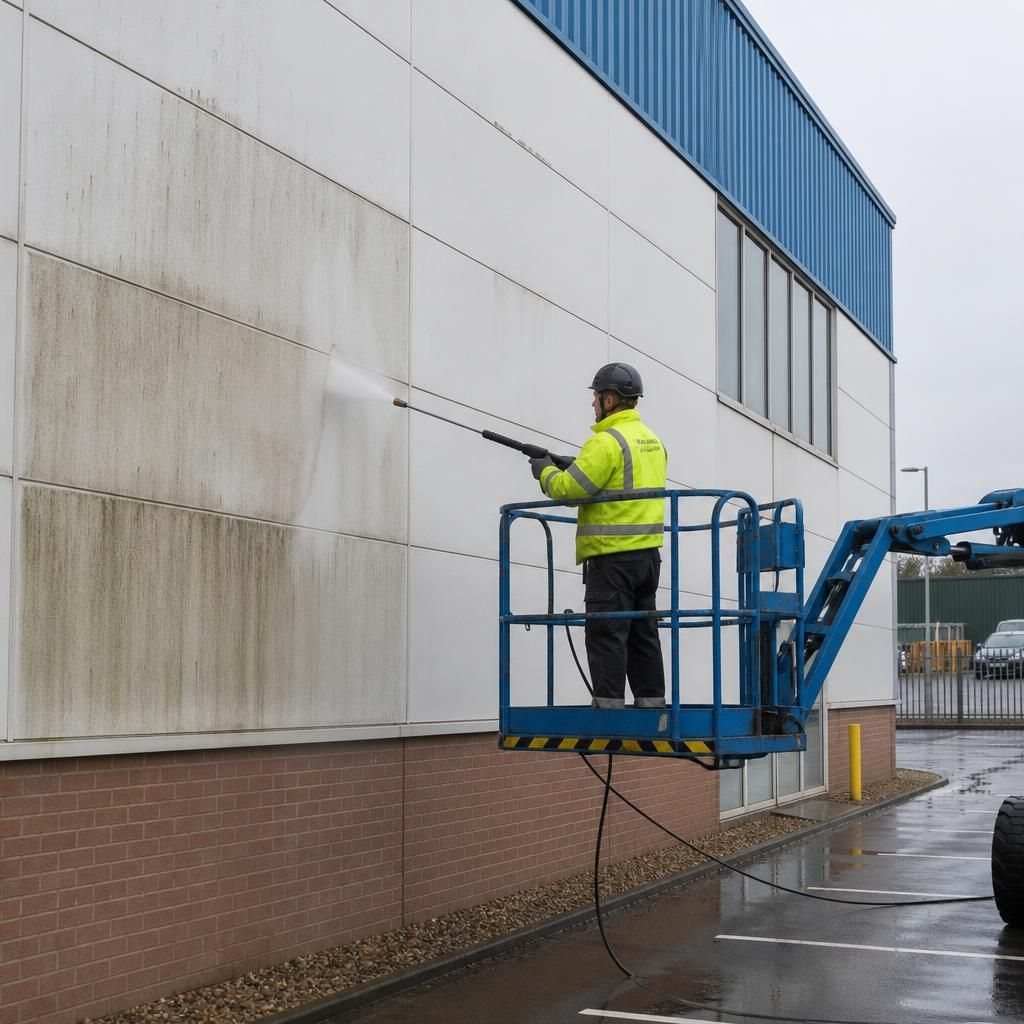
Commercial cladding is generally best cleaned on an annual or biennial cycle, but the correct interval depends on how quickly contamination builds up and whether it could affect the façade’s condition or safe use. A busy roadside, industrial site, coastal location or persistently damp elevation may require more frequent cleaning.
Regular inspections should identify traffic film, algae, moss, salt deposits, corrosion, coating failure and staining around entrances or loading areas. High-risk sections can then be cleaned locally between planned full-façade services, preventing deposits from becoming established and reducing the need for stronger treatments.
The schedule should also reflect the cladding material, its protective coating and the manufacturer’s maintenance guidance. After each service, record the condition of the panels, joints, seals and fixings. This evidence allows future cleaning intervals to be adjusted and ensures that defects are referred to a suitable cladding specialist rather than treated as a cleaning issue.