
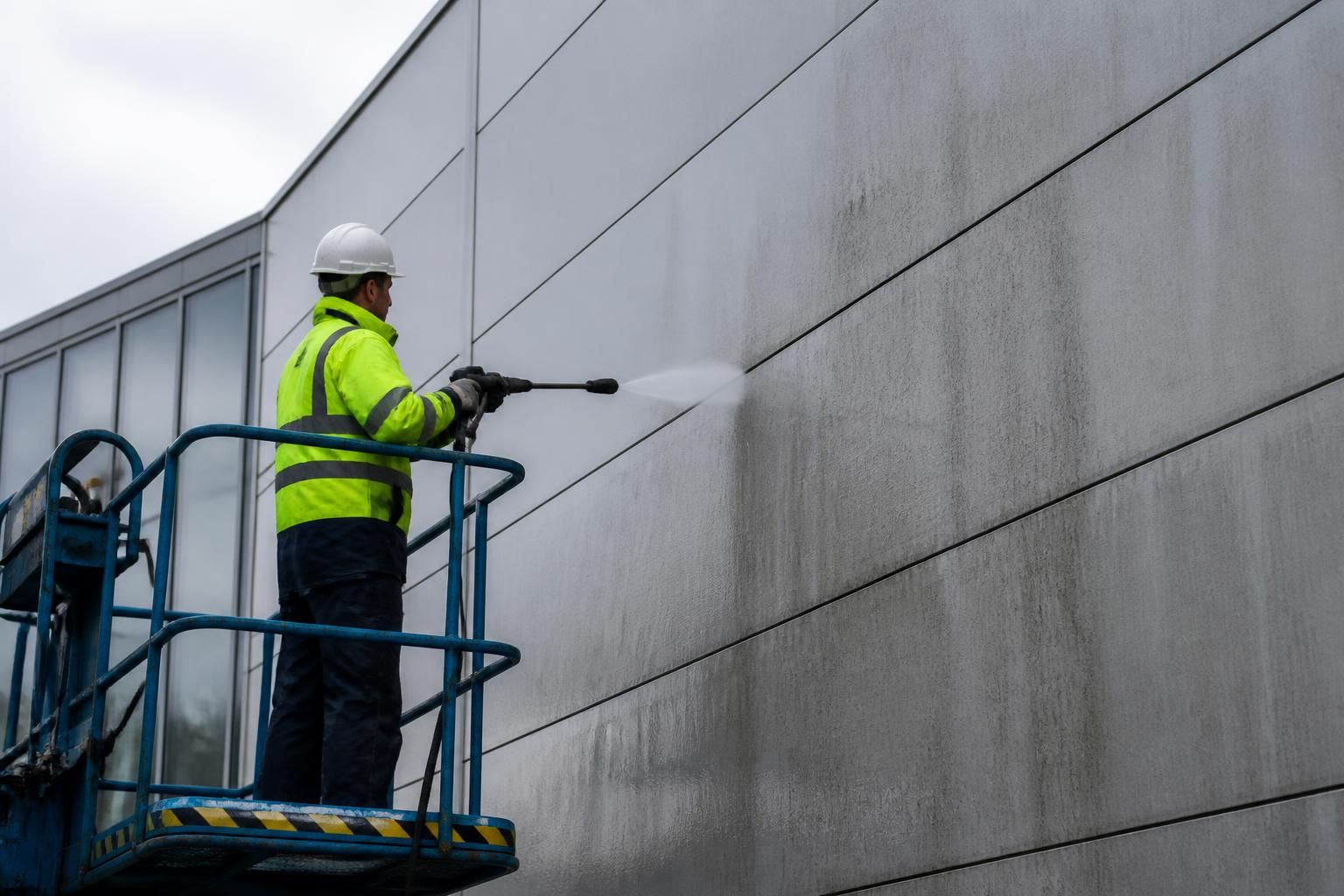
How often should cladding be professionally cleaned?
Commercial cladding should usually be professionally inspected at least annually and cleaned when dirt, algae, staining or pollution becomes established. Buildings exposed to heavy traffic, coastal conditions, industrial emissions or persistent damp may require more frequent cleaning, while sheltered cladding can often follow a longer maintenance cycle.
Commercial cladding should be professionally inspected at least annually and cleaned when dirt, algae, staining, traffic film or industrial pollution becomes established. The appropriate cleaning interval depends on the building’s location, cladding material, exposure, surrounding activities and the manufacturer’s maintenance guidance. High-exposure buildings may need cleaning more frequently, while sheltered premises can often follow a longer planned cycle.
A professional inspection should assess the condition of the cladding as well as its appearance. A contractor will look for organic growth, bird fouling, corrosion, oxidisation, failed sealant, damaged coatings, staining around drainage points and areas where water is not shedding correctly. This helps determine whether cleaning is required immediately or can be scheduled as part of routine maintenance.
Buildings beside busy roads, construction sites, quarries or industrial premises usually accumulate grime more quickly. Cladding in these locations may need more regular cleaning to prevent traffic film, dust and airborne pollutants becoming bonded to the surface. Coastal buildings can also require closer monitoring because salt deposits and persistent moisture may accelerate deterioration of certain finishes and fixings.
Shaded elevations, north-facing walls and areas beneath trees are more likely to retain moisture and develop algae, moss or other biological growth. If the site has poor drainage, leaking gutters or overflowing downpipes, cleaning alone will not resolve the underlying problem. These defects should be corrected so that newly cleaned cladding does not become marked or contaminated again soon afterwards.
For many commercial properties, an annual inspection combined with planned cleaning when the surface condition warrants it provides a sensible maintenance approach. Some buildings may require cleaning as part of a more frequent routine, particularly where presentation, hygiene or public safety is important. Other façades may remain serviceable for longer between cleans if they are sheltered and regularly checked.
Cleaning should normally be arranged before contamination becomes heavy or widespread. Early removal is generally easier to control and reduces the need for aggressive methods that could affect coatings, sealants or joints. Warning signs that a clean is due include:
- Visible darkening, streaks or uneven discolouration across panels.
- Green algae, moss or other organic growth, especially in shaded areas.
- Persistent bird fouling or deposits around entrances and roof edges.
- Traffic film, dust or industrial residue that remains after rainfall.
- Staining below windows, vents, gutters, joints or drainage outlets.
- Complaints about the building’s appearance or concerns that deposits are becoming difficult to remove.
The cleaning frequency should also take account of the cladding system itself. Powder-coated aluminium, coated steel, composite panels, render-backed systems, uPVC and other materials can have different tolerances and maintenance requirements. The correct pressure, temperature, detergent and rinse method must be selected for the surface, with a test area used where appropriate. Manufacturer instructions and warranty conditions should be checked before work begins.
Seasonal timing can influence the result. Cleaning during a period of moderate weather can help detergents work correctly and allow surfaces to dry properly. However, urgent contamination, health and safety concerns or heavily soiled public-facing areas should not be left until a preferred season. A professional contractor can recommend a practical schedule around site access, weather, occupancy and other maintenance work.
Property managers should record inspections, cleaning dates, observed defects and any areas requiring follow-up. This creates a useful maintenance history and makes it easier to identify recurring problems, such as staining caused by defective drainage. It also helps coordinate façade cleaning with roof, gutter, window and external repairs.
There is no single cleaning interval suitable for every commercial building. The most reliable approach is to inspect cladding regularly, clean it before contamination becomes established, and adjust the schedule in response to the site’s exposure and condition. A professional assessment can establish whether the building needs an immediate clean, remedial work first, or inclusion in a planned maintenance programme.
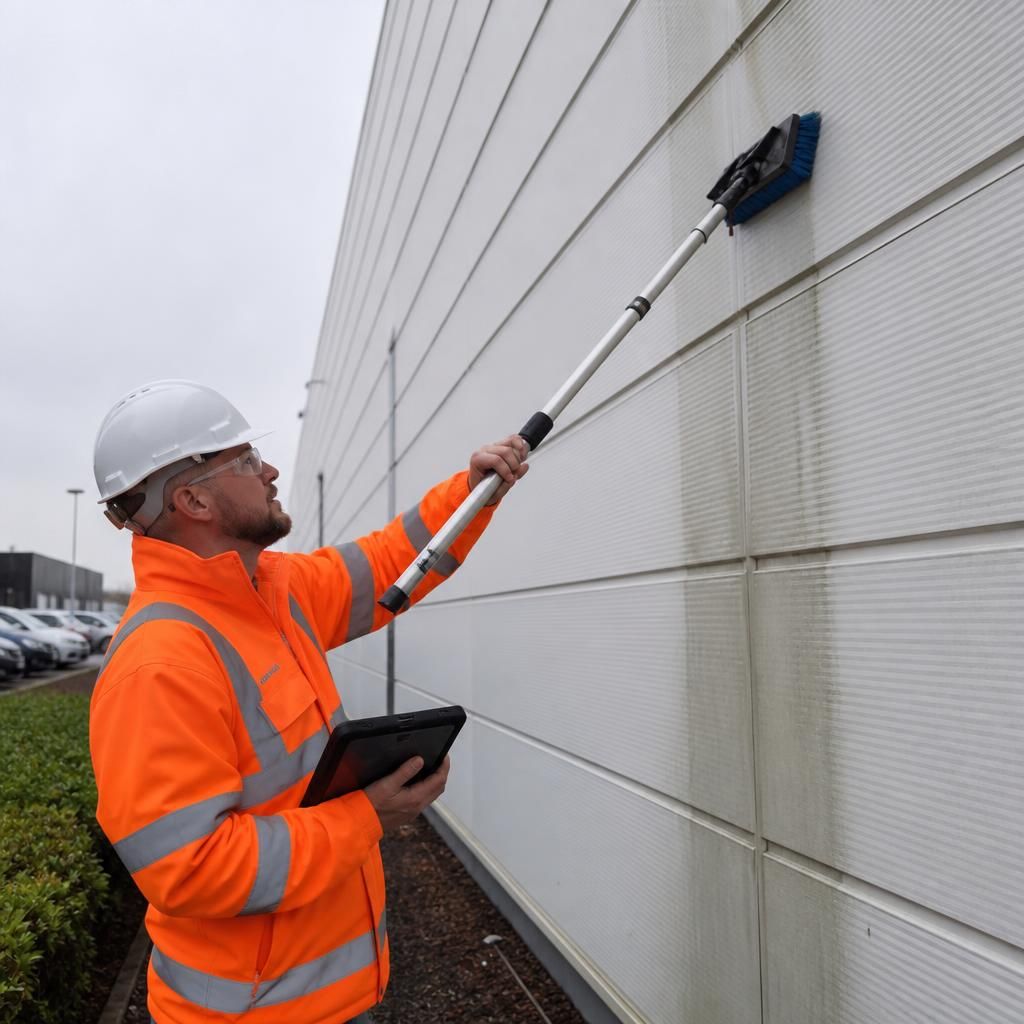
Cladding should be professionally inspected at least annually, but the cleaning interval should be based on its condition and exposure rather than a fixed date. Buildings beside busy roads, construction sites, industrial premises or the coast often need more frequent cleaning because pollution, dust, salt and moisture build up quickly.
Shaded elevations, areas beneath trees and façades affected by leaking gutters or poor drainage may also require closer monitoring. Arrange cleaning when you notice persistent staining, traffic film, algae, moss, bird fouling or discolouration, before contamination becomes established and requires more intensive treatment.
A suitable maintenance plan should record inspection findings, cleaning dates and any defects affecting the cladding. Correcting failed sealant, blocked gutters or drainage problems alongside cleaning helps prevent the same staining and organic growth from returning.