
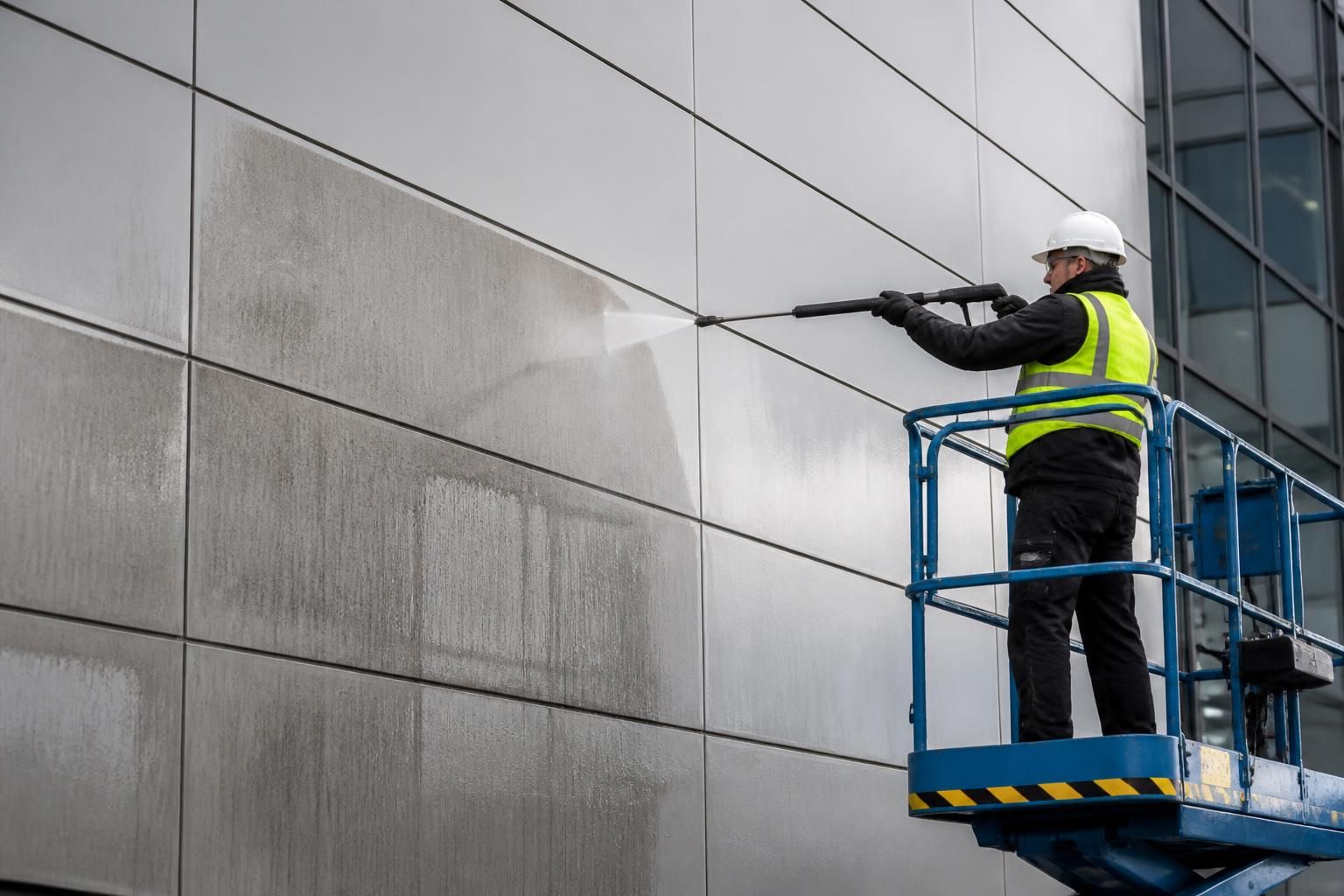
How can property managers ensure the safety of their building's cladding during the cleaning process?
Property managers can protect cladding during cleaning by arranging a pre-clean inspection, identifying the cladding material and vulnerable areas, and requiring a suitable risk assessment and method statement. The cleaning contractor should test the proposed method on a discreet area, use controlled pressure, temperature and chemicals, protect joints, seals and openings, and employ trained operatives with appropriate access and runoff controls.
Property managers can protect building cladding during cleaning by confirming the cladding type and condition, commissioning a site-specific risk assessment and method statement, and ensuring the proposed cleaning system is tested before full application. The contractor should use controlled pressure, temperature and chemical strength, protect joints and openings, select suitable access equipment, and inspect the surface throughout the work.
Begin with a pre-cleaning inspection
Cladding should not be treated as a uniform surface. Panels, coatings, fixings, sealants and detailing can respond differently to water pressure, heat and cleaning chemicals. Before work starts, inspect the elevations and record:
- the cladding material, finish and coating system, where this information is available;
- areas of corrosion, cracking, delamination, fading, chalking, dents or loose panels;
- failed seals, open joints, damaged trims and exposed fixings;
- penetrations, louvres, vents, windows, doors and other vulnerable openings;
- drainage routes, rainwater goods and locations where water could enter the building; and
- existing staining, biological growth, graffiti or deposits that may require different treatments.
Photographs and written records provide a useful condition baseline. If the inspection identifies loose panels, defective sealant or significant coating failure, these issues should be addressed or excluded from the cleaning scope rather than concealed by the work.
Confirm the correct cleaning method
The method should be selected for the specific cladding material and its surface finish. A system suitable for robust metal panels may be inappropriate for coated aluminium, composite panels, render-faced systems or aged finishes. The contractor should explain why the proposed combination of water pressure, temperature, equipment, dwell time and cleaning product is suitable.
Pressure should be kept as low as reasonably practicable while still achieving the required result. Excessive pressure can drive water behind joints, damage protective coatings, mark softer finishes and loosen already-compromised components. Steam and heated water can be effective for some deposits, but heat must also be controlled because it may soften sealants, affect coatings or create rapid temperature changes across the surface.
Chemical products should be assessed for compatibility with the cladding, seals, glazing, surrounding finishes and nearby landscaping. They should be diluted and applied in accordance with the product instructions and the agreed method statement. Stronger chemicals are not automatically safer or more effective. Where possible, a less aggressive treatment should be used first, with sufficient dwell time and agitation to remove the deposit without unnecessary mechanical force.
Require a discreet test area
A test patch should be completed in an inconspicuous location before the main clean. The test should assess more than whether the dirt has been removed. The contractor should check for colour change, streaking, coating loss, gloss variation, etching, water penetration and any reaction from sealants or adjacent materials. The area should also be reviewed after it has dried, as some defects are not apparent while the cladding is wet.
The agreed test result should define the operating limits for the wider project. If the finish reacts badly, the method should be changed or the affected area should be referred to the cladding manufacturer, specialist surveyor or another suitably qualified professional.
Use a suitable risk assessment and method statement
A site-specific risk assessment and method statement should set out the cleaning sequence, equipment, chemicals, access arrangements, exclusion zones, weather limitations, emergency procedures and inspection requirements. It should also identify risks to occupants, visitors, vehicles, neighbouring properties and the building fabric.
Where hazardous substances are used, the contractor should provide the relevant COSHH assessment and safety information. The documents should explain how products will be stored, handled, diluted and rinsed away, as well as what will happen if a product is spilled or contacts an incompatible surface. Operatives should be trained in the agreed method and should not improvise by increasing pressure, heat or chemical concentration on site.
Protect joints, openings and adjacent areas
Water and cleaning solution should be kept away from vulnerable points wherever possible. Windows, doors, vents, electrical fittings, cameras, signage, lighting, air-intake systems and other openings may require temporary protection. However, coverings must not block ventilation, trap chemicals against the surface or create a hazard in windy conditions.
Joints and sealants deserve particular attention. They should be checked before cleaning, and direct high-pressure application to failed or delicate seals should be avoided. Rinsing should be controlled so that contaminated water does not collect behind panels, enter cavities or flow into areas that have not been protected.
Adjacent materials such as glass, painted surfaces, brickwork, paving, plants and vehicles should be protected from overspray and run-off. Any masking or sheeting should be removed promptly after the work so that moisture and cleaning residues are not trapped.
Control access and work at height
Safe access protects both operatives and the cladding. The selected equipment should be appropriate for the building height, ground conditions, elevation profile and cleaning system. Equipment should not bear against fragile panels, trims or glazing, and mechanical access platforms should be positioned to avoid unnecessary contact with the façade.
Where work is carried out at height, the contractor should plan for falling objects, dropped equipment, unstable surfaces, overhead services and changing weather. Exclusion zones and pedestrian controls should be maintained below the work area. Wind can carry spray and affect access equipment, so the operation should pause when conditions make the method or protection measures unreliable.
Manage water, chemicals and run-off
Run-off should be directed and contained rather than allowed to flow uncontrolled over lower elevations or into surface-water drains. The method should identify where rinse water and chemical residues will go and whether collection, filtration or other controls are required. This is particularly important where the building is near watercourses, planted areas, public spaces or sensitive neighbouring premises.
Contaminated water may contain dirt, biological growth, paint residues or chemical cleaning agents. It should be handled in line with the agreed environmental controls and applicable site requirements. Protecting drainage routes also reduces the risk of staining lower cladding and reintroducing deposits after the clean.
Inspect the cladding during and after cleaning
Cleaning should proceed in manageable sections, allowing the supervisor to check the surface before moving on. Inspection should look for changes in colour or texture, exposed substrate, damaged coating, streaking, trapped water, disturbed sealant and missed deposits. Areas that do not respond to the agreed method should not automatically receive more aggressive treatment.
After completion, the cladding should be inspected when dry and the condition compared with the pre-cleaning record. Any defects or limitations should be documented and reported promptly. A completion record can include the areas cleaned, products used, test-patch outcome, access method, observed defects and recommendations for repairs or future maintenance.
Choose a contractor able to demonstrate control
Property managers should ask for evidence that the contractor has experience with the relevant cladding system, uses trained operatives and can provide suitable method statements, COSHH information and access plans. The contractor should be willing to explain the proposed settings and limitations rather than promising that every deposit can be removed with one aggressive process.
For large or high-level façades, coordination with the building owner, facilities team, occupants and cladding or roofing specialists may be necessary. Clear communication ensures that vulnerable areas, isolation requirements, access restrictions and repair concerns are known before cleaning begins. A controlled, material-specific process is the most reliable way to improve appearance while preserving the cladding’s protective finish and weather resistance.
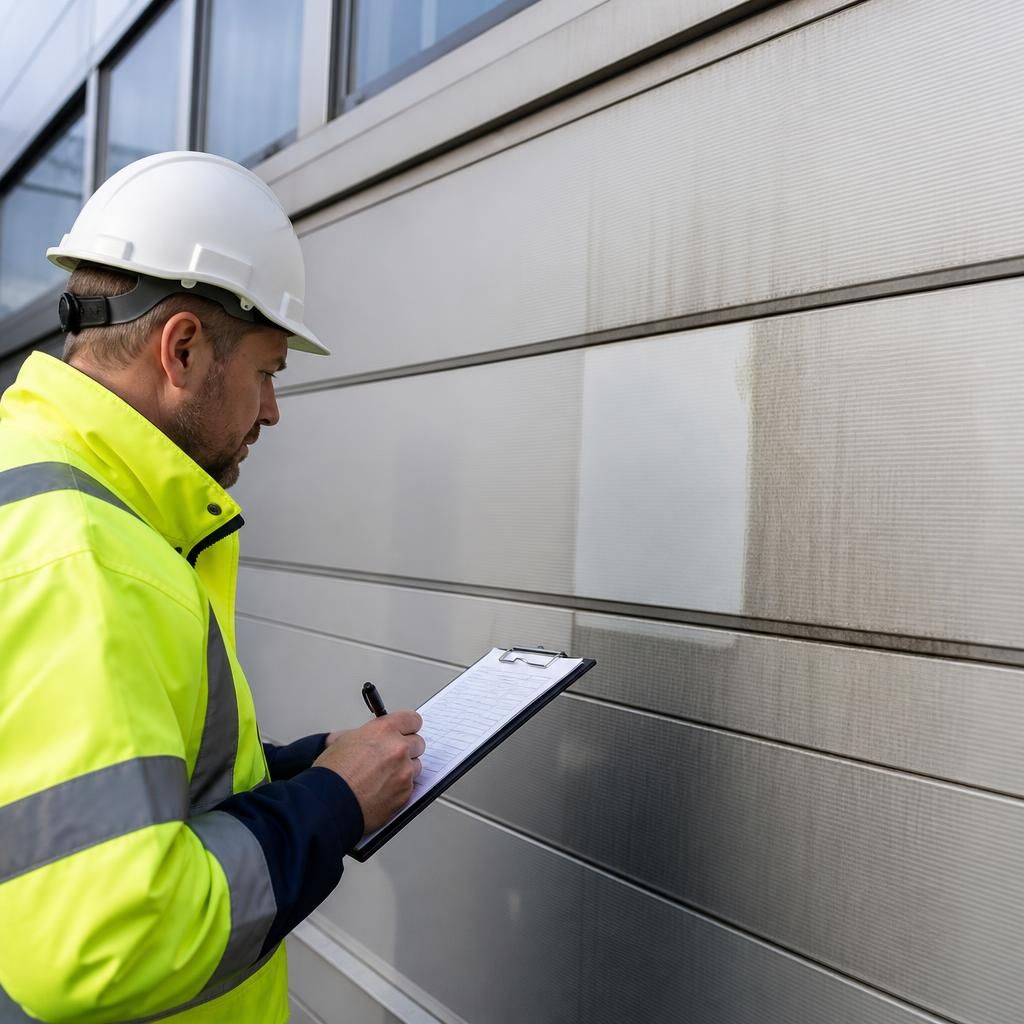
A discreet test patch is one of the most effective ways to protect cladding before full-scale cleaning begins. It shows whether the proposed pressure, temperature and cleaning product are compatible with the panel material, coating, sealants and adjacent surfaces.
The contractor should assess the test area after it has dried, checking for colour change, gloss variation, streaking, etching, coating loss and water penetration. If the finish reacts adversely or the deposit remains, the cleaning method should be revised rather than made more aggressive. The approved test result should then establish the operating limits for the wider cladding-cleaning project.
Arrange a safe cladding cleaning assessment
Arrange a safe cladding cleaning assessment with Encanto Exterior Cleaning to confirm the material, identify vulnerable areas and agree a suitable cleaning method before work begins. Contact our team to discuss your building and arrange a site-specific assessment.