
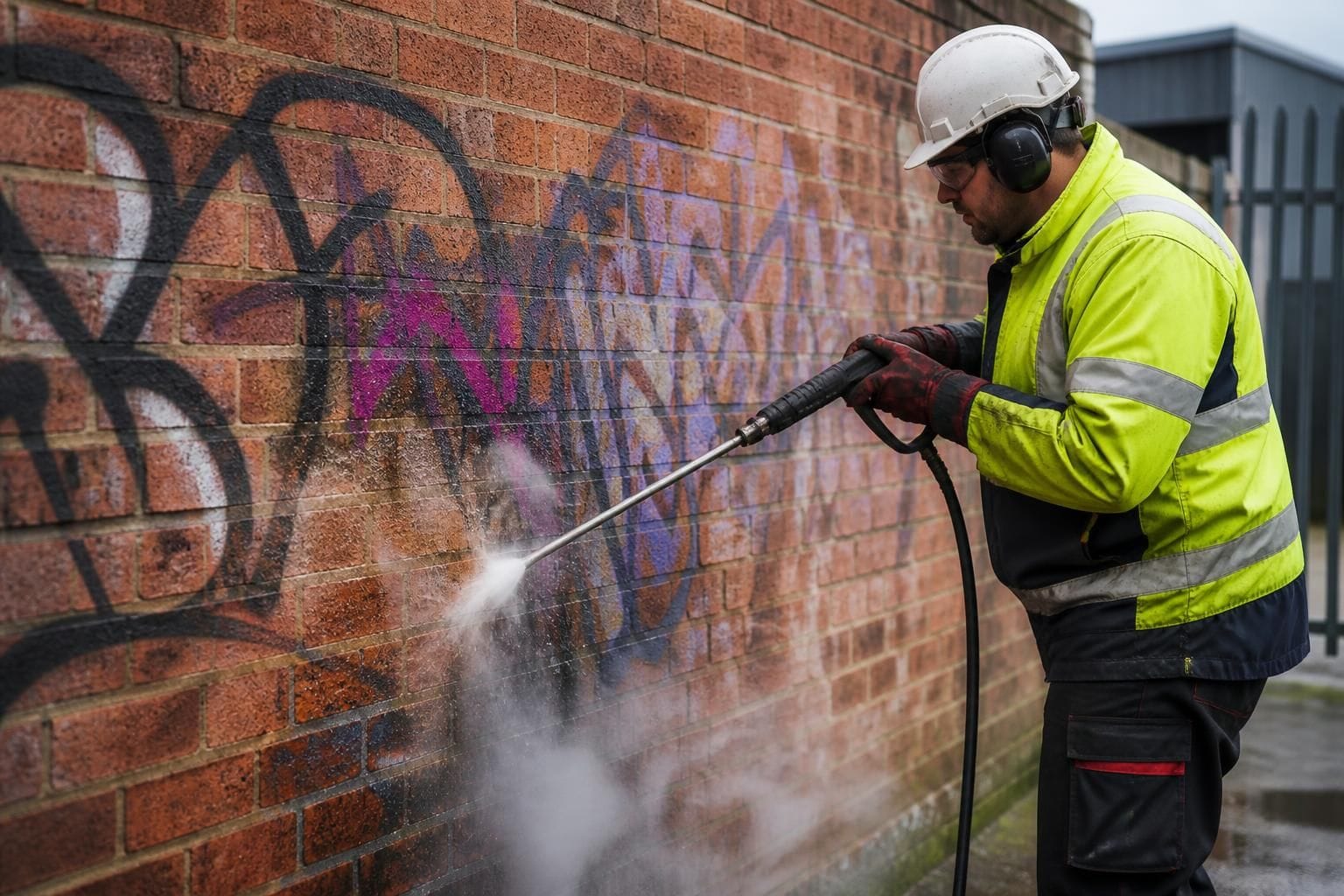
What methods are most effective for removing graffiti from brickwork?
The most effective graffiti removal method for brickwork is usually a carefully selected graffiti-removal treatment followed by controlled low-pressure rinsing or steam cleaning. The approach should be matched to the brick type, paint or marker, and surface condition, with a small test area completed first to prevent staining, mortar loss or surface damage.
The most effective method for removing graffiti from brickwork is usually a specialist graffiti-removal treatment followed by controlled rinsing at low pressure, hot-water cleaning or steam cleaning. The correct combination depends on the type of brick, the paint or marker used, how long the graffiti has been present and the condition of the mortar. A small test area should always be completed first, because an unsuitable chemical or excessive pressure can cause staining, mortar loss, surface pitting or permanent changes to the brick’s appearance.
Chemical graffiti removers are often the best starting point for painted graffiti on porous brick. Specialist removers soften, break down or lift the paint so it can be removed without relying on aggressive pressure. Different formulations are required for water-based paint, solvent-based paint, aerosol coatings, marker ink and older, layered graffiti. The product is applied for a controlled dwell time, then agitated or rinsed from the surface. On absorbent brick, the treatment may need to be repeated rather than intensified, as forcing the coating deeper into the pores can make removal more difficult.
Chemical treatment must be matched to the substrate. Strong solvents or caustic products can affect certain bricks, coloured finishes, sealants and mortar joints. They can also leave residues or cause a visible difference between the cleaned area and surrounding brickwork if they are not thoroughly removed. Professional operatives select products according to the surface and follow the manufacturer’s instructions, including requirements for ventilation, personal protective equipment, containment and disposal of contaminated wash water.
Steam cleaning is particularly useful where the brick is delicate, historic, heavily weathered or vulnerable to water penetration. Low-pressure steam uses heat and moisture to soften many paints, adhesives and marker residues, allowing them to be removed with limited mechanical action. It can be preferable to conventional pressure washing when preserving the face of the brick and the mortar is more important than achieving rapid removal. Steam is not suitable for every coating, however; baked-on or deeply absorbed graffiti may still require a compatible chemical treatment before or during the process.
Low-pressure hot-water cleaning can be effective for more resilient brickwork and graffiti that has already been loosened by a remover. Warm water helps dissolve or mobilise some coatings and can reduce the pressure needed to rinse the surface. The operative should control the pressure, temperature, nozzle type and distance from the wall. A high-pressure setting may remove the graffiti quickly but can strip the fired surface of the brick, widen existing defects, erode soft mortar and drive water or pigment into the wall.
Abrasive cleaning, including abrasive blasting or abrasive paste systems, is generally a last resort for brickwork. It may remove stubborn coatings, but it also removes a small amount of the substrate and can leave a rough, patchy or visibly altered finish. It should only be considered after less aggressive methods have been assessed, and only where the brick is sufficiently sound and the finish can be accepted. Abrasive methods are especially risky on soft, handmade, historic or already weathered bricks.
The graffiti-removal method should be selected by assessing several factors:
- Brick type and condition: soft, porous, glazed, painted, historic or damaged brickwork needs a more cautious approach than dense, modern engineering brick.
- Mortar condition: open, friable or recently repointed joints can be damaged by pressure, heat or chemical exposure.
- Graffiti coating: spray paint, brush paint, permanent marker, stickers and bitumen-based materials respond differently to cleaning products.
- Age and depth of staining: fresh surface graffiti is often easier to remove than old pigment that has penetrated the brick.
- Location: walls near roads, entrances, paving, planting, drainage channels or occupied premises require careful protection and runoff control.
- Appearance requirements: cleaning may need to blend into a larger elevation rather than stopping sharply around the graffiti.
A controlled removal process normally begins with a visual inspection and identification of the brick, mortar and coating. The surrounding area is protected, loose debris is removed and a test patch is carried out in an inconspicuous location. The test should assess both the immediate result and any later effects, such as colour change, tide marks, softened mortar or chemical residue. Once the method is confirmed, the graffiti is treated in manageable sections, working from the least aggressive effective option towards stronger treatment only where necessary.
Rinsing is as important as the initial removal. Residual paint, cleaning product and dissolved contaminants must be collected or directed into an appropriate drainage system in accordance with site and environmental requirements. Uncontrolled runoff can stain paving, affect vegetation or carry contaminants into surface-water drains. On porous brick, excessive rinsing can also saturate the wall and spread dissolved pigment beyond the original graffiti.
After cleaning, the brickwork should be inspected in suitable light once it has dried. Some staining may remain where pigment has penetrated deeply, and further controlled treatment may be safer than trying to achieve complete removal in one aggressive operation. If repeated graffiti is a concern, a breathable sacrificial anti-graffiti coating may be considered after the brickwork is clean and fully dry. The coating must be compatible with the brick and mortar, and it should not trap moisture within the wall.
For commercial, public or larger brick elevations, professional graffiti removal is preferable to untested pressure washing or household solvents. A competent contractor should explain the proposed method, test area, protection measures, access arrangements, runoff handling and likely limitations before work begins. This approach gives the best balance between removing the graffiti effectively and retaining the original condition of the brickwork.
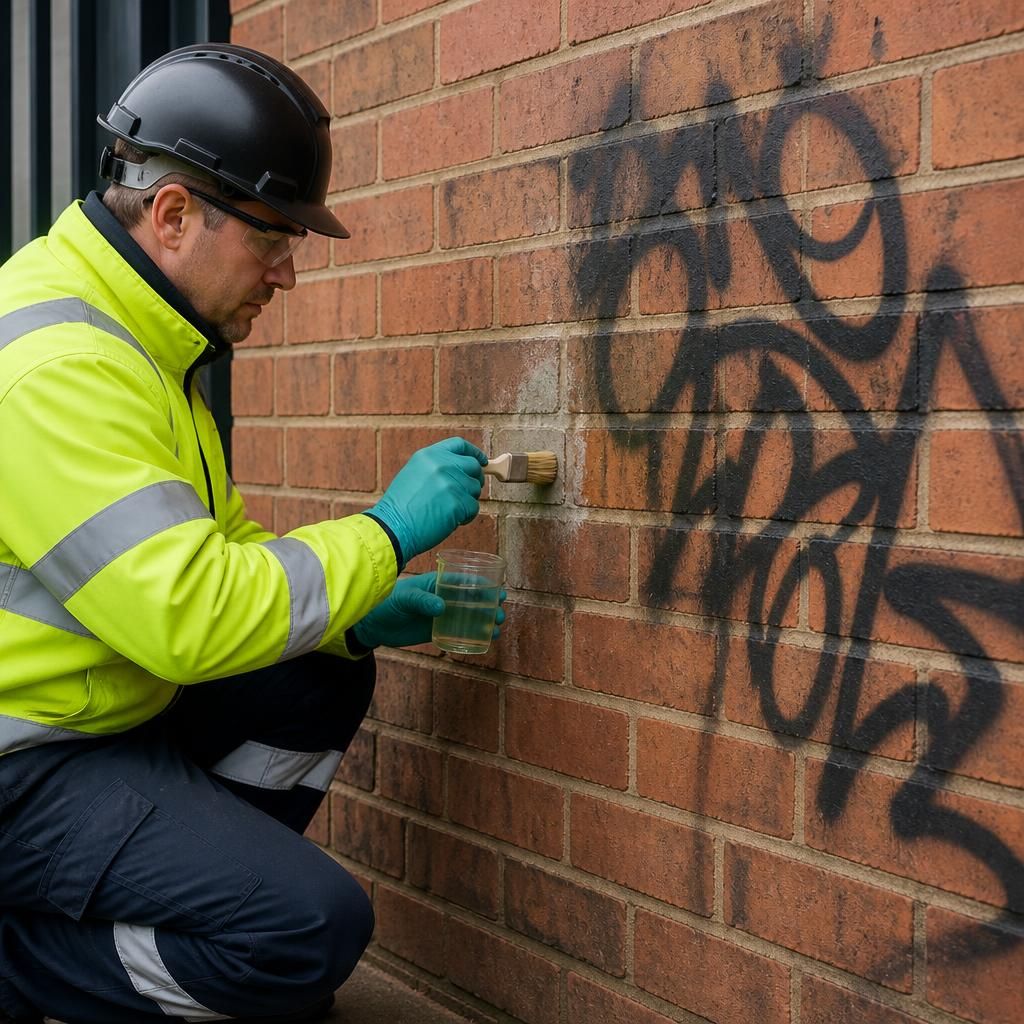
The safest effective approach to graffiti removal from brickwork is to test a compatible treatment on a small, inconspicuous area before cleaning the full elevation. This confirms whether the brick and mortar can tolerate the proposed chemical, steam or low-pressure rinse without causing colour change, staining, surface damage or mortar loss.
The test should assess the graffiti type, the brick’s porosity and the condition of the joints. Specialist remover may be suitable for paint or marker, while steam cleaning can reduce mechanical action on delicate or historic brickwork. If rinsing is required, it should be controlled to prevent dissolved pigment and contaminated water spreading into porous brick, paving, planting or surface-water drains. Where the graffiti has penetrated deeply, several gentle treatments are generally safer than one aggressive application.