
What is the process for removing graffiti from brick surfaces?
Professional graffiti removal from brick surfaces begins with assessing the brick, mortar and graffiti coating, followed by a discreet test patch to select the safest effective treatment. The graffiti is then removed using suitable chemical, steam or controlled pressure-washing methods, with the surface rinsed and checked afterwards to ensure the brickwork and surrounding areas remain undamaged.
Professional graffiti removal from brick surfaces is a controlled process that combines substrate assessment, a small test area, carefully selected cleaning products and an appropriate rinsing method. The aim is to remove the paint, ink or marker without eroding the brick face, loosening the mortar, spreading the graffiti or leaving a noticeably cleaner patch around the affected area.
Assessment of the brickwork and graffiti
The process begins by examining the wall rather than treating the graffiti immediately. The condition, age and type of brick are assessed, along with the condition of the pointing, joints, caps, sills and any adjacent materials. Older, handmade, soft or weathered bricks can be more vulnerable to abrasion and water penetration than dense modern brickwork.
The graffiti itself is also assessed. Different coatings respond differently to cleaning: aerosol paint, masonry paint, felt-tip ink, bitumen and marker pen may require different treatments. The colour, thickness and age of the coating can affect how deeply it has penetrated the brick pores. Previous cleaning attempts are relevant as well, because aggressive abrasion or unsuitable chemicals may already have altered the surface.
Protecting the surrounding area
Before cleaning starts, nearby windows, doors, signage, electrical fittings, plants, vehicles and other vulnerable surfaces are protected or moved where possible. Access arrangements are checked so that the operative can work evenly across the wall rather than cleaning only the most visible sections from an awkward position.
Run-off is considered in advance. Cleaning residues should not be allowed to enter drains, soil or watercourses without suitable controls. Depending on the location and cleaning method, this can involve collection, containment, filtration or other measures appropriate to the site. Commercial premises may also require a method statement, risk assessment and control of substances hazardous to health documentation before work begins.
Testing a discreet area
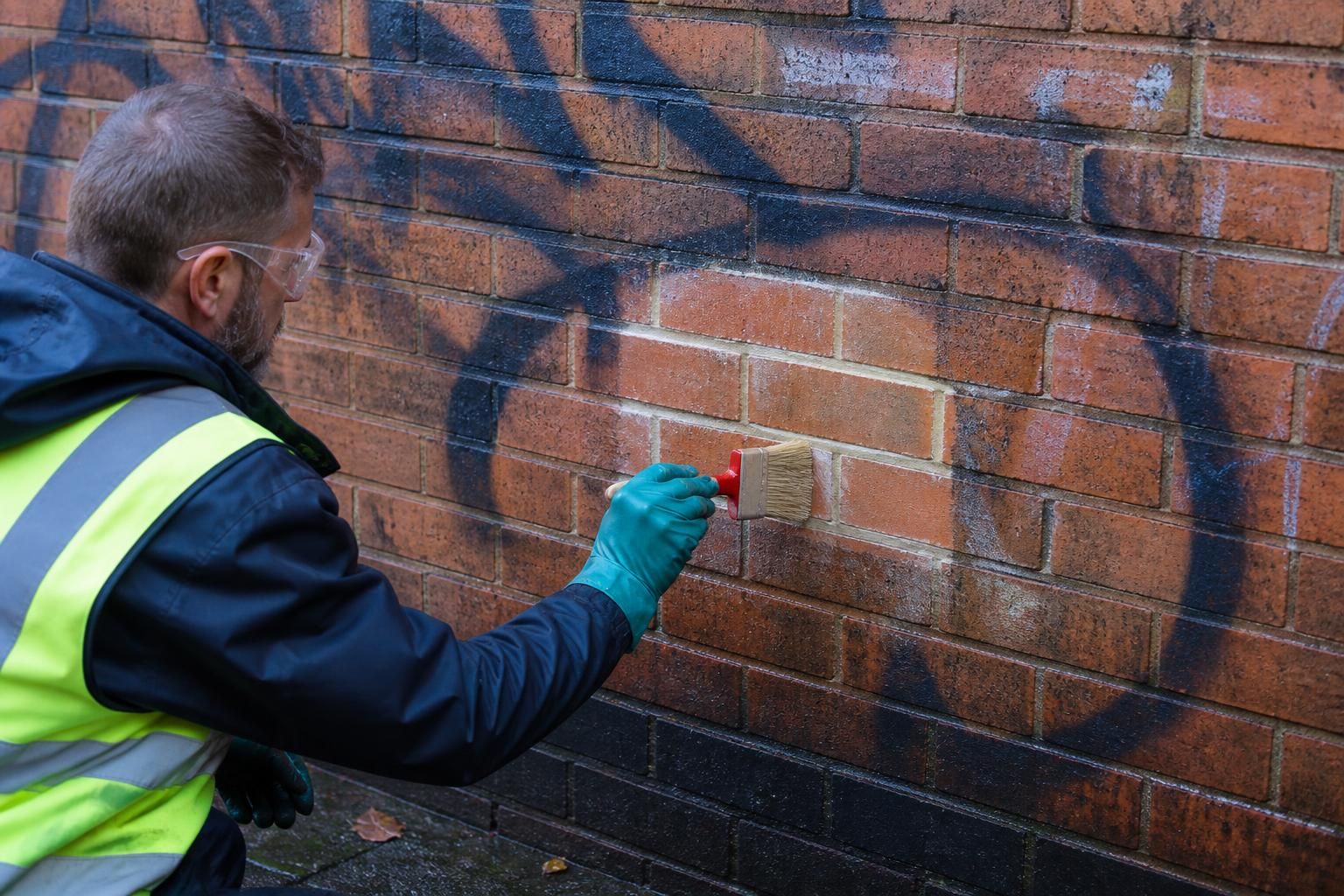
A test patch is an essential part of responsible graffiti removal. A small, inconspicuous section is treated using the proposed product, dwell time, agitation and rinsing pressure. The result is checked for paint removal, colour change, surface marking, mortar damage and any visible difference between the treated and untreated brick.
The test does not simply establish whether the graffiti can be removed. It also identifies the least aggressive method that produces an acceptable result. If a treatment is too strong, too abrasive or likely to create a pale halo around the graffiti, the method can be changed before the main wall is affected.
Selecting the cleaning method
The most suitable approach depends on the substrate and coating. It may involve one method or a carefully controlled combination of treatments:
- Graffiti-removal chemicals: Specialist products can soften or break down paint and ink so that they can be lifted from the brick. The product must be compatible with the brick and mortar, applied only as directed and prevented from drying on the surface. Chemical selection is particularly important on porous brick, painted brickwork and walls with vulnerable pointing.
- Steam cleaning: Low-pressure steam can soften some coatings while limiting mechanical impact on the brick. It is useful where the surface is delicate or where reducing water use and run-off is important, although it may not remove every heavy or deeply embedded coating on its own.
- Controlled pressure washing: Pressure can help rinse away softened graffiti and cleaning residue. It must be controlled carefully, as excessive pressure, an unsuitable nozzle or holding the lance too close can remove the brick face, widen joints and force water behind the wall surface.
- Gentle mechanical agitation: Suitable brushes or other non-abrasive tools may help release softened coating. Harsh wire brushing, grinding and abrasive blasting are generally avoided on exposed brick because they can leave scratches, remove the fired surface or create a patch that weathers differently.
Applying and removing the treatment
Once the method has been confirmed, the treatment is applied in manageable sections. The operative works methodically, allowing the product sufficient contact time to soften the graffiti without allowing it to dry. Agitation may be used where appropriate, followed by controlled rinsing or steam cleaning to remove the dissolved coating and residue.
Cleaning is normally extended beyond the exact outline of the graffiti. This helps blend the treated area with the surrounding brick and reduces the risk of a sharp clean border or visible shadow. However, the whole elevation should not automatically be cleaned without assessing whether the surrounding brick will respond consistently. On older walls, removing decades of dirt from one area can make the cleaned section more conspicuous than the original graffiti.
Dealing with porous brick and graffiti shadows
Brick is porous, so pigment can penetrate below the visible surface. A single treatment may remove the surface coating while leaving a faint shadow or discolouration within the pores. This does not necessarily mean the cleaning has been carried out incorrectly. Repeated treatment may be possible, but it must be balanced against the risk of damaging the brick through excessive chemical exposure, moisture or abrasion.
Some colour changes are caused by the graffiti itself or by earlier cleaning and cannot be completely reversed without removing part of the brick face. Where complete removal would cause more damage than the remaining mark, the safest professional recommendation may be to reduce the appearance as far as reasonably possible rather than pursue an aggressive treatment.
Final rinsing, inspection and aftercare
After the graffiti has been removed, the wall is rinsed or otherwise cleared of cleaning residues and inspected from normal viewing distances. The inspection checks the brick face, mortar joints, adjacent surfaces, run-off controls and overall consistency of the cleaned area. Any remaining residue is addressed with the least aggressive suitable method.
The wall may remain damp for a period after cleaning, so its final appearance should be judged once it has dried. If the brickwork is structurally sound and sufficiently dry, an appropriate graffiti-resistant coating can be considered. Such a coating does not make the wall permanently graffiti-proof, but it can reduce penetration and make future removal easier. It must be selected carefully so that it is suitable for the brick, allows the wall to manage moisture correctly and does not create an unwanted change in appearance.
Why professional assessment matters
DIY graffiti removal often causes problems when strong solvents, household cleaners, abrasive tools or high pressure are used without testing. These approaches can drive pigment deeper into porous brick, strip the surface, damage pointing or leave a larger visible patch than the original graffiti. A professional process limits those risks by matching the treatment to the coating and substrate, controlling water and chemical use, and stopping when further cleaning would cause disproportionate damage.
For commercial and public-facing premises, the work should also account for access, pedestrian safety, business operations, waste-water handling and the appearance of the surrounding elevation. Encanto Exterior Cleaning can assess the brickwork and graffiti, carry out a suitable test patch and establish a controlled removal method for properties in Birmingham, the West Midlands and across the UK.
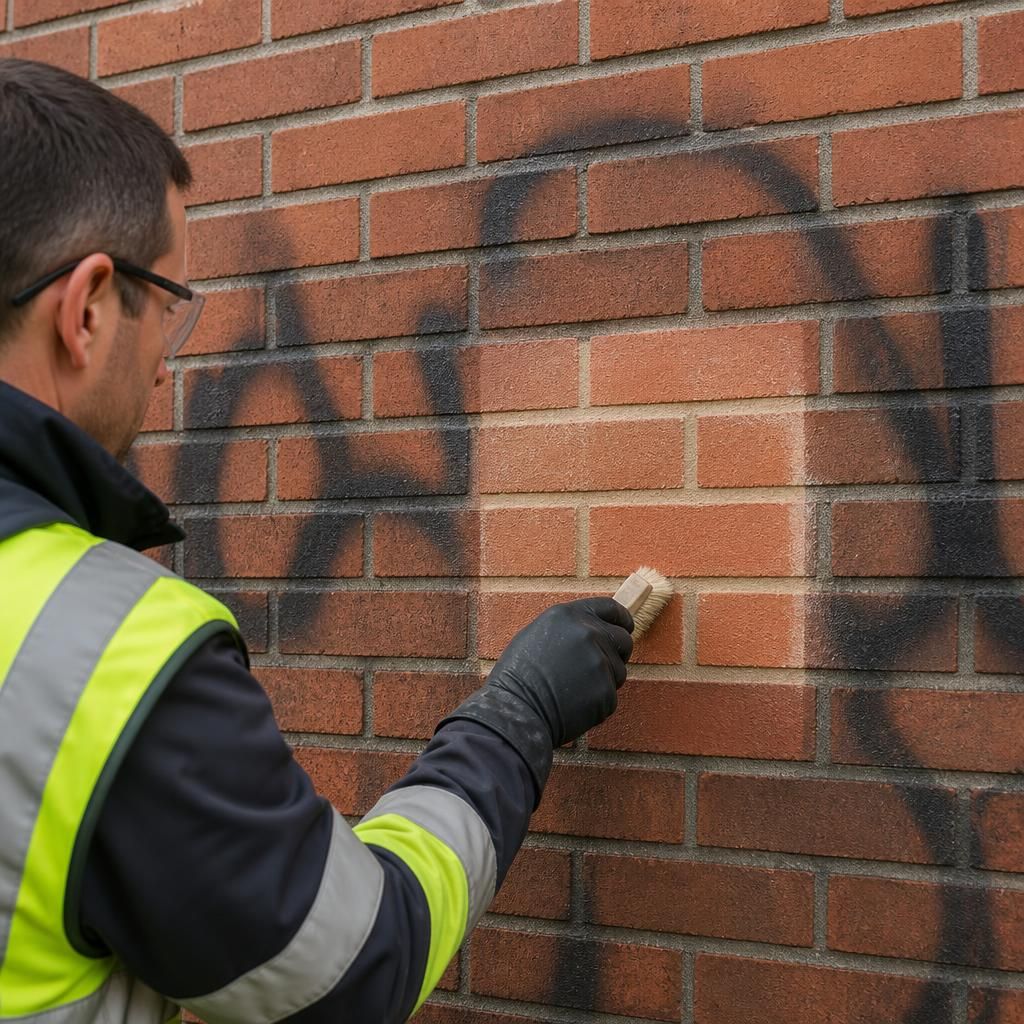
A discreet test patch is the essential first step in professional graffiti removal from brick surfaces. It shows whether the proposed chemical, steam or pressure-washing treatment will remove the coating without altering the brick face, staining the mortar or creating a visibly cleaner outline.
The test should be carried out on an inconspicuous section using the intended product, dwell time, agitation and rinsing method. The area is then checked after drying, because porous brick can retain moisture or pigment that is not immediately visible. If the result is unsatisfactory, the method can be adjusted before the main wall is treated. This controlled approach is particularly important for older, handmade or weathered bricks, where aggressive cleaning may cause permanent surface damage.