
What is the process for cleaning bricks after pointing or repointing work?
Cleaning bricks after pointing or repointing involves allowing the mortar to cure, then removing loose residue and mortar smears with gentle brushing, controlled low-pressure washing or steam cleaning. The method is selected according to the brick and mortar type, with a small test area completed first to prevent surface damage and erosion.
Cleaning bricks after pointing or repointing involves removing mortar splashes, smears and cement residue once the new joints are sufficiently cured, using the least aggressive method that will clean the brick without disturbing the pointing. The usual sequence is inspection, protection, dry removal, controlled wet cleaning, thorough rinsing and a final check for staining or damage.
The timing is important. Loose mortar droppings can often be lifted carefully while they are firm but not fully hardened, whereas washing or more intensive cleaning should wait until the mortar has cured in line with the specification and the mortar manufacturer’s guidance. Cleaning too soon can wash out the joints, soften the surface or leave marks in the pointing. Weather conditions also affect curing; cold, wet or frosty conditions may extend the required period.
The typical process is as follows:
- Inspect the brickwork and pointing. The surface is assessed for brick type, age, porosity, existing damage, mortar composition and the extent of contamination. Repointed areas are checked for weak joints, cracking, friable mortar and areas that have not cured evenly. The cleaning method should be compatible with both the brick and the new pointing, not selected solely according to the appearance of the staining.
- Identify the residue. Mortar deposits may be loose blobs, thin smears, cement film, hardened residue or staining absorbed into porous brick. Lime mortar, cement-rich mortar and modern repair products can respond differently to water, steam and chemical treatments. Efflorescence, which appears as a pale powdery deposit, is a salt issue rather than ordinary mortar staining and may need to be allowed to dry before it is brushed away.
- Protect adjacent areas. Windows, doors, vents, painted surfaces, paving, plants, drainage points and sensitive fixtures are protected before cleaning starts. Run-off is controlled so that mortar residue and cleaning water do not stain lower elevations or enter drainage systems. Any nearby surface that could be affected by water, heat or cleaning products is considered during the preparation stage.
- Remove loose material dry. Loose mortar is generally removed with a soft or medium natural-bristle brush and, where appropriate, a suitable non-metallic scraping tool. Hardened deposits should not be struck aggressively or chiselled across the brick face, as this can chip arrises, expose the brick’s inner surface or damage the fresh joints. Wire brushes and abrasive discs are avoided unless a specific method has been assessed as safe for that brickwork.
- Test a small area. A discreet test patch is cleaned before treating the full elevation. This establishes whether the brick and mortar tolerate brushing, low-pressure water, steam or another controlled treatment. The test should be reviewed after the surface has dried because some damage, colour change or recurring staining is not immediately visible while the brick is wet.
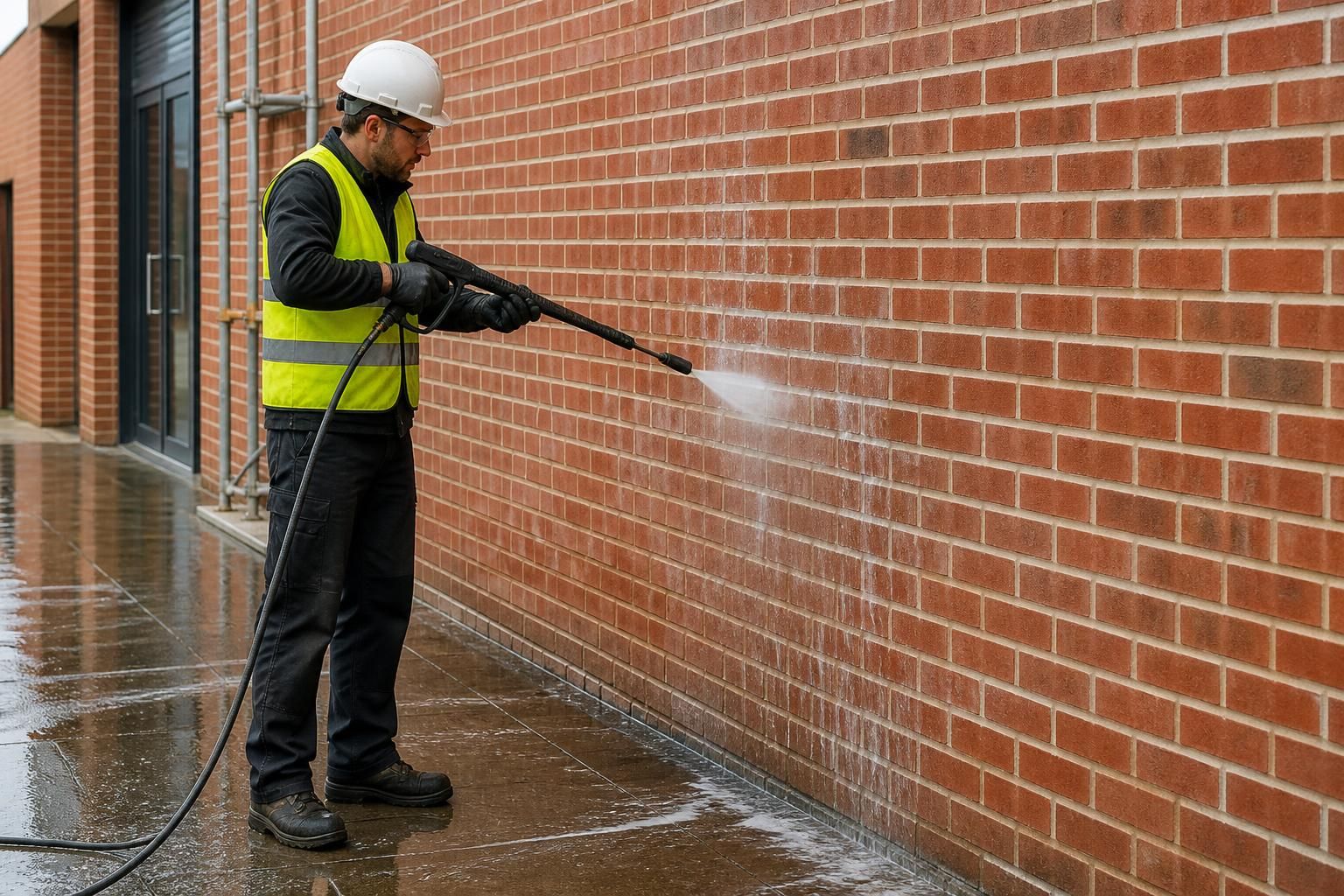
- Apply the mildest effective wet-cleaning method. Light mortar film may respond to controlled water washing with low pressure and a suitable brush. Steam cleaning can be useful where heat and low moisture help soften surface residue while limiting the volume of water entering porous brickwork. Pressure washing may be appropriate in carefully controlled conditions, but excessive pressure, a narrow nozzle or close working distance can erode brick faces and wash out pointing. Water should never be directed into open joints, cracks or vulnerable interfaces.
- Treat persistent residue cautiously. If a cementitious film remains after gentler methods, a specialist masonry cleaning product may be considered following an assessment of the brick and mortar. Acidic treatments are not a general-purpose solution: they can alter brick colour, attack lime or cement joints, leave salts behind and damage surrounding materials. They should only be used where appropriate, correctly diluted and thoroughly rinsed, with all manufacturer and site-safety instructions followed. On historic, handmade, glazed, soft or highly porous brick, non-chemical methods are usually considered first.
- Rinse and manage run-off. Residue and cleaning products are removed from the brickwork rather than allowed to dry back onto the surface. Rinsing is controlled to avoid driving contaminants into the pores or newly finished joints. Run-off is collected or directed appropriately, particularly where cleaning products or substantial mortar deposits are involved.
- Allow the brickwork to dry and inspect it again. The finished surface is checked for remaining mortar haze, patchiness, efflorescence, colour variation, damaged brick faces and disturbed joints. Any isolated residue is addressed with a targeted treatment rather than repeatedly cleaning the whole elevation. If the brickwork has been repointed with lime mortar, it may require particularly gentle handling and protection while it continues to carbonate and dry.
Fresh mortar should not be scrubbed hard or pressure washed simply to achieve an immediate uniform appearance. New pointing can be marked, recessed or partially removed by aggressive cleaning, while saturated brickwork may dry unevenly and show temporary colour variation. A clean finish is normally achieved through staged work rather than one forceful pass.
It is also important to distinguish mortar residue from other post-repointing marks. White deposits may be efflorescence, dark areas may be retained moisture or biological growth, and discolouration around joints may indicate that the brick has absorbed cleaning solution or mortar fines. These conditions need different treatments; applying stronger chemicals without identifying the cause can make the appearance worse.
For large elevations, older buildings, listed or traditionally built properties, delicate brick faces, extensive cement staining or repointing completed with lime mortar, cleaning should be assessed and carried out by an experienced exterior cleaning contractor. The contractor should be able to explain the proposed method, demonstrate a test area, protect the new joints and confirm how water and run-off will be managed. The objective is not simply to make the bricks look clean, but to remove residue while preserving the brick face, the pointing and the performance of the wall.
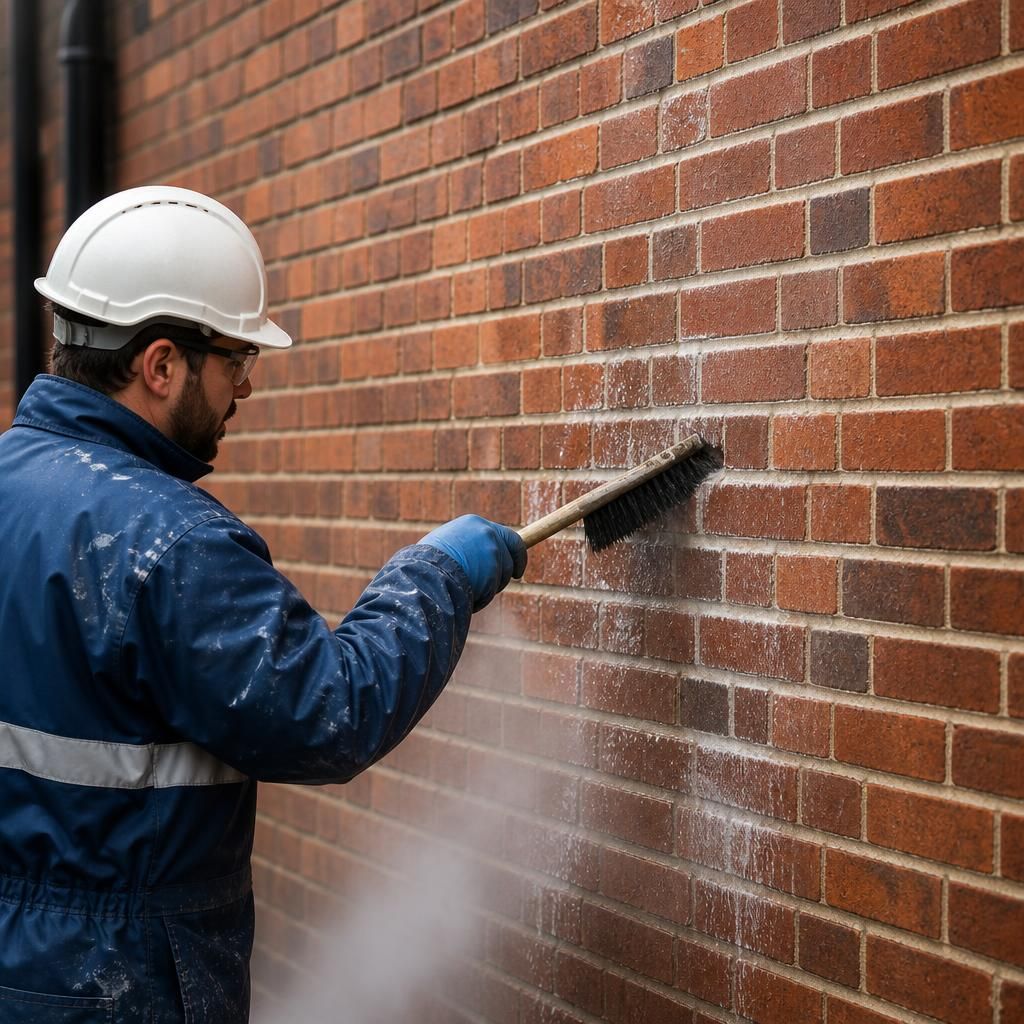
Cleaning should not begin with aggressive washing immediately after repointing. The new mortar must first cure in accordance with the specification and the mortar manufacturer’s guidance, allowing for cold or wet weather that may slow the process. Loose mortar droppings can be lifted carefully, but hard brushing or pressure washing may mark the joints, remove uncured material and drive residue into porous brick.
Once the pointing is ready, a discreet test area should be cleaned using the mildest suitable method, such as soft brushing, controlled low-pressure washing or steam cleaning. The result should be assessed after the brickwork has dried, as surface damage, colour changes and remaining mortar haze may not be visible while the wall is wet.
Discuss Cleaning Your Repointed Brickwork
Discuss cleaning your repointed brickwork with Encanto Exterior Cleaning before work begins, so the mortar condition, brick type and safest cleaning method can be assessed. We can arrange a suitable approach for removing residue while protecting the new pointing.