
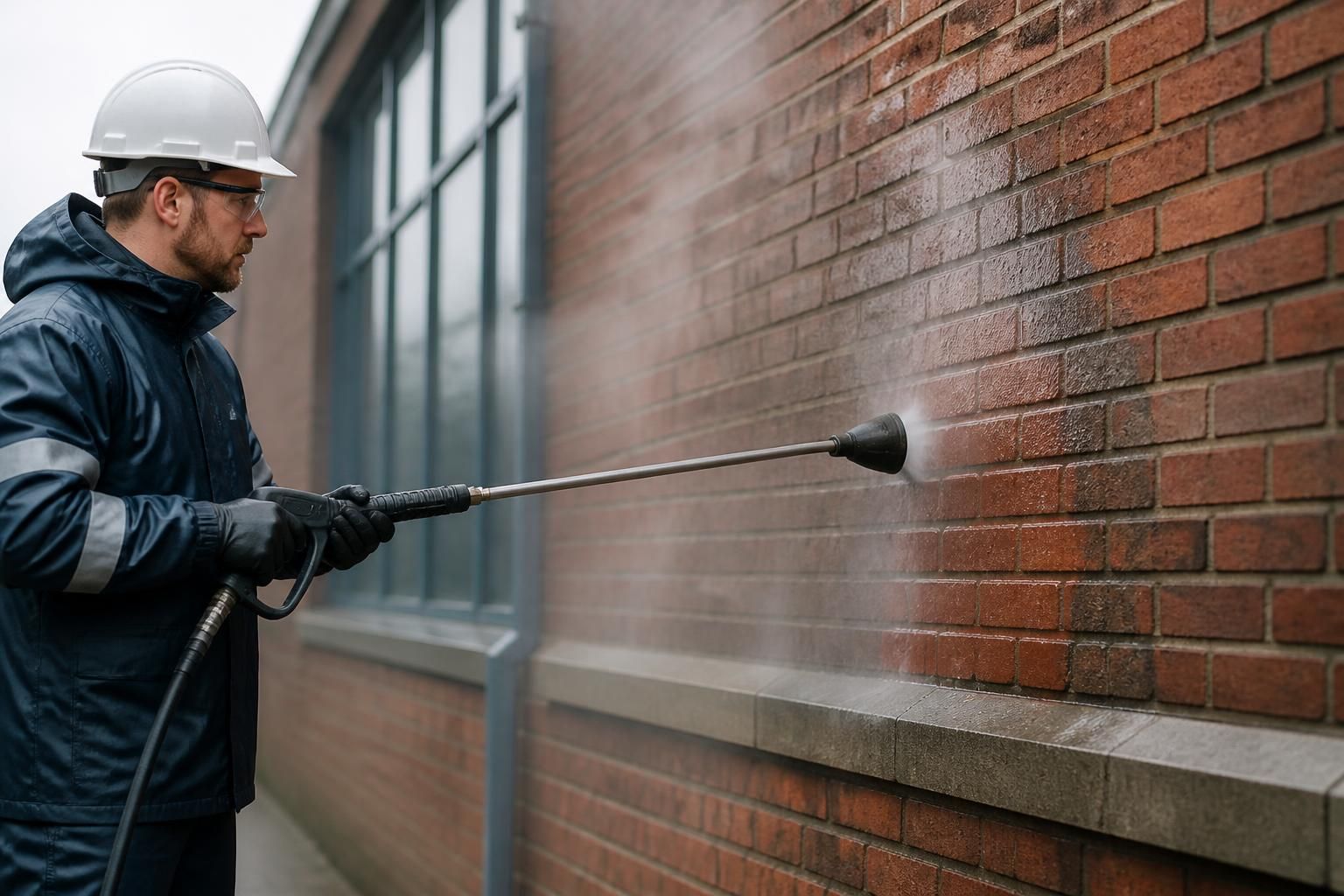
What is the best method for cleaning brick surfaces without causing damage?
The safest method for cleaning brick surfaces is usually controlled low-pressure steam cleaning, using the lowest effective pressure and a suitable detergent where necessary. Always test a small, inconspicuous area first, as brick type, age, mortar condition and existing coatings determine the appropriate technique.
The safest general method for cleaning brick surfaces without causing damage is controlled, low-pressure steam cleaning, using the lowest effective pressure and a suitable detergent only where necessary. Steam and water temperature help loosen dirt, biological growth, staining and some surface deposits without relying on aggressive mechanical force. The correct approach still depends on the brick type, age, porosity, mortar condition, previous coatings and the nature of the contamination.
Brickwork should be assessed before any cleaning begins. This includes checking for spalling, cracks, open joints, failed pointing, friable mortar, salts, existing paint or sealants and areas that have already been repaired. Dense engineering brick, soft handmade brick, old stock brick and modern facing brick can respond differently to water pressure, heat and cleaning chemicals. A method that is suitable for relatively robust brickwork may damage softer or weathered masonry.
A small test area should be cleaned first in an inconspicuous location. The test should confirm whether the chosen process removes the contamination without changing the brick colour, damaging the arrises or loosening the mortar. It also allows the operator to establish the lowest effective pressure, the appropriate temperature, the correct nozzle or tool and whether a detergent is required. The area should be allowed to dry before the result is judged, as wet brickwork can appear darker than its final finish.
Why low-pressure steam cleaning is often suitable
Steam cleaning combines heat, controlled moisture and gentle surface agitation. It can be effective for general atmospheric dirt, organic growth, staining around entrances and some residues left by construction or maintenance work. Because the cleaning action does not depend solely on high water pressure, there is less risk of driving water into defective joints, eroding soft brick faces or dislodging vulnerable mortar.
Steam cleaning is not automatically risk-free. Excessive heat, prolonged application to one area or unsuitable equipment settings can still affect coatings, repairs and delicate masonry. The operator should work progressively, keep the cleaning head moving and avoid concentrating heat or moisture around cracks, open joints and damaged surfaces.
When pressure washing may be appropriate
Pressure washing can be suitable for some sound, modern brickwork where the surface and mortar are in good condition. It must be carefully controlled rather than used at maximum power. Excessive pressure can remove the fired surface of a brick, enlarge defects, strip pointing and force water behind coatings or into the building fabric. It can also leave clean and dirty patches if the operator works inconsistently.
For older, softer, painted, previously damaged or heavily weathered brickwork, a lower-impact process is generally preferable. Pressure washing should not be selected simply because it is faster. The condition of the substrate and the type of contamination should determine the method.
Choosing the cleaning process for the contamination
- Loose dust and light surface dirt can often be removed with gentle brushing, low-pressure rinsing or controlled steam.
- Moss, algae and lichen should be removed without aggressive scraping that could damage the brick face. A suitable biocidal treatment may be needed, followed by careful cleaning and, where appropriate, a further treatment to reduce regrowth.
- Mortar smears and cement residue require particular care. The residue should be identified before treatment, and any specialist cleaner should be used at the correct dilution and kept away from vulnerable joints and adjacent materials.
- Paint, coatings, oil and heavy staining may require a combination of controlled steam, approved detergents and localised mechanical or chemical treatment. A test panel is essential because some coatings conceal damaged brickwork.
- Graffiti removal should be carried out with a brick-compatible system selected for the paint type and the porosity of the surface. Repeated high-pressure washing can spread the pigment or drive it further into porous brick.
- Efflorescence and other salt deposits should not automatically be treated with strong acid. The underlying moisture source should be considered, and dry deposits may sometimes be removed with gentle brushing before any further treatment is specified.
How to reduce the risk of damage
- Identify the brick and inspect the condition of the masonry and pointing.
- Remove loose material carefully before applying water or detergent.
- Use the least aggressive method that can achieve the required result.
- Carry out a representative test patch and inspect it after drying.
- Protect windows, doors, sealants, electrical fittings, landscaping and nearby finishes from heat, water and cleaning products.
- Apply detergents only when they provide a clear benefit, following the product instructions and allowing the correct dwell time.
- Rinse thoroughly but in a controlled manner, preventing dirty water from drying back onto the brickwork or entering openings.
- Inspect the cleaned surface and identify any defects revealed by the removal of dirt or coatings.
Strong acids, harsh caustic products, abrasive blasting, wire brushing and uncontrolled high-pressure washing should be avoided unless a specialist assessment confirms that they are appropriate. These methods can etch the brick face, remove its protective fired layer, damage pointing, alter the appearance of the masonry or create pathways for water penetration. Chemical residue can also affect nearby stone, metal, glass, render and planted areas.
Cleaning should normally be postponed where frost, extreme heat or heavy rain could affect the process. Brickwork must be allowed to dry naturally and should not be sealed immediately simply to improve its appearance. Sealers can trap moisture or change the way the wall weathers if the product is unsuitable or applied before defects have been addressed.
For commercial and industrial buildings, the safest specification is one based on a condition survey, contamination assessment and test panel rather than a fixed cleaning method. Large façades, boundary walls, car parks and multi-storey elevations may contain several brick types or repair materials, so the same setting may not be suitable across the whole site. Where pointing is loose or brick faces are already failing, repair work should be considered before cleaning.
In practice, controlled low-pressure steam cleaning is often the best starting point for exterior brick surfaces because it provides effective cleaning with less mechanical stress than aggressive pressure washing. The final method should be confirmed after inspection and testing, with the cleaning intensity adjusted to the weakest part of the brickwork and mortar rather than the most robust area.
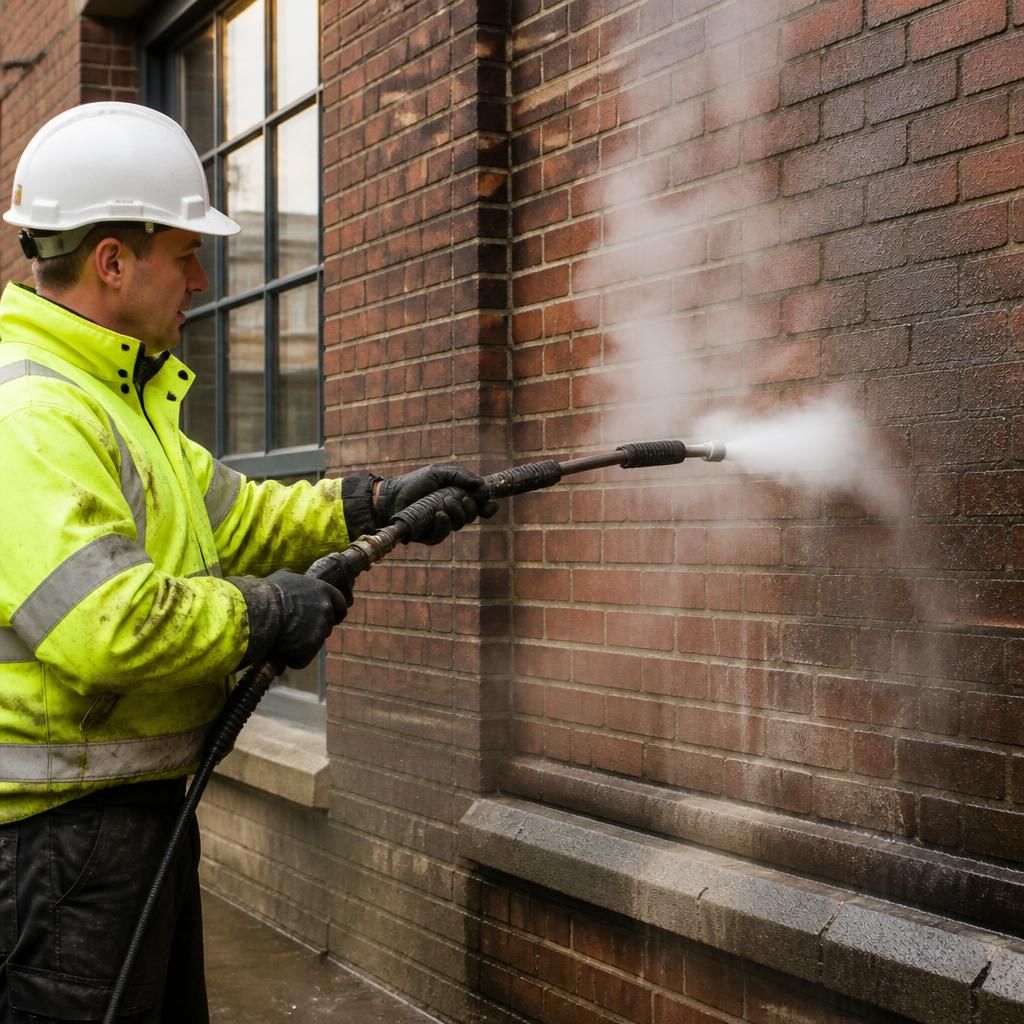
The safest way to clean exterior brick surfaces is to use the least aggressive method that removes the specific contamination, usually controlled low-pressure steam cleaning after a condition check and test patch. This limits mechanical stress on the brick face and pointing while allowing the operator to adjust heat, moisture and pressure to the masonry.
Before full cleaning, inspect for spalling, cracks, open joints, soft mortar, coatings and previous repairs. Test the proposed process in an inconspicuous area and allow the brickwork to dry before assessing the result. If the surface or pointing is already defective, cleaning may need to be reduced or postponed until repairs are completed.