
What considerations should be made when choosing a cleaning service for exterior brickwork?
Choose an exterior brickwork cleaning service based on its experience with similar brick types and soiling, its ability to recommend a low-risk method, and evidence of appropriate insurance, training and access equipment. A suitable contractor should carry out a site assessment, explain potential risks to mortar and finishes, confirm how wastewater and debris will be managed, and provide a clear, itemised quotation.
Choose an exterior brickwork cleaning service that can demonstrate relevant experience, recommend a method suited to the brick and mortar, and manage the risks associated with water, access and run-off. The contractor should inspect the building before quoting, carry out a controlled test area where appropriate, explain any potential for damage, and provide clear evidence of insurance, competence and safe working procedures.
Experience with the specific brickwork
Brick is not a uniform material. The age, firing, porosity, surface finish and condition of the brick can all affect how it responds to cleaning. Older or softer bricks, handmade bricks, glazed finishes and weathered mortar may require a more controlled approach than modern, hard-fired engineering brick.
Ask whether the contractor has worked on comparable buildings and soiling. Relevant experience may include removing atmospheric dirt, algae, moss, paint, cement residue, efflorescence or graffiti without unnecessarily eroding the brick face or mortar joints. A contractor should be able to explain how the proposed work will be adapted to the condition of the elevation rather than applying the same process to every surface.
A proper site assessment
A reliable service should assess the brickwork in person, or obtain sufficient technical information before confirming a method and price. The inspection should consider:
- the type, age and condition of the bricks;
- the hardness, depth and condition of the mortar joints;
- previous coatings, paint, sealants or repairs;
- the type and depth of the soiling;
- cracks, open joints, damaged bricks and areas of water penetration;
- nearby windows, doors, vents, electrical equipment and other sensitive materials;
- the height, layout and accessibility of each elevation; and
- where dirty water, removed coatings and debris can be safely contained and disposed of.
These checks help distinguish cleaning from repair. For example, cleaning may reveal defective pointing or existing defects, but it should not be presented as a substitute for repointing, brick replacement or structural work.
A low-risk cleaning method
The contractor should explain why a particular combination of pressure, temperature, water volume, steam, chemical treatment or mechanical work is appropriate. Higher pressure is not automatically more effective and can damage the brick face, force water into the wall or remove sound mortar. Chemical treatments can also stain brickwork, affect adjacent materials or leave residues if they are incorrectly selected or rinsed.
Methods should be chosen according to the contamination and substrate. Low-pressure washing may be suitable for loose surface dirt, while steam cleaning can be useful where controlled heat and lower mechanical impact are preferred. Carefully selected chemical treatment may be needed for certain biological growths, coatings or residues, but it should be tested and controlled. A competent contractor will not promise that one method will remove every type of staining without risk.
Test cleaning and agreed expectations
A test patch is an important part of selecting a method, particularly on older, painted, porous or previously repaired brickwork. It allows the contractor and client to assess cleaning effectiveness, colour variation, mortar stability and any change to the surface before full work begins.
The test area should be representative of the wider elevation and completed using the proposed equipment and treatment. Agree how it will be assessed and whether the final appearance is expected to be uniform. Some staining may be below the surface, permanent or caused by an underlying defect, so a responsible contractor should explain realistic limitations rather than guarantee a particular visual result.
Protection of mortar and surrounding materials
Mortar joints can be more vulnerable than the bricks themselves. Excessive pressure, aggressive abrasion or prolonged saturation may widen joints, remove friable material or drive water behind the façade. The service should describe how it will protect vulnerable pointing and how it will respond if loose mortar or damaged bricks are found during the work.
Windows, frames, roof coverings, vents, signage, render, painted surfaces and external electrical fittings should be identified and protected. Run-off should not be allowed to stain adjacent surfaces or enter drains without suitable controls. Where cleaning follows construction or repointing, the contractor should also confirm that the mortar has cured sufficiently and that residue can be removed without damaging new joints.
Access equipment and working at height
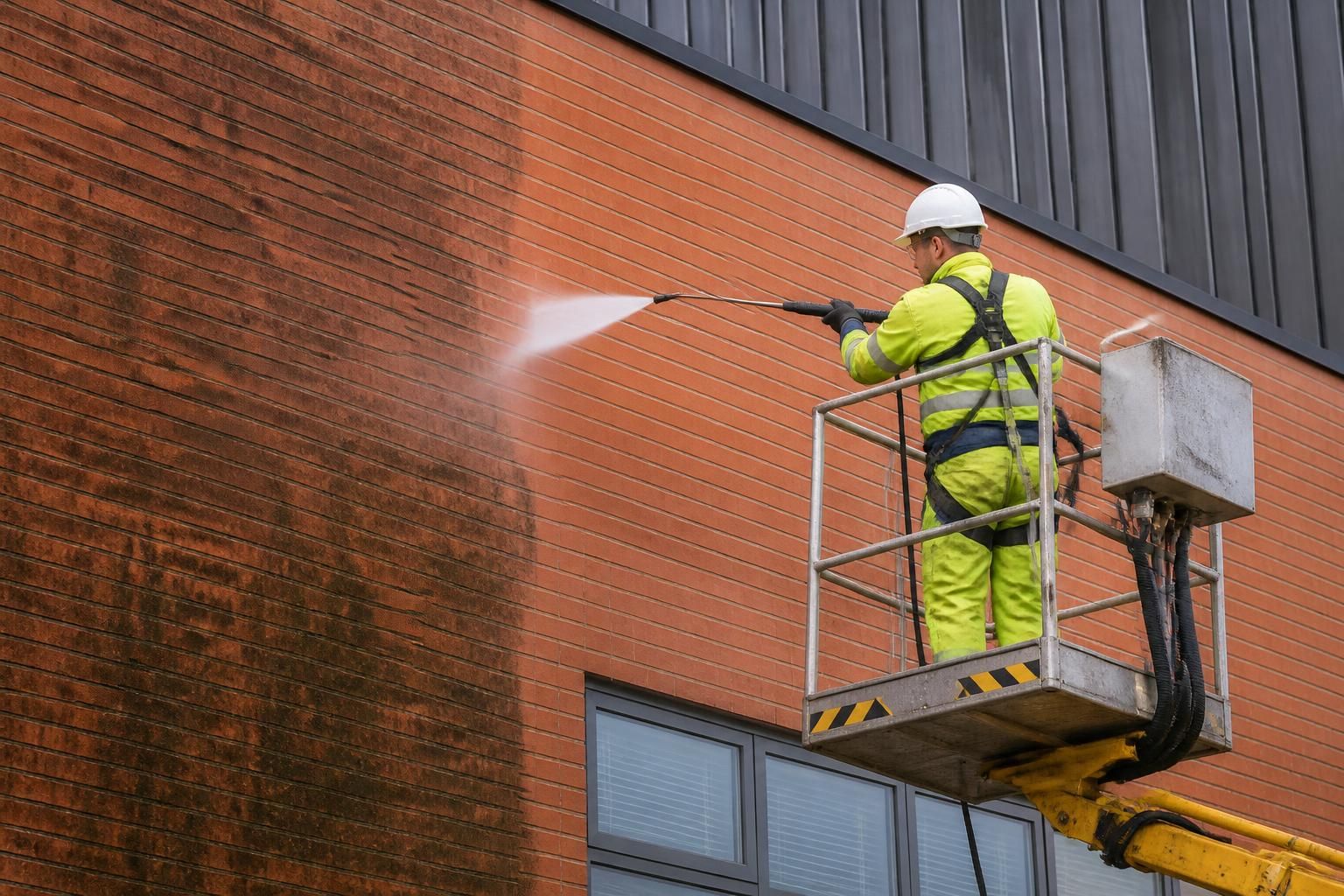
For multi-storey or extensive façades, ask what access equipment will be used and why. Depending on the site, this may include mobile elevated work platforms, scaffold, towers or other access systems. The equipment must suit the ground conditions, working space, overhead obstructions and reach required for the cleaning method.
Using the correct access arrangement helps the operative maintain consistent control of the equipment and reduces the temptation to work from an unsafe position. The contractor should explain how access will be installed, inspected and removed, and whether the quotation includes permits, traffic management, out-of-hours work or protection for public areas.
Training, insurance and safe systems of work
Confirm that the contractor has appropriate public liability insurance and, where relevant, employers’ liability cover. For larger commercial sites, request evidence of risk assessments, method statements and relevant training for pressure washing, steam cleaning, chemical handling and access equipment.
Safe working arrangements should cover exclusion zones, slips and trips, water near electrical equipment, chemical storage and dilution, personal protective equipment, falling debris and the protection of members of the public. If the building is occupied, the contractor should also coordinate access, noise, working hours and emergency arrangements with the site representative.
Environmental and wastewater controls
Exterior brick cleaning can produce contaminated water containing dirt, paint particles, biological material, mortar residue or cleaning chemicals. Ask how the contractor will prevent run-off from entering surface-water drains or neighbouring property and how wastewater, sludge and removed debris will be collected and handled.
The proposed controls may include drain protection, bunding, wet vacuum recovery, temporary containment and appropriate disposal arrangements. The correct approach depends on the site and the material being removed. A contractor who does not address run-off during the survey may not have fully considered the practical or environmental requirements of the work.
A clear, itemised quotation
The quotation should identify the elevations and surfaces included, the proposed method, preparation and protection, access equipment, test cleaning, collection of waste and any exclusions. It should also state whether repairs, repointing, stain removal beyond the agreed scope, traffic management or additional treatments are charged separately.
Be cautious of a quote based only on a broad area measurement or a photograph when the brickwork is complex or difficult to access. The cheapest option may involve a more aggressive method, limited preparation or exclusions that become additional costs later. Compare quotations by examining the proposed process and risk controls, not just the headline price.
Evidence of previous work and communication
Ask for relevant examples of completed brickwork cleaning and, where appropriate, references from comparable commercial or managed properties. The examples should show the type of brick, scale of the project and nature of the soiling rather than simply presenting unrelated exterior cleaning work.
Before work starts, confirm who will supervise the project, how changes will be approved and how defects or unexpected results will be recorded. Good communication is particularly important when cleaning forms part of a wider refurbishment, construction handover or planned maintenance programme.
Questions to ask before appointing a contractor
- What is the condition and likely sensitivity of the brick and mortar?
- Which cleaning method is proposed, and what alternatives were considered?
- Will a test patch be completed and approved before full cleaning?
- How will windows, services, landscaping and adjacent finishes be protected?
- What access equipment and traffic or pedestrian controls are required?
- How will water, chemicals, debris and wastewater be contained and disposed of?
- What insurance, risk assessments and method statements are available?
- What is included in the quotation, and what could lead to additional work?
- How will previously damaged brickwork, open joints or unexpected coatings be dealt with?
The most suitable exterior brickwork cleaning service is therefore the one that can connect its method to the condition of the building, demonstrate control of access and run-off, and set out the scope and limitations in writing. A careful survey and test-led process provide a stronger basis for safe, predictable cleaning than an uninspected quotation or a promise to remove every mark using maximum pressure.
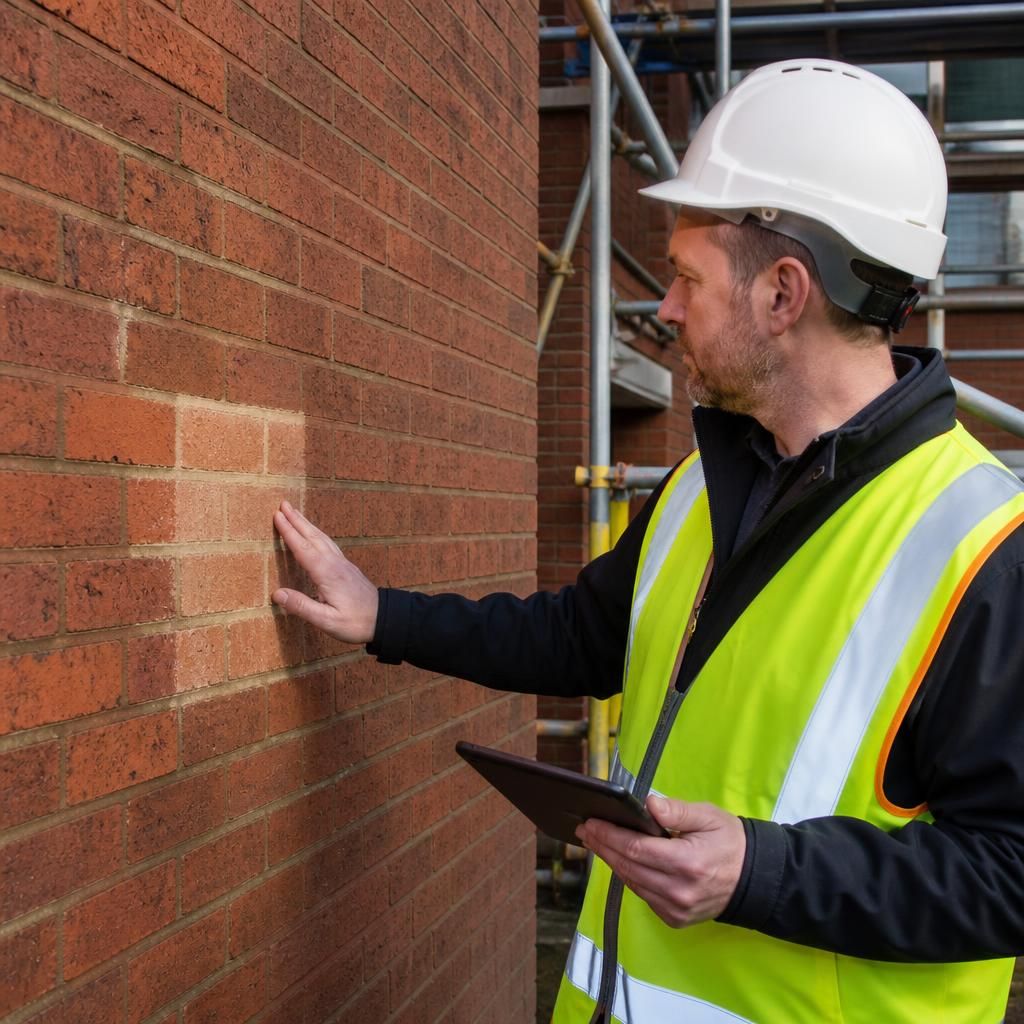
A site assessment and representative test patch are essential when choosing an exterior brickwork cleaning service. They show whether the proposed method can remove the specific soiling without damaging the brick face, mortar joints or nearby materials.
The contractor should explain the equipment and treatment being tested, identify any risks, and agree how the result will be assessed before full cleaning begins. This is particularly important for older, porous or previously repaired brickwork, where excessive pressure, heat or chemical treatment may cause permanent damage. A reliable service will use the test area to set realistic expectations rather than promise complete removal of every stain.