
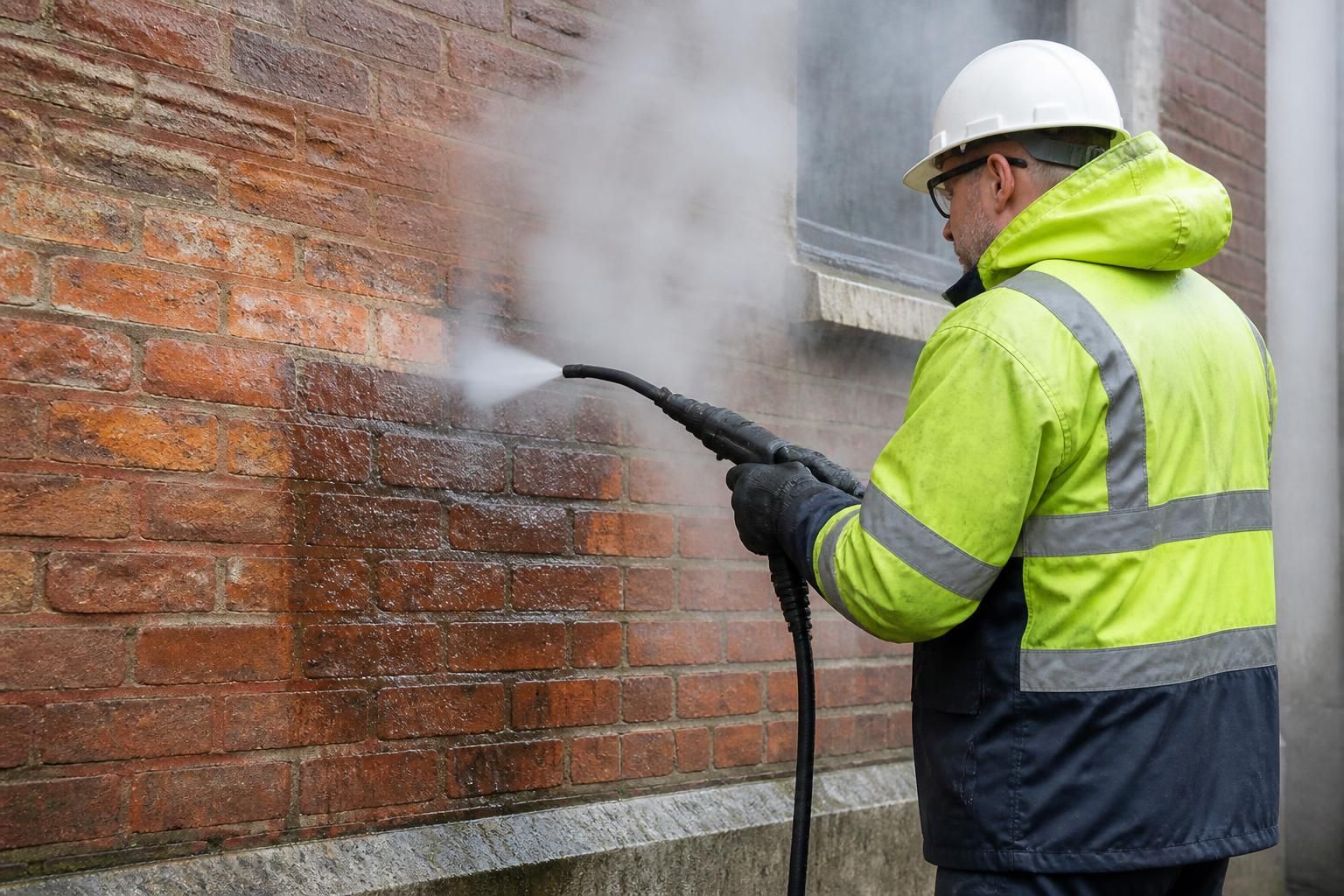
What are the benefits of using a steam cleaner for brickwork?
A steam cleaner removes dirt, algae, staining and some biological growth from brickwork using heated water vapour, helping to clean masonry without the aggressive impact of high-pressure washing. It uses relatively little water, can reach recessed areas and is often suitable for delicate or historic brick when operated by an experienced professional.
Steam cleaning uses heated water vapour to loosen and remove dirt, staining, algae, soot and other surface contamination from brickwork. Because it relies on heat and controlled moisture rather than highly pressurised water, it can clean many brick surfaces with less risk of driving water into the masonry, eroding soft faces or disturbing deteriorated mortar. It is particularly useful where brickwork is delicate, recessed, lightly to moderately soiled, or located on a building where water use and run-off need to be controlled.
The main benefits of using a steam cleaner for brickwork include:
- Gentle removal of surface dirt: Heat softens ingrained grime, soot, traffic film and some oily residues so they can be lifted from the brick surface with controlled agitation or low-pressure rinsing. This reduces the need to rely on aggressive pressure alone.
- Lower risk to vulnerable masonry: Older, handmade, historic or weathered bricks can have soft faces and open pores. Excessive pressure may cause surface bruising, pitting, spalling or the loss of the outer fired layer. Steam cleaning is generally easier to control around these vulnerable areas, although the condition of the brick and mortar must still be assessed first.
- Reduced water consumption: Steam systems use heated water efficiently and typically produce less run-off than conventional high-pressure cleaning. This can be valuable on façades, in enclosed areas and on sites where drainage capacity, access or waste-water management is restricted.
- Effective cleaning of recessed details: Heated vapour can penetrate around textured brick, mortar joints, reveals, ledges and other uneven details where ordinary wiping or brushing may leave dirt behind. Operators can work methodically across the surface while adjusting the distance, temperature and flow.
- Useful for biological growth: Steam can loosen algae, moss residue, lichen and other organic contamination. It may also help reduce surface organisms, but it does not always prevent regrowth. Porous brickwork normally needs suitable aftercare, improved drainage or reduced sources of damp to keep biological growth under control.
- Fewer added chemicals: Many brick-cleaning tasks can be completed with heated water and mechanical action, limiting the need for strong chemical products. This can simplify rinse-down and reduce the chance of chemical residues affecting adjacent materials. Chemicals may still be appropriate for specific stains, but they should be selected and applied according to the brick type and contamination.
- Suitable for detailed or historic buildings: Steam cleaning is often considered for listed, period or architecturally detailed properties where preserving the original brick surface is more important than achieving a rapid, highly aggressive clean. A test patch is essential, as historic brickwork can vary considerably across the same elevation.
- Improved control around adjoining materials: Brick façades often sit beside timber, stone, render, glazing, metalwork and painted surfaces. A controlled steam process can help limit splash and abrasion, although these materials still require protection and separate cleaning settings where necessary.
Steam is most effective on contamination that has bonded to the surface but can be softened by heat. This includes general atmospheric dirt, soot, dust, bird deposits, some grease, algae staining and residues left after construction or nearby works. It can also help clean bricks after pointing or repointing, once the mortar has fully cured and the contractor has confirmed that the surface is ready for cleaning. It is not a universal solution for every mark: deep rust, paint, tar, cement staining, embedded oil and some mineral deposits may require a carefully chosen cleaning agent, an alternative method or several stages of treatment.
Steam cleaning should not be confused with simply applying hot water at high pressure. The result depends on the equipment settings, the volume of water, the working distance, the condition of the substrate and the operator’s technique. Too much heat can affect certain coatings, sealants, painted details or recently repaired areas, while too much moisture can still enter cracked or highly porous masonry. A competent contractor will therefore inspect the brickwork before work begins and avoid treating defective areas as though they were sound.
A typical professional process involves:
- Inspecting the brick, mortar joints, previous repairs, coatings, cracks and areas of damp or salt activity.
- Identifying the type and severity of the staining, together with any risks from nearby windows, doors, landscaping, electrical equipment or public access.
- Carrying out a small test area using controlled steam settings to check cleaning performance, colour change, mortar stability and the condition of the brick face.
- Protecting adjoining surfaces and controlling run-off before cleaning the elevation in manageable sections.
- Adjusting heat, flow, nozzle position and working speed to remove contamination without overworking the masonry.
- Rinsing or collecting loosened residue where required, then inspecting the finished surface after it has dried.
- Identifying any remaining stains, repairs or maintenance issues and recommending further treatment only where it is safe and necessary.
Compared with pressure washing, steam cleaning normally offers more heat and less dependence on impact. Pressure washing can be effective for robust, sound brickwork and heavy external dirt, but excessive pressure or an unsuitable nozzle can damage friable brick faces, open mortar joints and force water into the wall. Steam is often the more conservative option for delicate masonry, detailed façades and locations where run-off must be limited. The best method is determined by the substrate and contamination rather than by the equipment alone; low-pressure washing, soft washing, specialist chemical treatment or dry methods may be more appropriate in particular cases.
Steam cleaning will not repair defective brickwork or failed pointing. Before cleaning, loose bricks, open joints, cracks, damp problems and unstable coatings should be recorded and addressed where necessary. Cleaning can expose previously hidden defects, and removing a layer of grime may make differences between replacement bricks or repaired sections more visible. These are reasons to plan the work carefully, not reasons to avoid cleaning altogether.
For commercial, industrial and public-facing properties, steam can also support safer site management by reducing standing water and limiting disruption around entrances, walkways and working areas. Even so, the cleaning area should be isolated where necessary, with appropriate controls for pedestrians, falling residue, electrical equipment and contaminated run-off. On larger elevations, access equipment and a staged work plan may be needed to maintain consistent results across the façade.
In practical terms, steam cleaning is a strong option when the priority is controlled removal of surface contamination while preserving the appearance and condition of the brickwork. It is especially worth considering for soft or historic bricks, recessed façades, lightly to moderately soiled surfaces and sites with limited water management options. A site inspection and test patch should confirm whether steam alone is suitable or whether it needs to be combined with another carefully controlled treatment.
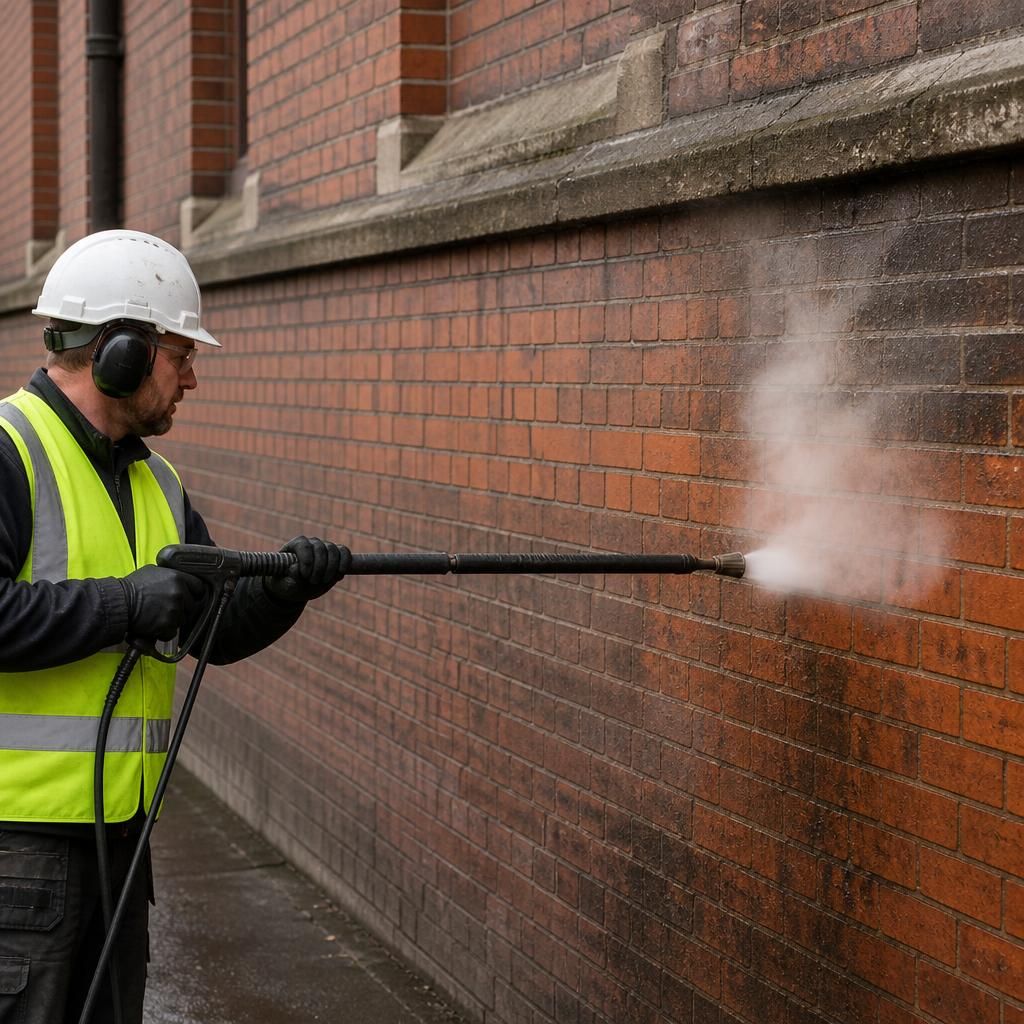
Steam cleaning is particularly useful for delicate, historic or weathered brickwork because it removes surface grime through controlled heat and moisture rather than relying mainly on abrasive impact. This can reduce the risk of eroding soft brick faces, disturbing older mortar or forcing excessive water into porous masonry.
The brick type, mortar condition and staining should still be assessed before work begins. A professional contractor should complete a small test patch and adjust the steam temperature, flow, nozzle distance and working speed to confirm that the surface can be cleaned safely. This is especially important where the façade includes previous repairs, coatings, cracks or areas affected by damp.
Arrange a professional steam cleaning assessment
Arrange a professional steam cleaning assessment to confirm whether steam is suitable for your brickwork and identify any areas requiring special care. Our team can inspect the masonry, discuss the contamination and recommend a controlled cleaning approach.