
How does steam cleaning differ from pressure washing for brickwork?
Steam cleaning uses heated water vapour at relatively low pressure to loosen dirt, algae, staining and some coatings from brickwork, while pressure washing relies on a concentrated water jet to remove deposits mechanically. Steam is generally gentler and uses less water, whereas pressure washing can be faster for robust brick surfaces but carries a greater risk of eroding the face of the brick or damaging mortar if used incorrectly.
Steam cleaning and pressure washing remove contamination from brickwork in different ways. Steam cleaning uses heated water, often delivered as low-pressure vapour or a hot, low-pressure rinse, to soften and lift deposits. Pressure washing uses a comparatively high-pressure water jet to break the bond between the surface and dirt. Steam is usually the more controlled and gentle option for aged, delicate or heavily soiled masonry, while pressure washing can be effective on sound, robust brickwork when the pressure, nozzle and technique are selected correctly.
How steam cleaning works
Steam cleaning applies heat to the contamination rather than relying mainly on force. The heat helps loosen organic growth, traffic film, atmospheric grime, grease, some paint residues and certain surface coatings. The softened material can then be rinsed away or removed with suitable tools, without directing a highly concentrated jet into the brick face or mortar joints.
Although it is commonly called steam cleaning, the equipment may produce heated water, vapour or a combination of both. The exact process depends on the machine and the condition of the brickwork. A professional operator adjusts temperature, flow and pressure to suit the substrate, keeping the cleaning action effective without unnecessarily saturating the wall.
Steam cleaning generally uses less water than conventional pressure washing. This can reduce run-off and make it easier to control wastewater, although water containing dirt, paint, oils or chemical residues still needs to be collected and disposed of responsibly. Steam should not be assumed to be harmless simply because it is low pressure: excessive heat can affect some coatings, sealants, painted surfaces and sensitive masonry, so testing remains important.
How pressure washing works
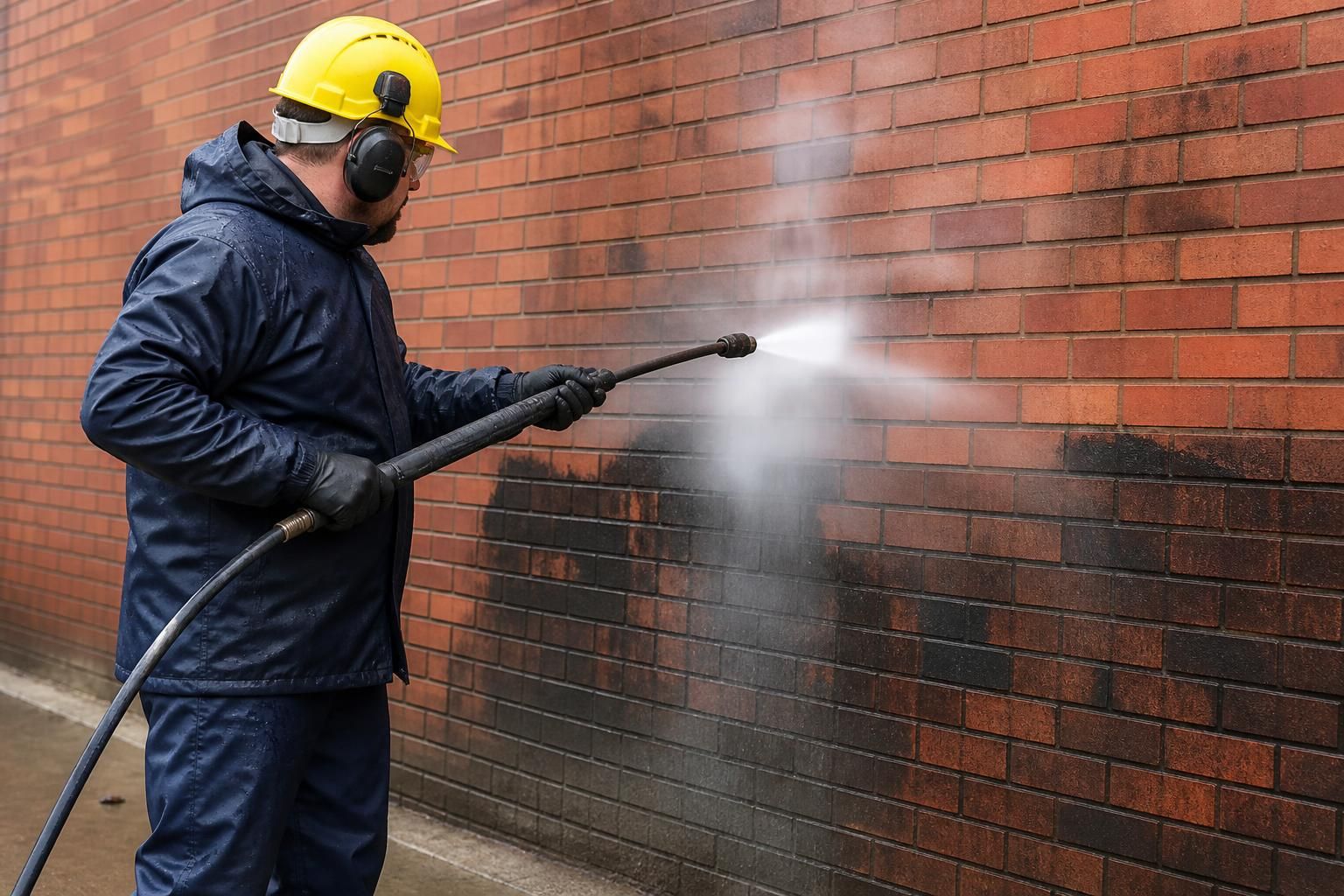
Pressure washing removes deposits primarily through mechanical impact. Water is forced through a nozzle at pressure, creating a concentrated spray that can quickly dislodge loose dirt, mud, algae and other surface contamination. It is often productive on modern, dense brickwork or larger areas where the brick faces and joints are in sound condition.
The main risk is that the water jet can do more than remove dirt. If the pressure is too high, the nozzle is held too close, or the operator uses an unsuitable spray pattern, it may erode the fired surface of the brick, expose the softer interior, widen defects or remove friable mortar. Water can also be driven into cracks, open joints and porous masonry, increasing drying time and potentially contributing to frost-related damage where conditions allow.
Pressure washing is therefore not automatically unsuitable for brickwork, but it requires careful control. A broad fan pattern, suitable working distance, moderate pressure and continuous movement are generally safer than a narrow jet held close to the wall. The correct settings still depend on the brick type, age, condition and previous repairs.
Key differences for brick cleaning
- Cleaning action: steam relies more on heat and softening, whereas pressure washing relies more on water impact.
- Water consumption: steam cleaning normally uses less water, which can help where run-off must be tightly managed.
- Risk to masonry: pressure washing presents a greater risk of surface erosion and mortar loss if misapplied. Steam is often more forgiving, but excessive heat or prolonged application can still cause damage.
- Speed and coverage: pressure washing can remove loose contamination quickly across large, sound areas. Steam cleaning may require more controlled, methodical work where deposits are bonded or the substrate is vulnerable.
- Organic contamination: heat can help loosen algae, moss residue and biological staining, but cleaning alone may not prevent regrowth. A suitable treatment and maintenance plan may be needed.
- Paint, coatings and graffiti: neither method removes every coating safely. Graffiti, masonry paint, sealants and historic finishes require assessment and, where appropriate, a compatible cleaning or removal product.
- Mortar joints: steam is often preferable around weak, recessed or historic pointing because it reduces the need for aggressive impact. Pressure washing can damage joints that are already deteriorated.
Which method is safer for different brickwork?
Steam cleaning is commonly considered first for older buildings, soft or handmade bricks, weathered façades, listed or historically significant masonry, and walls with vulnerable pointing. It is also useful where the objective is to remove ingrained grime while preserving the texture and patina of the brick. The operator can work progressively, stopping when the required level of cleanliness has been reached rather than continuing to scour the surface.
Pressure washing may be appropriate for newer, hard-fired bricks with sound mortar and relatively loose contamination. It can be useful for external paving, robust boundary walls and other areas where the substrate has been confirmed as suitable. It should not be selected solely because it appears quicker; the condition of the masonry and the required finish are more important than the equipment used.
Very delicate brickwork may require a lower-impact approach than either conventional steam or pressure washing. Dry brushing, gentle rinsing, specialist chemical cleaning or a combination of methods may be more suitable. Salts, soot, carbon staining and oil-based deposits can behave differently, so the visible appearance of the stain should not be the only basis for choosing a method.
Why a survey and test area matter
Brickwork varies considerably in porosity, hardness, firing quality, surface finish and repair history. A wall can also contain several materials, such as original bricks, replacement bricks, cement mortar, lime mortar, paint and sealant. A method that is safe for one section may damage another.
Before cleaning, the condition of the bricks and joints should be assessed for cracking, spalling, powdering, previous water damage, open joints and failed repairs. A small test area should then be cleaned using the proposed equipment and settings. The test should check not only whether the staining is removed, but also whether the brick colour, surface texture, mortar and surrounding finishes remain unaffected after drying.
Cleaning should normally begin with the least aggressive effective method. The operator can then increase the level of action only when the test evidence shows that it is necessary. This staged approach helps avoid over-cleaning, which can permanently alter the appearance and weathering performance of brickwork.
Practical conclusion
Steam cleaning is generally the better starting point when brickwork is aged, porous, delicate, heavily stained or surrounded by vulnerable mortar. Pressure washing can be suitable for sound, robust brickwork and loose surface dirt, but it must be controlled to prevent erosion, water penetration and joint damage. The safest choice is determined by the brick and its condition, not by whether the equipment is labelled as steam or pressure washing.
For commercial façades, industrial buildings, boundary walls and large external areas, the cleaning specification should set out the method, test requirements, protection of adjoining surfaces, run-off controls and the standard of finish expected. Where brickwork has historic value or visible defects, specialist assessment is particularly important before work begins.
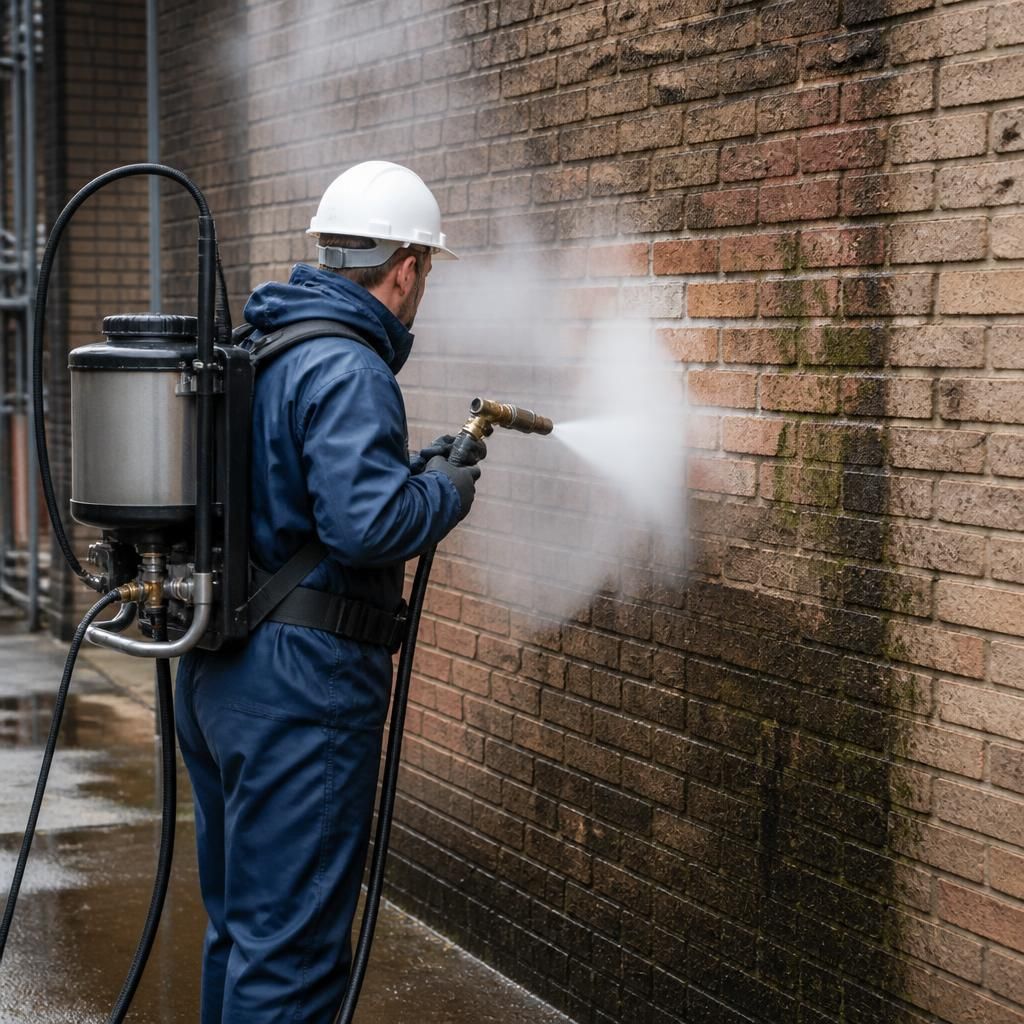
For brickwork, the safest cleaning method should be confirmed with a test area before the full façade is treated. Steam cleaning applies heat with relatively low pressure, while pressure washing uses water impact to remove contamination; the suitable option depends on the brick, mortar and type of staining.
A test should assess whether the proposed settings remove the deposit without eroding the brick face, loosening pointing, driving water into defects or altering the appearance of the masonry. The area should also be inspected after drying, as damage, staining and changes in colour or texture may not be immediately visible.
- Use the least aggressive method that achieves the required finish.
- Adjust temperature, pressure, nozzle selection and working distance to suit the substrate.
- Take extra care with soft, handmade, weathered or historic bricks and lime mortar.
- Protect adjoining surfaces and manage contaminated run-off before cleaning begins.
Where the test shows that pressure washing is too forceful, controlled steam cleaning or another low-impact technique may provide better protection for the brickwork.