
How do I choose the right cleaning method for my brick exterior?
Choose the gentlest method that will remove the specific contamination without damaging the brick, mortar or coatings. The decision should consider the brick’s age and condition, the type of soiling, surface porosity and access requirements, with steam or low-pressure cleaning often preferable to high-pressure washing for delicate or weathered brickwork.
The right cleaning method for a brick exterior is the least aggressive method that will remove the identified contamination without damaging the brick, mortar, coatings or surrounding surfaces. The choice depends on the brick’s age and condition, its porosity, the type of soiling, the strength of the mortar, the presence of paint or other coatings, and the access and environmental controls required for the work.
A suitable method should be selected after inspecting the wall rather than relying on the appearance of the soiling alone. Brickwork that looks robust may have weakened faces, open joints or historic repairs that are vulnerable to water pressure and abrasion. A professional assessment should establish the following:
- Brick condition: Check for spalling, cracking, frost damage, powdering faces, open joints and loose or missing mortar.
- Brick type and age: Soft, handmade, historic or highly porous bricks generally require more controlled cleaning than dense modern engineering bricks.
- Contamination: Identify whether the surface has dirt, traffic film, algae, moss, cement residue, paint, oil, rust staining, efflorescence or graffiti. Different contaminants respond to different treatments.
- Previous treatments: Existing sealants, paint, coatings, repairs or earlier cleaning may affect how water and cleaning agents interact with the surface.
- Mortar condition: Sound joints may tolerate carefully controlled cleaning, while friable or recently repointed mortar can be eroded or saturated.
- Site constraints: Consider nearby windows, vents, vehicles, planted areas, drainage, pedestrians and the safe use of access equipment.
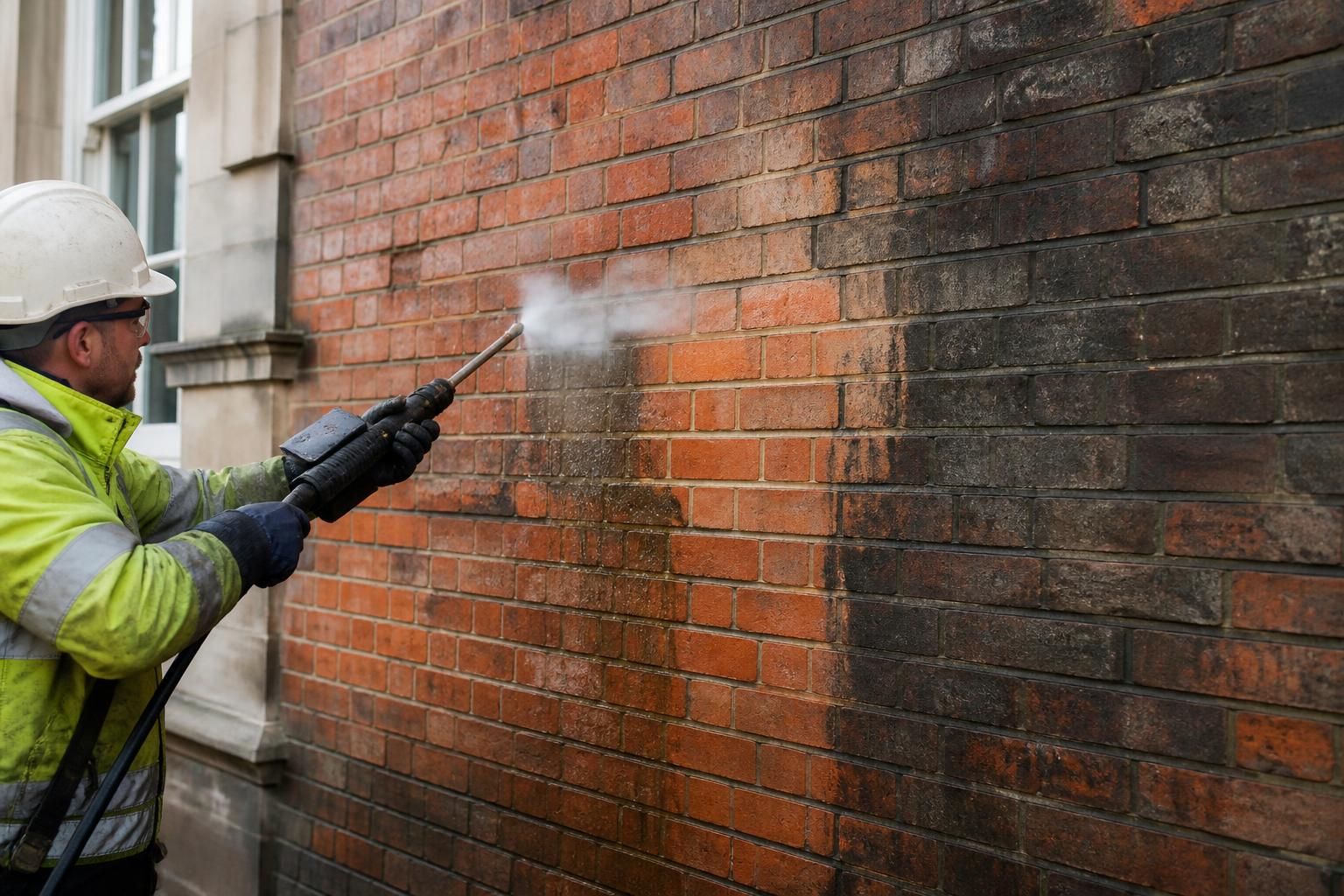
Steam cleaning is often appropriate for delicate, historic or weathered brickwork and for general atmospheric dirt, organic growth and some surface deposits. The combination of heat and controlled water flow can loosen contamination without depending on high mechanical force. This makes it useful where preserving the brick face and mortar is more important than cleaning at maximum speed. Steam cleaning can also reduce the amount of water entering porous masonry, although the wall must still be assessed for moisture sensitivity.
Low-pressure washing may be suitable for sound, dense brickwork with firmly bonded dirt or organic growth. It can be combined with a carefully selected cleaning solution where water alone is insufficient. Pressure must be controlled at the surface, not simply set according to the capacity of the machine. The operator should use suitable nozzles, maintain a safe working distance and avoid directing water into joints, cracks, vents or openings.
Higher-pressure washing is not automatically the best option for heavily soiled brick. Excessive pressure can remove the fired surface of the brick, widen defects, strip coatings, drive water behind the façade and erode mortar. It may leave the wall appearing clean while causing damage that becomes visible later through spalling, damp penetration or accelerated weathering. It should only be considered where the brick and joints are demonstrably sound and the method has been proven safe on a representative area.
Chemical cleaning can help with specific deposits such as cement staining, paint, oil or certain atmospheric residues, but the product must match the contaminant and the masonry. Incorrect chemicals can discolour brick, attack mortar, leave residues or create run-off concerns. Any treatment should be applied in a controlled manner, allowed to work for the appropriate period, and thoroughly rinsed or neutralised where required. Acidic products are particularly unsuitable for some brick types, calcareous materials, metalwork and vulnerable joints.
Mechanical abrasion, including aggressive brushing, abrasive blasting or grinding, is generally unsuitable for exposed brick faces unless there is a specific reason and the surface has been assessed by an experienced specialist. Abrasion can permanently alter the texture and colour of the brick and may expose the softer inner material. Graffiti, paint and hard deposits normally require a more targeted approach, such as a compatible removal product, controlled steam or a carefully tested low-pressure process.
Organic growth should be treated according to its extent and attachment. Light algae or surface staining may respond to steam or a gentle biocidal treatment, followed by controlled rinsing. Established moss may need to be removed carefully before the underlying staining is treated. The source of persistent dampness should also be investigated, because cleaning alone will not prevent regrowth where leaking gutters, poor drainage, defective pointing or continual shade are contributing to the problem.
Before the main work starts, the chosen method should be tested on a small, inconspicuous section. The test should assess cleaning effectiveness as well as possible side effects, including colour change, surface roughening, mortar loss, staining, water penetration and damage to adjacent materials. A test area is not conclusive if the wall is unusually dry, wet or contaminated compared with the rest of the façade, so the result should be interpreted in the context of the whole building.
For façades with mixed brick types or varying levels of deterioration, one method may not be appropriate everywhere. Sound lower sections, sheltered areas and heavily weathered elevations may need different pressures, dwell times, tools or cleaning stages. A method statement should explain these variations and identify how windows, doors, signage, paving, planting and drainage will be protected. Run-off and waste water should be managed so that contaminants and cleaning residues do not enter unsuitable drains or affect neighbouring property.
In practical terms, steam or another low-impact process is usually the starting point for old, soft, porous or damaged brickwork. Controlled low-pressure cleaning may be appropriate for sound modern brick with general dirt or organic contamination. More specialised treatments are required for graffiti, paint, cement residue and oil, and these should be selected after identifying the substance and testing the surface. The safest choice is therefore based on the condition of the masonry and the nature of the contamination, not simply on which cleaning equipment is most powerful.
After cleaning, the brickwork should be allowed to dry and inspected for missed deposits, exposed defects and areas requiring repair. Cleaning should not be used to conceal failed pointing, defective rainwater goods or structural movement. Where the inspection identifies damaged bricks or loose joints, repairs and repointing may need to be completed separately using materials compatible with the existing masonry.
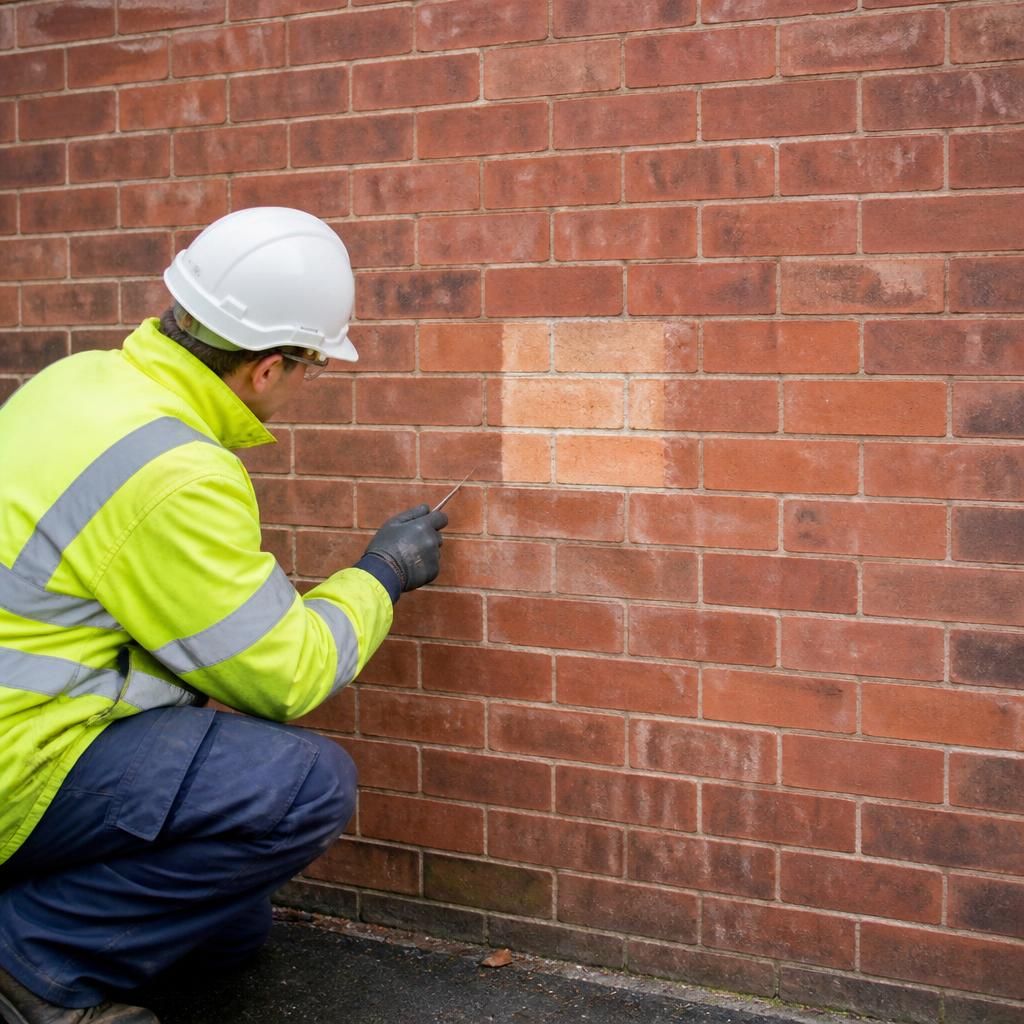
A small test area is the most reliable way to confirm that a brick cleaning method is effective without causing avoidable damage. It should be carried out on an inconspicuous section using the proposed pressure, temperature, cleaning product and dwell time.
The test should be checked for more than just improved appearance. Look for changes in brick colour or texture, mortar loss, staining, water penetration and effects on nearby materials such as pointing, windows or coatings. If the result is unsatisfactory, the method can be adjusted before work begins across the full façade.