
How can I prevent damage while cleaning brick exteriors?
Prevent damage to brick exteriors by assessing the brick and mortar first, testing the chosen method on an inconspicuous area, and using the gentlest effective combination of pressure, temperature and cleaning solution. Avoid excessive pressure, harsh chemicals and uncontrolled water, particularly on aged, soft or damaged brickwork, and rinse carefully to protect the mortar and surrounding surfaces.
Preventing damage to brick exteriors depends on matching the cleaning method to the condition, age and type of brickwork. The safest approach is to inspect the bricks and mortar first, test the proposed treatment on an inconspicuous area, and use the gentlest combination of pressure, temperature and cleaning solution that will remove the soiling effectively.
Assess the brickwork before cleaning
Brickwork should not be treated as a uniform surface. Modern, dense engineering bricks may tolerate a different process from soft, handmade, historic or weathered bricks. Mortar can also be more vulnerable than the brick face, particularly where joints are already recessed, cracked, loose or affected by previous repointing.
Before work begins, check for cracked bricks, open joints, spalled faces, flaking coatings, damaged sealants and areas where water could enter the building. Identify the type of soiling as well. Organic growth, atmospheric dirt, paint, cement residue and efflorescence may each require a different treatment. Cleaning without this assessment can spread staining, remove the brick’s fired surface or worsen defects in the mortar.
Use a test area before treating the full elevation
A small trial area should be cleaned using the intended equipment, pressure, temperature and solution. The test should be inspected after rinsing and drying, rather than judged only while the surface is wet. This helps reveal colour changes, over-cleaning, patchiness, etching, loose material or damage to the mortar.
The trial should include representative areas of the elevation, such as sound brick, softer brick, heavily soiled sections and vulnerable joints. If the result is too aggressive, the process can be adjusted before the full façade is affected. On sensitive or historic brickwork, a conservatively controlled trial is particularly important.
Choose the least aggressive effective method
Steam cleaning and low-pressure rinsing are often suitable for removing general dirt, algae and light organic contamination where the brickwork is sound. Steam can soften deposits while using less water than some conventional washing methods, which may reduce run-off and the risk of saturating the wall. It is not automatically suitable for every surface, however; heat and moisture still need to be controlled around damaged joints, coatings, glazing and vulnerable internal finishes.
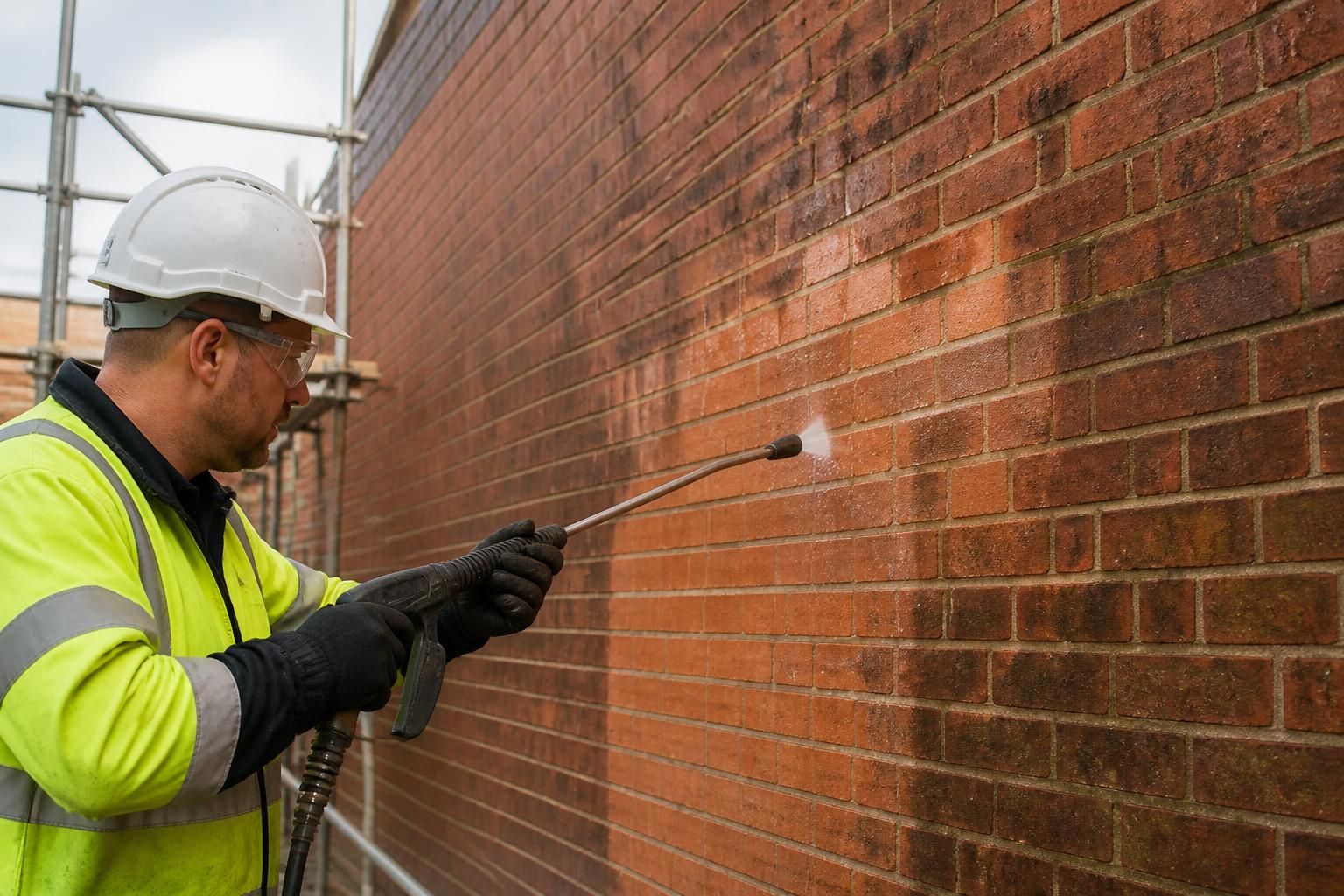
Pressure washing can be appropriate for robust brickwork when carried out by an experienced operator, but pressure at the surface is only one part of the risk. The nozzle type, spray angle, distance from the wall, water volume and duration of cleaning all affect the result. A concentrated jet held too close to the surface can erode soft bricks, strip the face of the brick or wash out mortar. The lance should be kept moving, directed appropriately and adjusted after the test area rather than operated at maximum power by default.
Where possible, start with a lower-pressure, wider spray pattern and increase the intensity only if the test shows that it is necessary. Abrasive blasting and highly aggressive mechanical methods should not be used routinely on exposed brick because they can permanently alter the texture and porosity of the surface.
Control cleaning chemicals carefully
Cleaning solutions should be selected for the contaminant and the brick’s condition, not simply for their strength. Strong acids, caustic products and unsuitable solvents may discolour bricks, attack mortar, damage metalwork or leave residues that continue to affect the wall after cleaning. Some chemical treatments can also react with salts in the masonry and make staining more noticeable.
Use only products that are appropriate for masonry and follow the manufacturer’s instructions for dilution, dwell time, application and rinsing. Do not allow a solution to dry on the wall, and prevent it from contacting windows, painted surfaces, natural stone, plants, vehicles and drainage components. Chemical application should be controlled in small sections so that the operator can rinse each area thoroughly.
Protect mortar joints and damaged areas
Mortar joints commonly suffer damage when water or a cleaning lance is directed into them at excessive force. Repointed areas may be softer than the surrounding brick, especially if the mortar has not fully cured. Loose or defective pointing should be repaired before cleaning where practical, and fragile sections may need to be excluded from high-pressure treatment.
Do not use cleaning to compensate for structural or maintenance defects. Cracked bricks, failed pointing, defective flashings and leaking gutters should be assessed separately. Cleaning a wall that is already allowing water into the building can worsen internal damp problems, even if the brick surface itself appears to improve.
Manage water, run-off and surrounding surfaces
Uncontrolled water can enter cracks, cavities, vents and openings, or become trapped behind coatings. Windows, doors, air bricks, electrical fittings and other openings should be protected before work starts. Water should be directed away from vulnerable details rather than driven into joints or beneath sills.
Run-off must also be contained and managed so that dirty water, chemical residue and loosened deposits do not stain paving, contaminate drainage systems or affect neighbouring property. On commercial premises, the cleaning plan should account for pedestrians, vehicles, access routes and any operational areas that need to remain protected or isolated during the work.
Rinse thoroughly and inspect the finished surface
After cleaning, rinse the brickwork sufficiently to remove loosened dirt and any remaining product. Inadequate rinsing can leave streaks, salts or chemical residues that become visible as the surface dries. Rinsing should be controlled rather than carried out with excessive force, particularly around mortar joints and damaged brick faces.
The completed elevation should be checked in changing light and, where appropriate, after it has dried. Look for uneven cleaning, exposed aggregate, damaged arrises, open joints, new cracks and areas of retained residue. Any issue is easier to address immediately than after further weathering.
Use competent operatives and suitable access equipment
Safe brick cleaning relies on control and observation, not just the power of the equipment. Operators should understand masonry types, recognise failing mortar and know how to adjust the treatment when the surface responds differently from the test area. Suitable access equipment helps maintain the correct working distance and spray angle; unstable positioning can lead to excessive pressure or uneven cleaning.
For large façades, older buildings, listed structures, heavily weathered brickwork or surfaces with uncertain coatings, obtain a documented method statement and agree the test area before full cleaning. Recording the selected method, products, protection measures and inspection findings also provides a useful maintenance record.
In practice, the best protection comes from treating brickwork conservatively: diagnose the deposit, assess the masonry, test first, avoid unnecessary pressure and chemicals, control water carefully, and inspect the result. If the brick or mortar begins to powder, flake, change colour or release unexpectedly, stop the process and reassess rather than continuing with the same settings.
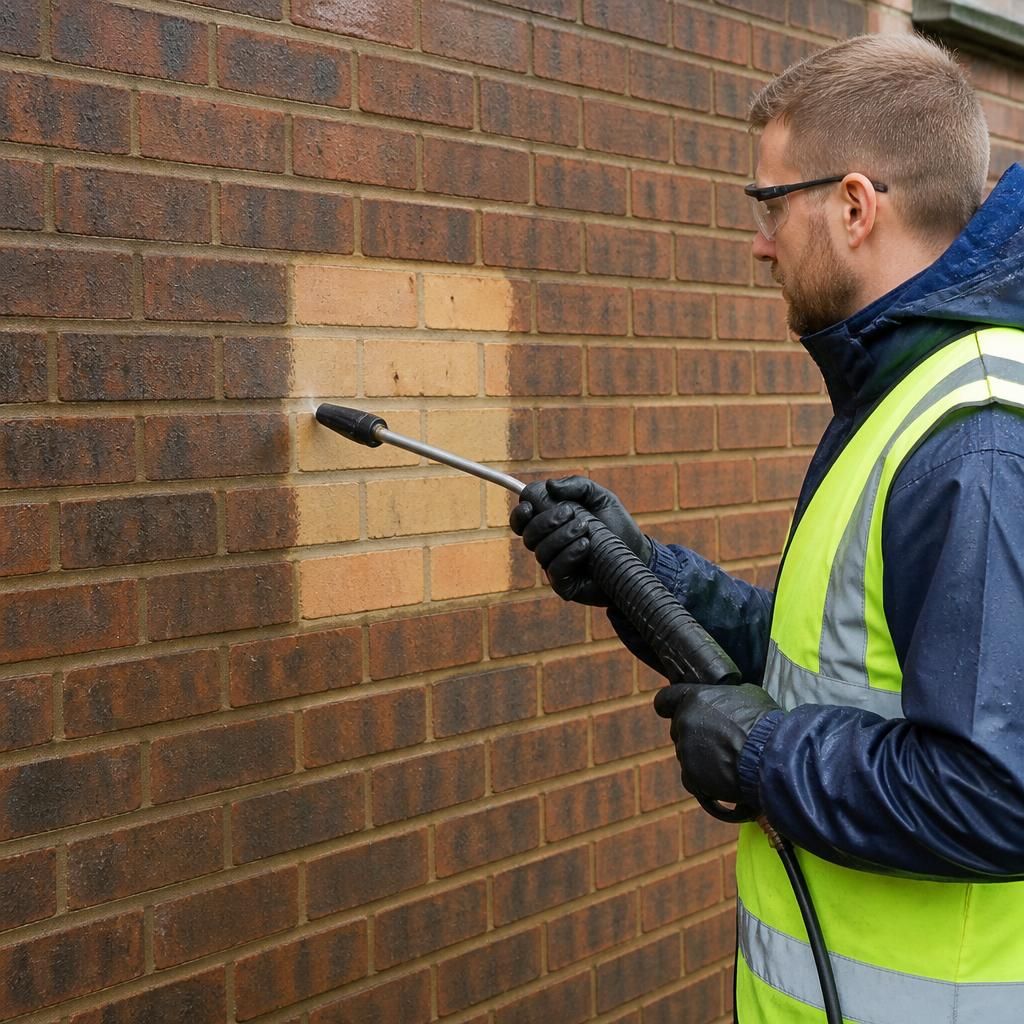
Testing a small, inconspicuous area before cleaning the full brick exterior is one of the most effective ways to prevent damage. Use the same equipment, pressure, temperature, spray pattern and cleaning solution planned for the main work, then assess the brick and mortar after rinsing and drying.
A wet surface can hide colour changes, patchiness, etching, loose material or weakened pointing. If the test area shows powdering, flaking, exposed aggregate or mortar loss, stop and adjust the method before proceeding. The trial should represent different conditions across the elevation, including softer bricks, heavily soiled sections and vulnerable joints.