
How can I effectively remove moss and algae from exterior brickwork?
Remove moss and algae from exterior brickwork by gently brushing away loose growth, then applying a suitable biocidal treatment before rinsing with controlled low-pressure or steam cleaning. Avoid aggressive pressure washing and harsh chemicals, as these can erode mortar, damage brick faces and spread contamination to surrounding areas.
Effective removal of moss and algae from exterior brickwork normally involves a combination of dry removal, a compatible biocidal treatment and controlled rinsing. The safest approach is to remove loose growth without forcing water into the brick or mortar, treat remaining spores and staining, then rinse using low pressure or steam where the surface and surrounding materials allow it.
Moss and algae are often found on shaded, damp or poorly ventilated elevations, retaining walls, paths, boundary walls and brick features beneath leaking gutters or downpipes. Moss is a more substantial plant growth with visible stems and roots, while algae may appear as green, brown or black staining across the brick face. Both can retain moisture against the masonry and may conceal defects such as open joints, failed pointing or damaged brick faces.
Before cleaning, assess the brickwork and the source of the moisture. Check for:
- soft, porous, spalled or frost-damaged bricks;
- friable, recessed or missing mortar joints;
- cracks, loose masonry and defective pointing;
- blocked gutters, leaking downpipes or persistent surface water;
- paint, render, sealants or other coatings that may react to cleaning products;
- nearby windows, doors, vents, electrical equipment, landscaping and other sensitive surfaces.
A small test area should be cleaned first, particularly where the brick is old, handmade, heavily weathered or of uncertain composition. This confirms how the brick and mortar respond and helps establish the lowest effective cleaning pressure and the most suitable treatment strength.
Remove loose growth carefully. Moss can usually be lifted or brushed away with a stiff natural or synthetic brush after it has been allowed to dry. Scraping tools should be used cautiously because they can chip the brick face and dislodge weak mortar. Avoid wire brushes and aggressive mechanical abrasion on historic or soft brickwork. Collect the removed material rather than washing it into gullies, drains or planted areas, as it may contain viable spores and debris.
Apply a masonry-compatible biocidal treatment. A suitable treatment helps kill remaining moss, algae and microscopic growth within the surface texture and joints. The product must be selected for exterior masonry and used in accordance with its instructions. It should not be assumed that a stronger concentration will produce a better result: inappropriate chemicals can discolour brick, weaken mortar, damage nearby vegetation or create hazardous runoff. Application should be even, with particular attention to textured brick, recessed joints and areas where growth has been removed.
Some treatments are designed to remain on the surface and weather away, while others require controlled rinsing after the stated contact period. The treatment instructions should determine the process. Do not mix cleaning chemicals, and do not allow treated water to enter watercourses or uncontrolled drainage. Windows, painted surfaces, metals, plants and vulnerable paving should be protected before application.
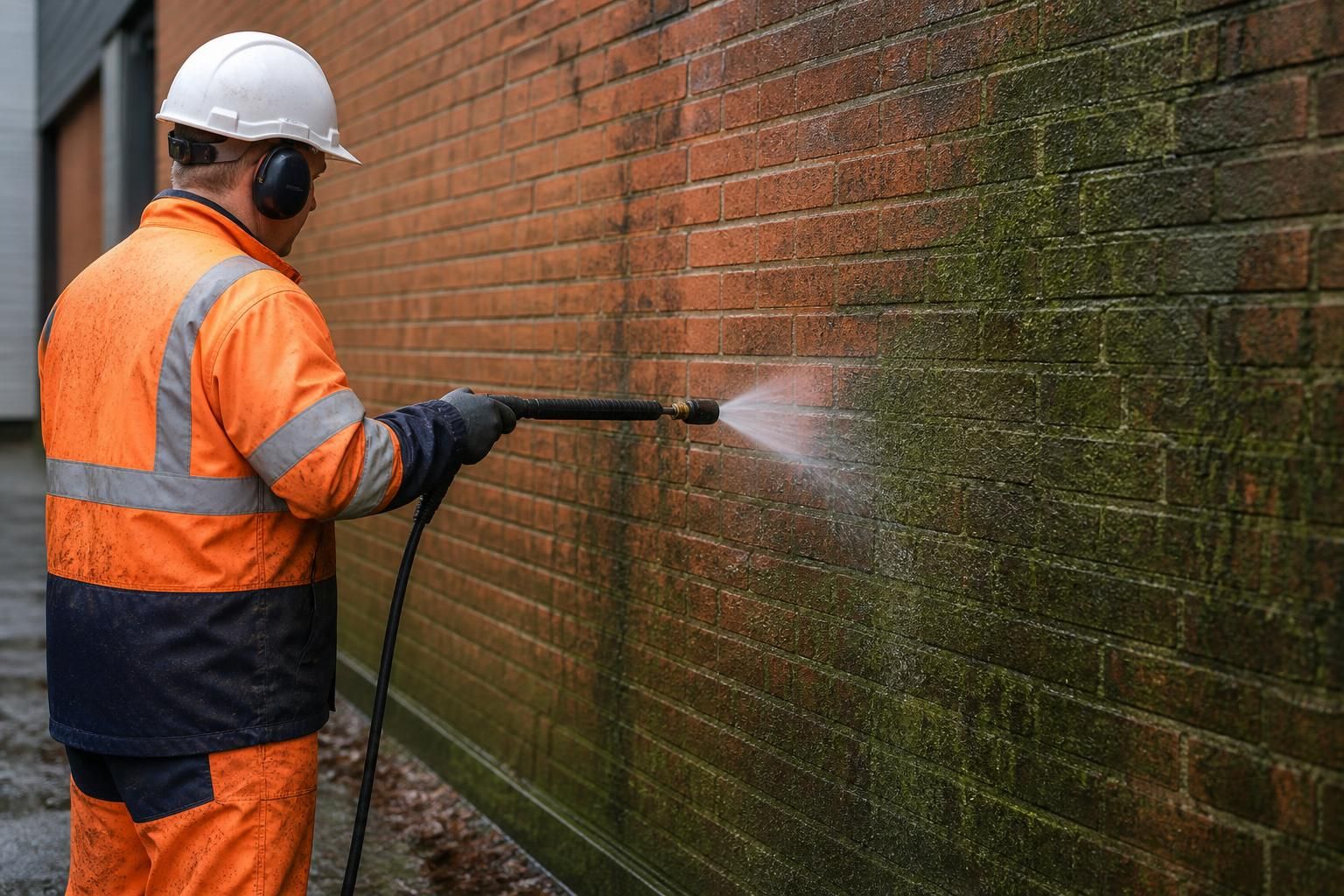
Rinse using the least aggressive method that achieves a clean result. Low-pressure washing with a suitable masonry nozzle can remove dead growth and residue when carried out by an experienced operator. The lance should be kept at an appropriate distance and directed across the surface rather than into open joints. Excessive pressure can erode mortar, enlarge defects, drive water behind the brickwork and remove the weathered face of the brick, leaving it more vulnerable to water penetration.
Steam cleaning can be preferable where the brickwork is delicate, where chemical residue needs to be minimised, or where controlled heat helps release organic staining. It uses less mechanical force than conventional high-pressure washing, but it still requires care. Heat and moisture can affect old mortar, coatings and adjacent materials, so a test patch and controlled application remain important. Steam is not automatically suitable for every brick surface, particularly where there are fragile finishes or hidden defects.
After cleaning, the brickwork should be inspected rather than judged only by its appearance while wet. Some algae staining may lighten gradually as the remaining biological material breaks down. Persistent marks may require a further compatible treatment, but repeated aggressive washing is rarely the correct solution. If staining is caused by an underlying damp defect, cleaning alone will not prevent regrowth.
To reduce future moss and algae growth:
- repair leaking or overflowing gutters and downpipes;
- keep air bricks, drainage channels and wall bases clear;
- trim vegetation that keeps the elevation shaded or touches the brickwork;
- address areas where splashback or standing water repeatedly wets the wall;
- maintain sound pointing so moisture cannot collect in open joints;
- arrange periodic inspections and treatment before growth becomes thick or established.
Do not seal brickwork simply to hide moss or algae without first identifying the moisture source. A coating that is unsuitable for the masonry can restrict drying, alter the appearance of the façade or trap moisture within the wall. Any protective treatment should be breathable, compatible with the brick and mortar, and specified only after the surface has been cleaned and allowed to dry appropriately.
Professional cleaning is advisable for large elevations, multi-storey buildings, listed or historic brickwork, heavily contaminated walls and areas above occupied entrances or public walkways. It is also appropriate where access equipment, runoff control or specialist steam-cleaning equipment is required. A competent contractor should inspect the substrate, carry out a test clean, protect surrounding areas, use controlled application methods and identify any pointing or drainage defects discovered during the work.
For commercial premises, moss and algae removal should form part of a planned exterior maintenance programme rather than being treated as a one-off cosmetic task. Combining periodic inspections with gutter maintenance, vegetation control and carefully selected biocidal cleaning helps preserve the brick face, reduce slip and contamination risks around the building, and maintain a consistent external appearance without unnecessary damage to the masonry.
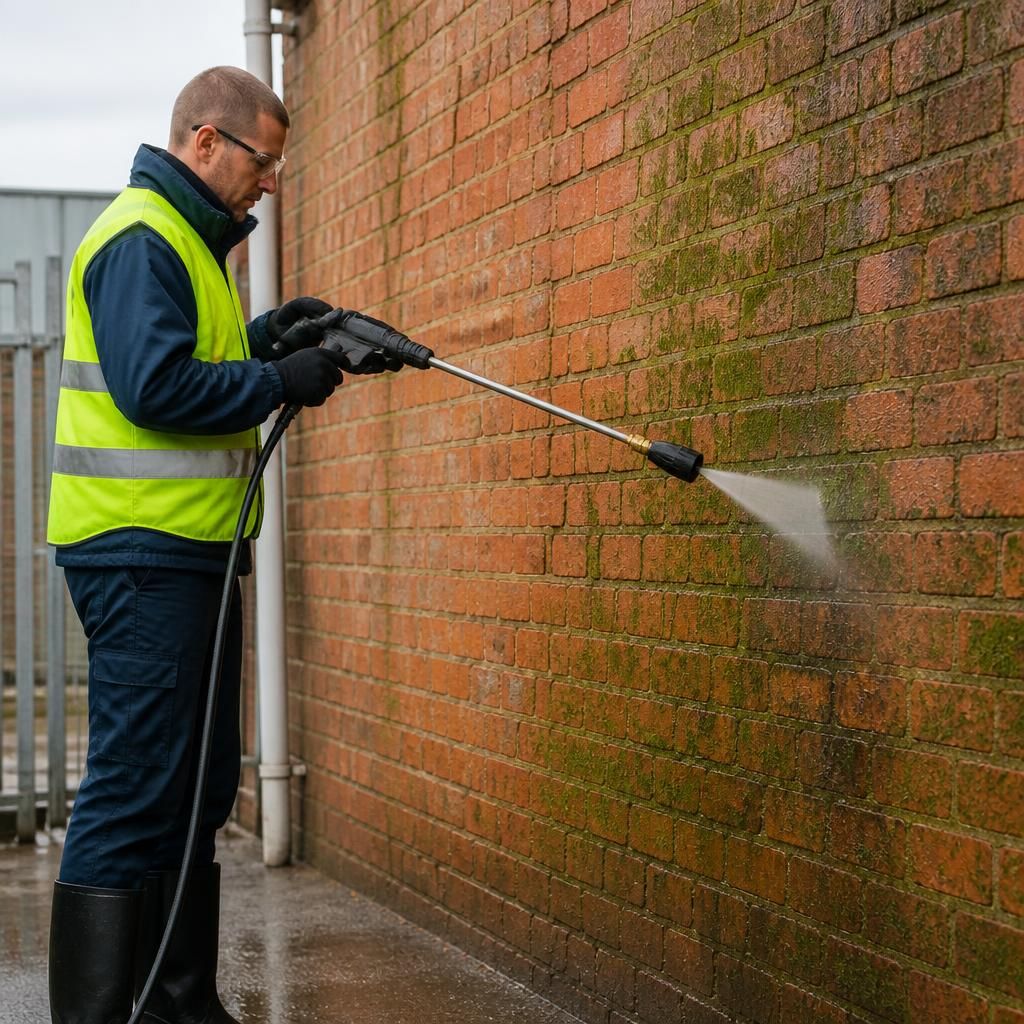
Removing moss and algae from exterior brickwork is safest when loose growth is brushed away first, followed by a masonry-compatible biocidal treatment and controlled low-pressure rinsing. This sequence removes visible contamination while helping address spores and organic residue within the brick texture and mortar joints.
Pressure should be kept to the lowest effective level, as aggressive washing can erode mortar, damage the brick face and force water into open joints. A small test area should be completed before full cleaning, particularly on old, porous or weathered brickwork. Any underlying moisture problem, such as leaking gutters, blocked drainage or excessive shading, should also be corrected to reduce regrowth.
Arrange Professional Moss and Algae Removal
Arrange professional moss and algae removal for exterior brickwork where growth is established, access is difficult or the masonry and pointing are fragile. We can assess the surface, identify moisture sources and recommend a controlled cleaning method suited to the brickwork.