
What specific cleaning techniques are best suited for ensuring compliance with construction site safety regulations?
The most suitable techniques are risk-assessed, controlled cleaning methods such as dust suppression, industrial vacuuming with appropriate filtration, contained pressure or steam cleaning, spill removal and safe waste segregation. Used alongside exclusion zones, suitable access equipment, documented inspections and correct PPE, these methods help control slip, trip, dust, chemical and falling-material hazards and support UK construction site safety compliance.
The cleaning techniques best suited to construction site safety compliance are those selected through a task-specific risk assessment and controlled under the site’s RAMS. In practice, this usually means dust suppression, industrial vacuuming with suitable filtration, controlled pressure or steam cleaning, prompt spill removal, safe waste segregation and careful cleaning at height. These methods help reduce airborne dust, slips, trips, chemical exposure, falling materials and blocked access routes, while supporting the site’s duties under the Construction (Design and Management) Regulations, COSHH, the Work at Height Regulations and relevant waste requirements.
Cleaning should be planned as part of the construction work rather than treated as an end-of-shift activity. The cleaning contractor and principal contractor should agree the work area, access arrangements, exclusion zones, interfaces with other trades, required PPE, emergency procedures and waste-handling arrangements before work starts. The method should also account for the surface, the type of contamination, nearby workers, drainage, weather conditions and whether the building is occupied or open to the public.
Dust suppression and controlled removal
Fine dust from cutting, drilling, sanding, demolition and dry sweeping can create respiratory risks and can spread beyond the immediate work area. Lightly wetting suitable dust-generating materials, using on-tool extraction and applying controlled misting can prevent dust becoming airborne. Water must be used carefully around electrical equipment, unfinished surfaces, insulation and materials that could be damaged by moisture.
Dry sweeping should generally be avoided where it would disturb fine construction dust. A suitable industrial vacuum or damp-cleaning method is usually safer. Dust suppression must not create a new slip hazard, allow contaminated water to enter drains or obscure visibility. Wet areas should therefore be controlled, signposted and dried or removed as soon as practicable.
Industrial vacuuming with appropriate filtration
Industrial vacuuming is effective for removing cement dust, plaster dust, sawdust, insulation debris and loose particles from floors, ledges, plant areas and access routes. Equipment should be matched to the material being collected and maintained so that filters, seals and collection bags work correctly. Where hazardous or very fine dust is present, a vacuum with the appropriate high-efficiency filtration and a closed disposal system is required; ordinary domestic equipment is not an adequate substitute.
Operators should avoid overfilling collection containers and should change filters or bags using a method that does not release captured dust. Vacuum hoses and leads should be routed away from walkways, protected from vehicle movements and removed after use. Cleaning high-level surfaces with extension tools can reduce the need for ladders, provided the operator can maintain control of the equipment and the method does not dislodge materials onto people below.
Controlled pressure washing and steam cleaning
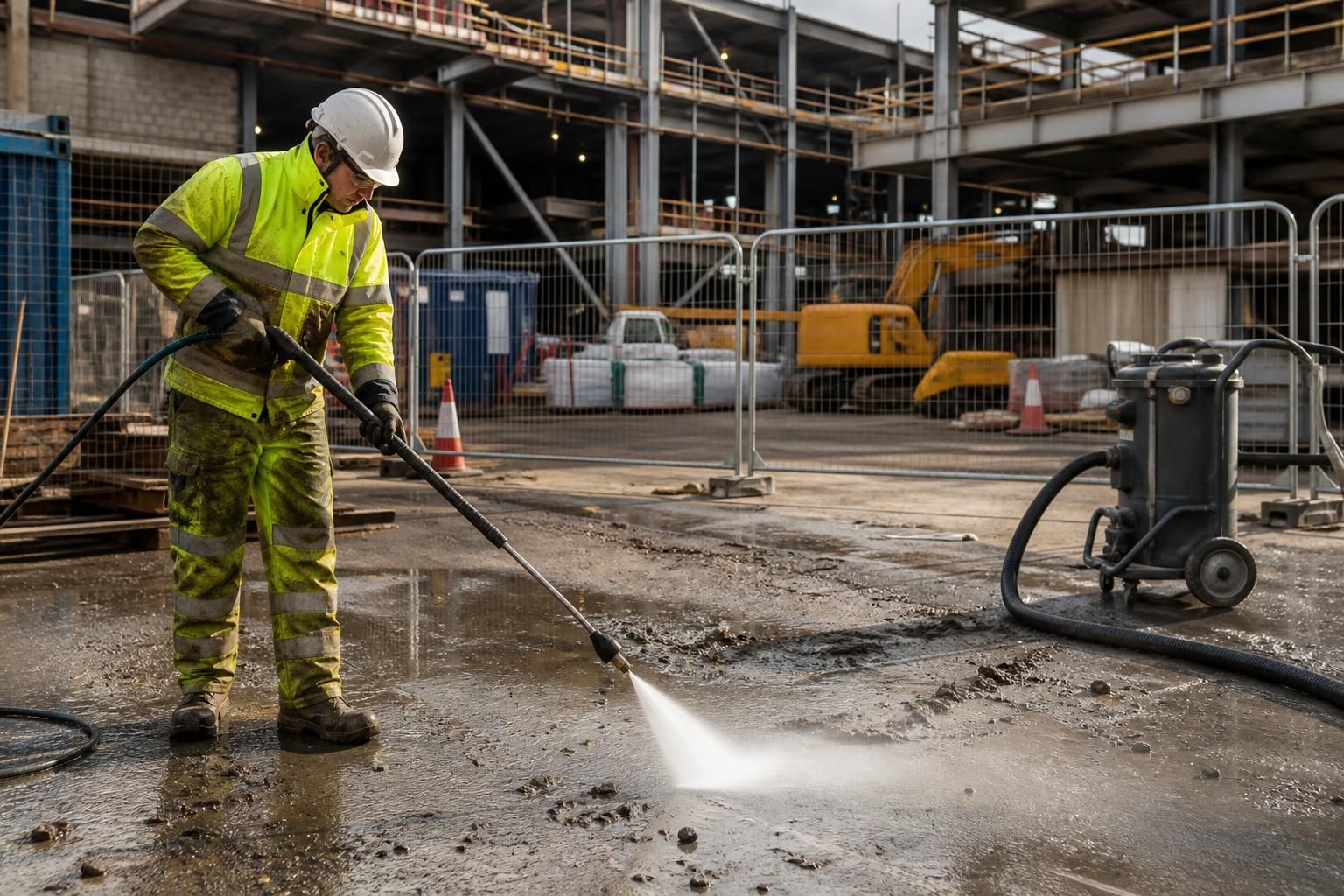
Pressure washing can remove concrete residue, mud, cutting slurry, traffic dirt and other deposits from façades, hard standings, plant areas and site access routes. The pressure, flow rate, nozzle and working distance should be selected for the surface and contamination. Excessive pressure can damage mortar joints, coatings, sealants, insulation systems, freshly laid surfaces and unfinished building materials.
Pressure washing should be carried out within a controlled area. This includes protecting workers and members of the public from spray, preventing water and debris from reaching live electrical systems, and managing runoff so that it does not create a slip hazard or enter surface-water drainage without suitable controls. Where appropriate, slurry should be captured, settled or collected for disposal rather than being allowed to spread across the site.
Steam cleaning uses heat and lower water volumes than many conventional pressure-washing methods. It can be useful for removing oily deposits, adhered dirt, labels and some biological growth from suitable surfaces. It still requires a COSHH assessment where chemicals or residues are involved, as well as controls for burns, hot surfaces, visibility, ventilation and runoff. Steam must not be directed at vulnerable finishes, electrical components or areas where trapped moisture could cause damage.
Spill, oil and chemical residue removal
Spills should be isolated and dealt with promptly using a method suited to the substance. This may involve absorbent granules, pads, booms, wet vacuuming or a compatible degreasing product. Operators should consult the product’s safety data sheet before using a cleaning chemical and should never mix products unless their compatibility and safe use have been confirmed.
The affected area should remain controlled until the residue has been removed and the surface is safe to walk or drive on. Used absorbents, contaminated soil and chemical residues may require separate handling and disposal. A spill response should also consider the possibility of contamination entering drainage systems, particularly on external yards, car parks and construction access roads.
Cleaning access routes and removing trip hazards
Regular removal of rubble, packaging, offcuts, fixings, cables and surplus materials is essential for maintaining safe pedestrian and vehicle routes. Industrial vacuuming, mechanical sweeping and manual collection can be combined, depending on the debris and the location. Sharp objects should be collected using suitable tools rather than handled casually, and broken materials should be placed in containers that prevent punctures or falling debris.
Cleaning should not move hazards from one location to another. Materials awaiting disposal must be stacked securely, kept clear of emergency routes and separated from combustible sources where required. After cleaning, walkways, ramps, stairways, loading areas and fire access routes should be checked rather than assumed to be clear.
Waste segregation and secure disposal
Construction cleaning produces mixed waste, including timber, plasterboard, metals, packaging, concrete fragments, contaminated absorbents and general waste. Segregating these materials at the point of collection reduces handling and helps ensure that waste is stored and transferred correctly. Sharp, dusty, chemically contaminated or potentially hazardous waste needs additional controls, including suitable containers, labels and protection from unauthorised access.
Waste should be removed using agreed routes and lifting methods. Containers must not be overloaded, and loose waste should be secured so that it cannot fall or become windblown. Records such as waste transfer documentation may be required, particularly where waste is removed from a commercial or construction site by a contractor.
Cleaning at height and hard-to-reach areas
High-level cleaning should use the safest reasonably practicable access method. Telescopic vacuum systems, water-fed poles and other equipment operated from ground level can reduce exposure to work-at-height risks. Where powered access equipment, scaffolding or other platforms are necessary, the equipment must be suitable, inspected, used by competent operators and positioned on stable ground.
Exclusion zones should be established below overhead work to protect people from tools, equipment, water and dislodged debris. Cleaning should stop if wind, rain, poor visibility or unstable surfaces make the activity unsafe. Ladders should not be used as a default working platform for prolonged or forceful cleaning tasks.
Final inspection and evidence of control
A compliant cleaning process includes inspection after the work, not just the removal of visible dirt. The responsible person should check that dust has not settled on ledges or plant, floors are free from slippery residue, access routes are clear, waste is secure, drainage has not been obstructed and no cleaning activity has damaged the building or temporary works.
Useful records include the agreed method statement, risk assessment, COSHH information, equipment checks, waste documentation, site briefings, inspection findings and details of any defects or corrective action. These records help demonstrate that cleaning was planned, carried out by competent people and reviewed when site conditions changed. Cleaning techniques support compliance, but they do not replace the principal contractor’s overall construction health and safety arrangements or the need to follow the site-specific rules.
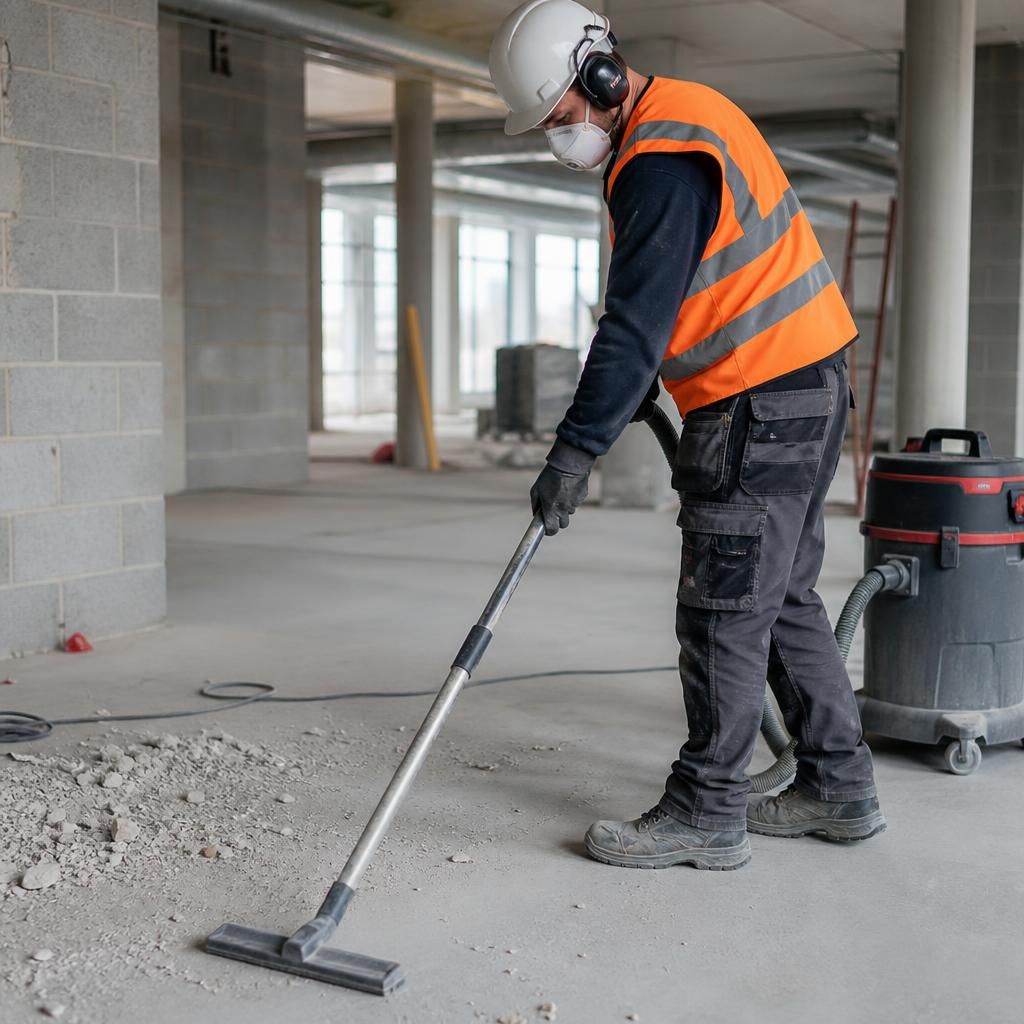
Dust suppression and controlled industrial vacuuming are key cleaning techniques for supporting construction site safety compliance. Lightly dampening suitable dust-generating materials, using on-tool extraction and vacuuming with appropriate filtration helps prevent fine particles from becoming airborne during cutting, drilling, sanding and demolition work.
The method must suit the material and work area. Water should not be used near live electrical equipment or moisture-sensitive finishes, while vacuum filters, seals and collection bags must be maintained to prevent dust release. Wet cleaning areas should be signposted, controlled and dried promptly so that dust suppression does not create a slip hazard. These controls should be documented in the site RAMS and supported by suitable PPE, equipment checks and COSHH information where hazardous dust or cleaning products are involved.