
What specialised equipment is commonly used for construction site cleaning and why?
Construction site cleaning commonly uses pressure washers, steam cleaners, industrial vacuums, scrubber dryers, water-fed systems and access equipment to remove dust, cement residue, mud, oil and debris from buildings and work areas. Each type is selected for the surface, contamination and site conditions, helping contractors clean efficiently while controlling risks, protecting finishes and maintaining safe, compliant premises.
Specialised construction site cleaning equipment includes pressure washers, steam cleaners, industrial vacuums, scrubber dryers, water-fed systems, access equipment and purpose-designed dust and debris collection tools. Contractors select the equipment according to the surface, type of contamination, stage of the project and site conditions. Using the right machinery removes construction residues efficiently while reducing damage, controlling airborne dust, limiting water use and helping keep the site safe for workers, visitors and other trades.
Pressure washers for mud, dust and surface residue
Pressure washers use controlled water pressure to remove loose soil, mud, cement splashes, plaster, algae, traffic film and general dirt from robust external surfaces. They are commonly used on access roads, loading areas, plant yards, paving, concrete, brickwork, cladding and car parks.
The pressure, flow rate, nozzle and cleaning distance must be matched to the surface. Excessive pressure can erode mortar joints, mark soft brick, damage coatings or force water into vulnerable building details. Professional operators also consider drainage, run-off, nearby electrical equipment and areas where water ingress could cause problems. Where appropriate, water recovery and containment measures are used to prevent contaminated run-off entering drains or spreading across the site.
Steam cleaners for sensitive or bonded contamination
Steam cleaning uses heated water, usually at lower water volumes than conventional pressure washing, to soften and remove substances such as cement film, grease, oil, adhesive residue, chewing gum, paint marks and ingrained dirt. It can be useful where high pressure may damage a surface or where a more controlled cleaning process is needed.
Heat can also help break down organic contamination and reduce the need for aggressive chemical products. However, steam is not suitable for every material or coating. Operators must assess the surface, check for heat sensitivity and manage condensation, run-off and electrical risks before work begins.
Industrial vacuums for dust and fine debris
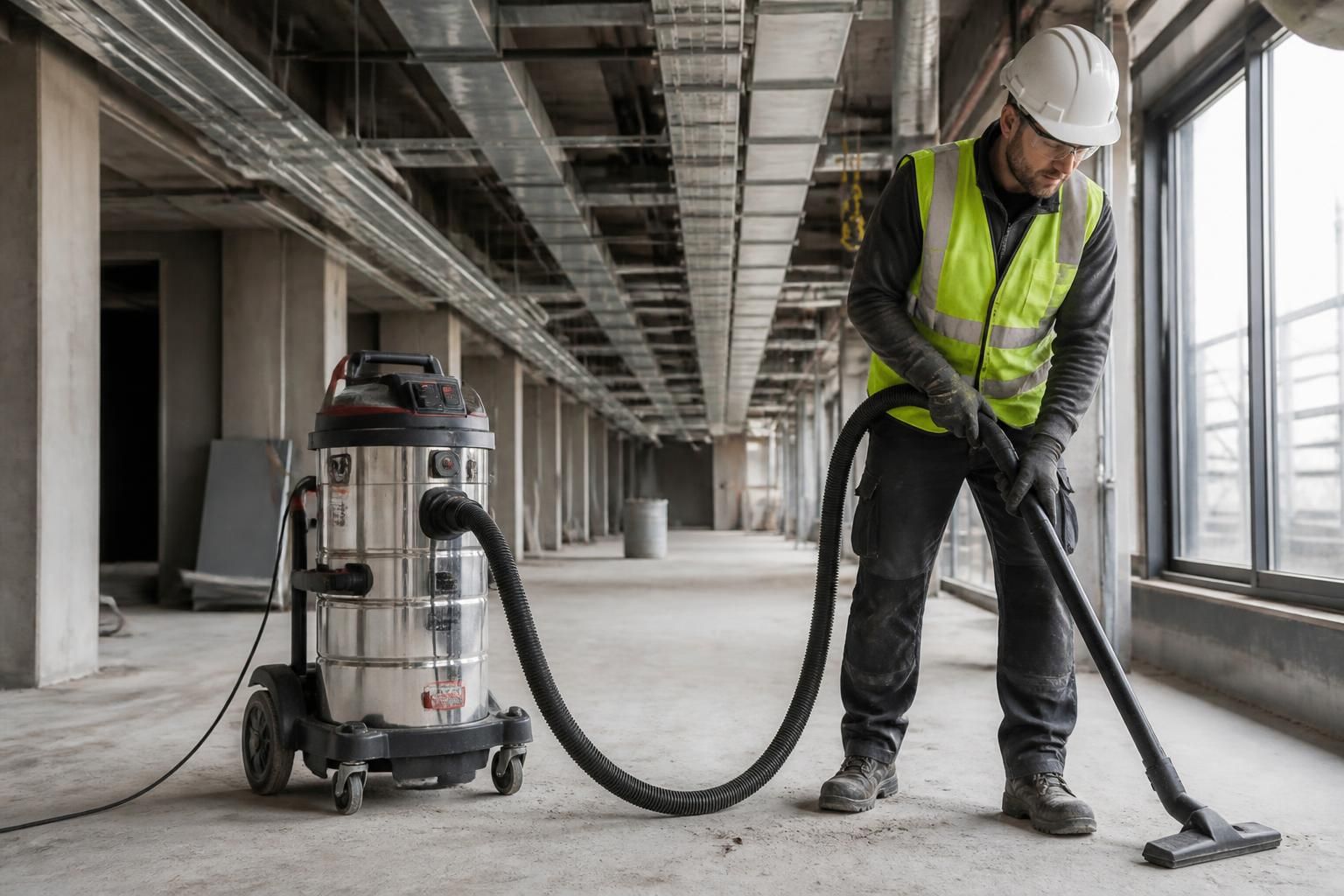
Industrial vacuum systems collect fine dust, sawdust, plaster, insulation particles, rubble fragments and other dry residues from floors, ledges, plant areas and internal construction spaces. They are particularly important during preparation and final cleaning because sweeping can disturb settled dust and return it to the air.
Suitable filtration is essential. Equipment may be selected to control ordinary construction dust or finer hazardous particles, depending on the materials present and the site risk assessment. Vacuums with effective filtration, sealed hoses and appropriate attachments can clean floors, corners, service areas and high-level surfaces while reducing dust migration into finished rooms or occupied parts of a building.
Scrubber dryers for hard floors
Scrubber dryers combine mechanical agitation, cleaning solution and suction to wash and dry hard floors in a single process. They are used on concrete, resin, tiled and other suitable hard surfaces in warehouses, commercial buildings, car parks, plant rooms and newly completed developments.
These machines are useful where construction dust, tracked-in mud, cement residue or general dirt has formed a film that ordinary mopping cannot remove effectively. The brush or pad, detergent and water setting must be chosen for the floor finish. Using too much water can delay handover, affect unfinished surfaces or create slip risks, while an unsuitable pad may scratch or dull the floor.
Water-fed poles and specialist cleaning systems
Water-fed poles deliver purified water through a brush head to clean glazing, frames, cladding and other external surfaces from ground level or from a safe working position. The system can remove dust, mortar spots and light construction residue without relying on ladders for routine areas.
For more difficult façades, contractors may use soft-washing, low-pressure systems or specialist chemical application equipment. The cleaning method must be compatible with the cladding, sealants, coatings and surrounding materials. Test areas are often used to confirm that the selected process removes the contamination without altering the finish.
Access equipment for high-level cleaning
Access equipment may include mobile elevating work platforms, scissor lifts, boom lifts, tower systems and other suitable platforms. It provides controlled access to façades, roofs, canopies, high-level glazing, steelwork and building services that cannot be reached safely from ground level.
Access machinery is selected according to working height, reach, ground conditions, obstructions, load requirements and the need to position cleaning equipment. It must be operated by competent personnel, inspected before use and used in accordance with the site plan and manufacturer’s instructions. Access equipment does not remove the need for proper controls around falling objects, exclusion zones, overhead services, uneven ground and weather conditions.
Water recovery and containment equipment
Construction cleaning can produce silty or chemically contaminated water, particularly when washing concrete, brickwork, plant areas and vehicle routes. Wet vacuums, collection tanks, drain covers, bunds, silt filters and temporary barriers can help control this water and prevent it spreading to clean areas or entering surface-water drainage without suitable treatment.
Run-off controls are selected before work starts. The cleaning team should identify drainage points, establish where collected water will go and confirm whether any substances require separate handling. This is both an environmental consideration and a practical way to avoid recontaminating completed areas.
Mechanical sweepers and debris collection tools
Ride-on or walk-behind sweepers remove loose aggregate, soil, packaging fragments and general debris from roads, yards, car parks and large floor areas. They improve productivity on extensive sites, while manual brooms, shovels, scrapers, magnetic sweepers and debris bins remain important for edges, corners and detailed work.
Mechanical sweeping should be managed carefully where fine dust is present. Dust-suppression features or vacuum-assisted collection may be preferable to dry brushing, particularly around occupied buildings, ventilation intakes and areas where other contractors are working.
Ancillary equipment for safe and controlled cleaning
Effective site cleaning also depends on supporting equipment, including hoses, surface-cleaning attachments, extension wands, dosing systems, warning signs, barriers, lighting, spill kits, personal protective equipment and waste containers. These items help operators control the work rather than simply increase cleaning power.
Before equipment is used, the cleaning contractor should review the construction phase, surface specifications, contamination, access restrictions, water and power availability, drainage, weather and nearby activities. A method statement and risk assessment should identify potential hazards such as silica or other construction dust, chemical residues, slips, high-pressure injection injuries, work at height and contact with live services.
The most effective equipment is therefore not necessarily the largest or most powerful machine. It is the equipment that suits the material and contamination, provides adequate control, and can be used safely without delaying other trades or damaging completed work. Combining dust extraction, targeted washing, mechanical scrubbing, controlled access and run-off management usually produces a more reliable result than applying one cleaning method across the whole site.
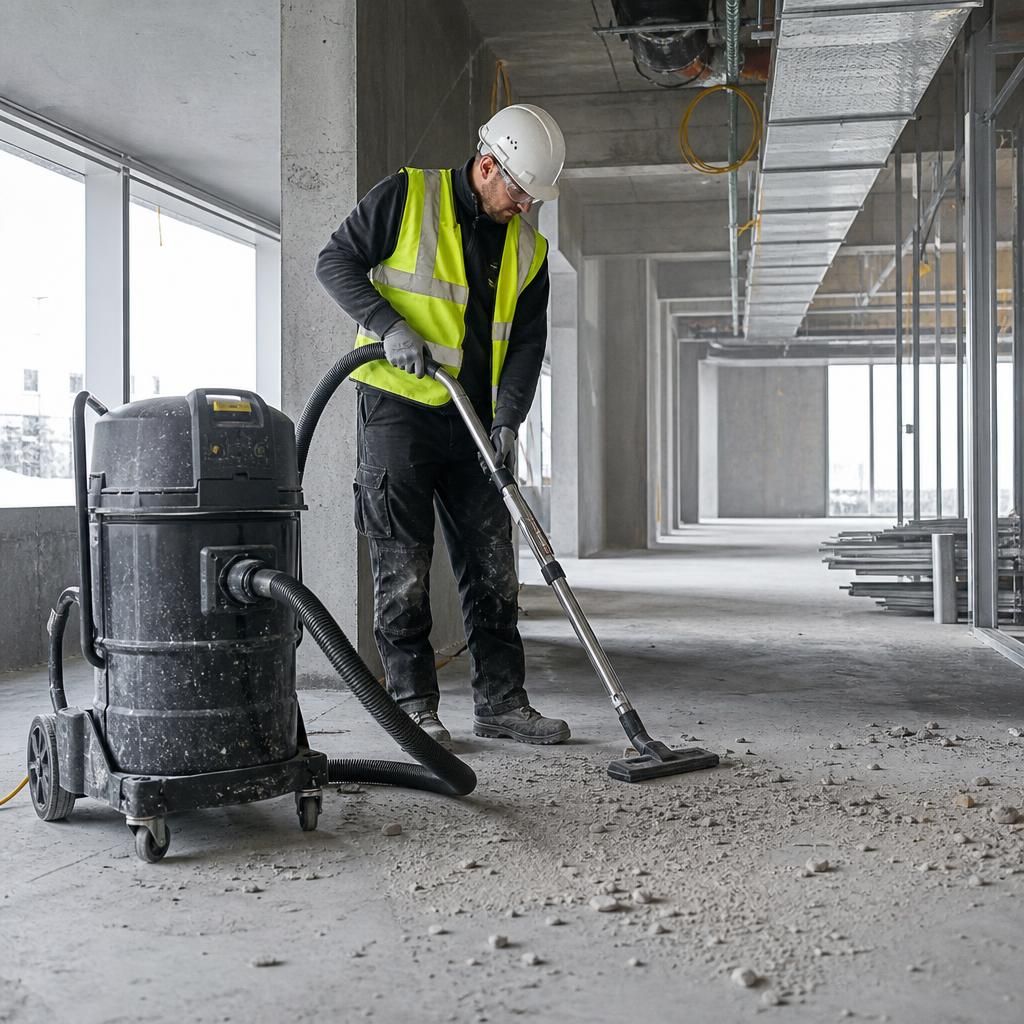
Industrial vacuum systems are essential for construction site cleaning because they remove fine dust and dry debris without simply redistributing it into the air. They collect plaster dust, sawdust, insulation particles, cement residue and small rubble fragments from floors, ledges, service areas and high-level surfaces.
The correct filtration, sealed hoses and suitable attachments help control dust migration, particularly during preparation and final cleaning when settled particles can affect completed rooms or occupied areas. Vacuum extraction is generally preferable to dry sweeping where airborne dust could create a health, cleanliness or visibility risk. The equipment should be selected according to the materials present and the site risk assessment, with operators using appropriate protective equipment and disposing of collected waste safely.