
What should I look for in a site cleaning service to ensure environmental responsibility and sustainable practices?
Look for a site cleaning service that uses environmentally responsible cleaning methods, minimises water and chemical use, and separates and disposes of construction waste through licensed channels. The provider should also demonstrate safe working practices, suitable equipment, clear environmental procedures and accurate records for waste, chemicals and any potential pollution risks.
An environmentally responsible site cleaning service should reduce water, chemical and energy use, prevent contaminated run-off, and manage waste through documented, licensed disposal routes. The contractor should be able to explain how its methods, equipment, staff training and records will limit pollution and environmental impact without compromising site safety or cleaning standards.
Environmental responsibility should be assessed as part of the contractor’s complete working method, rather than by the use of an isolated claim such as “eco-friendly”. Ask for a site-specific method statement, risk assessment and environmental arrangements before work begins. These documents should identify the surfaces being cleaned, likely contaminants, drainage points, nearby watercourses, required access equipment, waste streams and controls for accidental spills.
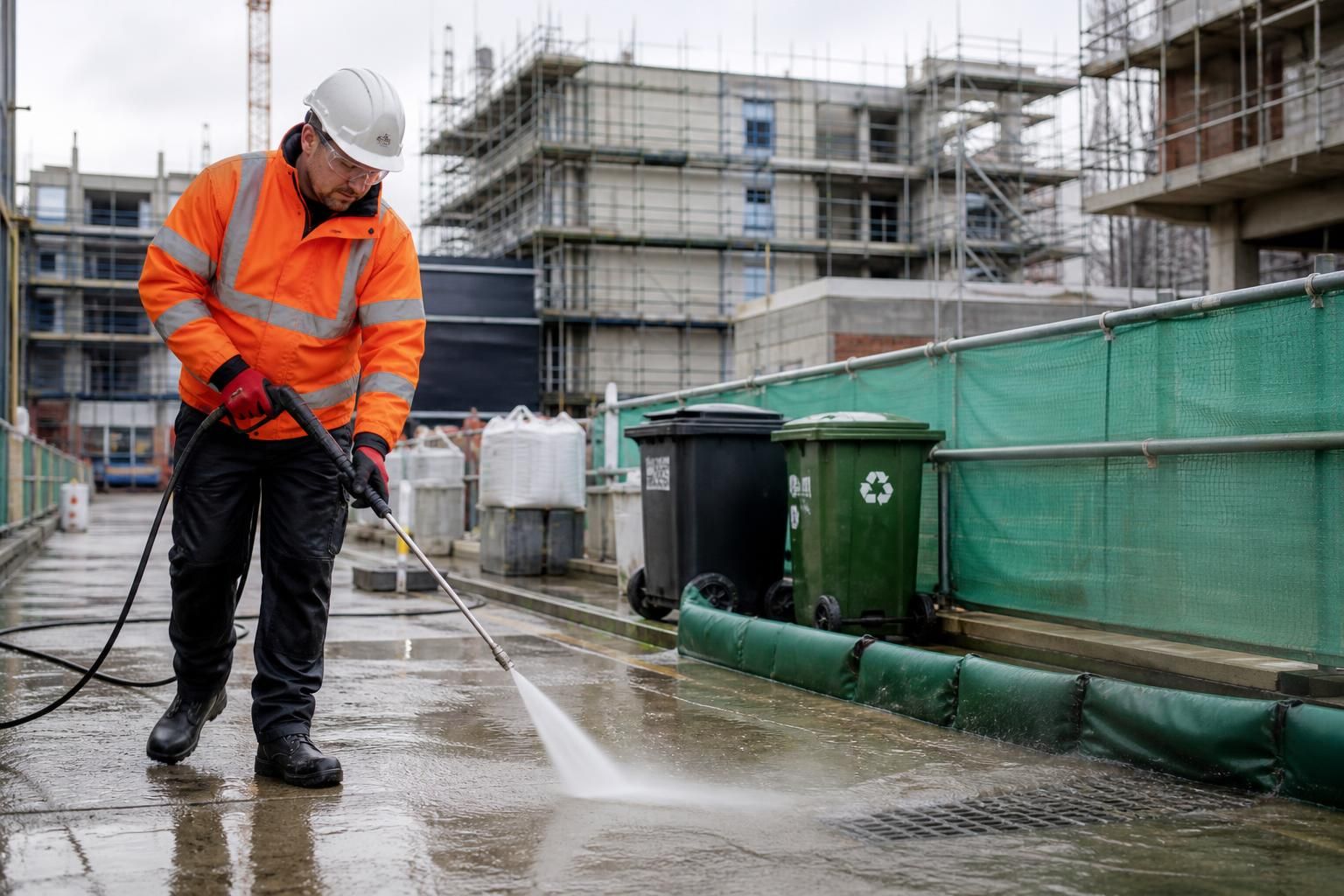
Check the proposed cleaning methods. A suitable contractor should select the least resource-intensive method that will achieve the required result. This may include controlled pressure washing, low-pressure cleaning, steam cleaning, dry methods or targeted treatment of specific areas. The choice should be based on the material, contamination and surrounding environment. Excessive pressure can damage façades, pointing, coatings and drainage systems, while unnecessary chemical use can increase the risk of pollution and create additional disposal requirements.
For each method, ask how the contractor will control:
- Water consumption, including whether flow can be regulated and whether cleaning can be limited to contaminated areas.
- Overspray, splashback and run-off from hard surfaces.
- Dust and airborne particles during dry cleaning, cutting or abrasive work.
- Noise, vibration and emissions from plant and access equipment.
- Damage to existing finishes, landscaping, drainage channels and surrounding structures.
Examine water management arrangements. Water from construction and industrial cleaning can contain silt, cement residue, oils, detergents, paint particles, heavy metals or other contaminants. It should not be allowed to enter surface-water drains, watercourses or unprotected ground without suitable controls and confirmation that the discharge is permitted. A responsible provider will identify drainage routes, use drain covers or bunding where appropriate, recover dirty water and arrange treatment or disposal when required.
Water recovery may involve wet vacuums, collection tanks, filtration or settlement systems. These controls are not suitable for every site, so the contractor should explain what will happen to the collected water and residual sludge. Simply moving contaminated water to another part of the site is not an environmental control. Where discharge to a foul drainage system is proposed, the contractor or site management should confirm that the arrangement is acceptable to the relevant water authority and complies with site requirements.
Ask how chemicals are selected and controlled. Chemical products should be necessary for the task, suitable for the surface and used at the manufacturer’s recommended dilution. Prefer products with a lower environmental hazard where they can achieve the same result, but do not assume that a product is harmless because it is described as biodegradable or environmentally friendly. The product’s safety data sheet and environmental information should be available for review.
Good controls include accurate dosing, secure storage, labelled containers, secondary containment and procedures for transporting chemicals around the site. Staff should understand the relevant COSHH controls, including safe handling, required personal protective equipment, ventilation and first-aid measures. The contractor should also have a spill response procedure and suitable materials available to contain leaks before they reach drains or soil.
Review waste segregation and disposal. Site cleaning can produce silt, sludge, contaminated absorbent materials, packaging, disposable protective equipment and residues from paint, oil, cement or chemical treatments. These materials should be assessed and separated at source where practical. Mixing hazardous and non-hazardous waste can increase disposal costs and may make an otherwise recyclable material unsuitable for recovery.
Ask the service provider to explain:
- Which waste streams are expected from the work.
- How waste will be contained, labelled and stored temporarily.
- Whether waste will be reused, recycled, recovered or disposed of, following the waste hierarchy.
- Which licensed or authorised facilities will receive the waste.
- What documentation will be supplied, such as waste transfer notes or hazardous waste consignment notes where applicable.
The contractor should be able to provide accurate waste records after the work. These records help demonstrate that waste has been handled lawfully and allow the site owner or principal contractor to maintain its own environmental files. For UK projects, it is reasonable to check that waste carriers and receiving facilities have the appropriate authorisations for the materials involved.
Consider the equipment and its environmental impact. Modern equipment can improve both cleaning control and resource efficiency, but its suitability depends on the task and the way it is operated. Adjustable pressure washers, steam systems, water-recovery equipment, efficient vacuums and well-maintained access equipment can reduce overspray, repeat work and unnecessary consumption. Equipment should be inspected, maintained and operated by competent staff.
Where powered plant is required, ask how the contractor will limit fuel use, idling, leaks and avoidable journeys. Battery or electric equipment may be suitable for some tasks, particularly in enclosed areas, although the overall environmental impact still depends on how the equipment is charged, transported and used. The important point is that the contractor can justify its equipment selection rather than relying on a general sustainability statement.
Check pollution prevention and emergency procedures. A robust service should include controls for accidental chemical releases, fuel leaks, dirty-water escapes and damage to drainage infrastructure. The method statement should identify who is responsible for stopping work, containing the incident, protecting drains, notifying the site contact and escalating the matter if pollution has occurred.
Before cleaning starts, the team should know the location of surface-water and foul drains, isolation points, sensitive landscaping, watercourses and areas where contaminated materials must not be stored. Spill kits should be appropriate to the substances being used, and used absorbents should be treated as a waste stream requiring proper handling. Environmental incidents should be recorded and reviewed so that controls can be improved.
Confirm that environmental procedures are supported by competent staff. Written policies have limited value if operatives do not understand how they apply on site. Ask whether the team has training or documented competence in pressure washing, steam cleaning, chemical handling, waste segregation, spill response and the operation of access equipment. A competent supervisor should be able to adapt the method if the surface, weather, drainage or contamination is different from the information provided at quotation stage.
Training should cover more than personal safety. Operatives need to understand why run-off must be contained, how to prevent cross-contamination between areas, when a cleaning chemical must not be used, and how to report damaged drains or unexpected contamination. This is particularly important on construction sites where conditions can change during the work.
Look for clear evidence and reporting. A responsible contractor should be willing to provide relevant evidence rather than relying solely on environmental wording in a proposal. Depending on the size and nature of the project, useful information may include:
- An environmental policy or site environmental plan.
- Method statements and risk assessments covering water, chemicals and waste.
- Safety data sheets and chemical usage records.
- Waste transfer or consignment documentation.
- Records of water recovery, incidents, near misses and corrective actions.
- Inspection and maintenance records for cleaning and access equipment.
- Details of relevant insurance, training and waste-carrier arrangements.
The level of documentation should be proportionate to the work. A small, low-risk external clean may not require the same reporting as a large construction project involving contaminated run-off, chemical treatments or substantial waste. However, the contractor should still be able to provide a clear explanation of its controls and confirm what will be recorded.
Include environmental requirements in the quotation and contract. Environmental performance is easier to manage when it is specified before work starts. The scope should state who supplies water and electricity, how dirty water will be contained, which party is responsible for drainage permissions, how waste will be classified and removed, and what records will be issued on completion. It should also identify any restrictions on working hours, noise, vehicle movements or chemical use.
Be cautious if a quotation is vague about disposal, excludes contaminated materials without explaining the process, or promises exceptionally low water or chemical use without describing the method. A responsible contractor will identify assumptions and tell you when additional controls, testing or specialist disposal may be needed. It should never dilute environmental requirements simply to reduce the initial price.
Use practical questions when comparing providers. Ask the contractor what happens to cleaning water, sludge and chemical residues; how drains are protected; which products will be used and why; how waste will be classified; and what documents will be supplied after completion. You can also ask for examples of how the service has adapted its approach to sensitive surfaces, occupied premises, restricted drainage or changing site conditions.
The strongest indicators are specific answers, traceable records and a method that is tailored to the site. Sustainable site cleaning does not mean avoiding water, chemicals or powered equipment in every circumstance. It means using them only where justified, controlling the associated risks, preventing pollution, recovering or disposing of waste responsibly, and demonstrating that the chosen approach meets both the cleaning specification and the site’s environmental obligations.
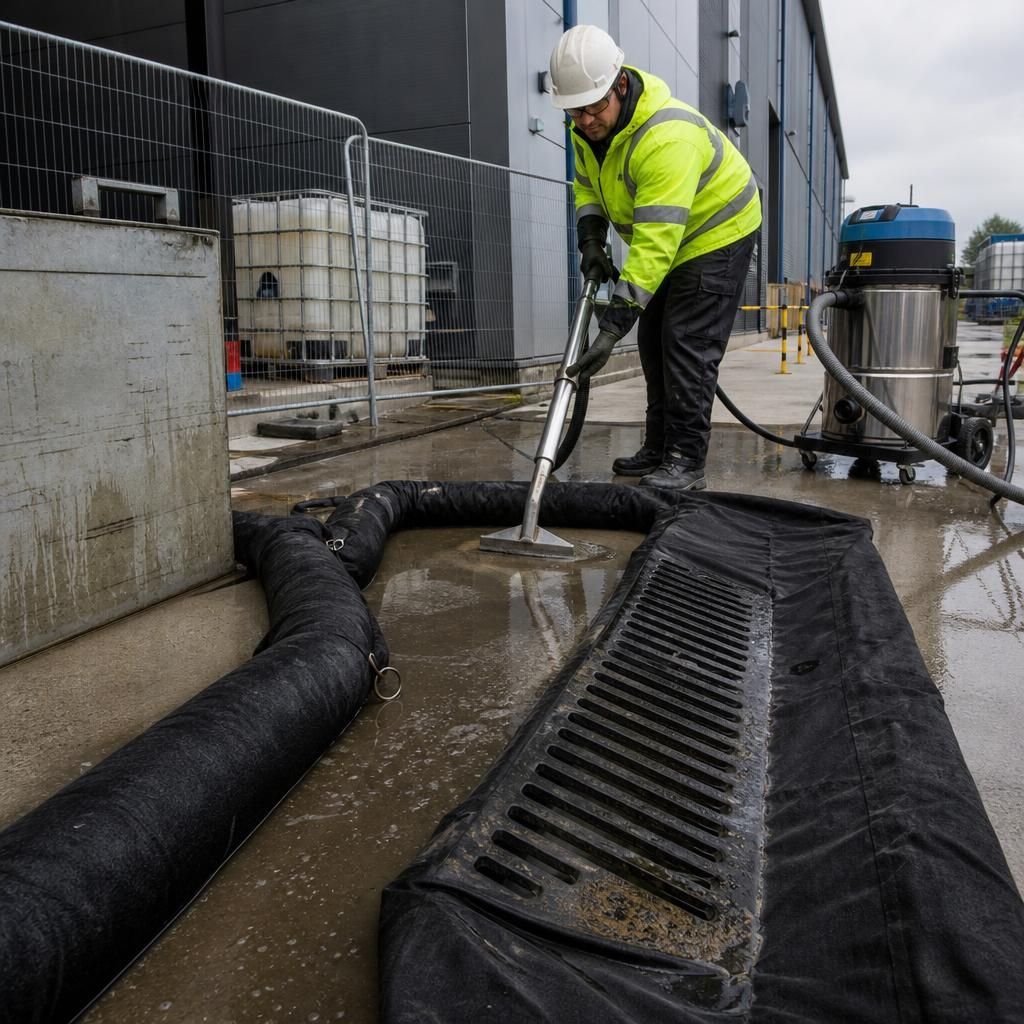
Responsible site cleaning includes controlling dirty water so silt, cement residue, oils, detergents and other contaminants cannot enter surface-water drains, watercourses or unprotected ground. Before work begins, the cleaning team should identify drainage routes and agree suitable measures such as drain covers, bunding, wet vacuums, collection tanks or filtration.
Collected water and sludge must then be assessed and managed through an appropriate, documented route. A sustainable contractor should explain whether water can be treated, reused or discharged lawfully, and should never move contaminated run-off elsewhere on the site. This approach reduces pollution risk while maintaining effective cleaning standards.