
What are the typical stages involved in a post-construction cleaning service?
A post-construction cleaning service typically progresses from an initial site assessment and removal of construction debris to detailed cleaning of surfaces, fixtures, glazing and external areas. The final stage is a thorough inspection and snagging clean to ensure the property is safe, presentable and ready for handover or occupation.
A post-construction cleaning service usually follows a planned sequence: site assessment, removal of construction waste, preparation of surfaces, detailed internal and external cleaning, specialist treatment where required, and a final inspection before handover. The exact scope depends on the building type, construction work completed, access arrangements and whether the property is being prepared for occupation, marketing or operational use.
Initial site assessment and planning
The cleaning contractor first inspects the site with the principal contractor, site manager or facilities representative. This establishes which areas are ready to clean, what materials and finishes are present, and whether other trades are still working. The assessment should identify access restrictions, fragile surfaces, high-level areas, drainage points, welfare arrangements and any hazards such as exposed fixings, sharp waste, dust, chemicals or unfinished services.
A method statement and risk assessment can then be prepared for the work. These documents help define the cleaning sequence, equipment, personal protective equipment, access systems, waste arrangements and controls needed to protect workers, visitors and the building. Cleaning is normally scheduled after dusty or disruptive construction activities have finished, although phased cleaning may be used where parts of the site are completed at different times.
Initial clearance and waste removal
The first practical stage is to remove loose construction debris and unwanted materials. This can include packaging, timber offcuts, plasterboard pieces, protective film, cable ties, surplus sealant, screws, dust sheets and general waste left by the construction process. Larger items are collected before detailed cleaning begins, as they obstruct access and can damage floors or equipment if dragged across finished surfaces.
Waste should be separated and handled in accordance with the site’s arrangements. Reusable materials, recyclable waste and controlled or hazardous substances must not be mixed with ordinary rubbish. Contractors should not disturb unidentified materials; these should be referred to the responsible site manager for assessment and safe removal.
Preparation of the work areas
Once the main debris has been cleared, the team prepares each area for cleaning. This may involve removing temporary protection, masking sensitive fixtures, opening accessible cupboards, isolating areas that must remain dry and checking that newly installed fittings are secure. Floors, walls, ceilings, plant areas, loading zones and circulation routes are usually divided into practical work sections so that cleaned areas are not contaminated by ongoing activity.
Loose dust is generally removed before water or chemical products are introduced. Dry vacuuming with suitable filtration, brushing or controlled air methods can be used depending on the surface and the risk of redistributing fine dust. This order is important because applying moisture too early can create mud, spread residue and make cement or plaster deposits harder to remove.
High-level and difficult-access cleaning
High-level surfaces are cleaned before lower areas wherever possible. This prevents dust and residue falling onto surfaces that have already been completed. The work may include beams, service runs, ceilings, light fittings, rooflights, upper wall sections, signage, ductwork and the tops of cabinets or partitions.
Access equipment is selected according to the height, reach, surface condition and working environment. Depending on the site, this may include mobile elevated work platforms, towers, podium steps, specialist vacuum systems or water-fed equipment. Access must be suitable for the task and used by trained operatives, with exclusion zones and controls in place where falling objects or vehicle movements present a risk.
Detailed cleaning of internal surfaces and fittings
The next stage focuses on the building’s internal finishes. Operatives remove construction dust, plaster splashes, grout haze, paint marks, adhesive, silicone residue and other builders’ deposits from suitable surfaces. Common tasks include:
- Vacuuming and damp wiping of walls, ceilings, ledges, doors and frames.
- Cleaning skirting boards, staircases, handrails, partitions and internal joinery.
- Removing labels, protective films and adhesive residue from fittings where authorised.
- Cleaning kitchens, washrooms, sanitaryware, cubicles and associated fixtures.
- Wiping radiators, vents, switches, sockets and other accessible fittings without allowing moisture into electrical components.
- Cleaning floors according to their material, such as concrete, screed, vinyl, tiles, timber, resin or carpet.
Cleaning products and mechanical methods must be matched to the finish. An aggressive chemical or abrasive pad that is suitable for unfinished concrete could permanently mark polished stone, coated metal, painted surfaces or newly installed flooring. Test cleaning in an inconspicuous area is good practice where the finish or residue is uncertain.
Glazing, frames and final surface detailing
Windows, glazed doors, mirrors and internal glass are cleaned after heavy dust-producing work has been controlled. The process may include removing labels and protective film, washing the glass, detailing edges and frames, and checking for paint or sealant contamination. Care is required around low-emissivity coatings, solar-control glass, powder-coated frames and factory-applied finishes.
Final detailing also covers areas that are easily missed during a general clean, including corners, reveals, door tops, hinges, behind fittings, service cupboards and junctions between different materials. These small areas often form part of the handover inspection and can affect the perceived standard of completion.
External and surrounding-area cleaning
Where included in the scope, external cleaning is completed after construction materials, access equipment and temporary site facilities have been removed or repositioned. Work may cover façades, brickwork, cladding, entrance canopies, loading areas, paths, kerbs, car parks and hard landscaping.
Suitable methods may include pressure washing, steam cleaning, low-pressure washing, soft washing or manual treatment. The method depends on the substrate and the type of contamination. Cement staining, mortar residue, paint, tyre marks, algae and general construction dust each require different controls. Run-off must be managed so that dirty water, chemicals and loosened contaminants do not enter unsuitable drainage systems or affect neighbouring areas.
External cleaning should also take account of newly completed joints, sealants, coatings, landscaping and drainage channels. High pressure or unsuitable chemicals can damage fresh finishes, force water behind cladding or disturb pointing. A competent contractor will adjust pressure, temperature, dwell time and agitation to suit the surface rather than applying one method throughout the site.
Specialist stain and residue removal
Some post-construction deposits need additional treatment after the general clean. Examples include concrete and mortar staining, efflorescence, bitumen, expanding foam, paint, adhesive, rust marks and ingrained traffic deposits. Specialist brick cleaning or other restoration techniques may be appropriate, but these should be controlled carefully to avoid etching, colour variation, loss of surface texture or damage to joints.
Where a deposit cannot be removed safely without affecting the substrate, the contractor should report the limitation rather than conceal it with an unsuitable product or method. The client can then agree whether further specialist treatment, repair or replacement is required.
Floor cleaning and protection
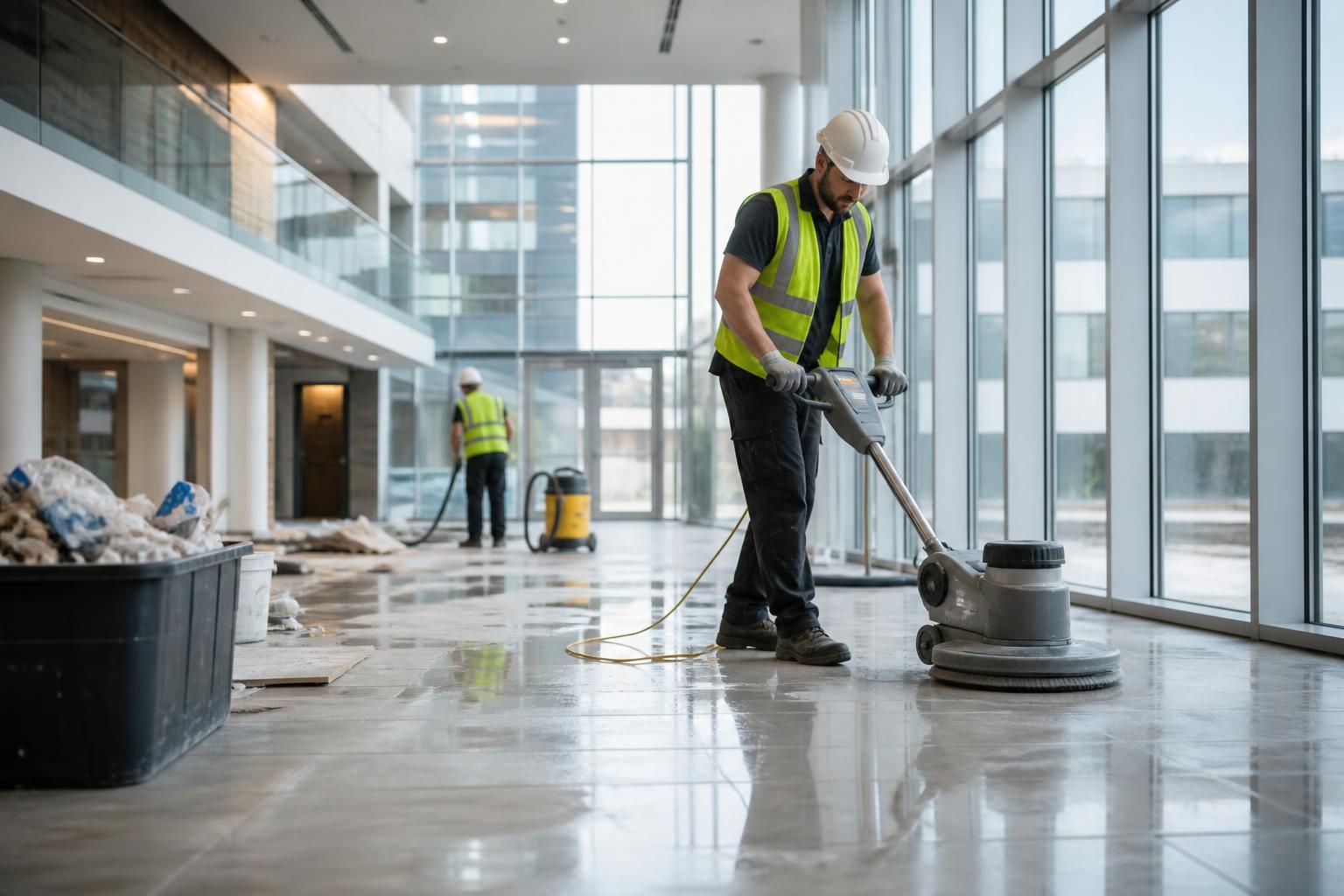
Floors often receive separate attention because they collect dust and debris throughout the build. After loose material has been removed, the floor is cleaned using equipment and products appropriate to its finish. This may include scrubbing, extraction, rotary cleaning, polishing or controlled pressure washing in suitable external areas.
Newly finished floors may need to remain protected after cleaning, particularly where other contractors are returning to the building. Protection should be applied only when the surface is clean and sufficiently dry, and it should not conceal defects or prevent required inspections. Any remaining paint, adhesive or grout residue should be recorded and addressed before final protection is installed.
Final cleaning, inspection and snagging
The final stage is a systematic inspection of the cleaned areas against the agreed specification. The contractor checks for visible dust, streaks, residue, marks, waste, missed edges, damaged finishes and areas that have become dirty again during other works. Glazing is often inspected under suitable lighting, while floors and high-level surfaces are checked from normal viewing positions as well as close up.
Any defects found during this inspection are recorded and returned to the cleaning team for a snagging clean. If the issue is caused by construction damage or an incomplete installation rather than cleaning, it should be clearly separated from the cleaning scope and referred to the relevant contractor. A final walk-through with the client or site representative confirms what has been completed and identifies any outstanding access or trade-related items.
Handover and ongoing maintenance
After approval, the site is handed over in a clean and usable condition, with waste removed and agreed areas ready for occupation or operational use. The completion record may include the areas cleaned, specialist treatments carried out, restrictions encountered and any recommendations for protection or ongoing maintenance.
For larger commercial and industrial properties, post-construction cleaning is often followed by a planned maintenance programme. Regular cleaning of entrances, façades, cladding, roofs, car parks and high-traffic areas helps prevent construction residue and environmental soiling from becoming more difficult or expensive to remove. The initial post-construction clean therefore provides both the immediate handover standard and a practical baseline for future exterior and facilities maintenance.
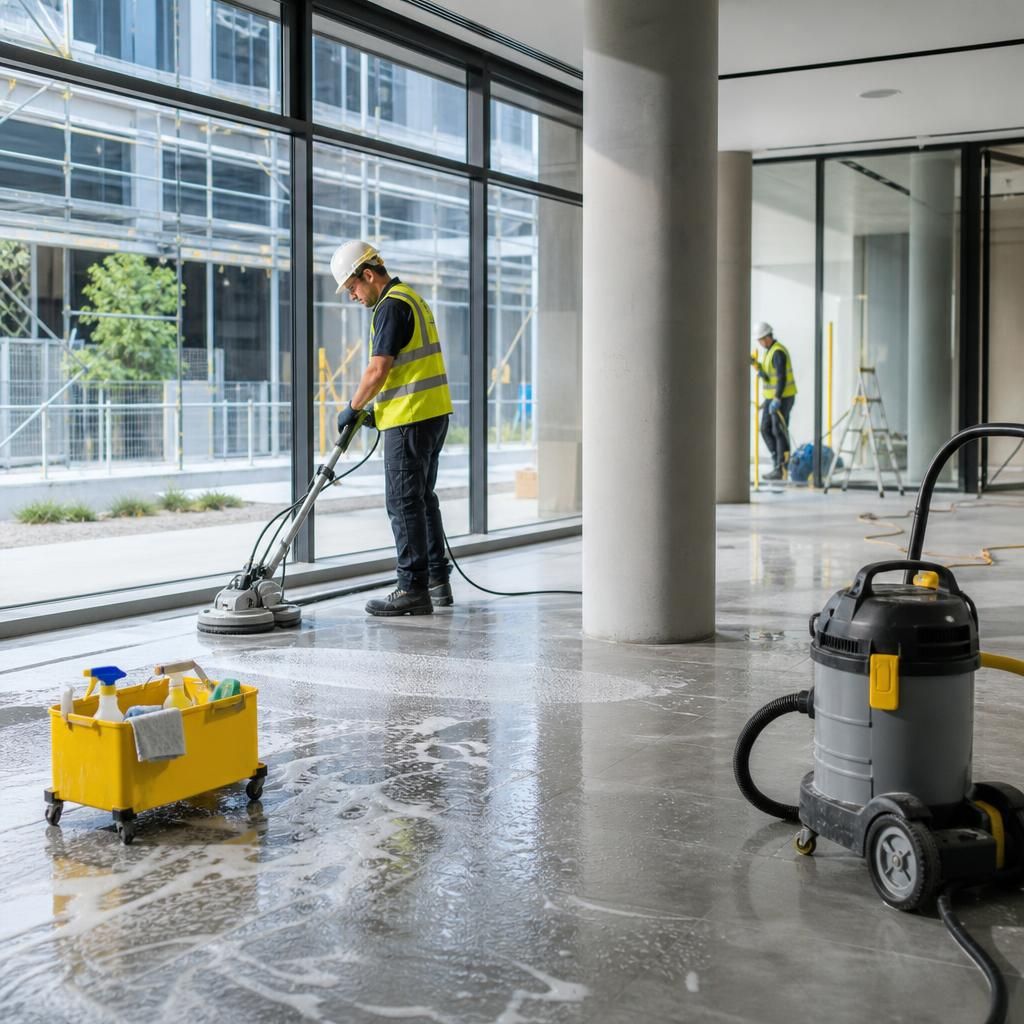
Post-construction cleaning is normally completed from high-level areas downwards. Once loose debris has been removed, operatives clean ceilings, beams, service runs, light fittings and upper wall sections before moving to lower surfaces, fixtures and floors. This sequence prevents dust and residue from falling onto areas that have already been cleaned.
The work then progresses from general cleaning to detailed treatment. Glazing, frames, corners, door tops, service cupboards and construction residues are checked separately, followed by external areas where included in the agreed scope. A final inspection identifies missed marks, dust or snagging items before the property is prepared for handover.